
Call a local advisor
+86 186 1196 4400Email our team
[email protected]Tour Beijing Journal
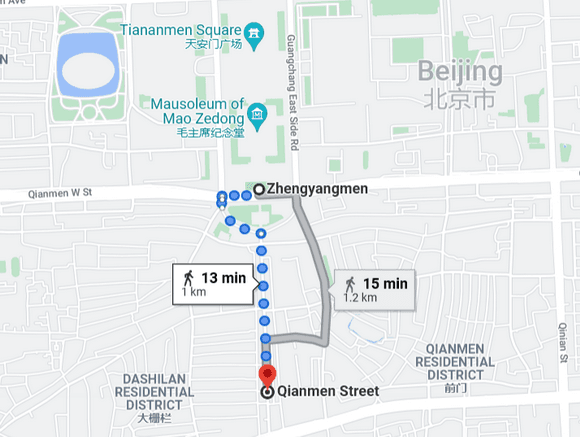
Qianmen Street, aka Qian Men Da Jie 前门大街 in Chinese, is an 845-meter long...
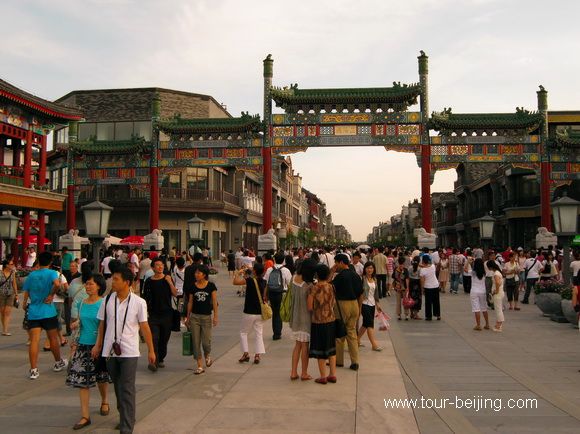
Qianmen Street was initially formed in Ming and Qing Dynasties (1368-1911). By the time of Emperor Jiajing, the 12th Ming Dynasty (1368-1644) emperor, the street was dotted with guild halls built by different localities, providing houses to citizens from other parts of China intending to take the imperial exams.
Qianmen Street became even more prosperous in the early years of the Qing Dynasty (1644-1911) with the development of activities such as lantern fairs, theatres and tea houses.
Places like the Guanghe Theater – today threatened with demolition — and the Quanjude Roast Duck Restaurant are part of Beijing’s history.
The original Qianmen Street in Ming and Qing Dynasties was burnt down to ashes in 1900 when the Allied Forces of the Eight Powers ransacked Beijing. Physically, there is nothing left for us to retrieve.
The present Qianmen Street has been rebuilt on the historical photos and the mould of the 1920s to 1930s. The 1.45-square kilometer area has been built into four zones for culture, food, shopping and entertainment. Trolley cars are back to transport and entertain tourists.
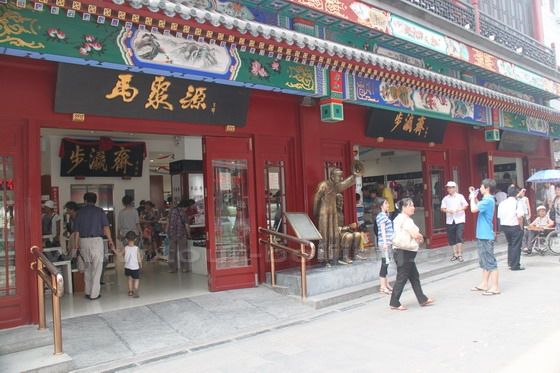
The area is home to 50 courtyards and hutongs listed as state-level heritage sites, as well as 80 famed shops that have been operating for over a century, such as the Liubiju sauce and pickle shop, Tongrentang drugstore, Ruifuxiang silk shop, Neiliansheng shoes store and Zhangyiyuan tea shop.
Follow me to explore Qianmen Street.
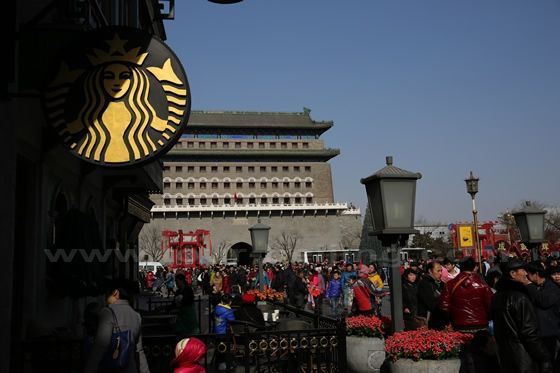
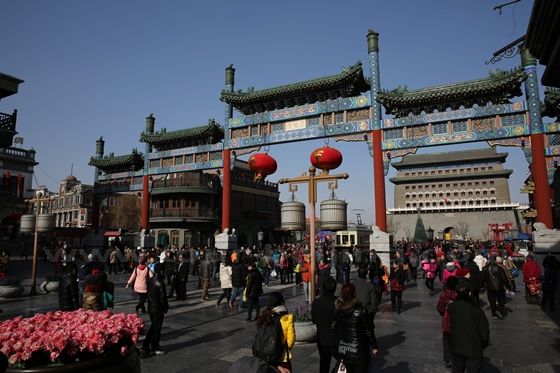
Here you can find the West meets the East. The Starbucks is located by the side of the norther paifang gateway of Qianmen Street, south of Zhengyangmen Tower.
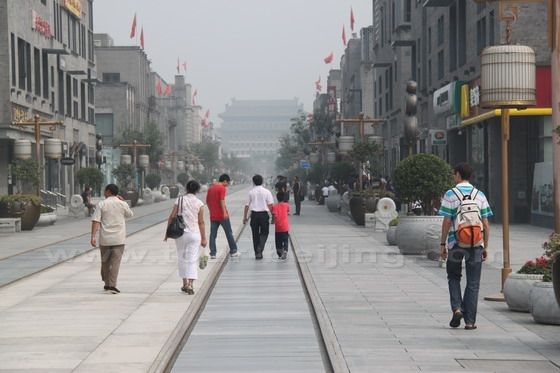
Or, you may enter Qianmen Street from its southern entrance. The distance between the north entrance and south entrance is 845m in length.
The Dangdang Che ( Tram) is basically in service during Chinese public holidays running from north to south.
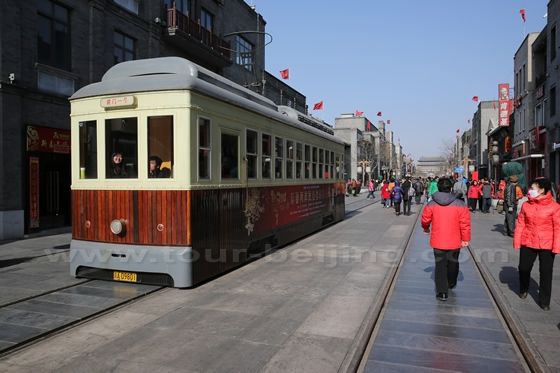
Walking along the street.
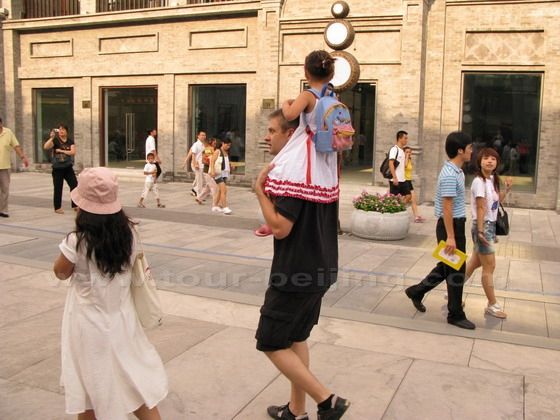
The father and daughter are ambling down the street.
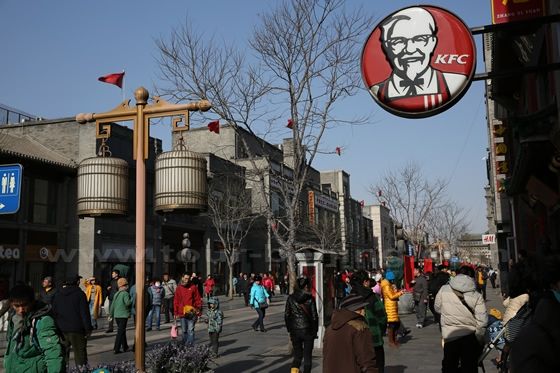
KFC is mixed with the traditional Beijing elements.
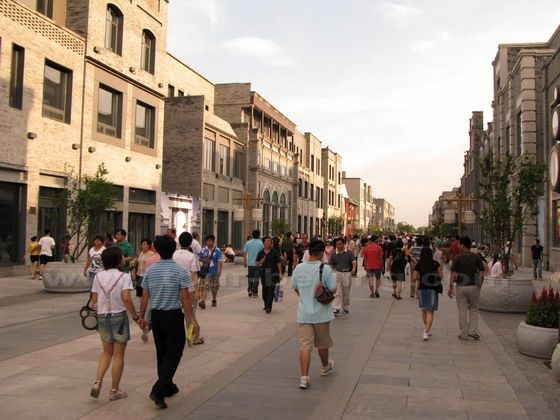
The 845m long Qianmen Street is a nice place for a walk.
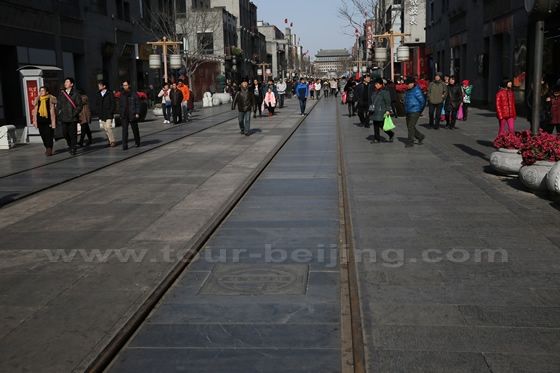
Here you can find the West meets the East. The Starbucks is located at the north entrance.
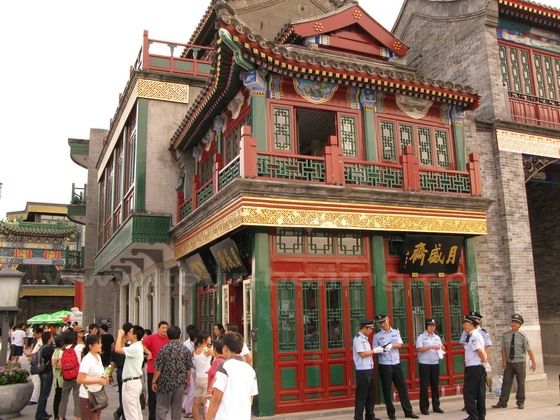
The time-honored Yueshengzhai Restaurant.
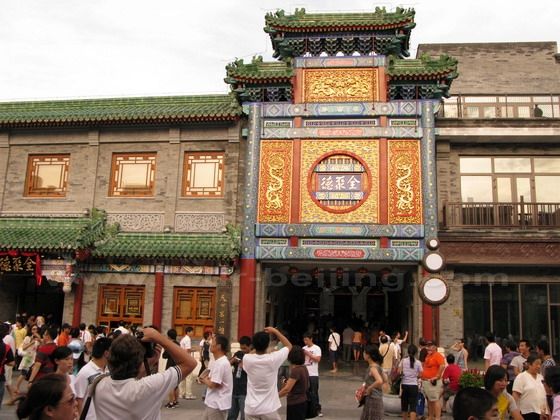
The famous Qianmen Quanjude Duck Restaurant.
People are lining up for having a bite of Duyichu shaomai.
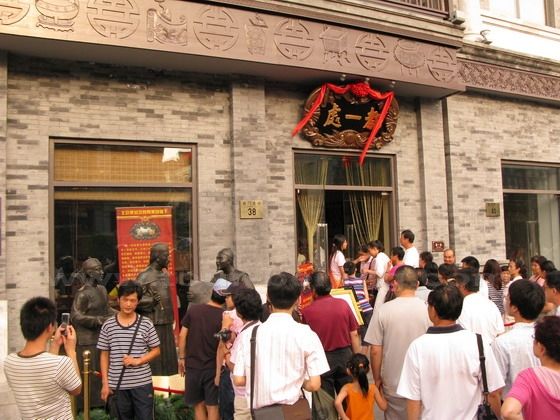
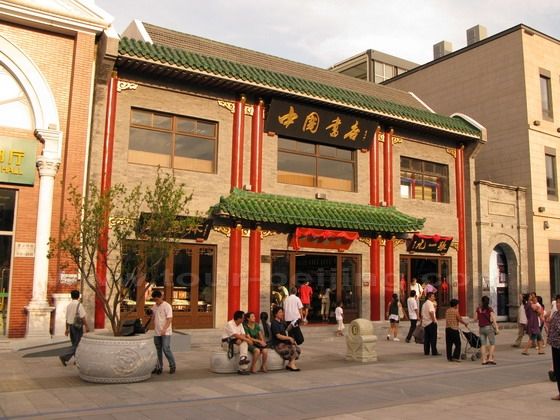
China Bookstore
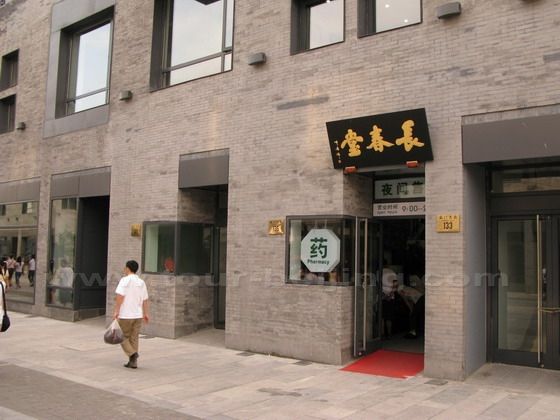
Changcuntang, a famous traditional Chinese Pharmacy
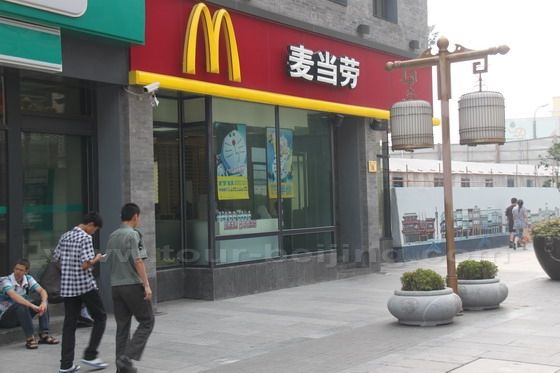
Qianmen Street is also an interesting area where the East and the West stay peacefully and harmoniously.
MCdonald’s on the street
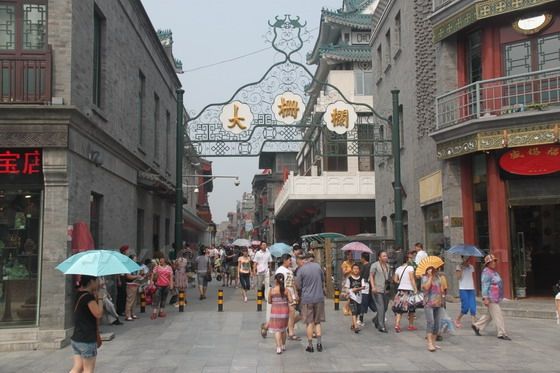
Walking about 80 meters from the north entrance to Qianmen Street, on your right hand, you will see the entrance to the famous Dashilan, once the commercial center of Beijing.
The Dashilan area has gathered some of China’s oldest brands, such as Tongrentang (TCM), Neiliansheng (shoes), and Ruifuxiang (silk and fabrics).
The two time-honored shops selling hats and shoes inside Dashilan Area.
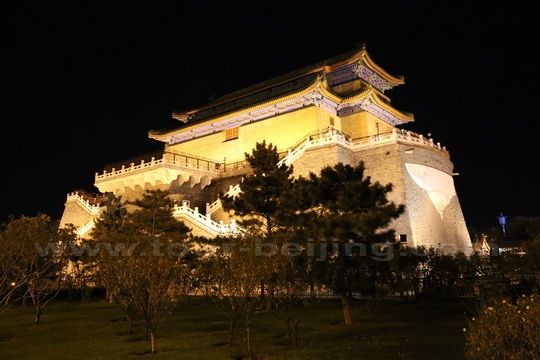
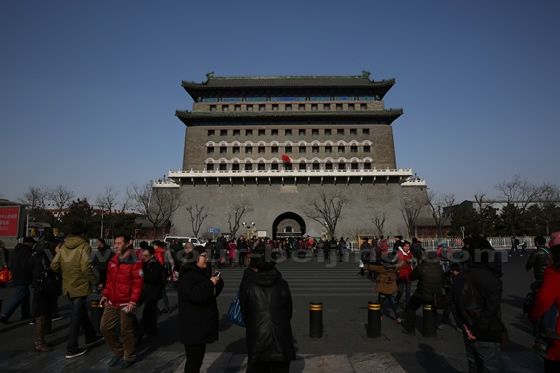
Its north entrance is just behind Zhengyang Gate ( Arrow Tower ).
If you don’t want to go the do-it-yourself route and prefer the hassle-free escorted tours, here are some options for Beijing guided tours:
Share a question or note for this guide. Comments are reviewed before publishing.
Hand-picked routes matched from this article's destination clues, tags, and categories.
Use these attraction notes to connect nearby sights with tours, destination guides, and planning articles.
Continue planning with practical Beijing guides selected from similar places, themes, and travel questions.
Subscribe to receive Beijing travel ideas and tour updates.