Why the 'Great Wave' has mystified art lovers for...
2022年1月29日发布日期
约 4 分钟阅读阅读时间
北美旅游文章主题
Why the 'Great Wave' has mystified art lovers for generations 日本木版画:为什么“巨浪”让几代艺术爱好者迷惑不解
Written byDan Tham, CNNJunko Ogura, CNN CNN新闻 丹·瑟姆,小仓纯子撰文
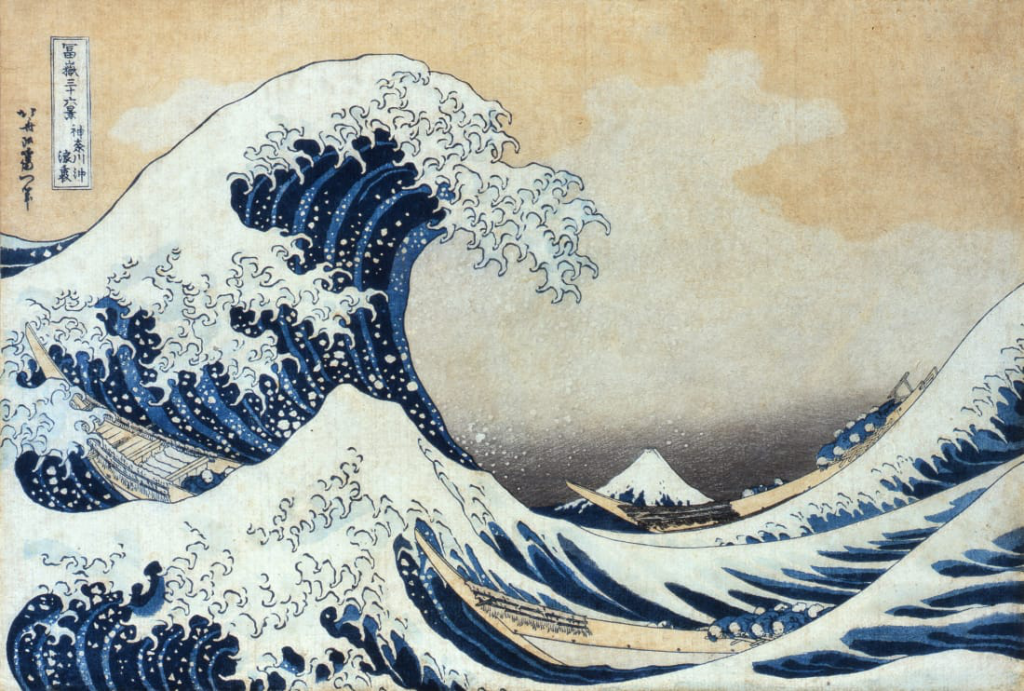
The famous kanagawa wave.Scroll through the gallery to see more of his ukiyo-e prints.hokusai 著名的《神奈川巨浪》。滚动通过画廊看到更多他的浮世绘版画。葛饰北斋
A massive wave threatens to engulf three fishing boats, its foam crown extending like claws, menacing the rowers below. It's an epic scene of human struggle and natural terror that dwarfs the sacred Mount Fuji just behind it.
This is "The Great Wave off Kanagawa," a woodblock print by the Japanese artist Katsushika Hokusai and one of the world's most iconic pieces of Asian art.
If this climactic moment seems ubiquitous -- think T-shirts, coffee mugs, laptop decals -- that's because it was designed to be.
这是日本艺术家葛饰北斋(Katsushika Hokusai)的木版画《神奈川巨浪》(The Great Wave off Kanagawa),是世界上最具标志性的亚洲艺术品之一。
如果这个高潮时刻似乎无处不在——想想t恤、咖啡杯、笔记本电脑贴纸——那是因为它的设计初衷就是如此。
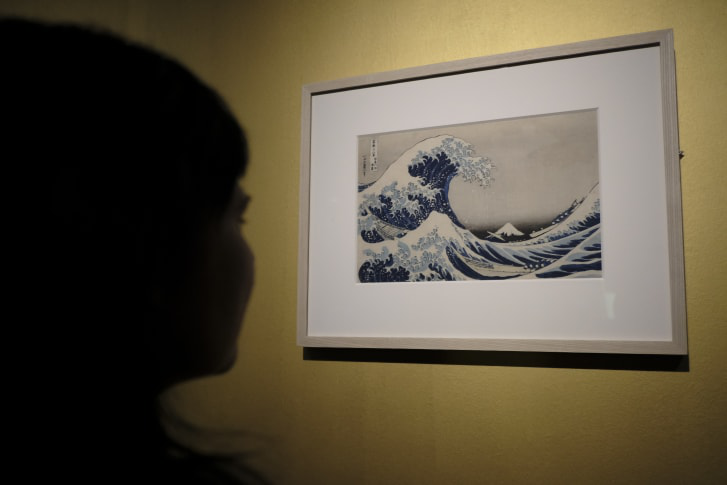
A visitor looks at Katsushika Hokusai's famous print, "The Great Wave off Kanagawa," at the Ara Pacis Museum in Rome.Credit: AFP Contributor/AFP/AFP/Getty Images 一位游客在罗马的阿拉·帕西斯博物馆欣赏葛饰北斋著名的版画《神奈川巨浪》。来源:法新社供稿人/法新社/法新社/盖蒂图片社
The artwork is considered a fine, if somewhat hackneyed, example of "ukiyo-e," a genre of mass-produced Japanese woodblock prints that displayed everything from theater announcements to the most salacious of erotica.
Ukiyo-e prints were cheap to produce and widely distributed in Edo (today's Tokyo) between the 17th and 19th centuries. As many as 5,000 impressions were made from the original woodblocks for "The Great Wave." Back then, the prints were sold for the price of a bowl of noodles.
By the time "The Great Wave" made its debut, in around 1830, Japan was flirting with the idea of ending more than 200 years of isolationism. The story of growing foreign influence is evident in Hokusai's masterpiece -- the rich shade of blue used in the prints was imported from Europe. Prussian blue, as it's commonly known, was a synthetic color created in the 18th century and prized for its depth and durability.
That Hokusai employed the hue as the principal actor in his oceanic drama suggests that he was depicting Japan on the cusp of change. As much as the wave portends instability and danger, it also suggests possibility and adventure.
Hokusai spent most of his life in the riverside district of Sumida, Tokyo, where he adopted at least 30 pseudonyms and, perhaps, just as many different styles. "The Great Wave" was the first in his series "Thirty-six Views of Mount Fuji," a virtuosic study of Japan's highest and most revered mountain.
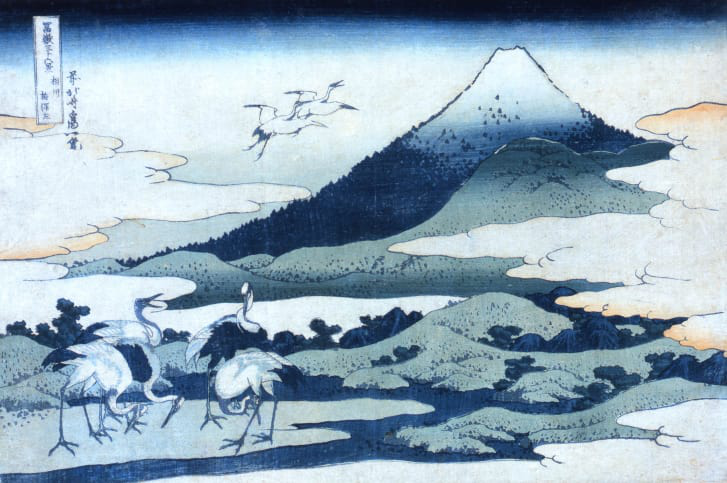
"Umezawa Manor in Sagami Province," another print from Hokusai's collection "Thirty-six Views of Mount Fuji." Credit: Katsushika Hokusai 《相上省的梅泽庄园》(Umezawa Manor in Sagami Province),这是葛饰北斋收藏的另一幅版画《富士山36景》(36 Views of Mount Fuji)
"Many people view the painting as the very essence of Japanese culture," says Atsuko Okuda, chief curator of the Sumida Hokusai Museum in Japan. "The simple and powerful composition of the mountain and the shape of the wave strikes right at the heart of the observer."
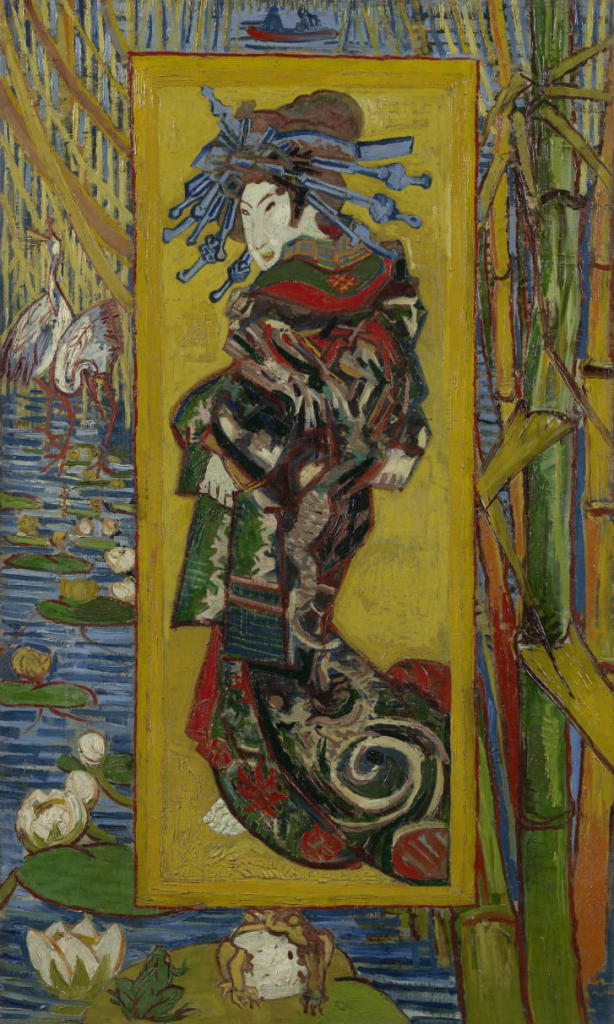
Observers famously included French Impressionists Edgar Degas and Claude Monet, as well as Dutch master Vincent van Gogh, who was enamored with"The Great Wave." They were not alone: In the 1860s, the proliferation of ukiyo-e in Europe led to an artistic fascination with Japan in the West, known as "Japonisme."
著名的观察人士包括法国印象派画家埃德加·德加(Edgar Degas)和克劳德·莫奈(Claude Monet),以及痴迷于《巨浪》(The Great Wave)的荷兰大师文森特·梵高(Vincent van Gogh)。他们并不孤单:在19世纪60年代,浮世绘(ukiyo-e)在欧洲的扩散,引发了西方对日本的艺术迷恋,被称为“日本主义”(Japonisme)。
Yet, the woodblock prints weren't considered art in Japanese society during the Edo period, according to Yukiko Takahashi, the sixth-generation owner of the Takahashi Kobo publishing house.
"At some point, ukiyo-e was brought to foreign countries," says Takahashi, whose family has been making ukiyo-e for more than 150 years. "We Japanese didn't realize how wonderful they were, because we took them for granted in our daily lives."
At Takahashi's workshop, craftsman Noriyasu Soda works on a replica of Hokusai's "Great Wave." He first dampens the "washi" paper, before applying paint and a small amount of rice glue to the woodblock to ensure that the colors stick.
Each side of any given block represents a different color that will be layered into the ukiyo-e. This piece alone requires a black outline, various blues for the water, and shades of yellow and pink for the sky.
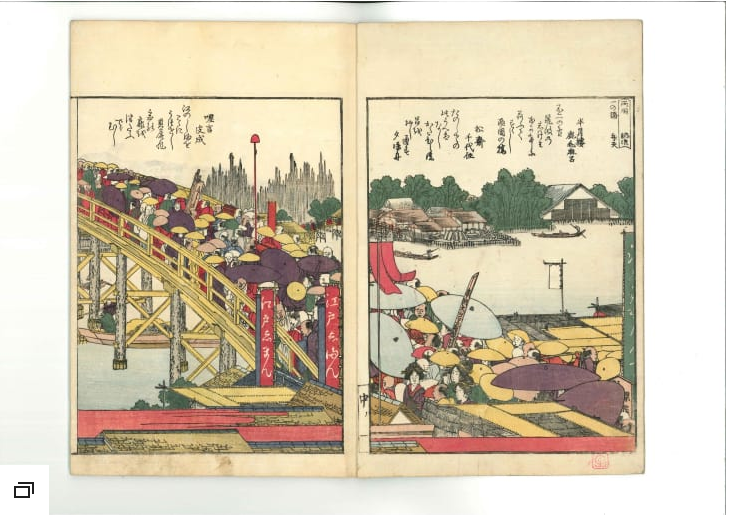
In the earlier stages of his career,Hokusai worked on a number of illustrated books.Credit:Katsushika Hokusai 在他职业生涯的早期阶段,葛饰北斋创作了许多插图书籍。藏家:Katsushika HokusaI
The process is painstaking and demands utmost precision. Takahashi says it takes about a decade to become a true ukiyo-e "shokunin," or master craftsman, and that there are only 25 left in Tokyo today.
"We have to succeed in passing down this wonderful technique of ukiyo-e woodblock prints," she says. "The craftsmen involved in this work are trying their best to teach these skills to the next generation."
Beijing Tour Great Wall Tour Beijing Tour Packages Beijing Day Tour Beijing Group Tour Beijing Winter Tour Car Rental in Beijing Create My Beijing Trip
TB 英语
会员讨论
留下回复
分享您对这篇攻略的问题或补充。评论会在发布前审核。
正在检查会员登录状态...
Plan the trip
Tour Packages for This Guide
Hand-picked routes matched from this article's destination clues, tags, and categories.