
Tour Beijing 中文博客
Uluru-Kata Tjuta National Park (乌鲁鲁卡塔丘塔国家公园)...
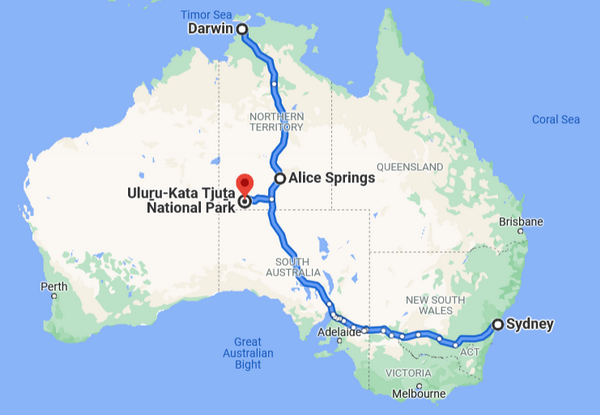
Uluru-Kata Tjuta National Park (乌鲁鲁卡塔丘塔国家公园) 是澳大利亚北部的一个保护区。整个公园包括乌鲁鲁高耸的砂岩巨石(Uluru)和由36块巨岩组成卡塔丘塔岩山( Kata Tjuta )。国家公园位于达尔文(Darwin)以南1943公里,和沿着斯图亚特和拉塞特高速公路在爱丽丝泉(Alice Springs)西南方向450公里处。
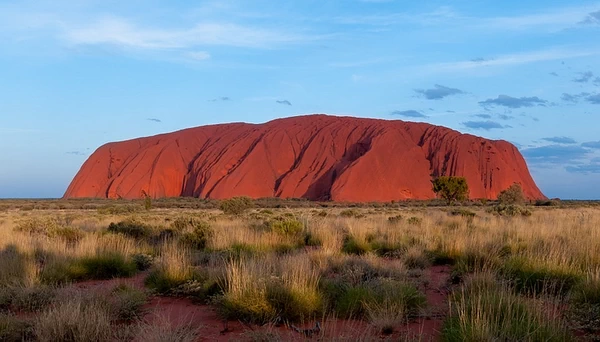
At the sunset, when its wavy walls blaze gold, Uluru looks like a ship on fire in a desert sea. Rising to 348m, the sandstone monolith seizes your eyes from miles away. It is easy to see why it's a sacred site. The Anangu people, the area's original inhabitants, believe it's still home to spirit ancestors like the python woman Kuniya and the hare-wallaby people, the Mala. But it has become an icon to all Australians, a symbolic heart beating in the country's Red Centre.
Until recently, visitors allowed to summit Uluru. This went against the wishes of the Anangu people, who worried about the degradation and climber injuries. But in 2017, the park board voted unanimously to ban the practice.
Luckily there are dozens of far more rewarding things to do. Watch dawn paint a rosy blush on the eastern wall. Take in the spectacle of Kata Tjuta, 36 bulbous red rock domes, about 30km from Uluru.
Join a ranger-guided walk past red gum tree groves and sacred waterholes. Spy peregrine falcons (游隼) wheeling over rocky slopes, and spot kangaroos hopping through the spinifex (三齿稃). Ride a bike - or a segway - on dusty park trails. And learn about the Ananagu, who have cared for Uluru since time out of mind. The cultural centre has a fantastic display on tiukurpa, the creation period, when mythical beings roamed the land. You can also work with local Anangu artists to create Aboriginal-style dot paintings.
While you watch the light play across the rock's vast face, consider this: two thirds of Uluru is actually underground. As the Anangu have always known, there is more to this place than the eye can see. ( Credit: Lonely Planet)
Kata Tjuṯa 卡塔丘塔岩山,另一个官方名字叫 奥尔加山( Mount Olga )。奥尔加 ( Olga ) ,来自 卡塔丘塔岩山最高的山峰 奥尔加山(Mount Olga)。
1993年12月15日,通过了双重命名政策,允许正式名称同时包括传统土著名称和英文名称。因此,奥尔加山更名为奥尔加山/卡塔Tjuṯa。2002年11月6日,根据地区旅游协会的要求,这两个名字的顺序正式颠倒过来,改为Kata Tjuṯa / Mount Olga.
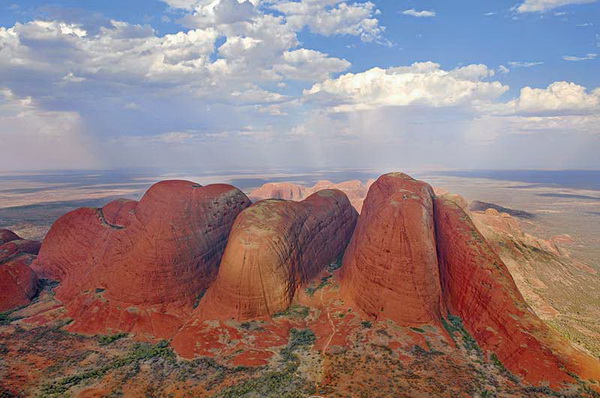
The other name, The Olgas, comes from the tallest peak, Mount Olga. At the behest of Baron Ferdinand von Mueller, Mount Olga was named in 1872 by Ernest Giles, in honour of Queen Olga of Württemberg (born Grand Duchess Olga of Russia, daughter of Tsar Nicholas I). She and her husband, King Charles I of Württemberg, had marked their 25th wedding anniversary the previous year by, amongst other things, naming Mueller a Freiherr (baron), making him Ferdinand von Mueller. The naming was his way of repaying the compliment.
On 15 December 1993, a dual naming policy was adopted that allowed official names consisting of both the traditional Aboriginal name and the English name. As a result, Mount Olga was renamed Mount Olga / Kata Tjuṯa. On 6 November 2002, following a request from the Regional Tourism Association, the order of the dual names was officially reversed, to Kata Tjuṯa / Mount Olga. (wikipedia)
乌鲁鲁卡塔丘塔国家公园位于艾丽斯斯普林斯(Alice Springs)西南450公里,达尔文(Darwin)以南 1943公里 和悉尼西北2800公里。
分享您对这篇攻略的问题或补充。评论会在发布前审核。
Hand-picked routes matched from this article's destination clues, tags, and categories.
结合这些景点信息,把周边看点与线路、目的地指南和旅行文章串联起来。
继续阅读与相似地点、主题和旅行问题相关的北京实用攻略。
订阅北京旅行灵感和线路更新。