

Call a local advisor
+86 186 1196 4400Email our team
[email protected]Tour Beijing Journal
If you are going to visit Huashan Mountain on your Xi'an tour, don’t miss Xiyue Temple ( or Xiyuemiao ), which is only 5km north of Huashan Mountain Visitor
If you are going to visit Huashan Mountain on your Xi'an tour, don’t miss Xiyue Temple ( or Xiyuemiao ), which is only 5km north of Huashan Mountain Visitor Centre. If you buy an entrance ticket for Mt.Huashan, you are entitled to to visit Xiyue Temple free of charge within 24 hours.
That said, I think, Xiyue Temple itself is really worth your time for a look, a big add-on to your knowledge of Chinese traditional culture.
As you know, Mt.Huashan is one of the five sacred Taoist mountains in China. Each of them has a temple to shrine the God of its mountain. As Dai Temple for the God of Mt.Taishan, Xiyue Temple is for the God of Mt.Huashan. “Xiyue” means the West Mountain, one of the five Taoist mountains ( east, west, north, south and central mountains).
Xiyue Temple was originally built by Wu Emperor (134BC) in West Han Dynasty (202BC-09AD). It was relocated to the present place in East Han Dynasty (25AD-220AD). The temple received great expansions in Sui and Tang dynasties (581AD-907AD). It further developed and reached its climax in Ming and Qing Dynasties (1368AD-1911AD). Unfortunately Xiyue Temple was heavily damaged during the Cultural Revolution (1966-1976).
In 1979 with the establishment of Xiyue Temple Relics Administration, Xiyue Temple’s great restoration work started. In 1988, Xiyue Temple was listed as China’s National Key Protection Relics. Now Huashan Scenic Spot has become a AAAAA national scenic area, attracting huge number of tourists home and abroad each year.
Opening Hours: 07:00-19:00 (Mar-Nov) 08:00-18:00 (Dec-Feb)
Entrance Ticket RMB15 per person Note: if you have bought an entrance ticket to Huashan Mountain, then you are entitled to visit Xiyue Temple free of charge within 24 hours.
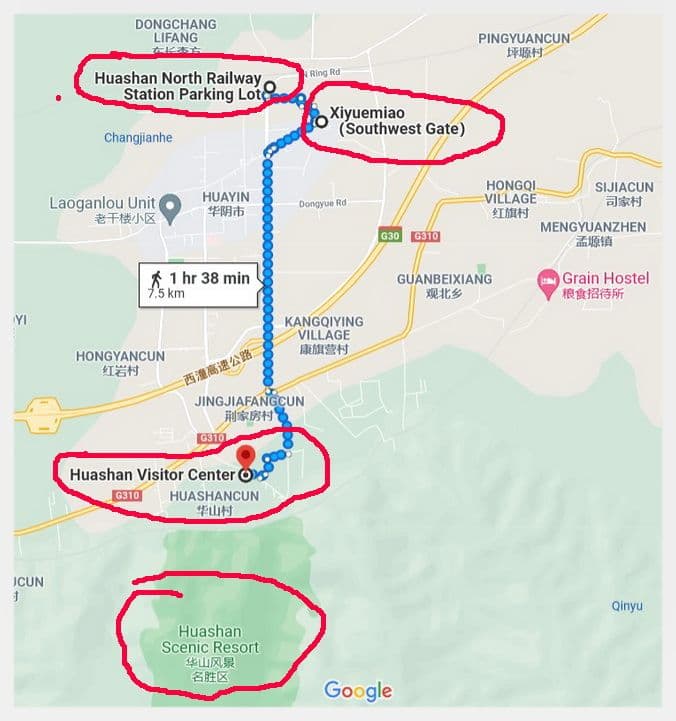
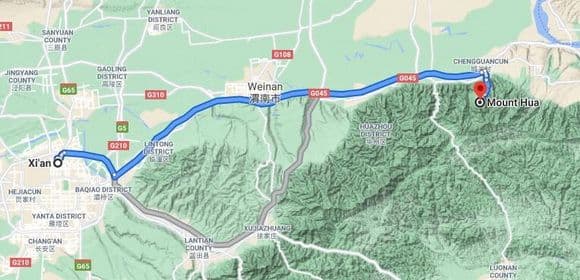
Xiyue Temple is about 2.2km southeast of Huashan North Railway Station and 5km north of Mt.Huashan Visitor Centre.
With an entrance ticket for Huashan Mountain, you are able to use the free shuttle buses running between Xiyue Temple and Mt.Huashan Visitor Centre. From Huashan North Railway Station, you can easily have half an hour’s walk to get to Xiyue Temple.
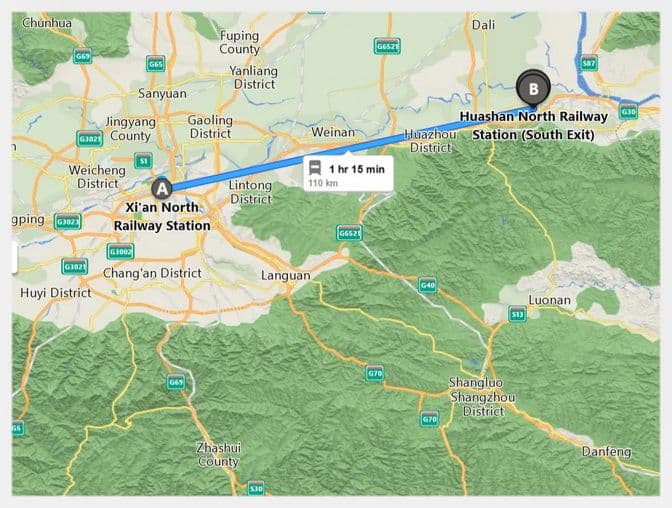
As for how to get from Xi'an, Beijing, Luoyang or other cities to Xiyue Temple, please check outhow to visit Huashan Mountain.
Note: During tourist low season ( Dec, Jan and Feb ), there will be probably no shuttle bus service connecting the north railway station, Xiyue Temple and the tourist center. If so, You need to take a local taxi from the train station to the tourist center (where you purchase your entrance ticket). Taxi fare around 10 yuan or 20 yuan, you should haggle with your taxi driver.
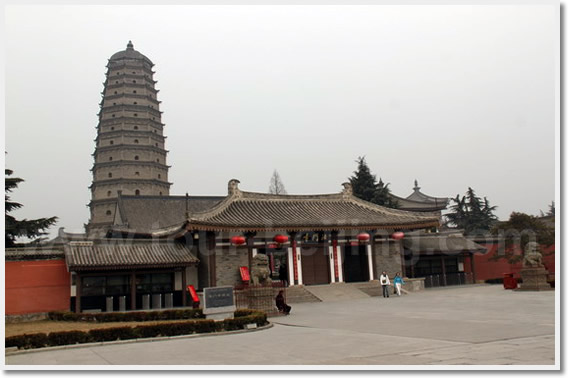
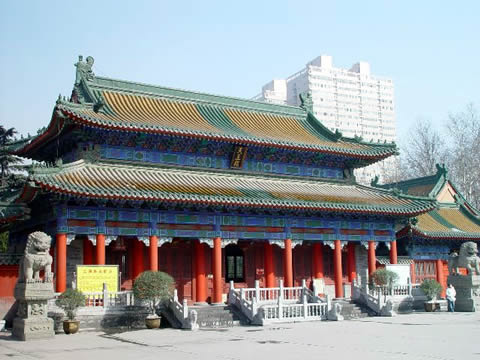
Xiyue Temple used to be an imperial worshipping place for the God of Mt.Huashan. So its buildings had higher level of architectures, quite different from the temples of the local communities or common people. It resembles the greatness of Forbidden City. See the photo below, does it look like Forbidden City? It is Xiyue Temple!
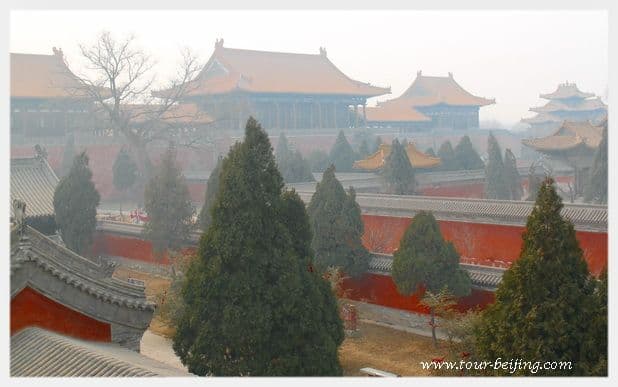
Look like “Forbidden City“?. It is Xiyue Temple! Xiyue Temple faces Mt.Huanshan. Its basic layout goes along the axis from south to north through 6 courtyards including Haoling Gate, Lingxing Gate, Jincheng Gate, Imperial Garden, Wanshou Pavilion etc. The present temple is mainly based on the remnants of Ming and Qing dynasties.
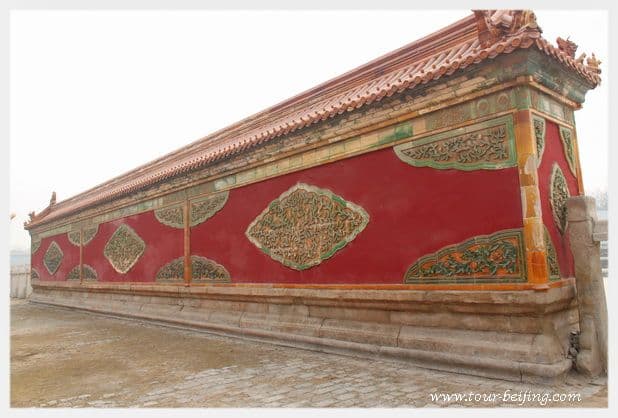
A huge colored glazed screen wall, 30m long and 6m wide, stands in front of the Xiyue Temple Gate.
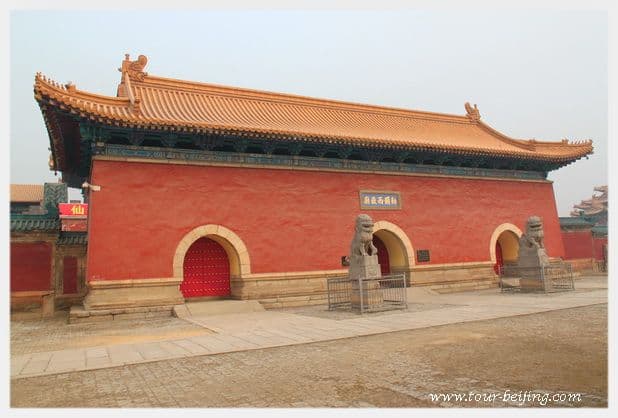
This is the first gate of Xiyue Temple, named “Haoling Gate”, also called “Three Gates”. It was first built in Ming Dynasty (1368-1644). It is brick-stone city wall architecture with coloured glazed tiles in single-eave saddle roof style.
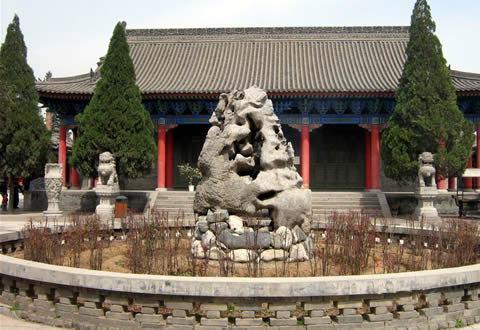
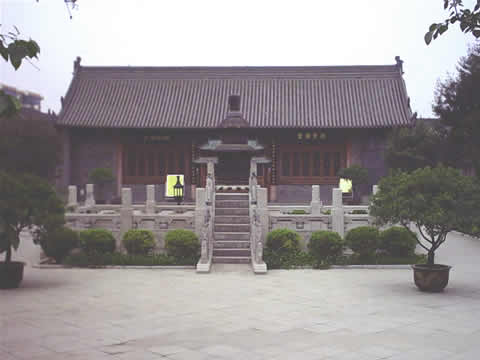
It is the main building of Xiyue Temple with nine rooms in width and five rooms in depth. It was a place for emperors or imperial officials to offer sacrifices to the God of Mt.Huashan.
Lingxing Gate is the third gate of the Xiyue Temple, and an archway-style gate building with three tall gates.
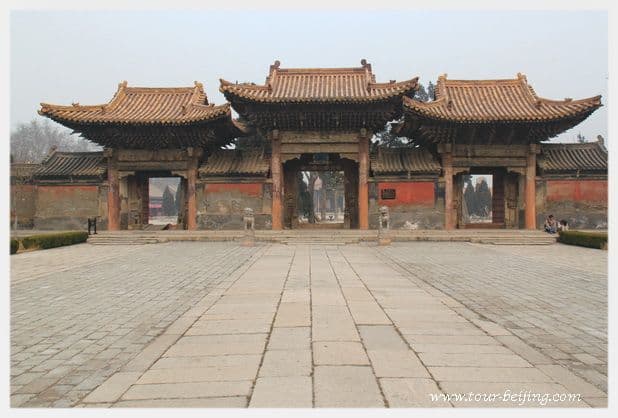
The gate gets its name from Ling Star, in ancient time, people sacrifice the star to pray for good harvest. The gate door shape is like window lattice. so it was renamed as the present one. It was a group of Ming-Qing architectures.
Jincheng Gate is in front of the main building in Xiyue Temple – Haoling Palace. When originally built in Ming Dynasty, it was named Jintian Gate.
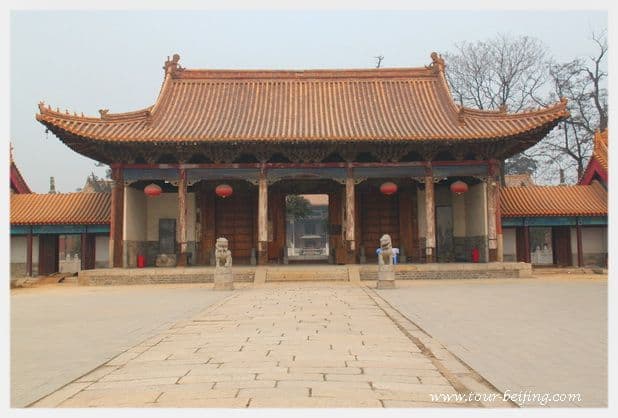
After Zuo Zhongtang, the general of Qing Dynasty suppressed the rebellion, the gate was renamed “Jincheng Gate”, meaning the golden city gate, solid and firm for the area.
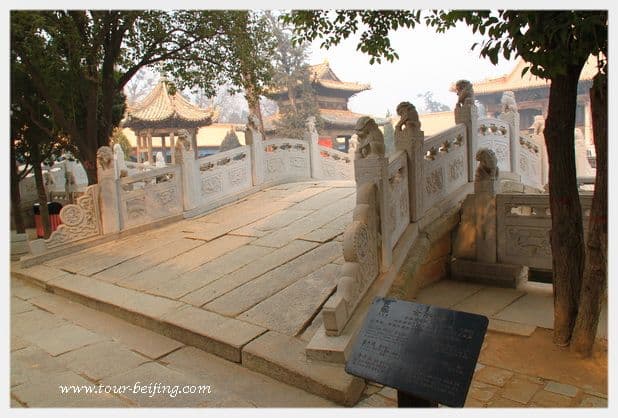
Known as Watching Immortal Bridge, it is a stone arch bridge of three-bridge and 4-ponds structure.
Haoling Palace is the master palace in Xiyue Temple, a leading place to sacrifice the God of Mt.Huanshan, which in the past was done by the numerous emperors in successive dynasties.
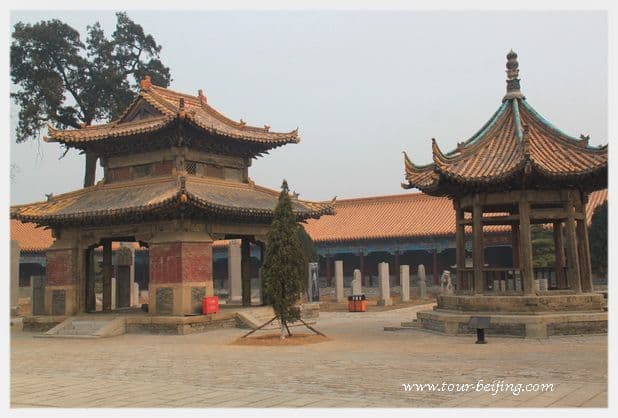
In the palace, the statue of Huashan God and other gods are worshipped here.
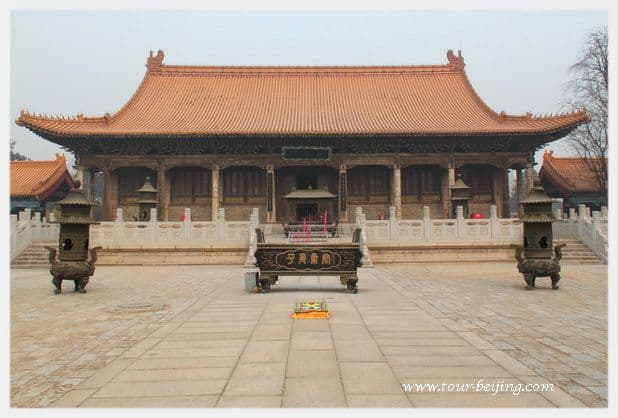
Behind Haoling Palace is the sleep palace for the God of Huashan and his wife. It is a single-eave saddle roof style. It is a place for God to settle down.
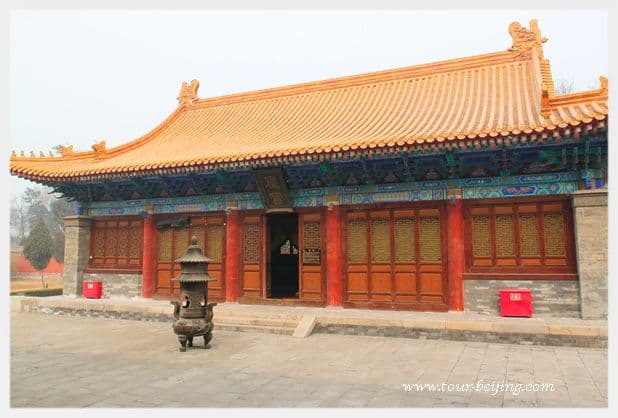
The building houses a stele engraved with the characters written by Emperor Qianlong in Qing Dynasty. The imperial calligraphy was used to pray for rain.
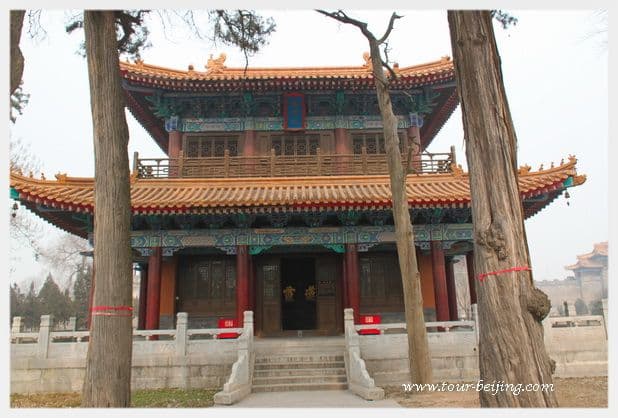
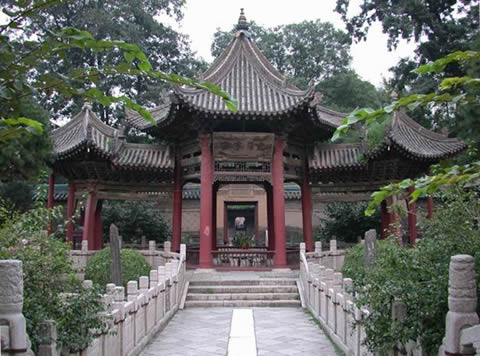
Longevity Tower is the last and the highest building in Xiyue Temple. It is a 3-storey structure built on a high platform. Unfortunately it was destroyed in war. The present tower was rebuilt in 2000.
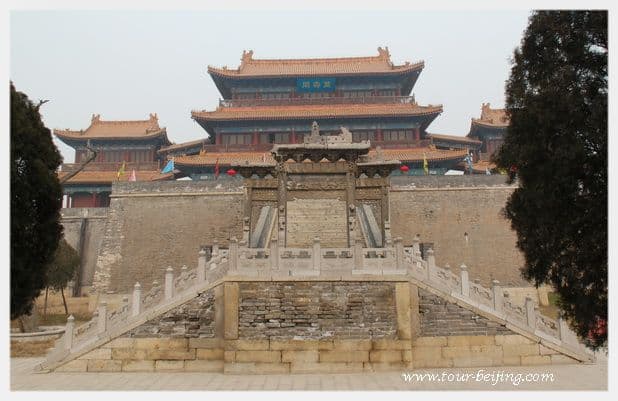
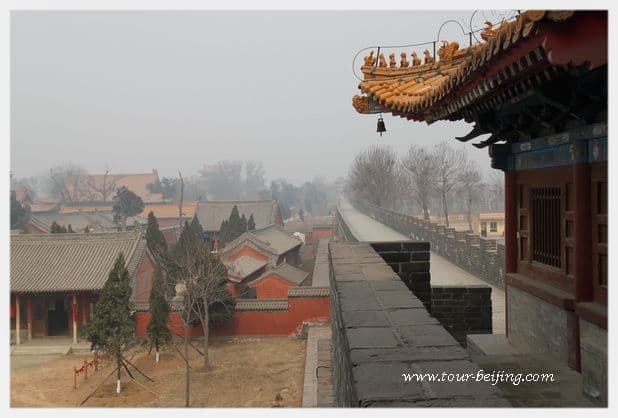
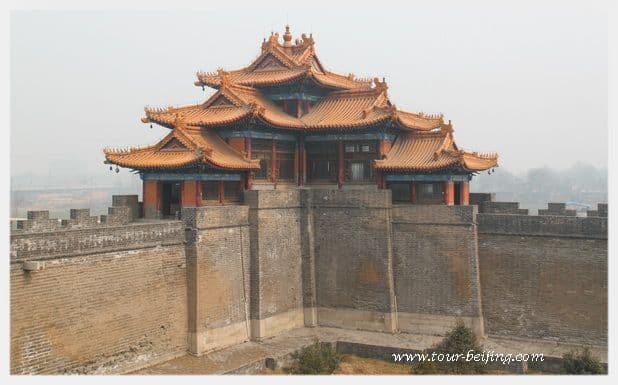
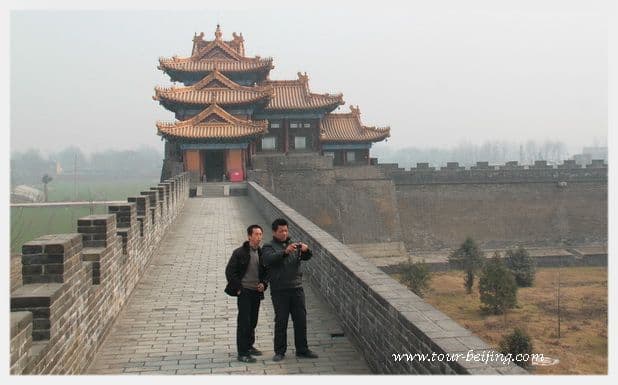
The Xiyue Temple is laid out like a Ming-Qing Palace. It is rectangle in shape with 525m long(north-south) and 225m wide (east-west). Each of its four corners has a corner tower similar to those of Forbidden City.
Hand-picked routes matched from this post's destination clues, tags, and categories.
Use these attraction notes to connect nearby sights with tours, destination guides, and planning articles.
Subscribe to receive Beijing travel ideas and tour updates.



Leave a Reply
Share a question or note for this guide. Comments are reviewed before publishing.