
Call a local advisor
+86 186 1196 4400Email our team
[email protected]Tour Beijing Journal
Plan your Beijing tour? It is worth your time to have a stroll along its...
Plan your Beijing tour? It is worth your time to have a stroll along its ancient city wall within the Ming Dynasty City Wall Relics Park if you want to have a glimpse of Beijing's splendid past.
800 years ago Beijing began its history as a capital city when 1153 AD the Jin Dynasty (1115-1234) moved its capital from Shangjing to Beijing, known as Zhongdu.
The rebuilding of the first capital city began in 1151 with expansion to the east, west and south. The new expanded city, with its splendid buildings in the center measured roughly five kilometres in circumference in today’s southern Beijing.
Mongol armies seized Zhongdu in 1215. In 1271 Kublai Khan formally adopted the new dynasty’s name ” Yuan ” and made Yanjing (Beijing) the capital. Kublai Khan rebuilt the city and gave it the Chinese (Han) name of Dadu or Great Capital.
The construction of Dadu began in 1267 and ended in 1293 The magnificent palaces of the Jin capital Zhongdu were destroyed by fire during the dynastic transition from the Jin to the Yuan. When the capital was rebuilt, the original site of Zhongdu was replaced by a larger rectangular area centered in a beautiful lake region in the northeastern suburbs.
On August 2, 1368, Ming troops conquered Dadu and renamed it Beiping (Northern Peace). Zhu Yuanzhang, the founding emperor of the Ming Dynasty (1368-1644), however, made Nanjing his first capital.
Beginning in 1406, Emperor Yongle of the Ming Dynasty spent 15 years constructing walls 12 meters high and 10 meters thick at their base around the city of Beiping.
The construction of palace buildings and gardens began in 1417 and was completed in 1420. The following year, Emperor Yongle formally transferred the capital from Nanjing to Beiping and, for the first time, named the city Beijing (Northern Capital).
During Ming Dynasty, there were 9 gates in Inner City and 7 gates in Outer Gates. The nine gates of the Inner City wall: Zhengyangmen, Chongwenmen, Xuanwumen, Chaoyangmen, Dongzhimen, Fuchengmen, Xizhimen, Andingmen and Deshengmen; ehe seven outer gates: Dongbianmen, Guangqumen, Xibianmen, Guang’ anmen, Yongdingmen, Zuoanmen and Youanmen.
When the Manchus founded the Qing Dynasty in 1644, they began to build suburban gardens, the most famous of which was Yuanmingyuan. Qing Dynasty left the city wall and palaces built in Ming Dynasty almost intact.
So Beijing’s city plan was first laid out in the Yuan Dynasty. Yet only after massive reconstruction during the Ming and Qing (1644-1911), did the city come as an architectural masterpiece as the capital of the Chinese empire.
Follow me to explore the only remaining city wall relics built during the Ming Dynasty (1368-1644) in Beijing.
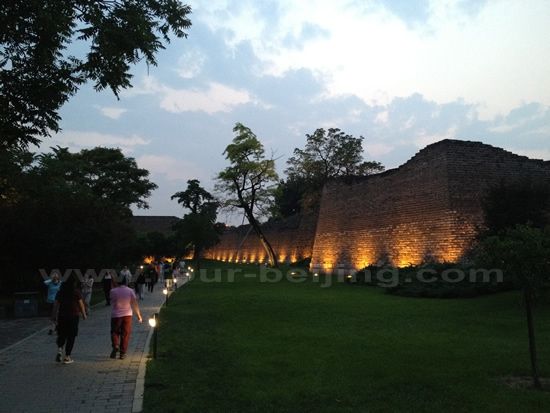
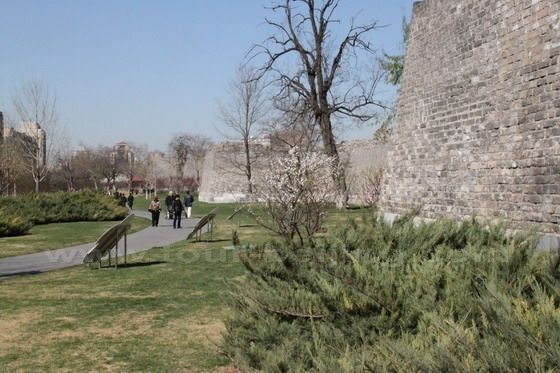
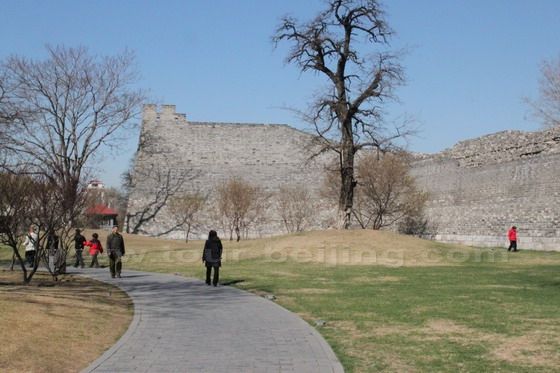
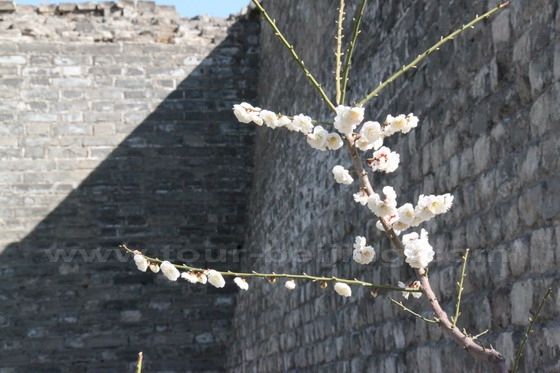
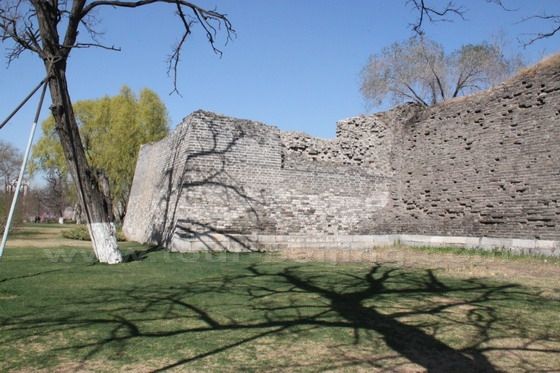
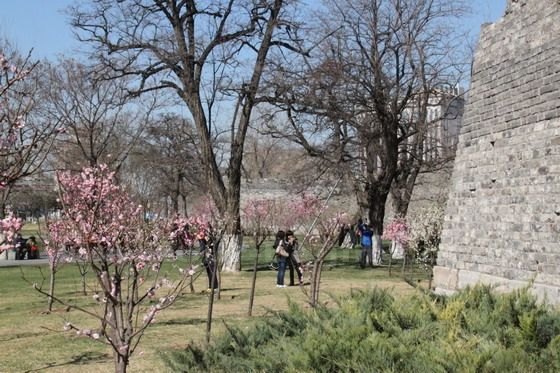
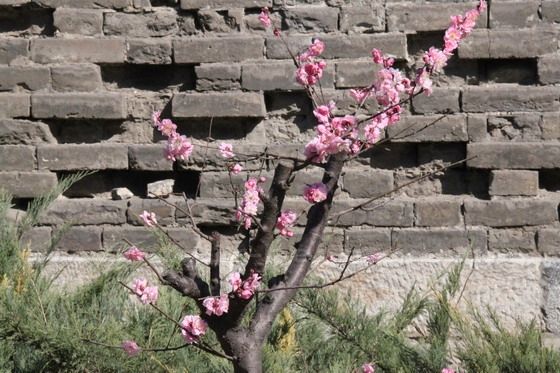
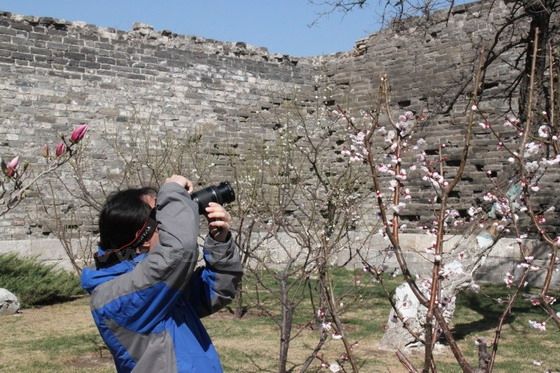
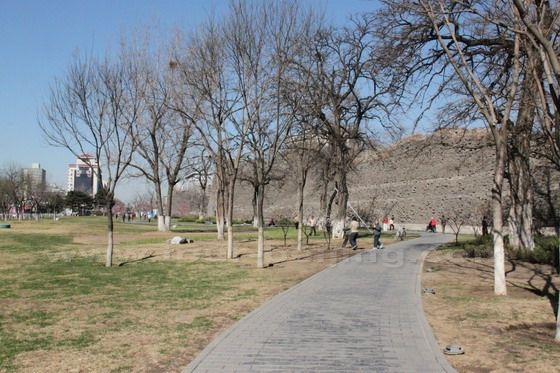
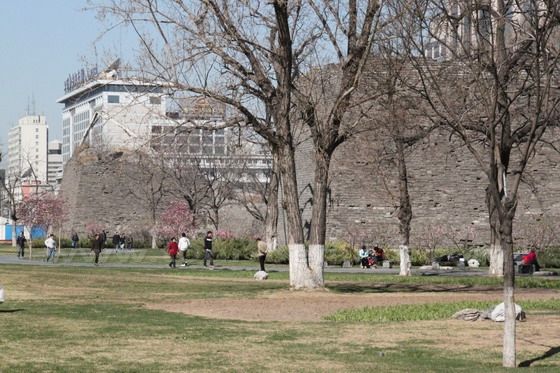
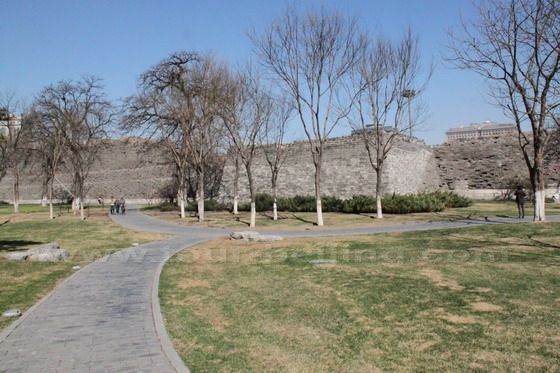
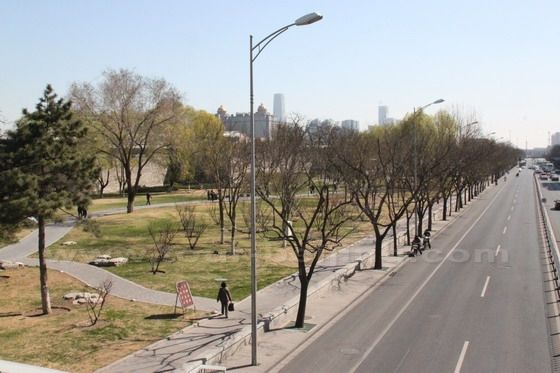
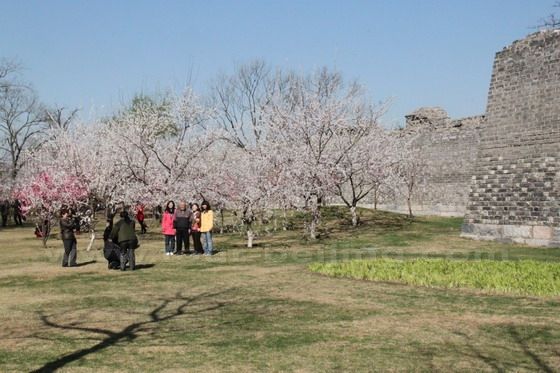
The remnant city wall is about 1.5km in length, which has been transformed into a public park. The Ming Wall Relics Park is composed of two parts: the wall relics itself and the southeast corner tower of the former inner city in Ming and Qing Dynasties.
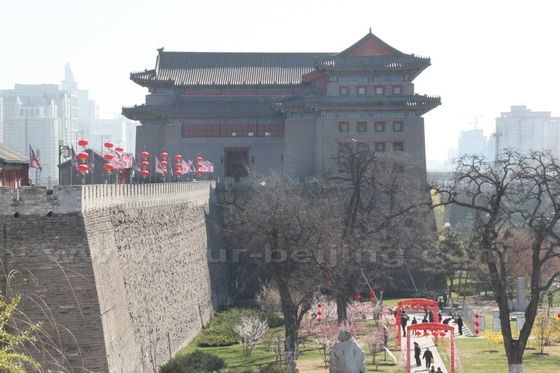
Let’s first visit the Southeast Tower of the Inner City or Arrow Tower (北京内城东南角楼). The tower was first built 1436, the largest of its kind existent in China, now a key historical and cultural site under state protection.
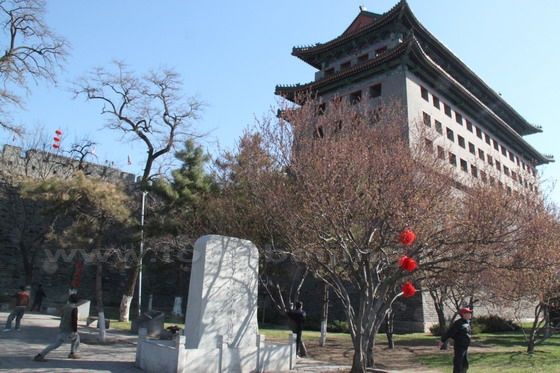
The Southeast Tower (Arrow Tower) is 29 meters high including its 12-meter base and 39.45 meters in circumference.
It has two eaves with one row of arrow windows below the higher eave and three rows of arrow windows below the lower eave, totalling 144 arrow windows.
Now we are at the entrance to the Southeast Tower and the entrance fee is RMB 10 per person. The two Ming soldiers are standing by the entrance.
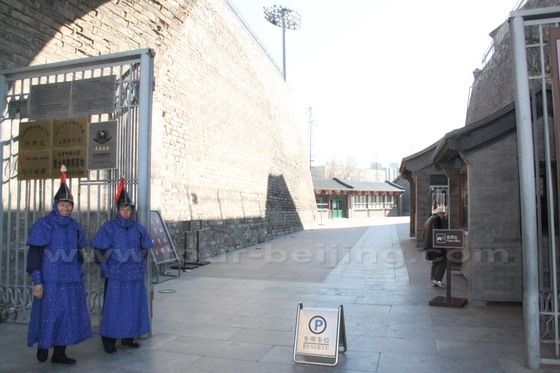
Walking up the flight of stairs before you easily get to the top of the city wall leading to the tower.
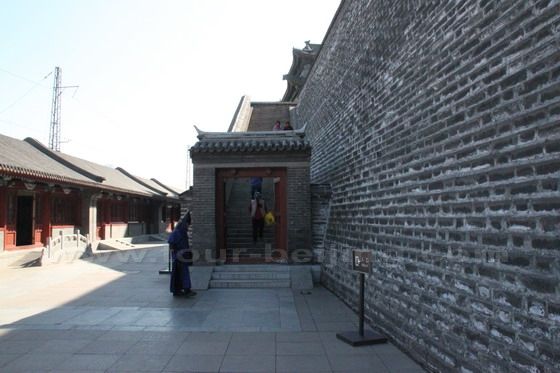
On the wall, you can either visit the Tower on your left side or walk on the remaining city wall on your right side. Let’s turn left and go up the ladders and have a look inside the tower.
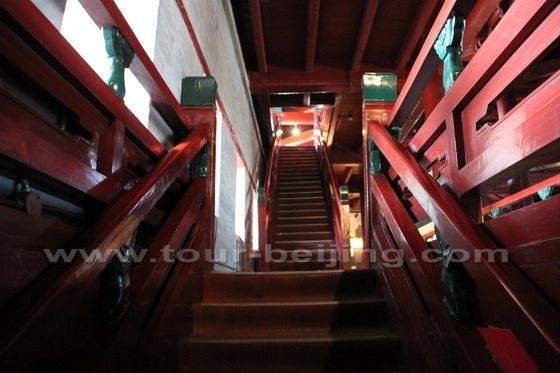
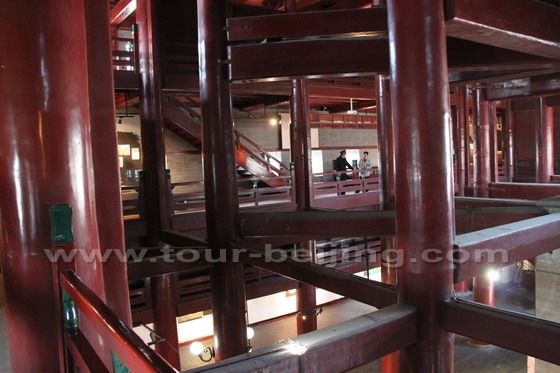
The Chinese traditional architecture
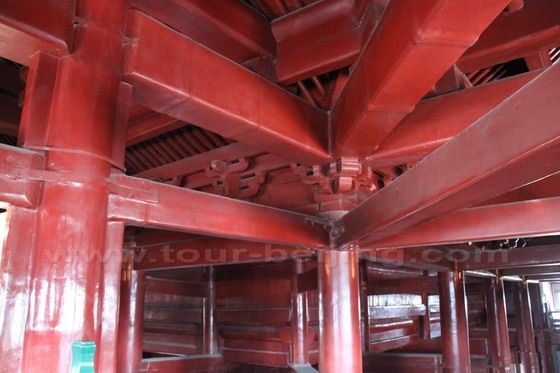
On the second floor, there is an exhibition corridor introducing all the 9 inner gates and outer gates in Ming and Qing Dynasty using pictures and writings.

After visiting the Tower, walk down stairs and go out for a glimpse of the wall on the top. The Ming Soldier is standing by the Duty Room. The duty room is usually built on the terrace of the city wall.
The duty rooms were built in the form of gable roof and the earth beds were for the duty men to sleep. The two existent duty rooms were built in 1988 according to the historical records.In Qing Dynasty, the city was guided by the Eight Banner troops. The Blue Banner defended the city wall area between Chonwenmen and Dongbianmen. This the stone tablet to fix the Blue Banner’s flag.
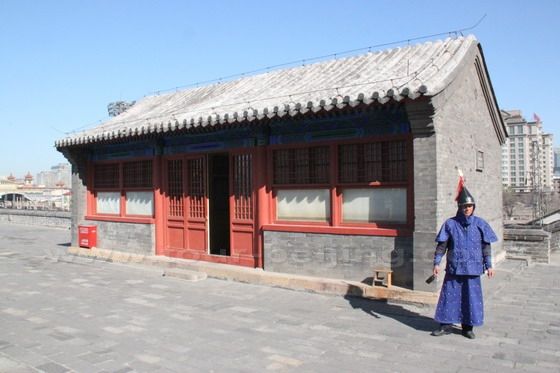
The cannon was built in 1638 with the two duty rooms and the Tower as the backdrop.

On the west tip of the wall on the top, you can clearly see the wall is sandwiched by Beijing Railway Station and the wall park itself.
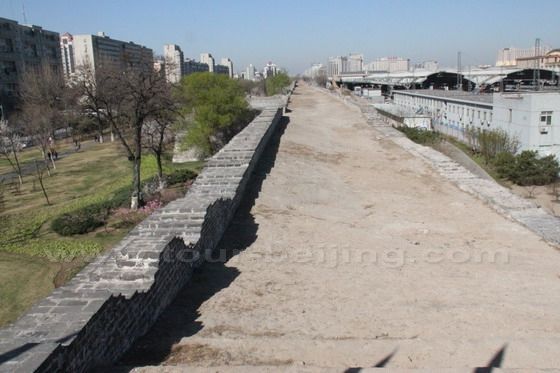
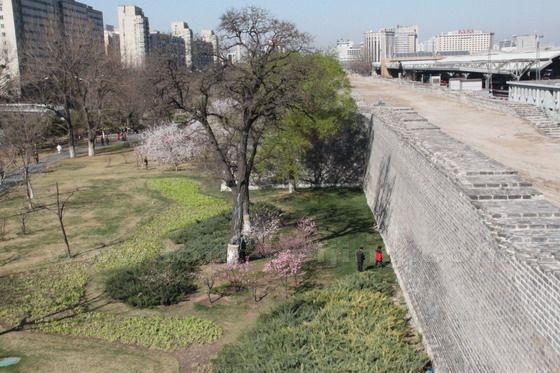
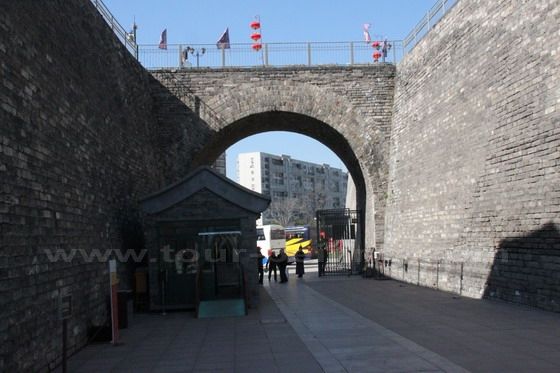
Finishing the wall top tour, I 'm walking out of the tower area though the former railway arch gate.

If you don’t want to go the do-it-yourself route and prefer the hassle-free escorted tours, here are some options for guided tours to Beijing:
Share a question or note for this guide. Comments are reviewed before publishing.
Hand-picked routes matched from this article's destination clues, tags, and categories.
Use these attraction notes to connect nearby sights with tours, destination guides, and planning articles.
Continue planning with practical Beijing guides selected from similar places, themes, and travel questions.
Subscribe to receive Beijing travel ideas and tour updates.