

Call a local advisor
+86 186 1196 4400Email our team
[email protected]Tour Beijing Journal
Plan your Nanjing tour? We’ve made a list of the top 10 attractions in Nanjing, which may be useful for your planning your short trip to Nanjing. Nanjing is
Plan your Nanjing tour? We’ve made a list of the top 10 attractions in Nanjing, which may be useful for your planning your short trip to Nanjing.
Nanjing is the capital of Jiangsu province, China, and has a prominent place in Chinese history and culture. Located in the lower Yangtze River drainage basin and Yangtze River Delta economic zone, Nanjing has always been one of China’s most important cities.
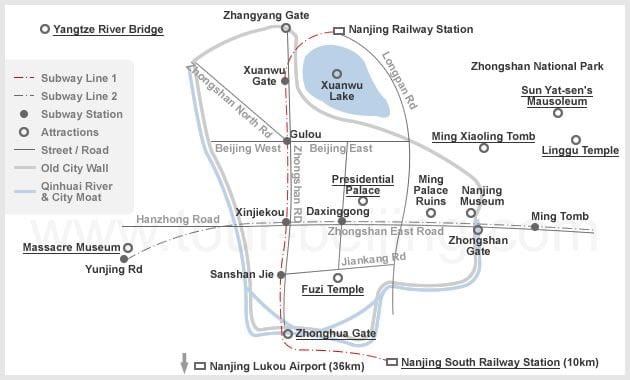
Nanjing, which has been the capital of several Chinese imperial dynasties, is one of the Four Great Ancient Capitals of China. In Nanjing, you can see not only diverse historical and cultural buildings, such as ancient temples, and distinctive garden buildings, but also stunning scenic spots and areas like Qixia Mountain, Qin Huai River, and Xuanwu Lake.
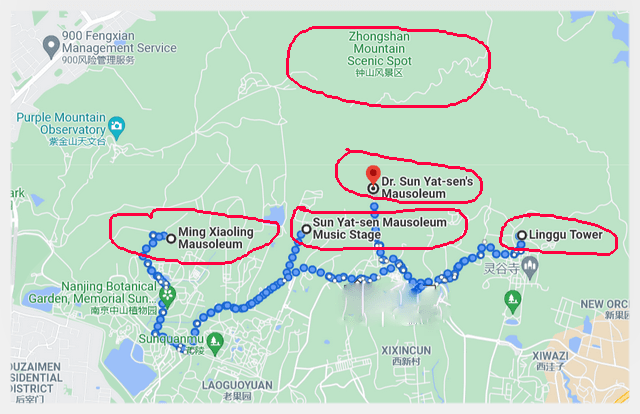
Dr Sun Yat-Sen Mausoleum is situated on Zhongshan Mountain in the eastern suburb of Nanjing, capital city of Jiangsu province. It was built in January 1926 and was finished in 1929.
Dr. Sun Yat-sen was a great forerunner of the Chinese democratic revolution and led by Dr. Sun the Chinese people brought down the corrupt rule of the Qing Dynasty and ended 2000 years of the feudal monarchy system, which led the Chinese peoples in to a new age.
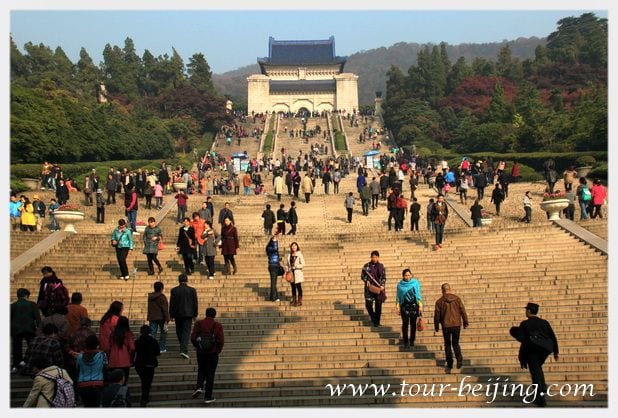
The whole Mausoleum Scenic Area represents an alarm bell as seen from the air, symbolizing the noble spirit and heroic efforts of Dr. Sun Yat-sen’s devotion to the Chinese people, fight of oppression and wining the independence of China.
Entrance Fee: Free Opening Hours: 07:00-18:00 How to get there: take Buses Y1, Y2, No. 9 to the Dr Sun Yat Sen Mausoleum
Now Nanjing Confucius Temple with its old world charming surrounding area is popularly and officially known as Nanjing Confucius Temple-The Qinhuai River Scenic Area (夫子庙秦淮风光带).
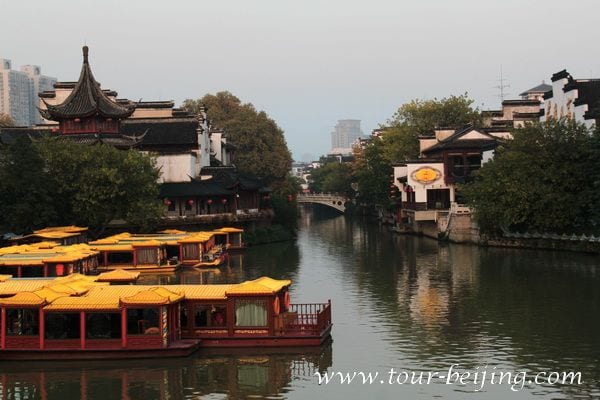
The Qinhuai River is the biggest river in Nanjing It’s also the birthplace of the age-old Nanjing culture. As such, it’s called “Nanjing’s mother river”. Qinhuai River is a branch of the Yangtze River, running about 110 kilometers, a major watercourse around Nanjing City.
How to get there: It is most convenient to take subway line – take subway line 1 and get off at the station of Sanshan Jie (三山街), and exit from Exit 3 (Jinshanjing 金沙井) and walk a few steps to get to the site of the Confucius Temple area.
Take Nanjing Metro Line 3 to Fuzimiao Station, get off at Exit 2 or 3, walk south along Pingjiangfu Road, you can reach Qinhuai Archway, Imperial Examination Museum in the scenic area
Ming Xiaoling Mausoleum is the tomb of the Hongwu Emperor, the founder of the Ming Dynasty. It lies at the southern foot of Purple Mountain, the east of the historical center of Nanjing.
The construction of the mausoleum began during the Hongwu Emperor’s life in 1381 and ended in 1405, during the reign of his son the Yongle Emperor, with a huge expenditure of resources involving 100,000 laborers.
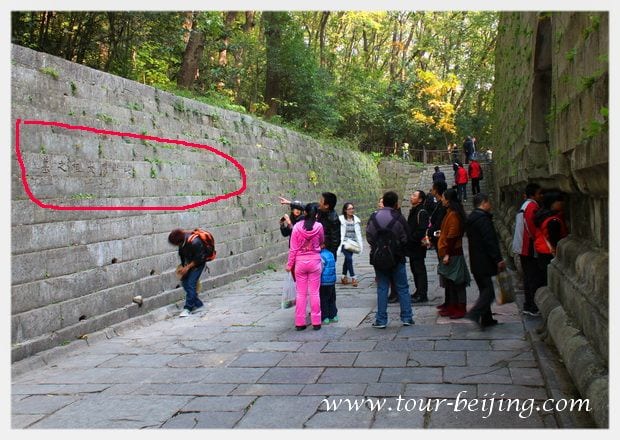
The original wall of the mausoleum was more than 22.5 kilometers long. The mausoleum was built under heavy guard of 5,000 military troops. Ming Xiaoling Mausoleum has a grand scale with stately buildings.
Entrance Fee: CNY 70 Opening Hours: 09:00-21:00 How to get there: take Buses Y 2, Y3 or 20 to Ming Xiaoling Mausoleum
The Presidential Palace is located at 292 Changjiang Road, in the Xuanwu District of Nanjing. It is now a museum, the China Modern History Museum.
The Presidential Palace is currently serving as the Nanjing museum of Chinese contemporary history. The gate of the Presidential Palace is western style with meters-long guard stations in two sides, while the second gate is typical Chinese style.
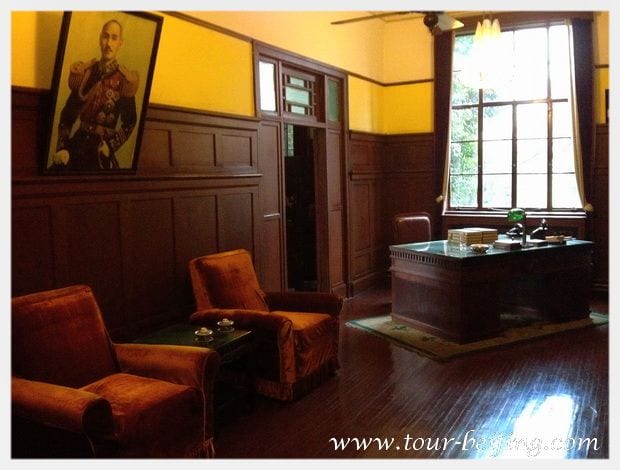
Through the gate there is a long corridor, along which are hall, foreign guests reception room, lobby of president and some offices.
Entrance Fee: CNY 40 Opening Hours: 08:00-17:30 How to get there: take Buses No. 2, 3, 5, 29 or 65 from the downtown area to Presidential Palace
The Nanjing Yangtze River Bridge is the first bridge to be built across the Yangtze River in Nanjing, China. It was completed in 1968 and is the first double-deck, double-track highway and railway bridge.
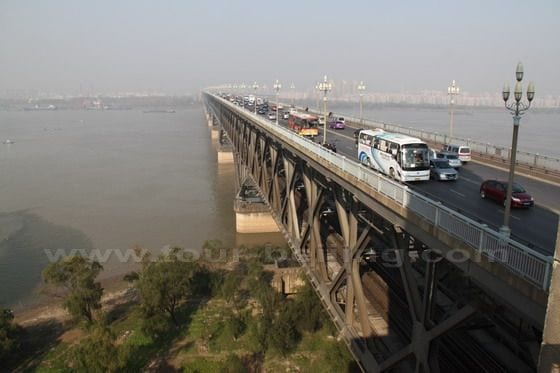
It includes a bus stop and a museum. On the western side of the bridge, a new city is currently being developed. It is 6,772 meters long and has a span of 160 meters—it can take up to 15 minutes to cross during regular traffic periods. Supporters of the Cultural Revolution within China have cited the construction of the bridge as one of the positive legacies of the Revolution.
Entrance Fee: Free of Charge Opening Hours: the whole day How to get there: take Buses No. 12, 15, 67, 69 or 307 to Daqiao Garden, the Suburb Buses to Pukou and Dachang pass Nanjing Yangtze River Bridge
Linggu Temple Scenic Area is named after the namesake temple – Linggu Temple. Now the scenic area is mainly composed of Linggu Temple, Linggu Pagoda (also Linggu Tower), the Beamless Hall, the Entrance Gate, the Paifang and a large screen wall.
From 1928 to 1935 during the Kuomintang Government, the Linggu Temple was gradually built into a cemetery dedicated to the the National Revolutionary Army’s martyrs who gave their lives during the Northern Expedition against the northern warlords and the Anti-Japanese Wall.
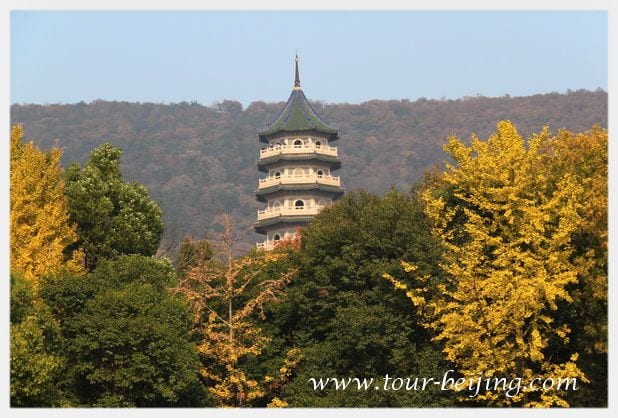
1.Take Nanjing Metro Line 2 and get off at “Zhongling Street” station (钟灵街站) and walk along Linggusi Road for about 15 minutes; 2. Take Bus Line 202 and get off at the stop of “Linggu Temple Park” (灵谷寺公园站) 3. Take the sightseeing bus within the park: 1) Take the sightseeing Bus 5 from “Ming Xiaoling (Zixia Lake)”; s or Sightseeing Bus 4 from “Sun Yat-sen’s mausoleum east” and stop at Linggu Tower. This is the tour bus inside Zhongshan Scenic spot, where there are two kinds, the red train and the blue electric car, the ticket price is 5 yuan.
Entrance Fee: CNY 15 Opening Hours: 08:00-17:00 How to get there: take Buses Y3 or No. 9 to Linggu Temple; or take a taxi to get there
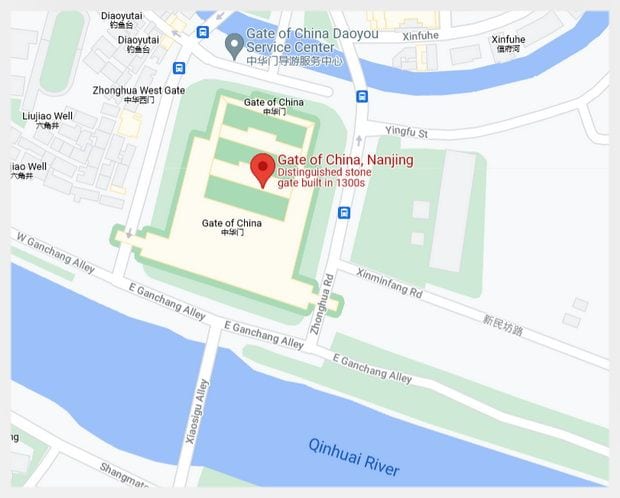
China Gate was a ceremonial gateway in Nanjing, China. It is a renowned ancient city gate in China and the city gate with the most complex structure in the world.
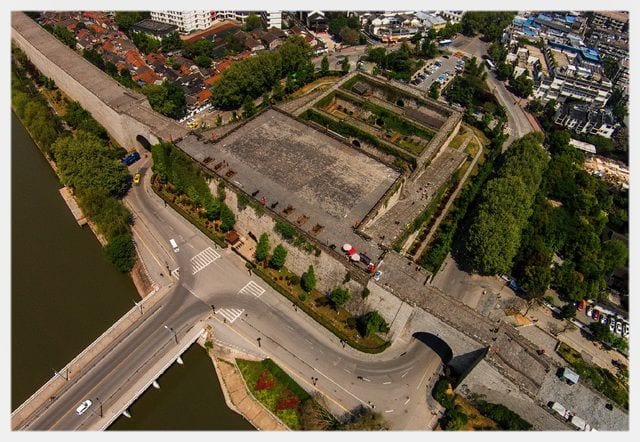
As the gate looks like an urn, it was also initially called Urn Gate. It is the largest of 13 gates measuring 21.45 meters in height, 118 meters in length from east to west and 129 meters from north to south. The Zhonghua Gate records the dynastic cycle of this city. It shows both the prosperity and decadence of Chinese history.
Entrance Fee: CNY 50 Opening Hours: 08:00-17:30
The Sun Yat-sen Mausoleum Music Stage was designed by the well-known artchitects Guan Songsheng and Yang Tingbao.
Its construction was completed in 1933 with the donations from the oversea Chinese in San Francisco and the Liaoning Branch of Kuomintang. The music platform is a supporting project of The Mausoleum of Sun Yat-sen, mainly used for the musical performance and assembly speech during the ceremony to commemorate Dr. Sun Yat-sen.
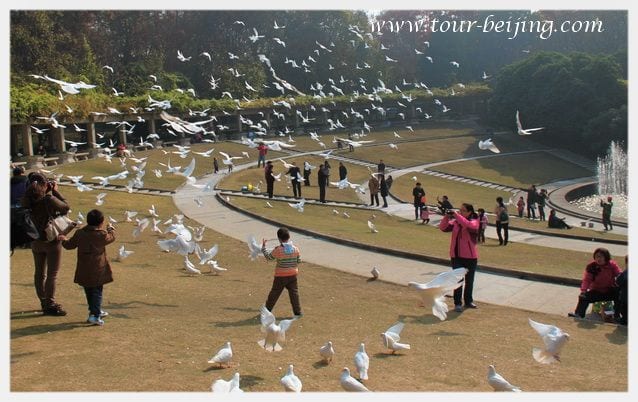
The music stage features the Chinese and Western architectural style in the use of natural environment, as well as the layout and facade, fully absorbing the characteristics of ancient Greek architecture, and the use of Chinese jiangnan classical garden form as well.
Nanjing Museum is located inside the Zhongshan Gate of Nanjing City. The complex of buildings represents an amalgamation of east and west, with the great hall copying the style of a Liao-dynasty palace.
With an area of 70,000 square meters, Nanjing Museum is one of the largest museums in China. The Museum currently holds some 400,000 objects in its collections, among which are some of the most famous objects in China. The Museum applies modern scientific methods of conservation, and is active in displaying its holdings, having mounted some 236 exhibitions.
Entrance Fee: Free ( but need to book your free ticket in advance) Opening Hours: 08:00-18:00 How to get there: take Buses Y1, Y2, No. 59, 29, 5, 9, 51 or 55 and get off at Zhongshanmen Station
Situated at the foot of Mt. Zhongshan in Nanjing, Jiangsu Province, Xuanwu Lake is a beautiful scenic spot protected by China. It is also one of the three most famous lakes in Nanjing.
The history of Xuanwu Lake can be traced back to the Pre-Qin period. The lake covers an area of 444 hectares with a coastline of 15 kilometers in circumferences.
Xuanwu Lake is best seen in combination with the Ming city wall bordering the park to its east and south and the Ji Ming Temple just outside Jie Fang Men at Xuanwu Lake’s southwestern edge. There are five isles in the lake: Huan Isle, Ying Isle, Liang Isle, Cui Isle and Ling Isle. |
Entrance Fee: Free Opening Hours: 07:00-21:00 How to get there: take a boat at the opposite of Nanjing Train Station; or take Buses Y1, No. 3, 25, 30, 35 or 38 to Xuanwu Lake Park
Hand-picked routes matched from this post's destination clues, tags, and categories.
Use these attraction notes to connect nearby sights with tours, destination guides, and planning articles.
Subscribe to receive Beijing travel ideas and tour updates.




Leave a Reply
Share a question or note for this guide. Comments are reviewed before publishing.