
Call a local advisor
+86 186 1196 4400Email our team
[email protected]Tour Beijing Journal
On the morning of Feb 13, 2011, after successfully crossing the...
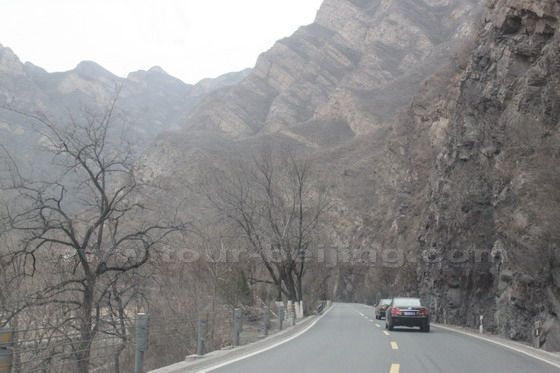
On the morning of Feb 13, 2011, after successfully crossing the Changyuchgeng Village and hiking the mountain up to the Changycheng Great Wall, we drove back along the zigzag mountain roads and reached Nankou Town, where we had a late and simple lunch.
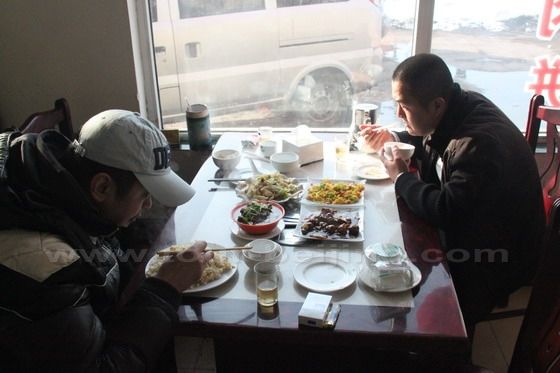
Recharged and refreshed up, we were again on our road and drove to Wang Bao Chuan Village. We had planned to have a hike from Wangbaochuan Village to Haizi Village.
Wang Bao Chuan Village is located 5km northeast of Changling Town of Changping District on the Changjiu Highway ( Changping to Jiuduhe ).
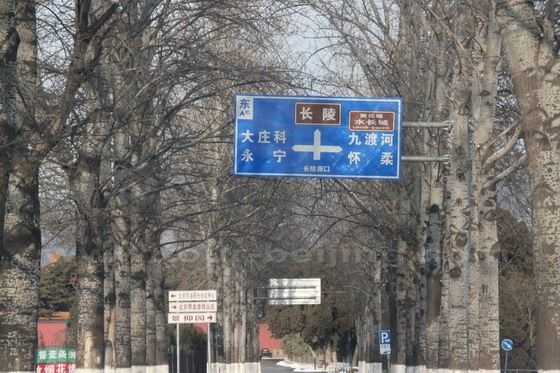
Wang Bao Chuan Village is under the jurisdiction of Changling Town of Changping District. The Changjiu Highway links the village with the outside world. Wangabochuan Village is surrounded by the mountains on its four sides with a spring stream passing through the village.
It boasts lush trees, pure air and cool and sweet spring water with the vegetation coverage rate of 95%, hence the nickname of "Longevity Village".
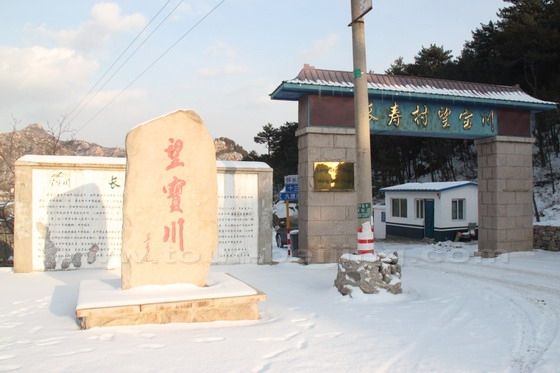
When we got to the entrance to Wang Bao Chuan Village, it was almost 4:00pm. We drove through the gate and not long, we were in the heart of the village.
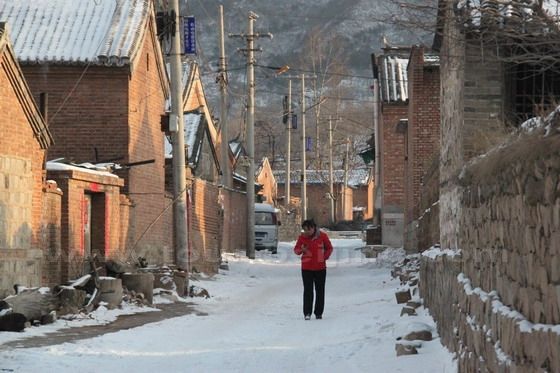
Hai Zi Village is to the east of Wang Bao Chuan Village. Normally it takes 1 and half hours to hike from Wangbaochuan Village to Haizi Village.
It was very easy to find the right road leading to Hai Zi Village. On our left side a cement road leads to the valley in the east, the only road to Haizi Village.
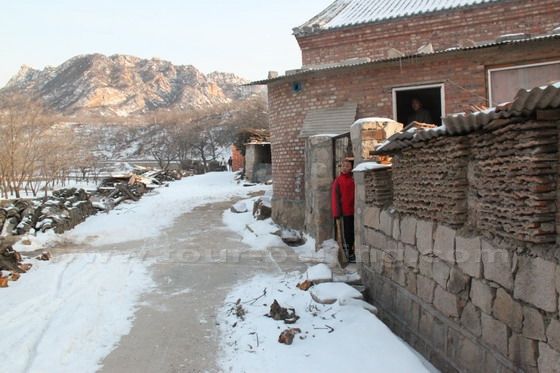
Very easy walk on the cement road for a while.
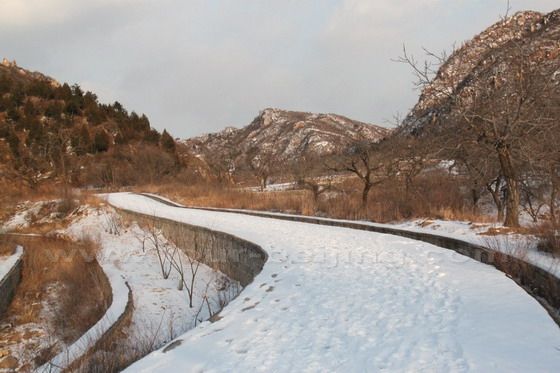
Not long after, we found ourselves walking on a dirt, bushy and stony mountain road in the valley.
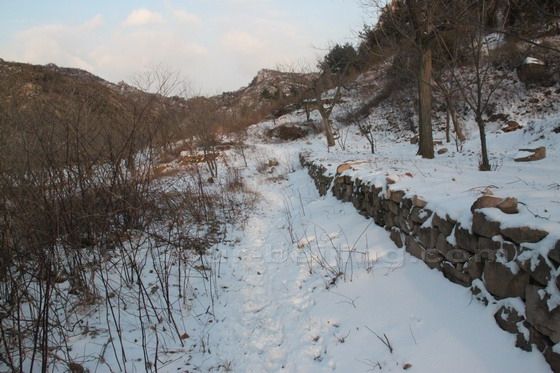
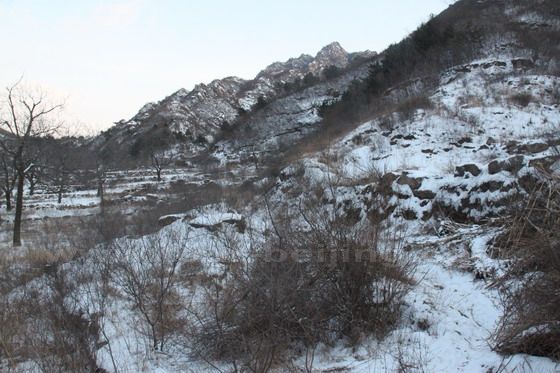
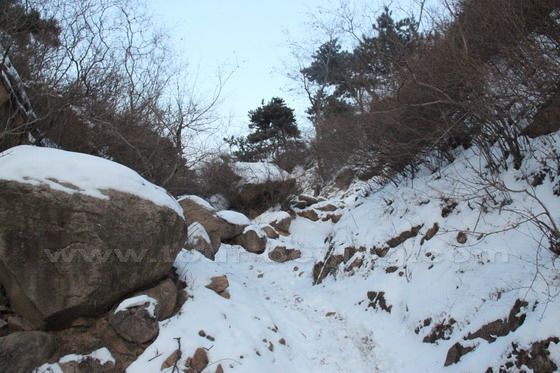
In the middle of our hike, we saw a shrine on the stone mound accompanied by a big pine tree.
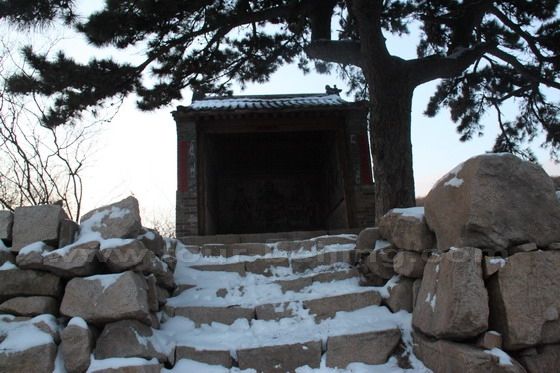
We prayed and stood here for a while overlooking the Hai Zi Village below.
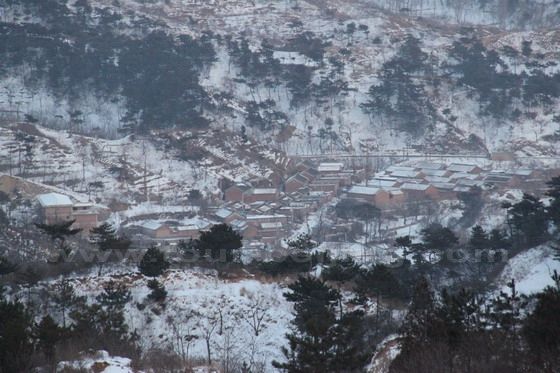
Again we embarked on our road to the village. The road here was very bushy, sandy and teamed with rocked of different sizes.
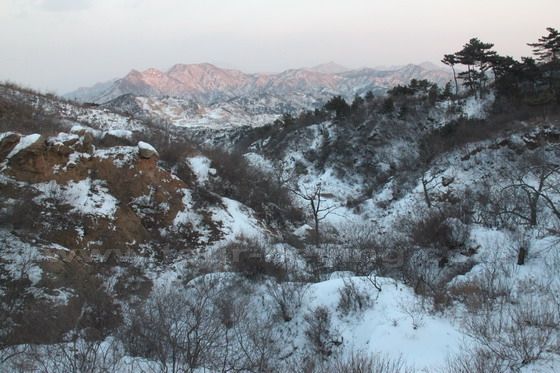
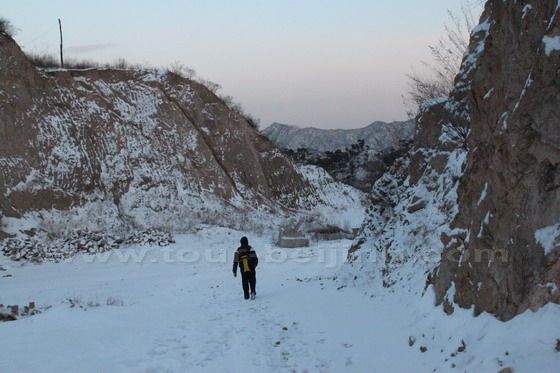
We were marching towards Hai Zi Village. Haizi Village is under the jurisdiction of Xingshou Town of Changping District.
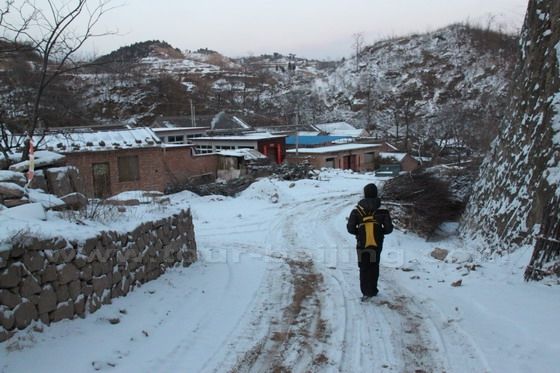
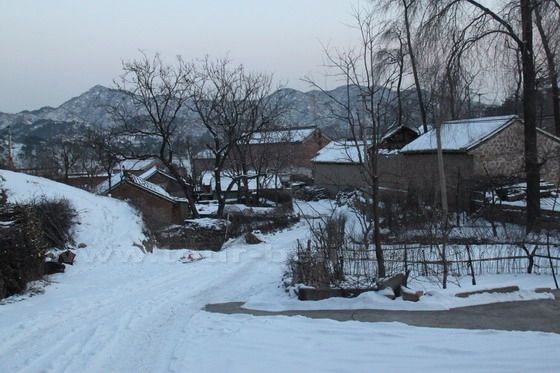
Our driver - Mr. Zhou was waiting by the entrance to Hai Zi Village.
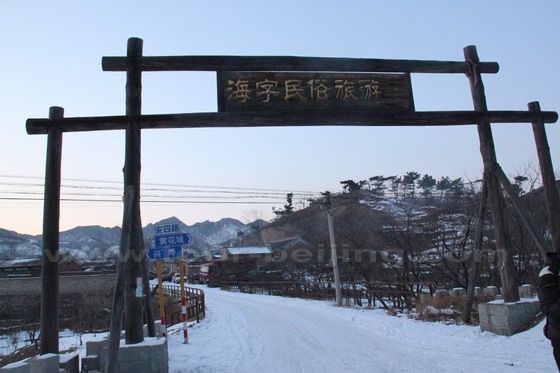
Now it was almost 5:30pm, a bit dark. We continued to drive to Yinshan Pagoda Park ( or Yinshan Talin, Yinshan Pagoda Forest ), not far from Hai Zi Village.
We grabbed a few pictures of the pagodas before it was totally dark outside.
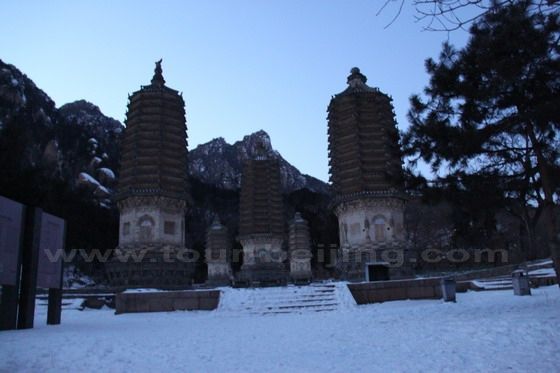
During the Liao Dynasty (907-1125) and Jin dynasty (1115–1234), there were many Buddhist temples built around Yinshan. Today only seven pagodas still stand, five built during the Jin Dynasty and two during the Yuan Dynasty. All five Jin Dynasty pagodas are multi-eaved brick structures on huge Sumeru platforms.
The two Yuan Dynasty (1279-1368) pagodas are smaller, but each has its own characteristics. One is a multi-eaved pagoda with brick brackets under the eaves. Its inward-curving lines give it a special elegance. The other is a combination of multi-eaved and inverted-bowl styles.
Tip: Hassle-free Great Wall Guided Tours Don’t want to go the do-it-yourself route? No worries, We at Tour Beijing have some options for guided tours to Great wall Tours:Share a question or note for this guide. Comments are reviewed before publishing.
Hand-picked routes matched from this article's destination clues, tags, and categories.
Use these attraction notes to connect nearby sights with tours, destination guides, and planning articles.
Continue planning with practical Beijing guides selected from similar places, themes, and travel questions.
Subscribe to receive Beijing travel ideas and tour updates.