

Call a local advisor
+86 186 1196 4400Email our team
[email protected]Tour Beijing Journal
Plan your Suzhou tour? Suzhou has four most famous classical gardens listed as World Cultural Site which includes Canglang Pavilion (沧浪亭). Canglang Pavilion is
Plan your Suzhou tour? Suzhou has four most famous classical gardens listed as World Cultural Site which includes Canglang Pavilion (沧浪亭). Canglang Pavilion is typical of the classical gardens in Song Dynasty (960 – 1279), the oldest private garden in Suzhou. The other three world-heritage crowned gardens are Humble Administrator’s Garden, Lingering Garden , and Lion Grove Garden.
Canglang Pavilion literally means “Surging Waves Pavilion”. The garden was built in the year 1044 by the famous poet named Su Shunqing (1008–1048) in Song Dynasty.
The garden features the Song Dynasty layout and design. The name Canglang originates from a verse in a poem written by Qu Yuan (340 BC-278 BC). Qu Yuan wrote the verse to allude to an honest official who rather resign from his office than do in a corrupt way.
Su Shunqing (苏舜钦) used the verse to express his emotion after his removal from office. In Northern Song Dynasty ( 960 -1279). In 1044, He was removed from office and and settled down in Suzhou. He later bought the abandoned the land and built a garden named "Canglang Pavilion". He often sailed a boat for playing. Often with Ouyang Xiu, Mei Shengyu and so on to write poems. Since then the name of Canglang spread.
The ownership of the garden changed many times and went through a bunch of renovations and revamping. The garden was opened to the public in 1955 and in 2000 it was listed the UNESCO world cultural heritage site together with other three classical gardens in Suzhou.
The Surging Waves Pavilion is located at No.03 Cangang Pavilion Street, Renmin Road, Gusu District in the south of the ancient city of Suzhou. Canglang Pavilion is often put together with Master of the Nets Garden on a same day trip since the two gardens are within walking distance.
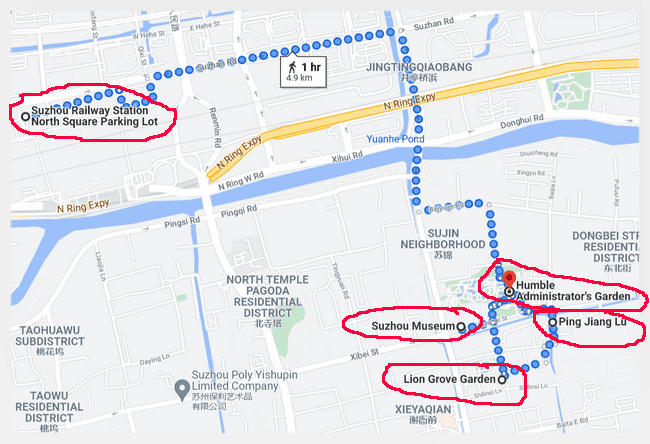
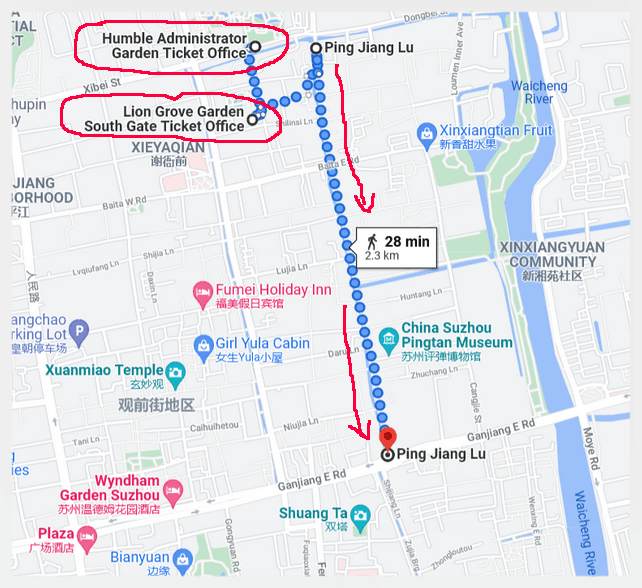
The major classical attractions are located the old area, or particularly within the ancient city moat in Suzhou, as you see the Google Map below. And Canglang Pavilion is just a 16-minute way to the west of Master of the Nets Garden.
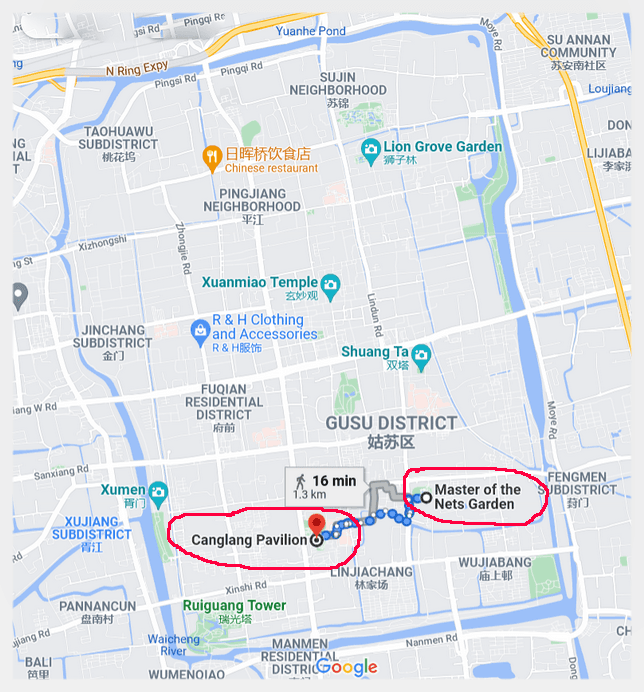
Public transport: Bus lines going to Canglang Pavilion:
Entrance fees: RMB 20 (April 16 – October) RMB 15 (November – April 15) Enquiry Tel: 0512-65293190
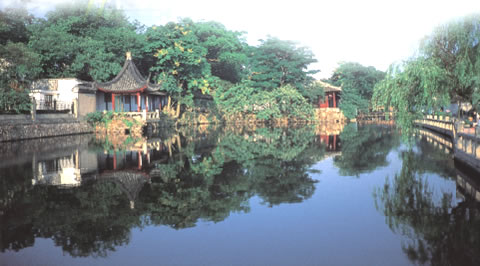
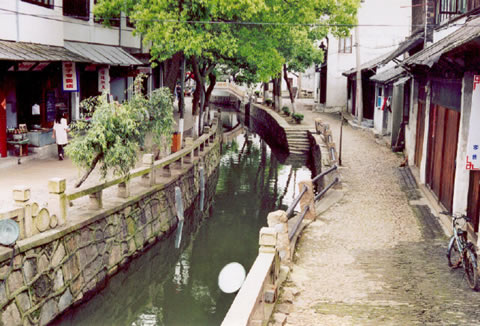
The garden art of Canglang Pavilion is unique. Before entering the garden gate, there is a pool of green water set on the northern entrance to the garden and people have to walk across a bridge to enter the main gate (the north gate).
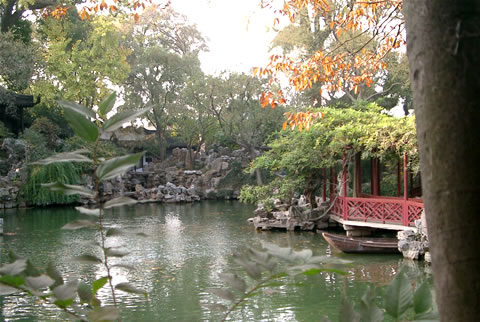
The garden is set on a hill in the centre topped by the famous Canglang Pavilion after which the garden is named.
The hill is surrounded by the small lake lined with rockeries and the old trees.
The garden lacks the northern wall, which gives people an illusion of space by borrowing scenes from the lake outside the north of the garden.
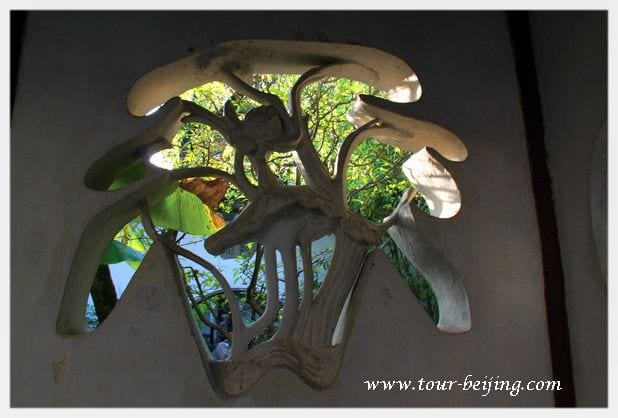
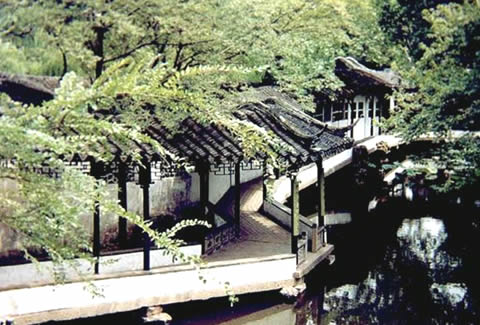
The wave-type long corridor with leaky windows frames beautiful views from the outside of the garden. The verdant bamboo garden is one of the highlights in Canglang Pavilion. The bamboo garden boasts of over 20 kinds of bamboos.
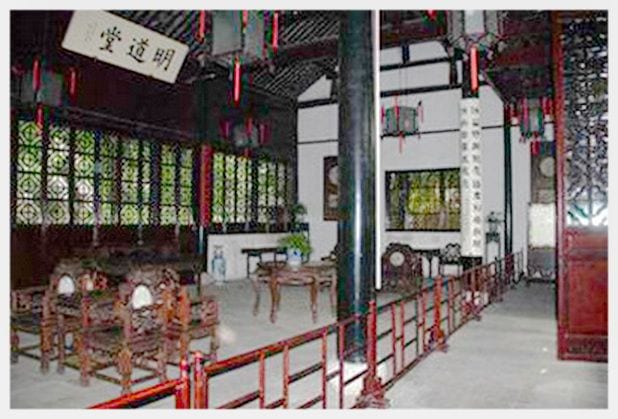
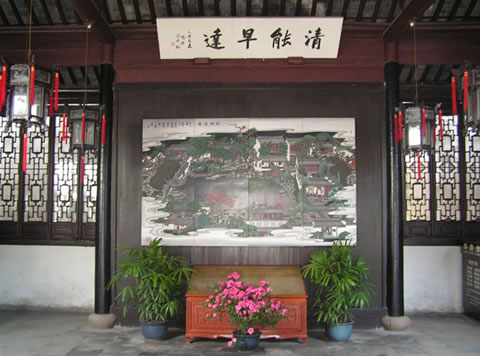
The largest building in the garden is Mingdao Hall (明道堂) with in the southeast of the garden. The hall has some impressive furniture made from the gnarled roots of Banyan trees.
Ming Dao Hall was created by Zhang Shusheng (张树声), the governor of the twelfth year of Tongzhi in the Qing Dynasty. Used to be the venue for meetings and lectures. Now it is an open venue for religious activities attached to a temple.
Follow me to have a virtual tour of Canglang Pavilion.
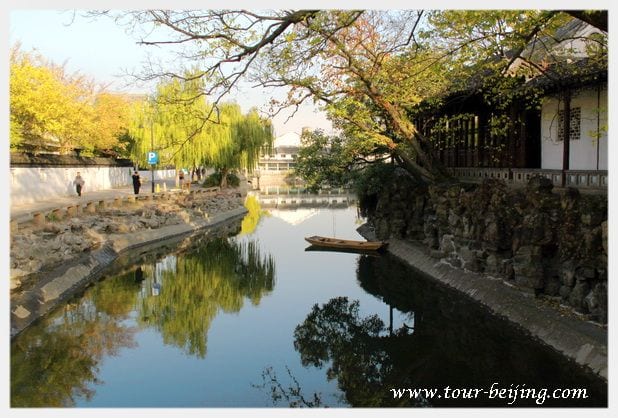
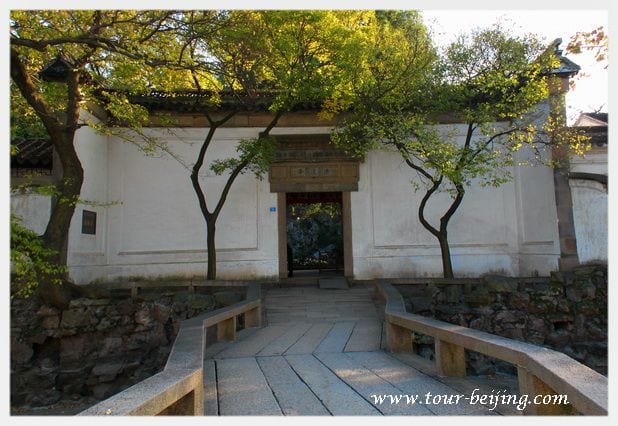
The north of the garden has no wall, but a long corridor with leaky windows framing the outside lake views.
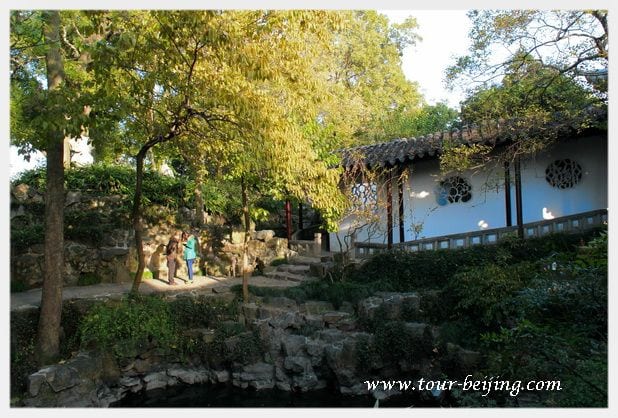
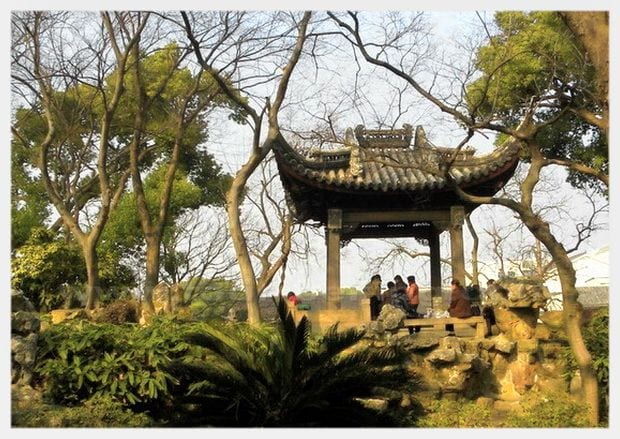
Cuilinglong Pavilipn or the Bamboo Pavilion in the garden has three rooms and several side rooms of different sizes. It was given its name by Han Shizhong (韩世忠) in the early shaoxing period of the Southern Song Dynasty, and he took the name from a poem written by Su Zi (苏子) that "The autumn color enters the forest and becomes dark and red, while the sunlight shines through the green and emerald bamboos".
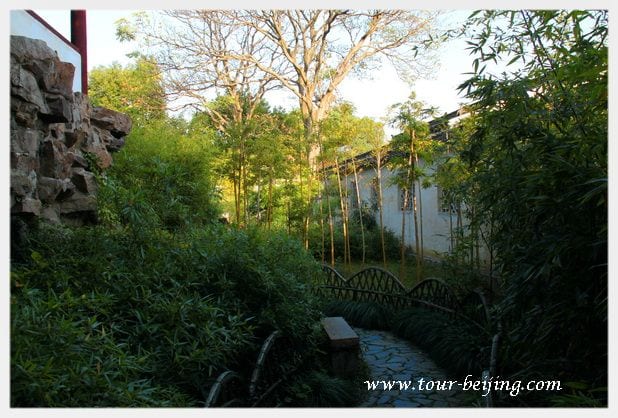
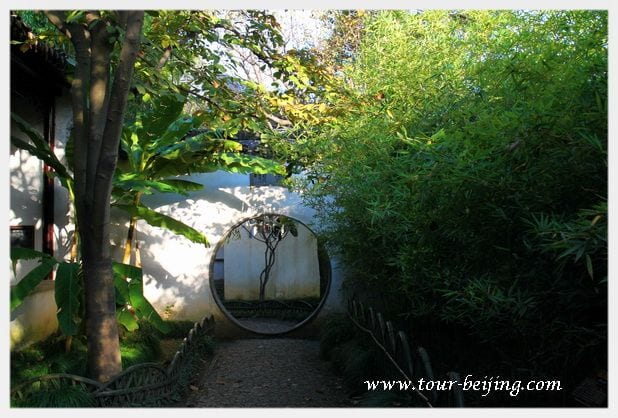
Ming Dao Hall was created by Zhang Shusheng (张树声), the governor of the twelfth year of Tongzhi in the Qing Dynasty. Used to be the venue for meetings and lectures. Now it is an open venue for religious activities attached to a temple.
Hand-picked routes matched from this post's destination clues, tags, and categories.
Use these attraction notes to connect nearby sights with tours, destination guides, and planning articles.
Subscribe to receive Beijing travel ideas and tour updates.


Leave a Reply
Share a question or note for this guide. Comments are reviewed before publishing.