

Call a local advisor
+86 186 1196 4400Email our team
[email protected]Tour Beijing Journal
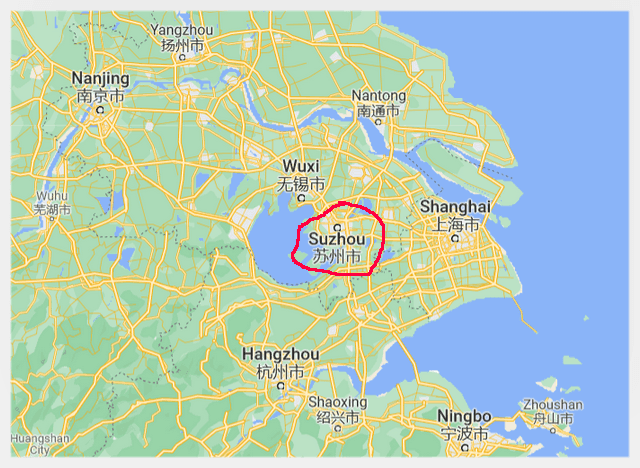
Plan your Suzhoutour? Visiting the World Cultural Heritage crowned classical gardens in Suzhou is a must for many first time visitors. The Lion Grove Garden
Plan your Suzhoutour? Visiting the World Cultural Heritage crowned classical gardens in Suzhou is a must for many first time visitors. The Lion Grove Garden (狮子林) is one of the most famous gardens in Suzhou and the other three are the Humble Administrator’s Garden, Canglang Pavilion and the Lingering Garden.
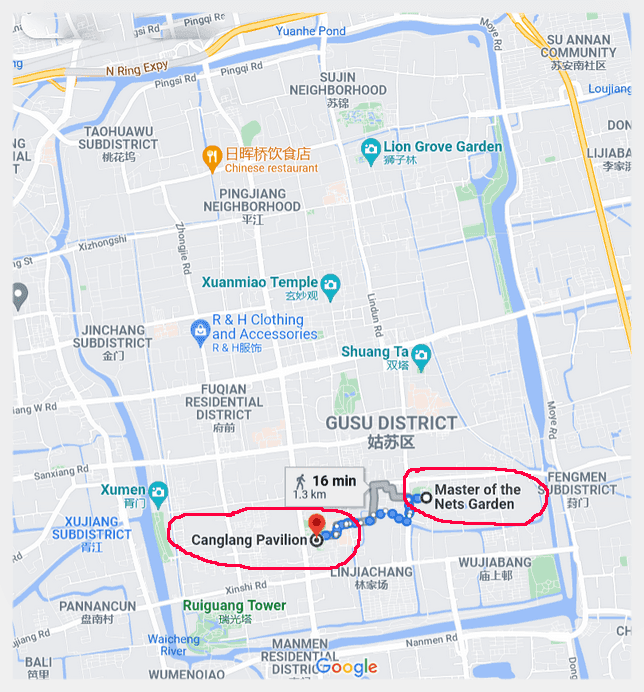
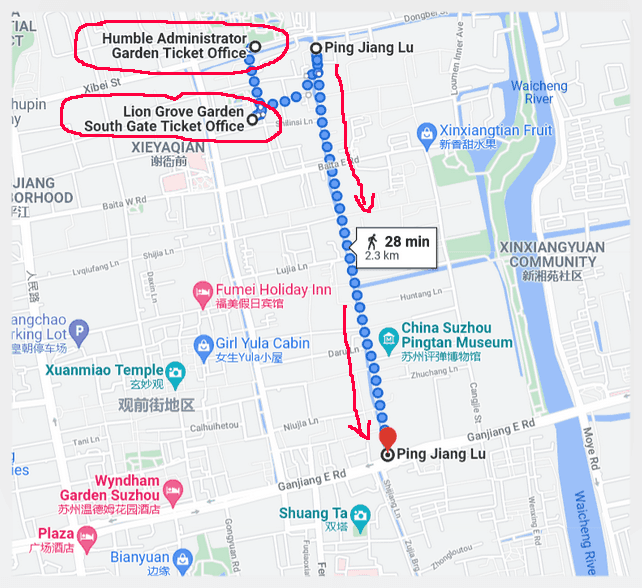
The Lion Grove Garden is located at 23 Yuanlin Road (园林路)in Pingjiang District, just about 10 minutes’ walk south from the Humble Administrator’s Garden.
So basically you can put the famous attractions together for a half day garden tour in Suzhou. Generally people will visit Lion Grove Garden after having a walking tour of the Humble Administrator’s Garden, since the two are so quite close to each other.
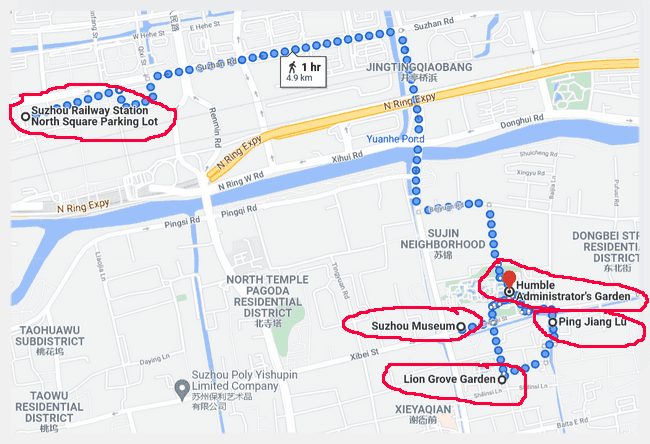
If you are going to have a one day walking tour of Suzhou, you could extend your travel to the nearby attractions such as Suzhou Museum, and Pingjiang Road in Suzhou.
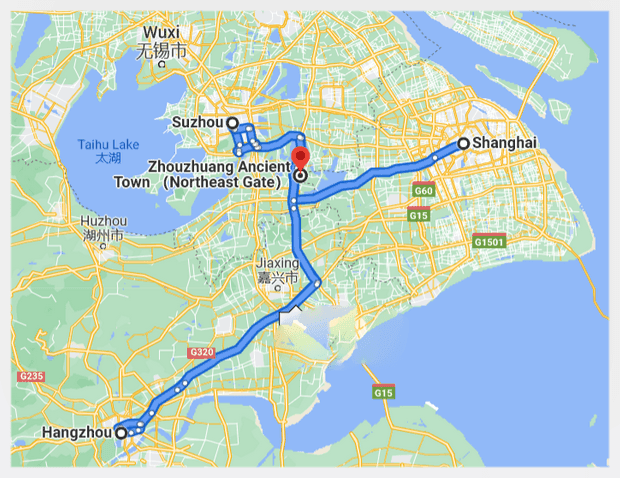
It has convenient public transportation with easy access through public buses and taxis. If you start from Suzhou Railway Stationor Suzhou North Bus Station, you take the buses No.5 or 2 and get off at the stop of the Lion Grove Garden; if you start from the Suzhou South Bus Station or the Suzhou Boat Dock, you may take the buses No.1, 101 and 102, then get off atthe Guanqian Street ( 观前街) and connect Bus 3 or 5 and get off at the stop of the Lion Grove Garden.
Entrance Fees: RMB 40 ( April 16 – October 31) RMB 30 ( November – April 15) Enquiry: (0512)67272428
The Lion Grove Garden was originally built in 1342 and typical of the Chinese classical gardens in Yuan Dynasty (1206–1368). The Lion Grove Garden is renowned for its amazing shapes of the rocks and rockeries in the garden dubbed as the King of the Rocks. The Taihu rocks in the garden resembles the shapes of lions, hence the name of the Lion Grove Garden.
The garden name is also linked to a monk called Tianru who first built the garden in memory of his master who lived on the Lion Cliff in Zhejang Tianmu Mountain. Qianlong Emperor in Qing Dynasty liked the garden very much and visited the garden for 6 times.
The garden changed hands for many times in the past centuries. The last owner of the garden till in 1949 was Bei Runsheng who purchased the garden and finished the restoration in 1926. In 1949 Bei family donated the garden to the government.
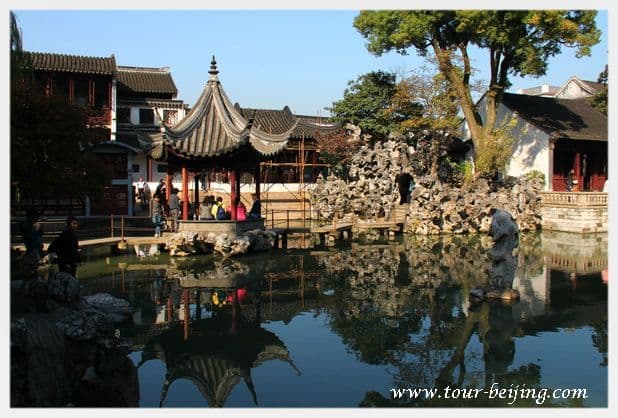
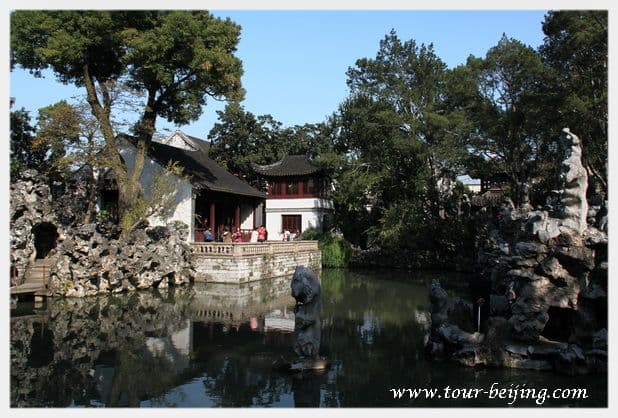
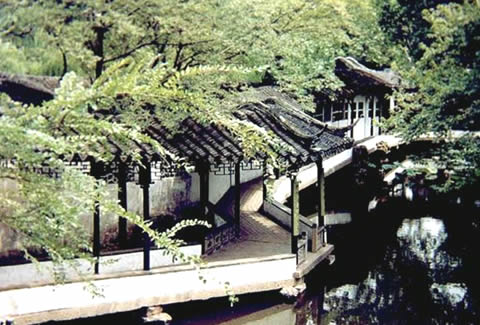
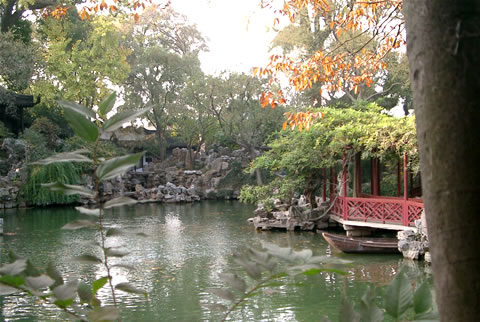
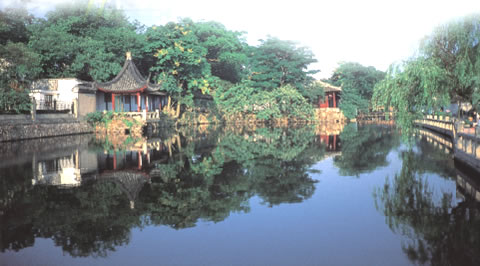
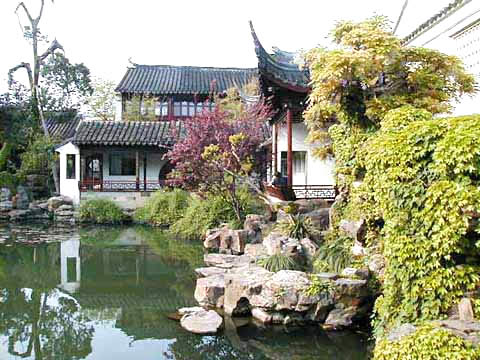
The garden consists of two parts – the residential compound and the garden area. The garden area is set out around a lake with rockeries, bridges and pavilions built around the lake. The garden is noted for its elaborate grotto of Taihu rocks. This grotto contains a labyrinth of 9 pathways winding through 21 caves across 3 levels. The most famous is the 9 lions Peak.
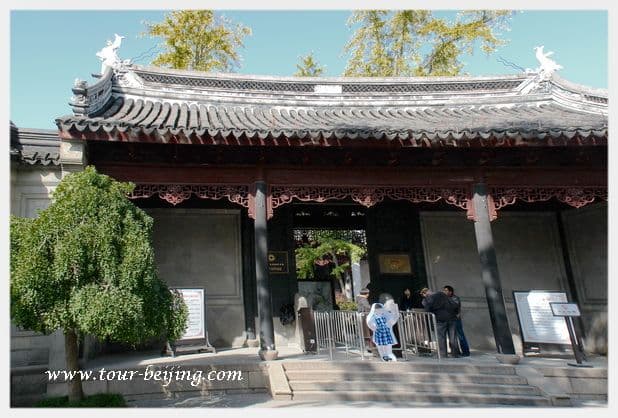
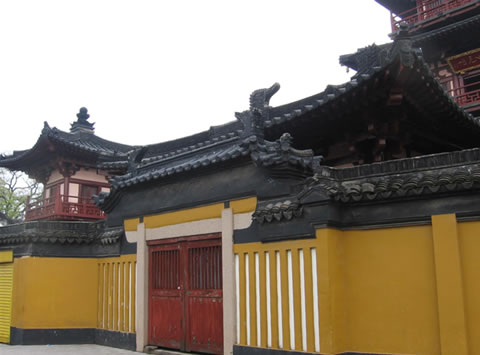
The East Entrance to the Lion Grove Garden
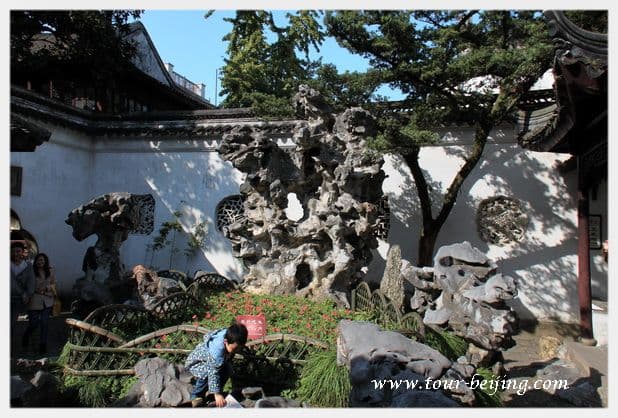
The Nine Lions Peak Garden is located on the north side of the small square behind Yan Yu Hall. This is a tall Taihu stone peak. The jagged and porous stone peak has the natural stone patterns, and variable shape elevation. If you carefully look at the rockery peak, you could dimly see the visible nine different posture of the little lions, like playing, hence the name of "nine lions peak".
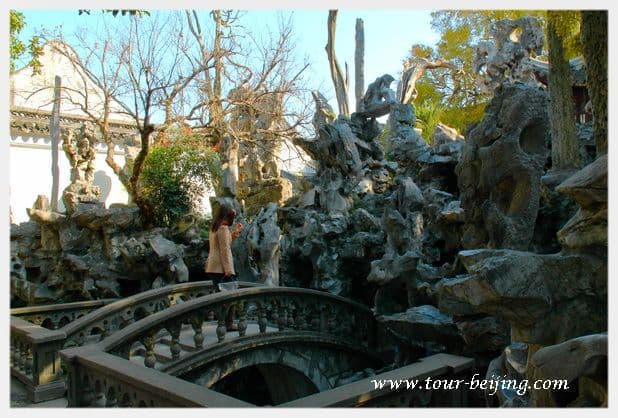
Lion Grove Garden is famous for its rockery, the last large-scale rockery in Chinese gardens, with important historical nd artistic value. The rockery peaks in the garden wind ups and downs. The rockery group has a total of nine routes, 21 holes, extreme twists and turns.
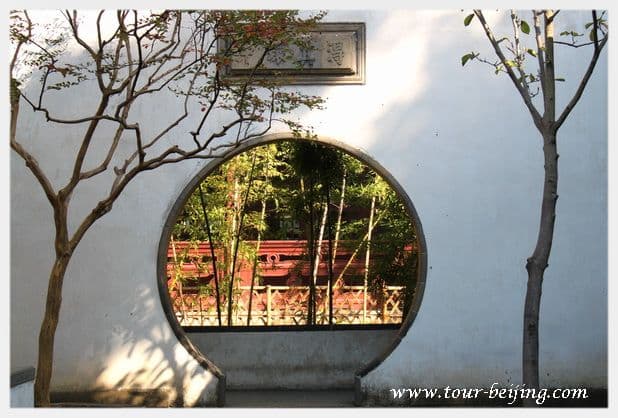
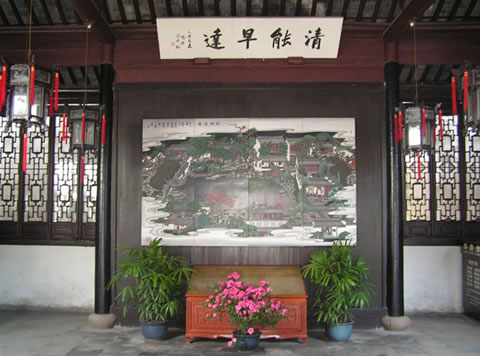
Bamboo Hidden Cottage is the central building of the Academy in the Lion Grove Garden, just as its name suggests, a large area of square bamboo is allocated in the west of it, and bamboo has a very profound significance in ancient China, but also improve the overall realm of the Academy! The moon gate frames a pretty view with a backdrop of bamboo.
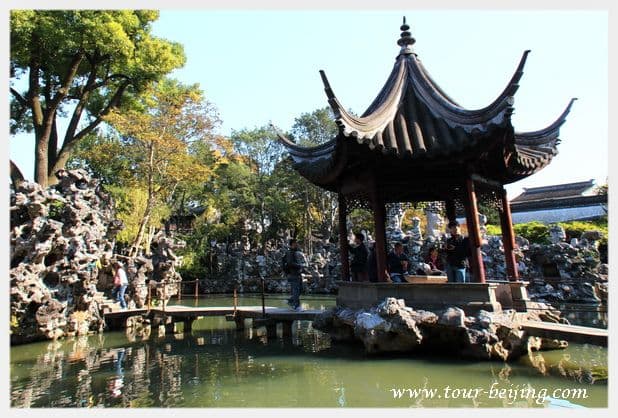
The Lake pavilion built in the middle of the lake is a typical Jiangnan classical hexagonal pavilion with a winding bridge connected to both sides.
Hand-picked routes matched from this post's destination clues, tags, and categories.
Use these attraction notes to connect nearby sights with tours, destination guides, and planning articles.
Subscribe to receive Beijing travel ideas and tour updates.


Leave a Reply
Share a question or note for this guide. Comments are reviewed before publishing.