
Call a local advisor
+86 186 1196 4400Email our team
[email protected]Tour Beijing Journal
If you are going to visit Yinchuan on your Ningxia Tour, you are highly...
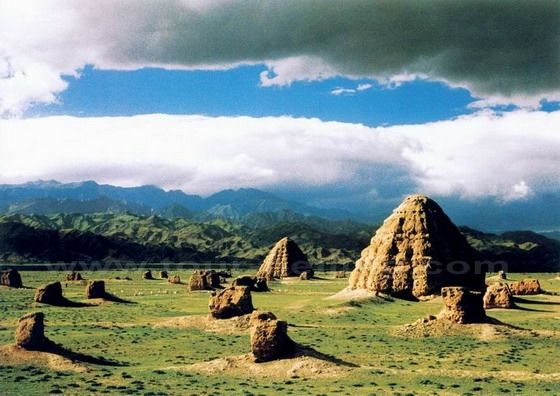
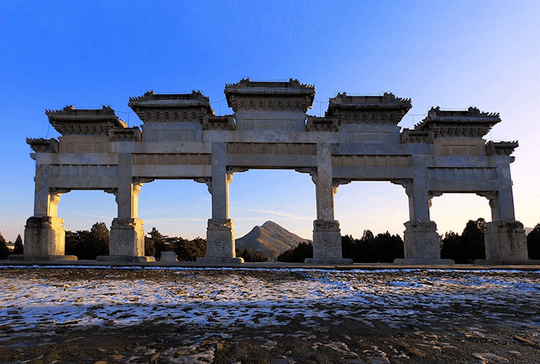
The Western Xia Imperial Tombs are the burial site of the 9 emperor mausoleums, 254 subordinate tombs in Western Xia Dynasty. Western Xia Dynasty was founded by Tangut ethnic group in 1038 and destroyed in 1227 by the Mongols which later established Yuan Dynasty ( 1279 – 1368 ).
The imperial tombs are now on the tentative lists of UNESCO World Cultural Heritage. The Tombs are the best-preserved historic cultural heritage representing the Tangut civilization at the largest scale and in the highest rank.
How to get to Western Xia Imperial Tombs from Yinchuan?
Entrance Fee: RMB 60 including the fee for electric car Opening Hours: 8:00 – 18:00
Now follow me to have a glimpse of the Western Xia Imperial Tombs.
The South Entrance to the tombs
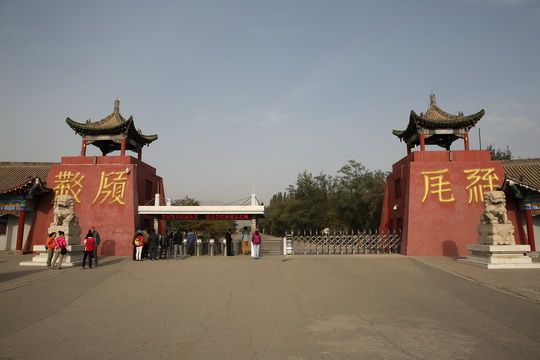
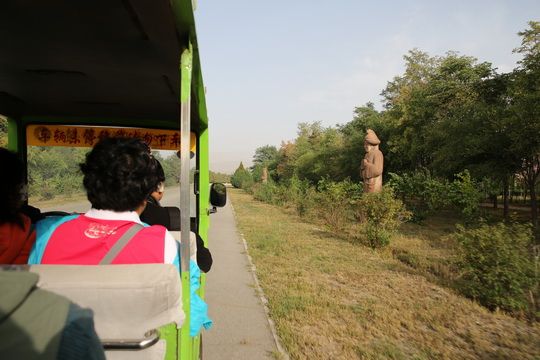
First take an electric car from the gate to the museum in the compound.
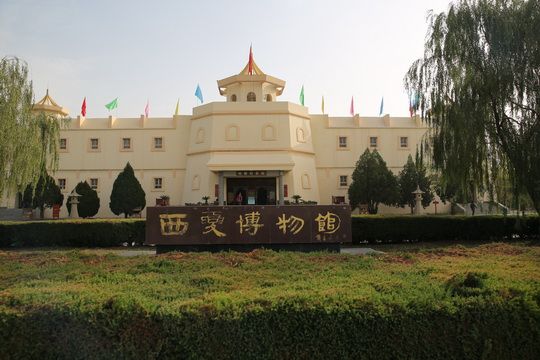
Visitors are arranged to visit Western Xia Museum. The museum displays the impressive artifacts related to Western Xia culture.
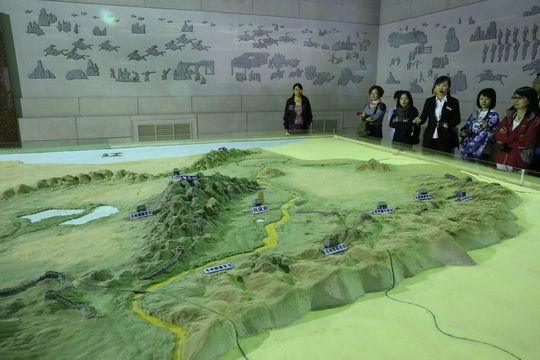
Visitors are briefed on the layout model of the Western Xia Dynasty and the location of the tombs and Helan Mountain. Of the 9 imperial tombs, the Tomb No.03 is the largest one , which was attributed to the founder of Western Xia Dynasty – Mr.Li Yuanhao.
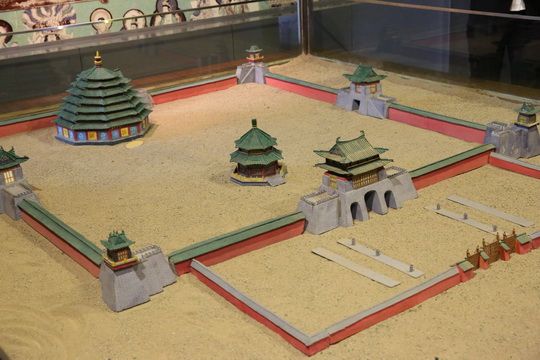
The tomb was originally constructed in an octagonal pagoda style with outer wooden structure and rammed earth inside. The tomb was built within an inner city. Now you have a brief introduction to the tomb construction.
The layout model of the Western Xia Dynasty
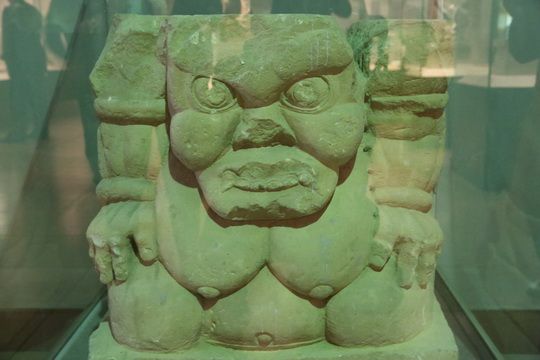
The stone pedestal of a figure excavated from the No.08′ emperor’s tomb 1972.
Move from Western Xia Dynasty Museum, and walk on the path leading to the Tomb No.03.
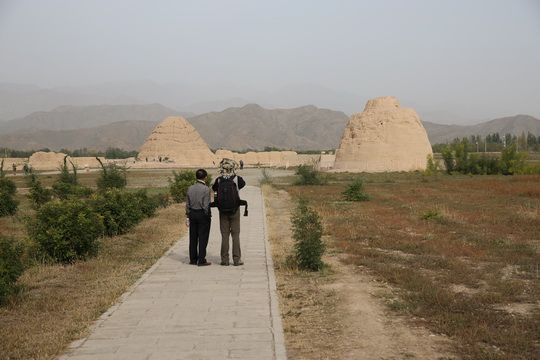
The Tomb no.03’s imperial burial site was composed of the tomb itself, the inner city and the moon city. Below is the ruins of the rammed walls of the former moon city in front of the inner city.
Walking toward the Tomb No.03.
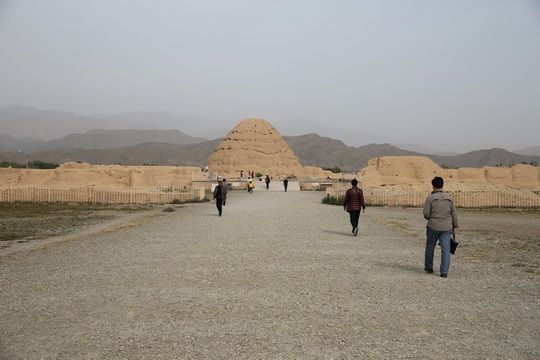
The former moon city in front of the inner city.
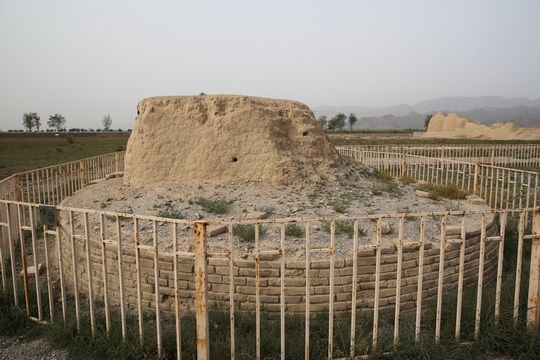
The inner city in a rectangle layout is the symbol of the imperial palace in the real world. Four gates were built as well as four towers on the four corners. The walls were rammed with plank, which is 3.5 meters wide and painted in red. The wall was decorated with projecting eaves covered with tiles.
The ruins of the rammed wall of the inneer city
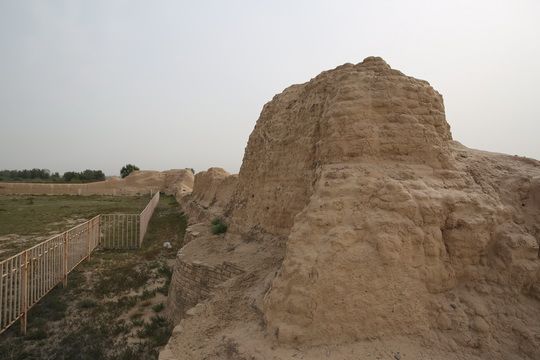
North of the Tomb No.03 is the imperial sacred way. North of the imperial sacred way is the Sacrifice Temple. Today the temple has disappeared and only the foundation is still discernable.
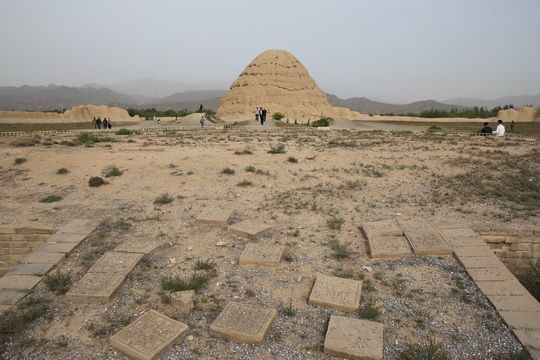
After the ruined Sacrifice Temple is the imperial path or the Tomb Gallery. The gallery is 46 meters long and 24 degree of inclination.
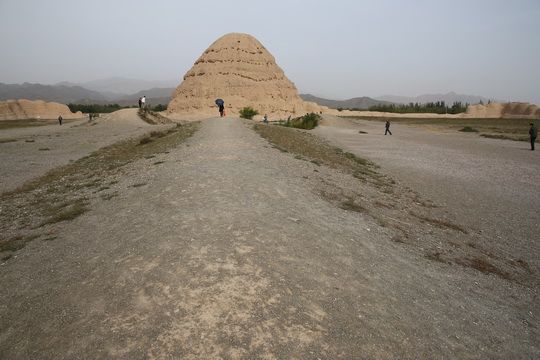
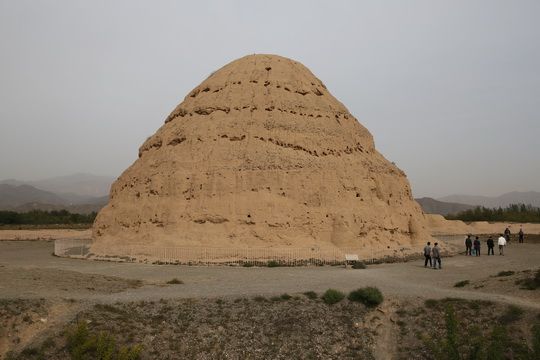
The Tomb Tower (Tomb No.03) is the main structure in the imperial tomb complex. The main body of the tower or pagoda was constructed with earth and covered with wooden structure of seven storeys. The current base of the tomb is 36 meters in diameters and 24 meters in height.
 If you don’t want to go the do-it-yourself route and prefer the hassle-free escorted tours, here are some options for Yinchuan Guided Tours:
Yinchuan One Day Excursion Tour from US$ 95 p/p Yinchuan 3 Day Tour from US$ 235 p/p Yinchuan Car Rental with Driver
Share a question or note for this guide. Comments are reviewed before publishing.
Hand-picked routes matched from this article's destination clues, tags, and categories.
Use these attraction notes to connect nearby sights with tours, destination guides, and planning articles.
Continue planning with practical Beijing guides selected from similar places, themes, and travel questions.
Subscribe to receive Beijing travel ideas and tour updates.