Call a local advisor
+86 186 1196 4400Email our team
[email protected]Tour Beijing Journal
Planning for your Jiangxi Tour? Jiangxi (江西) is an underrated province for...
With Nanchang (南昌) as its capital, Jiangxi Province is centered along Gan River plain. Gan River runs 885 km from south to north before entering itself into Lake Poyang ( the largest fresh water lake in China) and into the Yangtze River.
Mountains surround Jiangxi on three sides, east, south and west with the north being Poyang Lake and the tributary of Yangtze River. The west mountain ranges are dominated by two famous mountains - Mount Sanqing (Sanqingshan) and Mount Longhu (Longhushan).
Looking for top things to do in Jiangxi? So here is our Top 10 Attractions in Jiangxi.
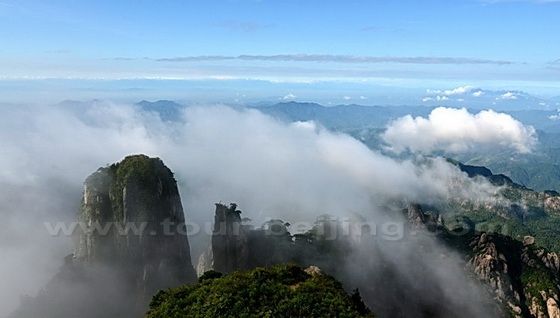
The name "Sanqing", literally "Three Pure Ones", refers to the three renown peaks or summits in Mount Sanqing, Yujing, Yushui, and Yuhua, representing the Taoist trinity.
Mount Sanqing features the natural landscapes and cultural Taoism. It is famed for its granite topography, sheer rocks, old trees, splashing waterfalls, and sea of clouds.
Now Mount Sanqing is enlisted as a national park of China. It is a wonderful destination as well as a peaceful habitat for animals and plants. It houses over 1000 species of flora and 800 types of fauna.
It is a mecca for hikers with many walking trails on the mountain. It is preferable to spend 2 days to hike around. There are two starting points - the Southern Route and the Eastern Route.
Visiting Time: suggested 2 Days Entrance Fee: RMB 150( summer ); RMB130 (winter) Cable car: Up RMB70; Down RMB55 Location: between Dexing City and Yushan County of Shangrao City in the northeast of Jiangxi Province Opening Hours: 08:00 – 17:00 Best Time to Visit: Spring and Summer How to Get There Sanqingshan is only accessible by road. You may bus to Sanqingshan from Yushan County or Shangrao City. Self-driving is highly recommended with the hghways linked to Nanchang, Hangzhou, Shanghai and Nanjing.
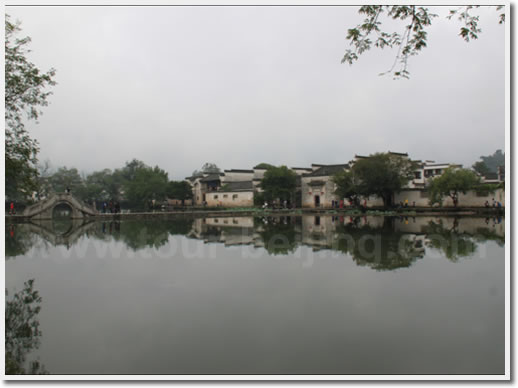
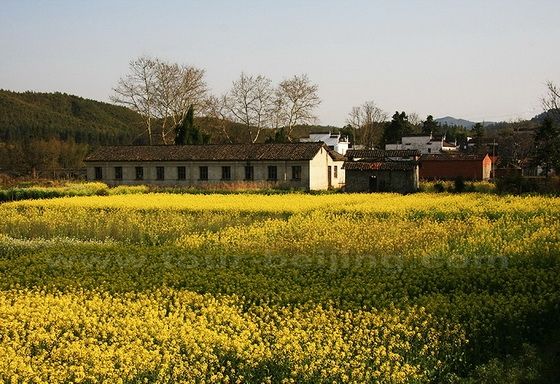
Wuyuan is basically the name given to a scattered cluster of villages home to the famous Hui style architectures and the mesmerizing rapeseed flowers. Wuyuan is reputed as the most beautiful village in China. Each village is a Chinese painting; each step is a view. Perpetual mists whirl over the mountains and rivers; the quaint villages feature stone flagged alleyways ancient bridges.
Now Wuyuan has formed three travel routes and people can choose different routes to experience the mild and elegant villages with deep-rooted Huizhou culture.
The East Line is home to the picturesque villages such as Jiangwan, Likeng, Wangkou, Xiaoqi, Jiangling and Qingyuan. Jiangling features the charming rapeseed flowers; Jiangwan Hui-style buildings and beautiful mountains and rivers.
The West Line is a showcase of the good eco-environment of Wuyuan.Yuanyang Lake Scenic Area is the largest habitat for wild mandarin ducks in the world.
The North Line is dominated by the original Ming and Qing ancient villages and primitive natural landscapes.
Visiting Time: suggested 1-2 Days Entrance Fee: RMB 210 ( a through tickets covering 14 sites valid for 5 days ) Location: the north of Shangrao in the northeast of Jiangxi Province. Opening Hours: 08:00 – 18:00 Best Time to Visit: Mid March and early April ( Rapeseed flowers ) How to Get There Take buses from Jingdezhen, Huangshan, Jiujiang, Shangrao and Nanchang
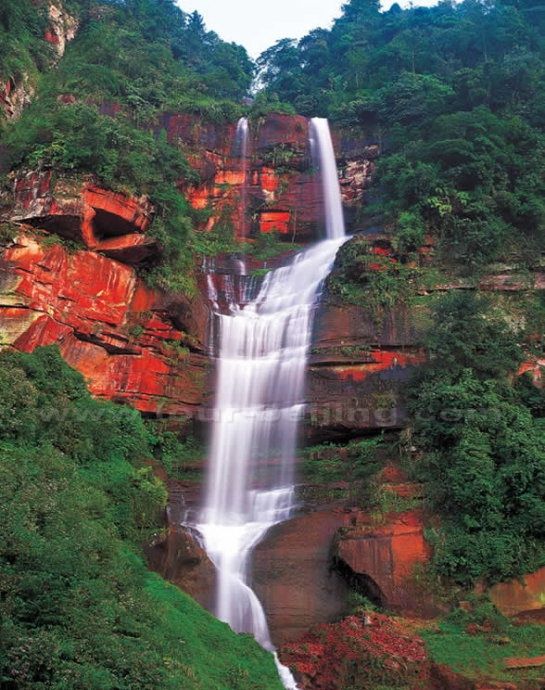
Mount Longhu features many Taoist temples built upon the mountainsides. The most important Shangqing Temple and the Mansion of the Taoist Master are located here related to Zhengyi Dao. It is repute as one of the Four Sacred Mountains of Taoism in China.
Besides its Taoist background, Mount Longhu is renown for its Danxia Landform. There are four kinds of Danxia landscape Longhushan including Danxia geomorphological landscape, Danxia water landscape, Danxia ecological landscape and Danxia cultural landscape. Mount Longhu was listed on the UNESCO World Heritage List as part of the complex of six sites that make up the China Danxia Landform in August 2010
Visiting Time: suggested 1 Day Entrance Fee: RMB 260 ( including entrance, shuttle and drifting ) Location: 20km southeast of Yingtan City, Jiangxi Opening Hours: 07:30 – 17:30 Best Time to Visit: Summer How to Get There Take shuttle buses directly from Yingtan Railway Station
More than a natural landscape, Lushan is a famous ancient mountain with combination of natural beauty, culture, religion, education and politics. A number of poets,writers and thinkers were attracted by the mist and fog covered mountain for the past 1500 years, left behind numerous poems and proses.
The monk Hui Yuan set up Donglin Temple in Lushan and founded Pure Land Buddhism here in 4th century AD. Lushan was once a summer resort for Western missionaries in China. Absalom Sydenstricker, the father of Pearl Buck was among the first five missionaries to have property in the Kuling Estate on the mountain.
Visiting Time: suggested 2-3 Days Entrance Fee: RMB 180(summer); RMB135 (winter) Location: 30km south of Jiujiang City, Jiangxi Opening Hours: All day Best Time to Visit: Summer How to Get There Bus to Lushan conveniently from Jiujiang or Nanchang.
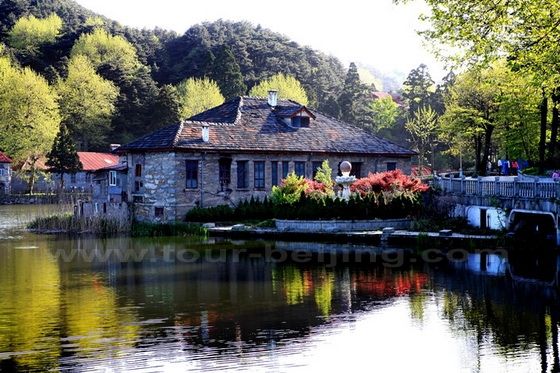
Among other natural and cultural attractions, Longnan is well known for its ancient fortified rural Hakk around houses. At present, Longnan County has chosen more than 100 round houses on the list of protection, repaired over 20 representative round houses and improved the their surrounding environments.
The Hakka, or Kejia in Mandarin, are a subgroup of the Han Chinese people who now live mainly in the provinces of Guangdong, Jiangxi, Fujian and Guangdong. Their ancestors settled there centuries ago back to Tang, Song, Ming and Qing dynasties, often to escape wars, natural disasters and severe persecution in their homelands in central China. Today Hakka communities are scattered all over the world.
The Hakka round earth houses are less known, but same equally excellent as Tulou (EarthHouses ) in Fujiang, which have been listed as UNESCO World Cultural Heritage.
The Kakka houses in Longnan, called "weiwu" or "wei," are usually taller and more rectangular in shape than similar structures in Yongding Fujian ( more round earth houses), the UNESCO heritage-site.
There are over 500 Hakka weiwu are scattered across southern Jiangxi, with some 370 found in Longnan, hence the name of "the land of Hakka weiwu".
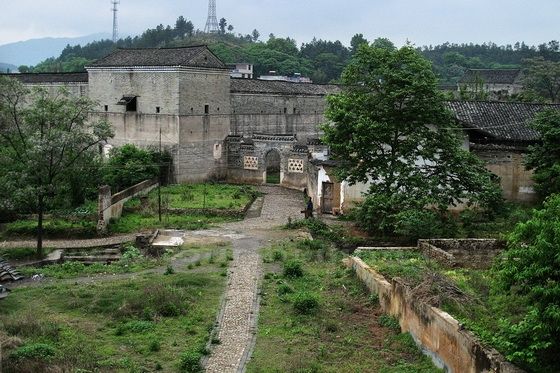
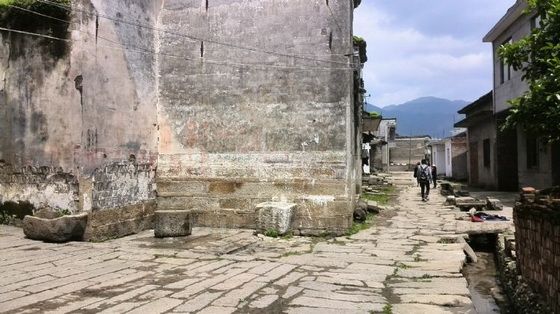
The earliest villagers came settled here from Qizhou in Hubei to escape war during the late Tang and Ming dynasties. The village was once the ancient pilgrim path leading to Wanshou Palace in the West Mountain. The pilgrim path brought the trade and commerce to the village, making much fortune to the village. Today you still can see the stone flagged alleyways, traditional houses and ancient streets.
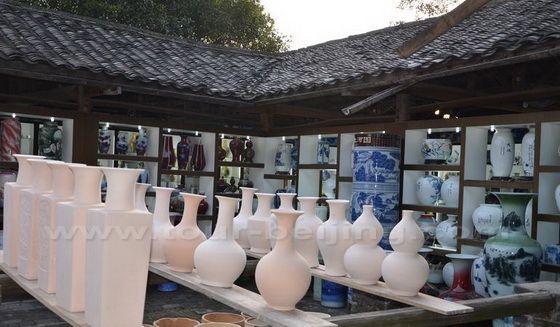
Jingdezhen is famed as the "Porcelain Capital" because it has been producing quality pottery for 1700 years. Its recorded history is over 2000 years. Jingdezhen's porcelain is well known in China and internationally as well for being "as thin as paper, as white as jade, as bright as a mirror, and as sound as a bell".
Visiting Time: suggested 2 Days Entrance Fee: Free Location: 226 km Northeast of Nanchang city of Jiangxi Province. Best Time to Visit: Autumn How to Get There Bus to Lushan conveniently from Jiujiang or Nanchang.
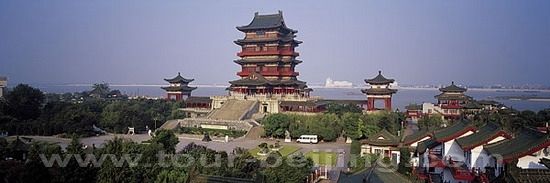
The Pavilion of Prince Teng was first built in 653 AD, by Li Yuanying, the younger brother of Emperor Taizong of Tang and uncle of Emperor Gaozong of Tang. The building has a total floor area of 13000 square metres. It sits atop 12-metre tall concrete platform, which is intended to symbolise the now-destroyed ancient city wall. A stainless steel tablet at the entrance is engraved with a calligraphy work of Mao Zedong.
Entrance Fee: CNY 50 Opening Hours: 07:30-18:00 (May1 to Oct. 7); 08:00-17:30 (other time) How to get there: take Buses No. 7, 8, 26, 302, Y1, Y2, 135 or 118 to Pavilion of Prince Teng
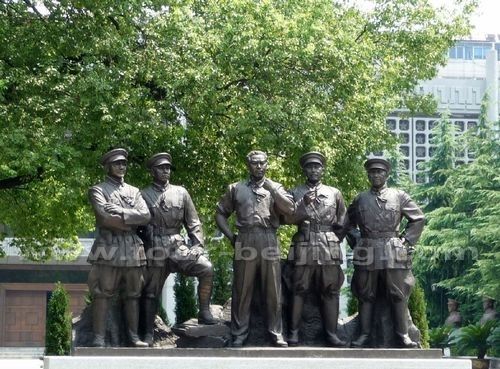
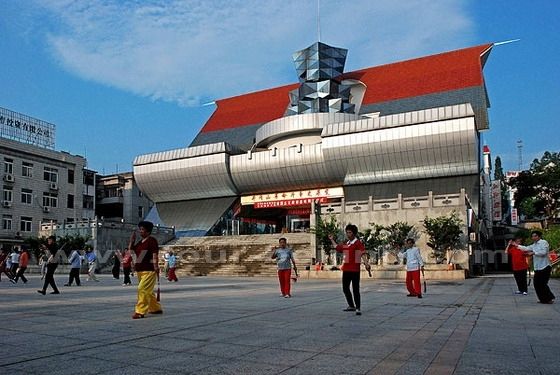
This building used to be a local hotel, but as they used it as the headquarters of the revolutionary army at the time of uprising in arms in 1927, it has been kept as a memorial hall to the revolution with a lot of objects of historical and cultural importance on display. A golden plaque with an inscription written by Chen Yi, former mayor of Shanghai and highest ranking military commander in China, hangs above the door to the museum.
Entrance Fee: free Opening Hours: 08:00-17:30 (closed on Monday) How to get there: take Buses No. 2, Tram 7, 18, Y1 or Y2 from the downtown area
 10. Jinggang Mountains 井冈山
Towering in the southwest of Jiangxi Province, Jinggang Mountain is in the middle stretch of Luoxiao Mountain in the border region between Jiangxi and Hunan provinces.
10. Jinggang Mountains 井冈山
Towering in the southwest of Jiangxi Province, Jinggang Mountain is in the middle stretch of Luoxiao Mountain in the border region between Jiangxi and Hunan provinces.
The area has complicated terrain, with main peaks over 1,000 meters above sea level. Nanfengping, or South Screen, the southernmost peak with an elevation of 2,120 meters, is the highest peak in Jinggang Mountain area. There are eight major scenic spots in the mountain. They are: Ciping, Huangyangjie Post, Dragon Pond, the highest peak, Tongmuling Post, Xiangzhou Area, Bijia Mountain and Xiankou Area.
Entrance Fee: CNY 156 Opening Hours: 06:00-20:00 How to get there: The are long-distance buses from Nanchang, and Ji’an to Ciping. In Ciping, there are public buses to every spot of Jinggang Mountain
Any questions, just drop a line.
Share a question or note for this guide. Comments are reviewed before publishing.
Hand-picked routes matched from this article's destination clues, tags, and categories.
Use these attraction notes to connect nearby sights with tours, destination guides, and planning articles.
Continue planning with practical Beijing guides selected from similar places, themes, and travel questions.
Subscribe to receive Beijing travel ideas and tour updates.