
Call a local advisor
+86 186 1196 4400Email our team
[email protected]Tour Beijing Journal
Plan your Gansu tour? Gansu Province is located in the northwest of China,...
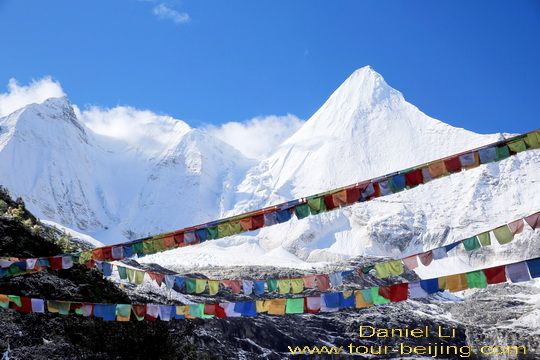
Synonymous with the Silk Road, Gansu's narrow strip of the land bounded between Qilian Mountains and Longshou Mountains known as Hexi Corridor was once the essential passage for the caravans hiking along the old silk road. The flowing trade and commerce left behind Buddhist temples, stone carved hills, ruined ancient cities and wild sections of the Great Wall.
Gansu has a rich minority and geographical diversity. Linxia is a Muslim dominated area also joined in by Bao'an and Dongxiang ethnic groups. The southern part of Gansu gives itself to the Tibetan area featured by the monastic towns of Xiahe and Langmusi.
Looking for the top things to do in Gansu. Here is our list of the Top 10 Places in Gansu.
Major attractions
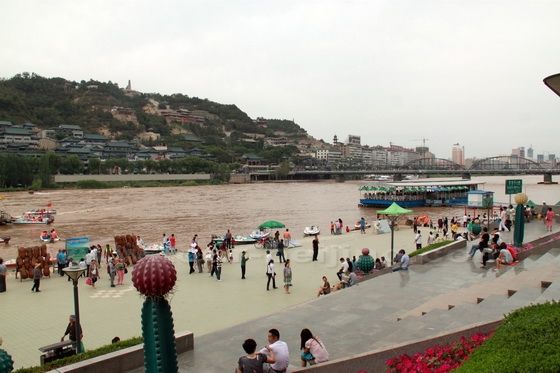
Major attractions 1)Maiji Shan Grottoes As one of the four famous Grottoes in China with other three being Yungang Grottoes in Datong, Longmen Grottoes in Luoyang and Mogao Grottoes in Dunhuang, the Maijing Shan Grottoes are a series of 194 caves cut in the side of the hill Maijishan. This rock cut architecture contains over 7,200 Buddhist sculptures and over 1,000 square meters of murals, all of which built from 384AD to the Qin Dynasty (1644-1911).
2)Fuxi Temple Fuxi Temple was built to commemorate Fuxi, who was the earliest ancestors of ancient China. The temple is a Ming Dynasty construction that, despite renovations in the Qing Dynasty, still retains its Ming format. Every year on January 15th (alleged birthday of the emperor) and May 13th (apparent birthday of China’s first dragon) by the Chinese traditional calendar, grand sacrificial ceremonies are held, which draw throngs of Chinese and foreigners to its door.
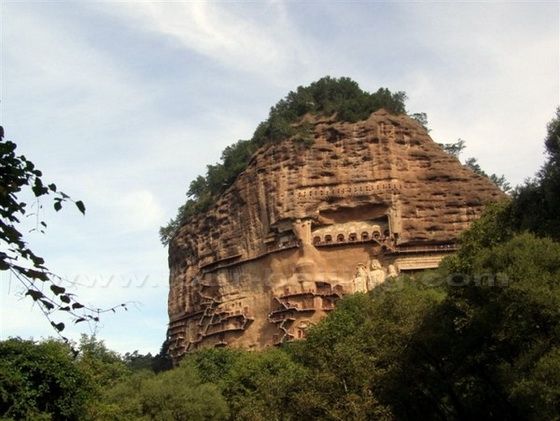
Haizang Temple Haizang Temple, located 2km northwest of Wuwie city, is the largest complex of ancient buildings in Wuwei. The temple was opened as a park. The well preserved gateways, archways, pavilions and temples of Ming and Qing Dynasties are surrounded by river, lake and age-old trees, which make the park a quiet spot with its spectacular scenery.
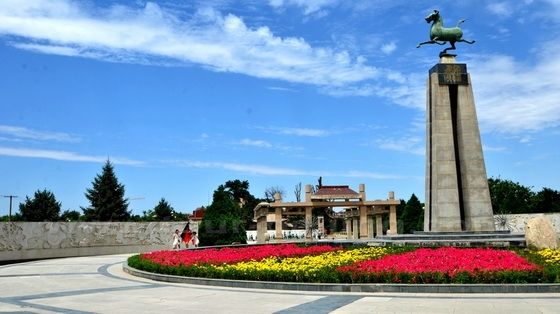
Zhangye Danxia Geopark Danxia landform is formed from red-coloured sandstones and conglomerates of largely Cretaceous age. Danxia is the name of a particular place, but the name of a type of landform found in China, featured by prominent boulders and steep cliffs. It resembles karst rocks, but formed by layers of conglomerate instead of compact blocks of rock. The site Zhangye Danxia Gepark is about 33 km west of Zhangye's city center.
Mati Temple ( Hoof Temple) Mati Temple is situated in the foothills of Qilian Mountain range, about 65 km south of Zhanye. The temple is a combination of Buddhist grottoes, the picturesque Qilian Mountains and the local folklore. Totally there are over 70 caves.
Major Attractions
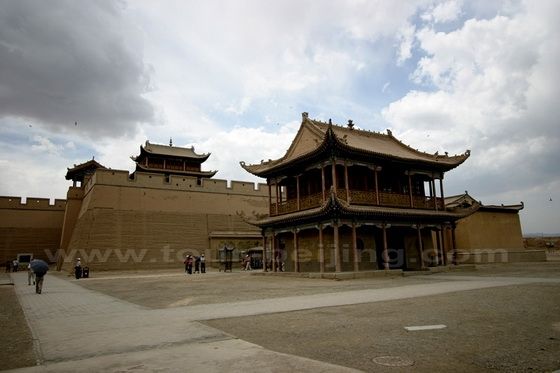
Jiayuguan Fort Jiayu Pass ( Jiayuguan Fort ) was the first pass at the west end of the Great Wall of China. Built 1372, Jiayuguan Fortwas was christened as the first and greatest Pass under the Heaven. The pass consisted of three defense lines – an inner city, an outer city and a moat.
Suspension Great Wall 11kms to the downtown Jiayuguan City, the Suspension Great Wall was built on the ridge with the gradient of 45 degrees hence the name. From a distance, it is saide to resemble a dragon to extend its body towards the ground.
Wei-Jin Mural Tombs Also named “Underground Art Gallery”, Wei-Jin Mural Tomb is a big tomb group with over 1, 400 tombs built between the 3rd century and 5th century during the Wei and Dynasties. It houses a great deal of colorful murals, the gallery. Most tombs are of families, housing bodies of three or four generations, and now only Grave 6 and Grave 7 are open for tourism.
July First Glacier 七一冰川 The famous July 1st Glacier sits on the high range of Qilian Mountains at 4300 meters, about 116 km southwest of Jiayuguan. The July First Galacier is the nearest visitable glacier to a city in Asia. The glacier was discovered in July 01, 1958, hence the name of July 1st Glacier.
Major Attractions
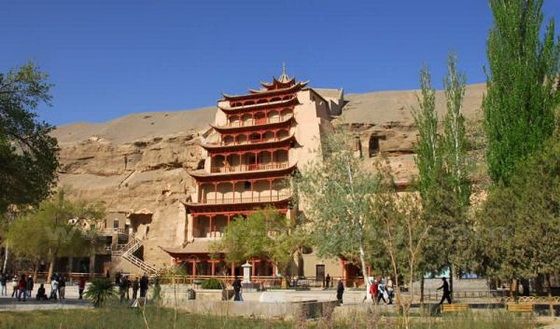
Mogao Caves The site of the Mogao Caves is loated 25 km southeast of the city of Dunhuang. The Mogao Cave temples rise three levels along a 1.6 kilometer escarpment near the Daquan River. Every visitor to Dunhuang will be overpowered by their rich complexity and astonishing details. There are totally 492 caves, hand hewn from the cliff face over a millennium, are numbered for reference and protection.
Singing Sand Dunes Echoing-Sand Dune is located on the southern outskirts, six kilometers from Dunhuang City. When people slide down on the sand of the mountain, it produces a ringing sound, hence its name “Echoing-Sand Dune" or Singing Sand Dunes.
Crescent Lake Also called Yueyaquan in Chinese, the Crescent Lake is named so due to its surface in a crescent shape. To people’s surprise, the lucid and clear water in the lake had never dried up for thousands of years. The lake and the surrounding deserts are very popular with tourists, who are offered camel and 4x4 rides.
Dunhuang Museum It is a local museum for keeping the cultural relics that were found in Dunhuang. The Dunhuang Museum reflects the flourishing social development and cultural exchange between China and the West during the time when Dunhuang was a major center along the Silk Road.
Yangguan Pass ( South Pass ) Yang Pass (Yangguan), also known as the Southern Pass, sits 75 kilometers southwest of Dunhuang, and was originally built by Emperor Wu in Hang Dynasty as one of the two most important passes protecting Dunhuang from invasion from the west (the other pass is Yumen Pass (Yumen Guan). Today, there are hardly any walls in sight, the only visible sections being the foundations of some of the walls.
Yumen Pass ( Jade Gate Pass ) Yumen Pass was a strategic pass on the ancient Silk Road and was built in order to ensure the safe and smooth of Silk Road in the Han Dynasty. It is said that the jade of Hetian in what is now Xinjiang region was transported to central China through this pass, hence the name "Yumen" which just means the gate of jade in Chinese.
Yadan National Park 180 km northwest of Dunhuang, the eroded and weird landform of Yadan lies in the Gobi desert. It is a UNESCO World Heritage crowned site with the strange rock formations formed by the former lake bed of over 12,000 years.
There are in total twenty-two ethnic groups living in Linxia, including Hui, Han, Dongxiang, Bonan, Salar, Tibetan and Tu. The Bonan and Dongxiang are unique to the prefecture and have thire own autonomous counties. Linxia has a population of 1.9 million with ethic groups taking 57%.
The Major Attraction in Linxia
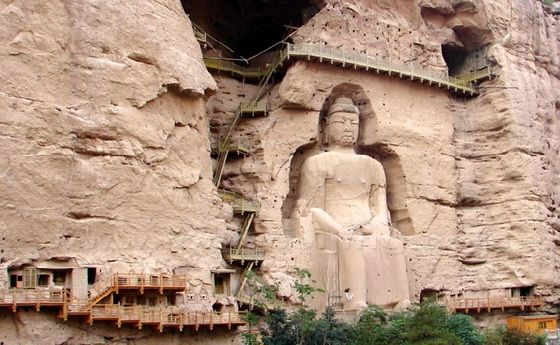
Binglingsi Grottoes The site of Binglingsi Grottoes is about 70km to the southwest of Lanzhou. "Bingling" means "ten of thousand Buddhus" in Tibetan language since there are many stone carved buddha sculptures here. Today the cliffs are isolated by the waters of Liujiaxia Reservoir on the Yellow River.
The site is well preserved, including 183 caves, 694 Buddha stone statues, 82 earth buddha statues, more than 900 square meters'mural painting which are scattered around the cliff of 200 meter long and 60 meter high on the west bank.
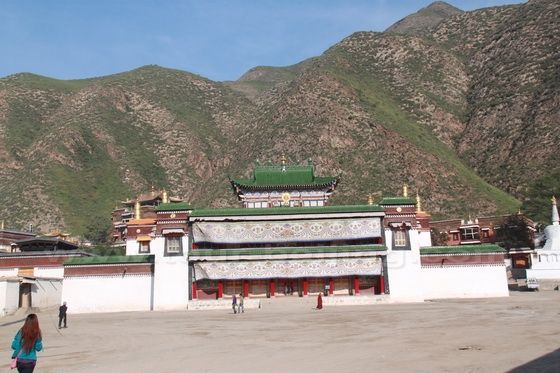
About 2km outside the city center of Hezuo is the famous Hezuo Milariba Buddha Pavilion, which was built in 1777. It has an interior nine storeys painted with colorful murals and Tantric deities.
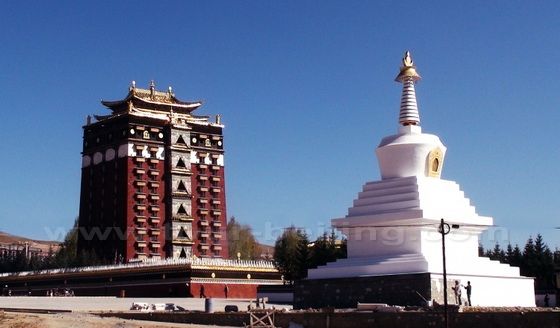
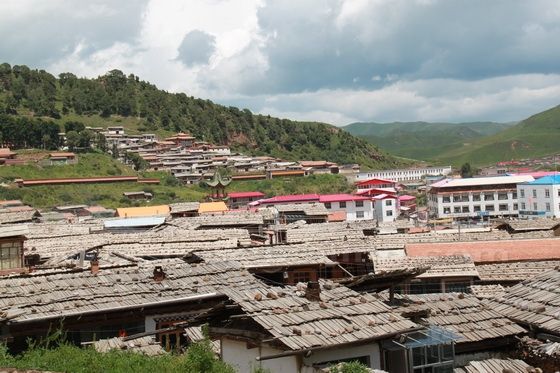
It is easy to spend a few days here exploring the numerous red and white monastery buildings and hiking around the green mountains. The surounding mountains reminds people of the rural Austria or Bavaria and ideal for hiking and horsetrek.
Share a question or note for this guide. Comments are reviewed before publishing.
Hand-picked routes matched from this article's destination clues, tags, and categories.
Use these attraction notes to connect nearby sights with tours, destination guides, and planning articles.
Continue planning with practical Beijing guides selected from similar places, themes, and travel questions.
Subscribe to receive Beijing travel ideas and tour updates.