
Call a local advisor
+86 186 1196 4400Email our team
[email protected]Tour Beijing Journal
Plan your Qingdao tour? Qingdao, known in the West by its postal map...
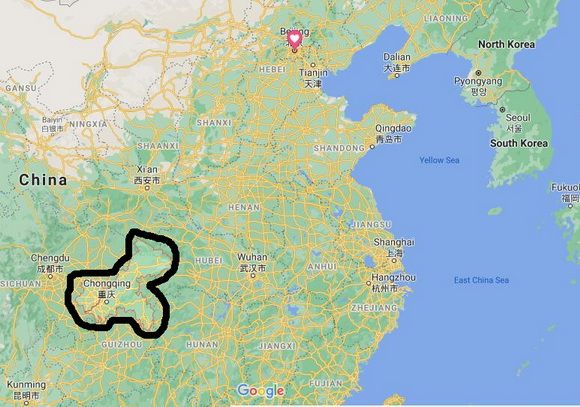
Plan your Qingdao tour? Qingdao, known in the West by its postal map spelling Tsingtao, is a major city in eastern Shandong province. To the east, a short distance across the Yellow Sea, lie Korea and Japan, making Qingdao an important city for international trade.
The red roofs, blue sea, green trees and azure sky form a bright and colorful picture of Qingdao. Qingdao is regarded as one of the most beautiful and clean cities in China. what’s more, Qingdao is also a hot tourist destination.
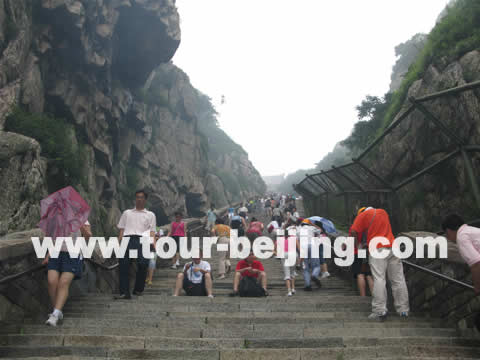
Mt. Laoshan has been an important center of Taoism in China for many centuries. The entire mountain covers 446 square kilometers and has 218 places of interest, big and small. Mt. Laoshan is known for its oddly shaped rocks, ancient trees, and crystal-clear springs.
Entrance Fee: CNY 90 Opening Hours: 07:30-16:30 How to get there: take Buses No. 304, 104, 802 or 113 to Mt. Laoshan
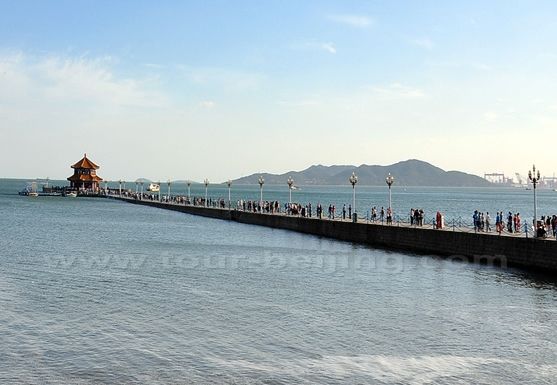
Qingdao Bay is crescent shaped; like an arrow, the bridge shoots into the broad sea. Standing afar, a white lighthouse braves the waves and wind, while the Small Green Island No. 6 Beach west of the bridge and Zhan Bridge Park around the bridge invite visitors to enjoy the beauty of Qingdao Bay. is a serene platform for exuberant trees. Dynamic and static scenes meld.
Entrance Fee: Free Opening Hours: 07:00-19:00 (peak seasons); 08:00-17:30 (low seasons) How to get there: take Buses of No.2, 5, 6, 8, 25, 26, 218, 220, 223, 225, 301, 304, 305, 307, 311, 316, 320, 321, 501, 217 or 801 to get there.
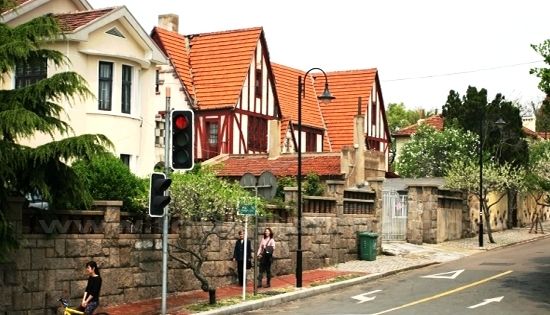
Badaguan Scenic Area is made up of eight streets named after the eight great military forts of the ancient times. Along the streets are many classic European houses built when Qingdao was a German protectorate. It boasts more than 200 different architectural styles ranging from German to Dutch.
Entrance Fee: free of charge Opening Hours: the whole day How to get there: take Buses No. 26, 304, 315, 31, 202, 212, 223, 228, 316, 321, 501 or 801 and get off at Wushengguan Lu Station.
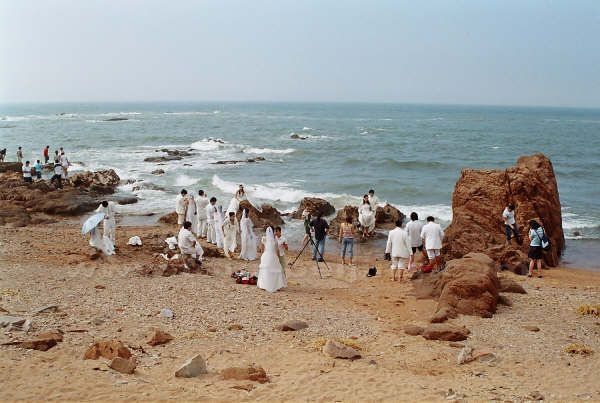
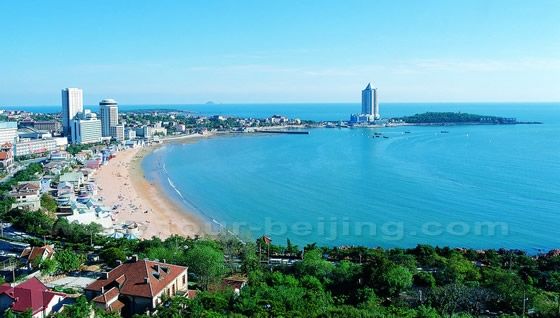
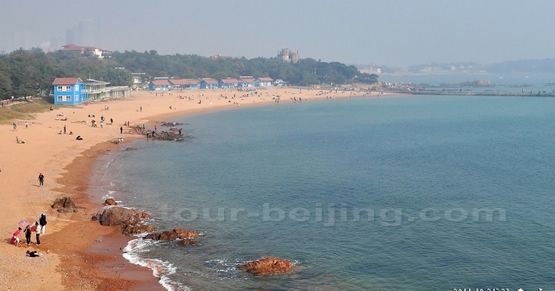
The beach was first built in 1901 by the Germans after they invaded Qingdao. The unique beach, known for its slightly inclining stretches of fine-sand slopes and calm waters, is among the best of all bathing beaches in Qingdao. Surrounded on three sides by mountains, the beach is like the pearl of Huiquan Bay.
Entrance Fee: free of charge Opening Hours: the whole year How to get there: take Buses No. 6, 15, 26, 31, 214, 304, 311, 312, 316, 604 or 605 from the downtown area and get off at Bathing Beach Station.
Entrance Fee: CNY 2 Opening Hours: the whole year How to get there: Buses No. 26, 31, 202, 206, 214, 223, 228, 231, 304, 316, 317, 321, 501, 604 and 801 pass through No. 2 Bathing Beach
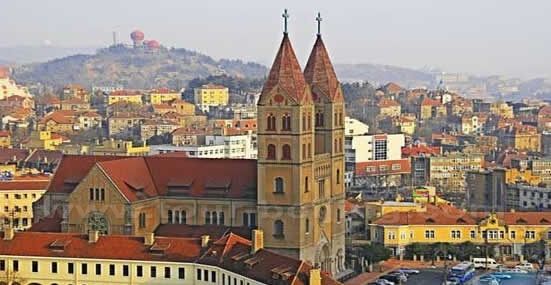
Catholic Church was formerly known as St. Emil Church. Construction of the church was under the guidance of a German architect and lasted for two years from 1932 to 1934. The church was designed according to Gothicism and Romanesque and is of the Neo-Romanism. Inside the church, there is a big and bright hall, which is spacious enough to hold one thousand people.
Entrance Fee: CNY 5 Opening Hours: 08:00-17:00 How to get there: take Buses No. 301, 305 or 320 to the Catholic Church; or take Buses No. q or 367 and get off at the Hushui Lu Station.
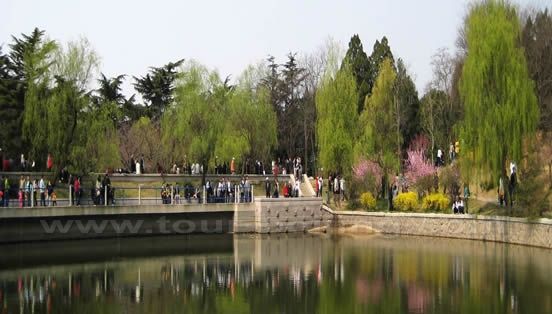
The park features several gardens, including a Chinese Herbaceous Peony Garden, a Chrysanthemum Garden and a Sweet-Scented Osmanthus Flower Garden. The park holds an annual Cherry Blossom Festival, the city’s main festival, which naturally takes place when the cherry trees are in bloom, sometime during the end of April/ the beginning of May.
Entrance Fee: free of charge Opening Hours: 08:00-18:00 How to get there: take Buses No. 6, 15, 302, 304 or 316, and get off at Zhongsban Gongyuan Station, Qingdao.
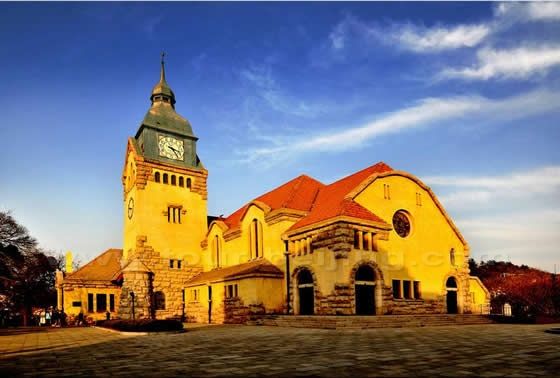
The church is in typical Protestant style, the sandy yellow walls and clay red tiles contrasting well with the greyish buildings around this area. Within, the church is spacious and austere and can hold between 300 and, aledgedly, thousands of congregation. The highlight of the church is the bell tower which houses an old German bell and clock face.
Entrance Fee: CNY 3 (another CNY 4 for going up the bell tower) Opening Hours: 08:00-16:30 How to get there: take the bus No.1, 214, 225 to get there
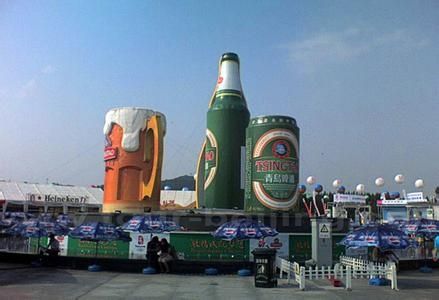
The motto for the Qingdao International Beer Festival reads: "Ganbei with the World!", indicating the spirit of the event.
The first Qingdao Beer Festival took place back in 1991. Qingdao is the largest beer production base in China and the Beer Festival provides a great opportunity to show-off the city's distinctiveness.
Entrance Fee: CNY 10 (during the Qingdao International Beer Festival) Opening Hours: August to September How to get there: take Buses No. 201, 301, 312 or 313, and get off at Pei Jiu Cheng Station. There are special buses for visitors during the Qingdao International Beer Festival.
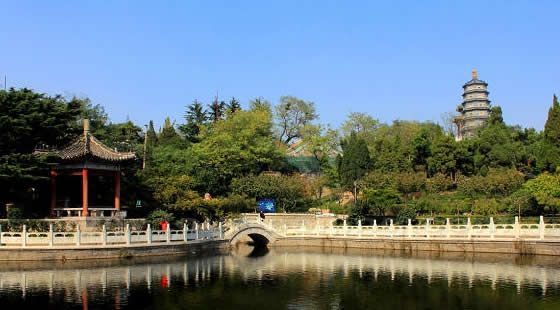
It consists of three courts. Returning to the central path, directly ahead is the Heavenly King Hall. Behind the Hall of Sakyamuni is the Hall of Three Saints. To the left of Preaching Hall is the Hall of the Recumbent Buddha. Opposite the Hall of the Recumbent Buddha is the Shandong Zhanshan Buddhist College.
Entrance Fee: CNY 8 Opening Hours: 08:30-16:30 How to get there: take Buses No. 26, 206, 310 or 370
If you don’t want to go the do-it-yourself route and prefer the hassle-free escorted tours, here are some options for Qingdao guided tours:
Qingdao Cruise Port Day Tour from US$ 65 p/p Qingdao Highlight Day Tour from US$ 105 p/p
Share a question or note for this guide. Comments are reviewed before publishing.
Hand-picked routes matched from this article's destination clues, tags, and categories.
Use these attraction notes to connect nearby sights with tours, destination guides, and planning articles.
Continue planning with practical Beijing guides selected from similar places, themes, and travel questions.
Subscribe to receive Beijing travel ideas and tour updates.