
Call a local advisor
+86 186 1196 4400Email our team
[email protected]Tour Beijing Journal
Plan your Henan Tour? If you are interested in Chinese history and...
The Yin Xu archeological site is one of China's oldest and largest, and a UNESCO World Heritage Site (2006). The archeological site covers palace area, emperor tomb area, general tomb area, handcraft workshop area, civilian inhabitancy area and slave inhabitancy area. Most importantly, Yin Xu is home to the first form of Chinese writing ( Inscriptions on oracle bones ).
Yin Xu ( Yinxu ) is located 7km northwest of the city center of Anyang, 510km south of Beijing. The city of Anyang is easily accessed by highspeed trains from any cities along the Jingguang Railway Line such as Beijing, Shijiazhuang, Zhengzhou, Wuhan and Guangzhou.
From the city center of Anyang, you may take the public bus No.01 from the bus stop of Shirenda (市人大) and get off at the 14th stop of Yinxu Museum, then walk north for about 900m and you will reach Yin Xu, officially known as Foundation Sites of Palace and Temple of Yin Xu (殷墟宫殿宗庙遗址). Of course, you also can taxi there for a small amount of money.
Entrance Fee:RMB 90 Guide Fee:RMB 80-120 Opening Time:8:00 - 18:30(April - Sept) 8:00 17:30(Oct - March) Tel: 0372 - 3932171/3161009 Fax:0372 - 3161009
A visit to the Yinxu Site is mainly composed of several parts such an exhibition hall for the general survey of Yin Xu, Foundation Site of Concave Palace, Yinxu Museum, Stone Stele of Enlarged Inscriptions on Oracle Bones, Chariot Pits of Shang Dynasty, Oracle Bone Pit Yh127, Foundation Sites in Group B, Building No.12 in Groups, Fuhao Tomb, Foundation Sites in Group B.
Well, follow me to have a glimpse of Yin Xu, a 2-hour tour basically needed for this large archeological park. It is a AAAAA National Key Site with good maintenance.
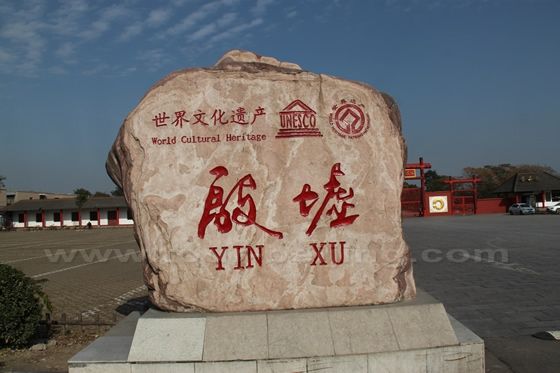
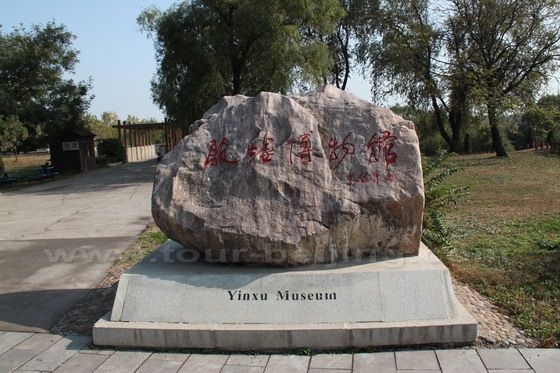
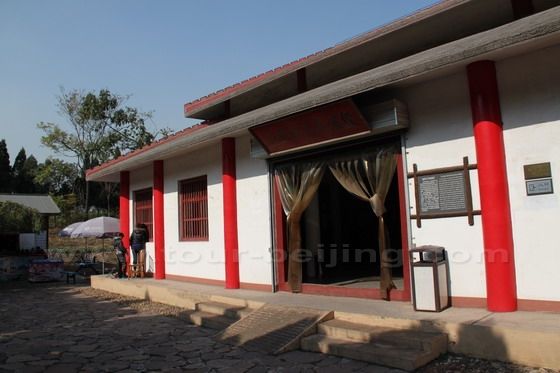
Outside the entrance gate is a large parking lot with a rock in its front inscribed with the Chinese name of Yinxu.
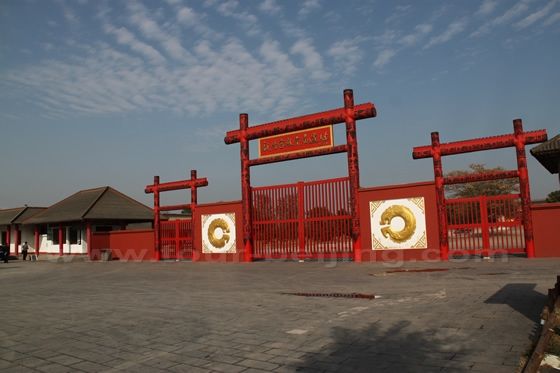
Enter the Yin Xu Park, on your right side, you will see Foundation Site of Concave Palace.
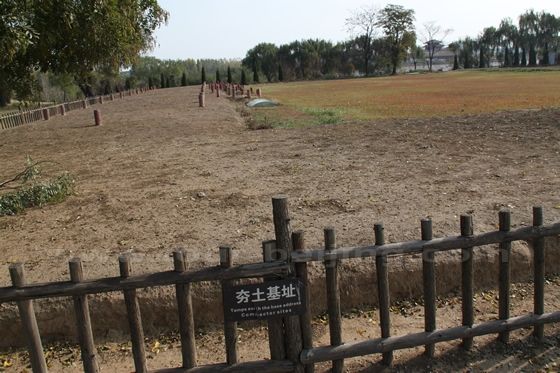
Next, you will go to the exhibition hall for the general survey of Yin. This exhibition gives you a general information on the Yin Xu archeological site.
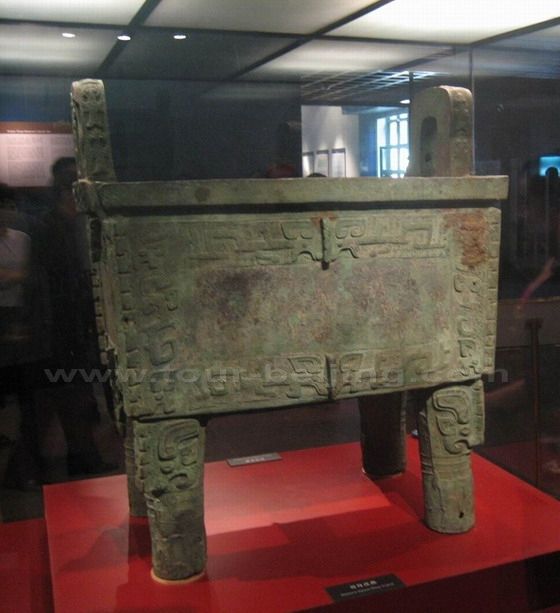
The exhibition house is behind the huge Simuwu tetrapod, an imitation square cauldron unearthed here and the real Simuwu tetrapod housed in National Museum of China, Beijing.
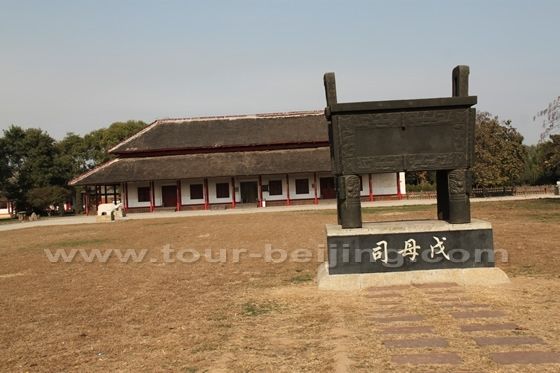
The real Simuwu tetrapod housed in National Museum of China, Beijing.
Simuwu tetrapod was made latter Half of Shang Dynasty (c. 1600-1046 BC), Height: 133 cm, Length: 110 cm, Width: 79 cm; Weight: 832.8 kg
Then turn right and walk to the entrance to the underground basement of Yinxu Museum.
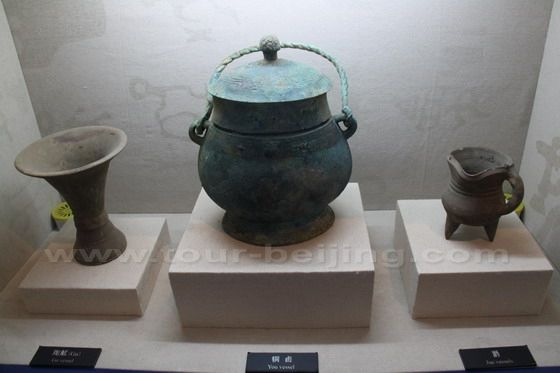
Various Vessels on display
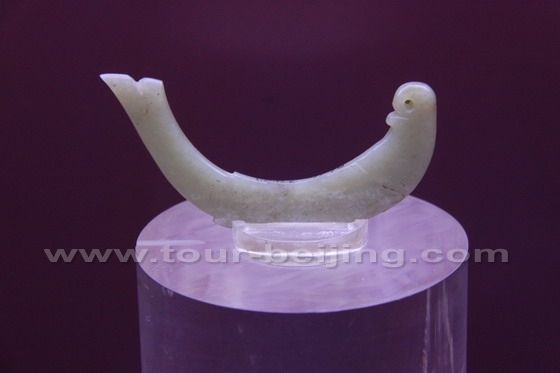
A piece of carve jade on exhibition
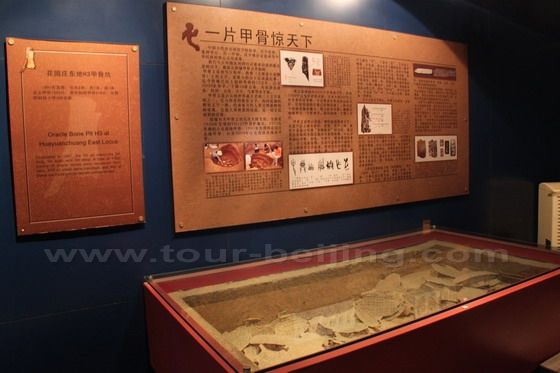
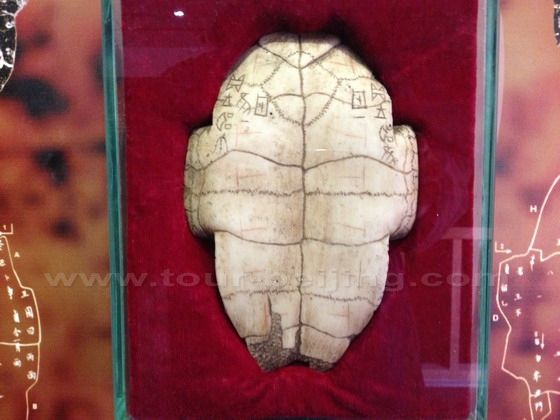
Oracle bones found pit 3 on display
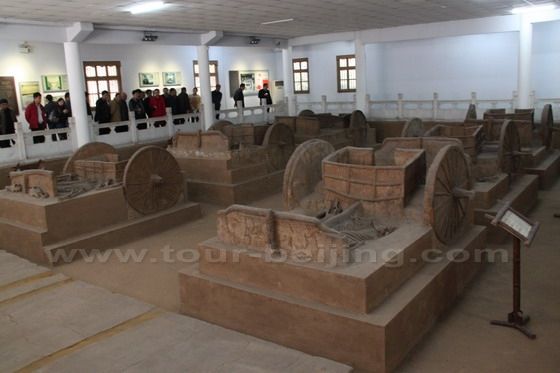
The 5 pits of Chariots and men buried as immolation
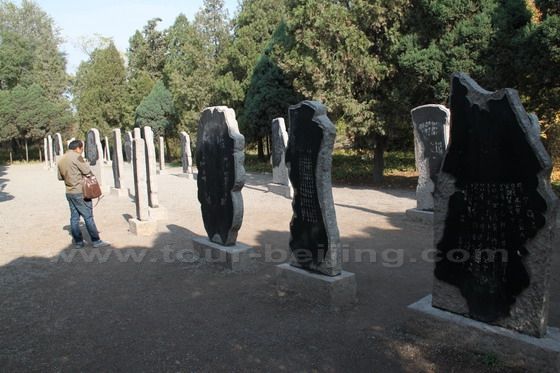
The stele are made according to the original shape of the 30 pieces of oracle bones with inscriptions carefully chosen by the famous scapulimancy ( Oracle bones ) experts Mr. Wang Yuxin and Mr.Yang Shengnan through enlargement.
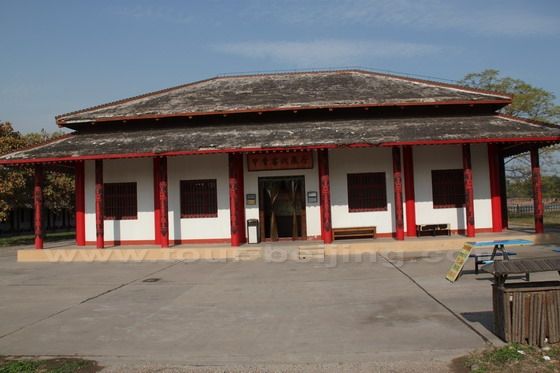
YH127 Oracle Pits: 17000 pieces of oracle bones were discovered in 1936 here in the pit of YH127. Most of the oracle bones are now in Taiwan.
The Hall of YH127 Oracle Pit
the inscribed oracle bone on display
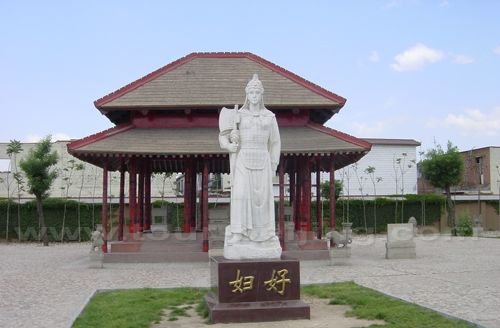
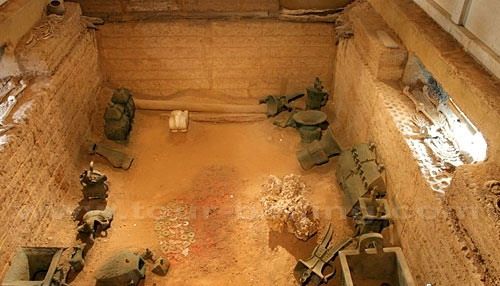
Tomb of Lady Fu Hao Buiral Pit on exhibition. As one of the smaller tombs, Lady Fu Hao Tomb is one of the best-preserved Shang Dynasty royal tombs and the only one not to have been robbed and looted before excavation.
The pit was a wooden chamber 5 meters long, 3.5 meters wide and 1.3 meters high housing a lacquered wooden coffin that has since totally rotted away. 1926 burial artifacts have been excavated including 468 bronze vessels, 755 jade pieces,564 none vessels and 6800 shells.
Tomb of Lady Fu Hao Buiral Pit on exhibition
1926 burial artifacts have been excavated
Share a question or note for this guide. Comments are reviewed before publishing.
Hand-picked routes matched from this article's destination clues, tags, and categories.
Use these attraction notes to connect nearby sights with tours, destination guides, and planning articles.
Continue planning with practical Beijing guides selected from similar places, themes, and travel questions.
Subscribe to receive Beijing travel ideas and tour updates.