
Call a local advisor
+86 186 1196 4400Email our team
[email protected]Tour Beijing Journal
Plan your Great Wall Tour? If you'd like to have a weekend hike on a wide...
Plan your Great Wall Tour? If you'd like to have a weekend hike on a wide and overgrown section of the Great Wall around Beijing, Baiyangyu Great Wall is highly recommended.
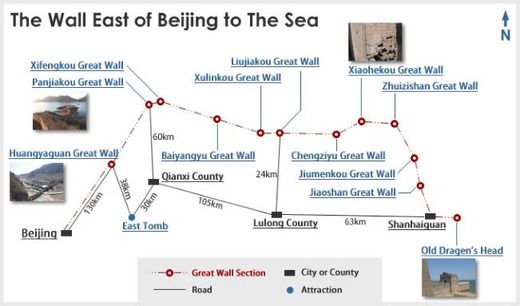
This section of the Wall is located about 250km northeast of Beijing. It is under the administration of Dacuizhuang Town of Qian'an County in Tangshan City, Hebei Province.
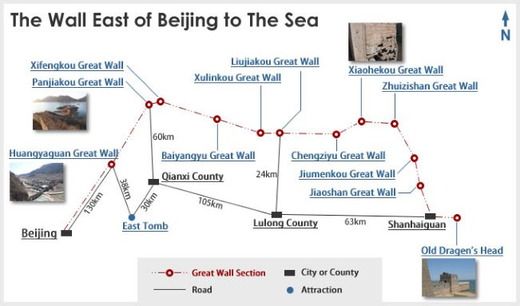
"Baiyangyu" literally means "White Sheep Valley". A river called Baiyang River passes the valley from north to south. There used to be a grand water pass of the Great Wall bridging the valley which now still divides the Baiyangyu Great Wall into two sections - East and West.
The two sections of Bauyangyu Great wall are a 4552m-long fairly well preserved wall with 21 guide-towers. Baiyangyu Great Wall was originally built in Northen Qi Dynasty (550-577) and reinforced in Ming Dynasty (1368 - 1644) by the builders and army led by Qi Juguang.
Baiyangyu Great Wall has some unique features different from other sections of the Wall. Firstly, its water pass town had a double water wall - upper part and lower part, constituting a solid water town which was easy for self-defense and attacking invaders as well, part of the military defense system in Baiyangyu Great wall.
Second, the east section of the Wall has a 1.5km unique marble wall, 10km high and 5m wide, rarely seen among other sections of the wall. Third, among other towers, Shenwei Tower (Powerful Tower) on the west section of Biayangyu Great Wall is the most remarkable. Unlike other watch-towers sitting on the wall, it was constructed to the outer side of the wall.
In the middle of the way on the New Sanwu Road, still 9km from Baiyangyu Valley
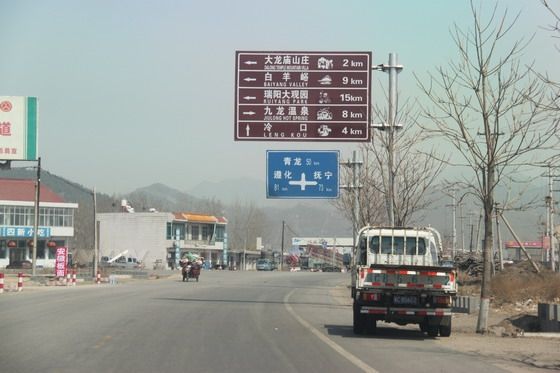
Baiyangyu Valley has now become a scenic area planned and constructed by the local government and some individual sponsors. On weekends, middle class urban residents come here for a pleasant escape from polluted and noisy cities, drinking, climbing, outdoor activities and eating organic food prepared by the local farmers.
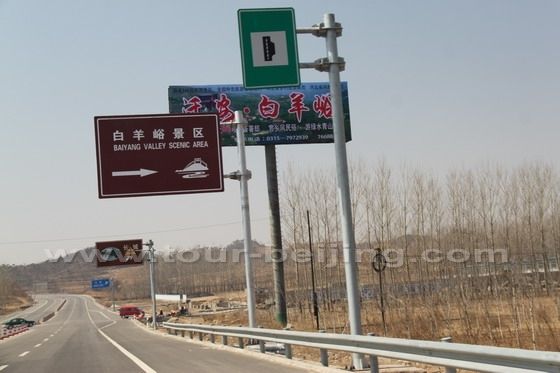
Now we turn off the New Sanwu Road and drive towards the entrance to Baiyangyu Scenic Area.
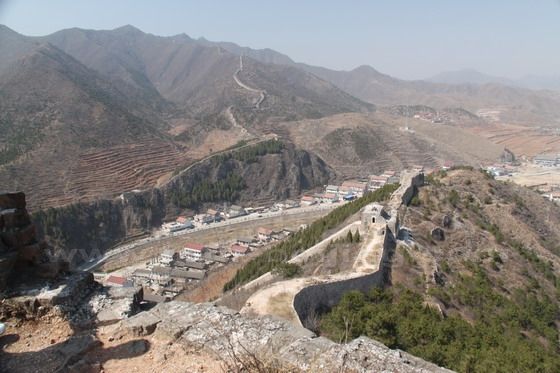
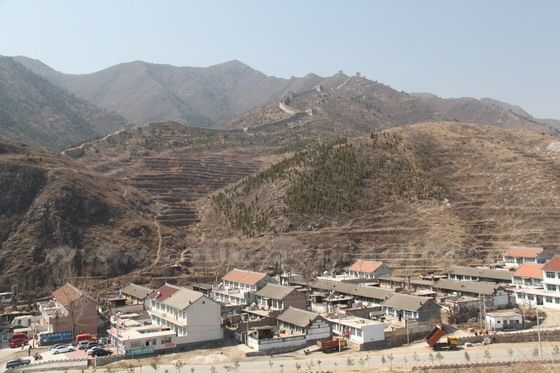
We enter the valley flanked by farm restaurants and inns with the two sections of the Wall looming overhead and Baiyang River passing from north to south, a picturesque view, but unfortunately it is still early spring, not much green nor blooming around.

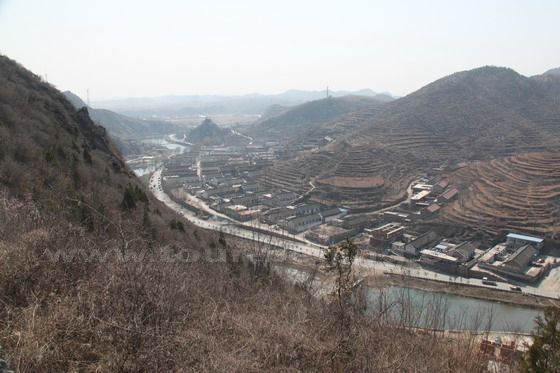
The picture also shows both the west and east sections of the Wall with Baiyangyu Village nestled in the valley and the river winding from north to south.
We choose our hike from the east side of the valley and walk along a mountain road leading up to the wall.
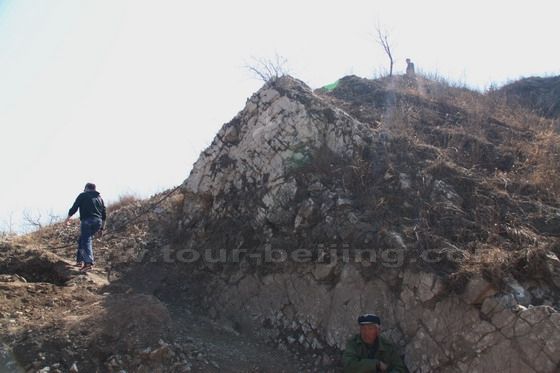
On the hillside, not yet on the Wall, I turn right to the west and look at the west section of Baiyangyu Great Wall.
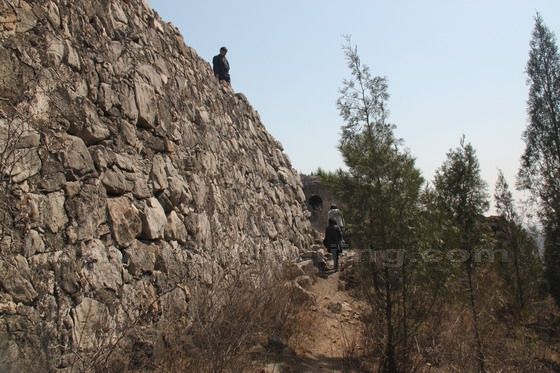
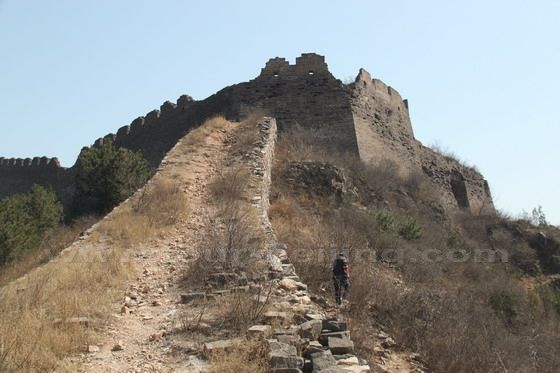
The first fort is ahead of us, dilapidated, sitting on the broken wall built of hoary rocks and its tower base made of slabs.
Hiking along the mountain path by the slab built wall, we are heading towards to the second fort.
Now we are on the crumbling wall and look at the second watch tower and a wire fence is fixed nearby keeping rubble from falling down the mountain.
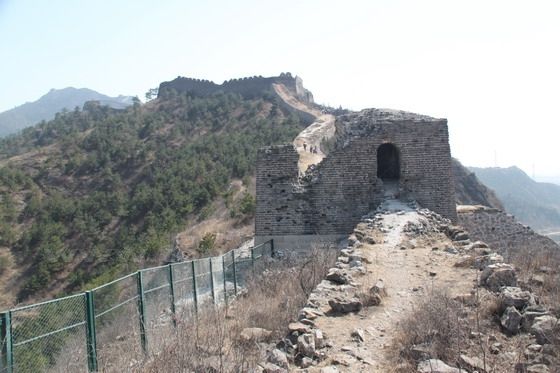
We continue to walk along the dilapidated wall to the so called "Wild City", which looks like a castle surrounded by the wall on its four sides.
I turn right and look down, just have a clear view of the valley with the village and the river in the middle.
I turn back and see the first tower with the west section of the Wall as its background.

We are approaching the "Wild City", no path leading to the wall, we have to get off the wall and hike along a mountain path by the wall, bushes and saplings.
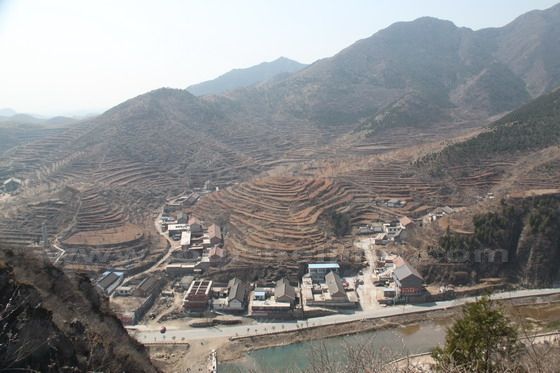
Before we enter the "Wild City", again I turn right and look down, just see a picturesque view of the terraced fields on the hillside on the west of the valley.
The path leading to the entrance to the "Wild City" is overgrown and crumbling.
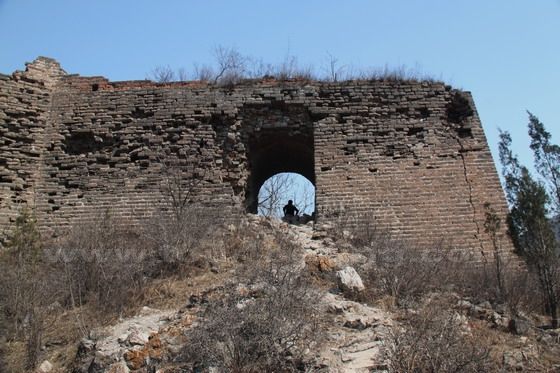
The so called "Wild City" is an open space with a four-sided wall, now rife with bushes and saplings.
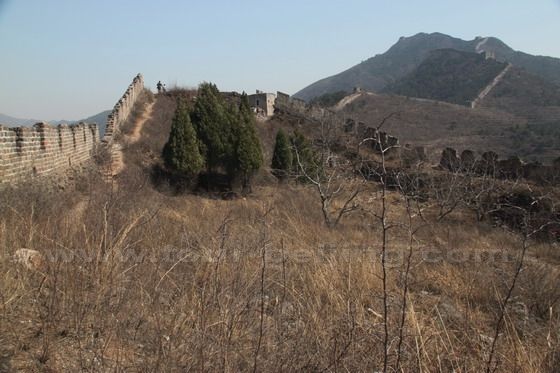
The wall leads to the east and reaches Shanhaiguan Pass as its eastern tip.

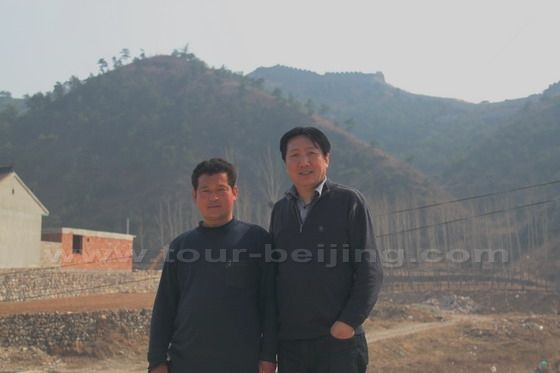
We backtrack from the Wild City and climb down the mountain. Mr.Yu Haiwen's farmhouse provides meals and accommodations. Again we have an authentic farm lunch.
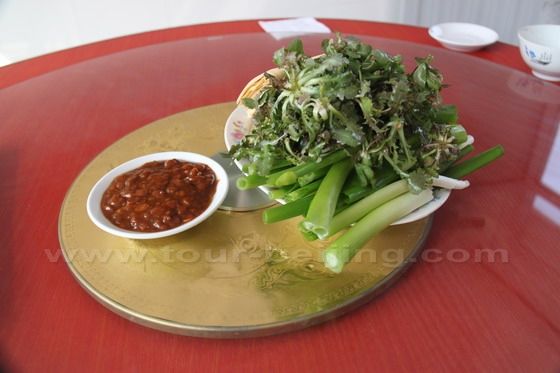
Onions and wild vegetables
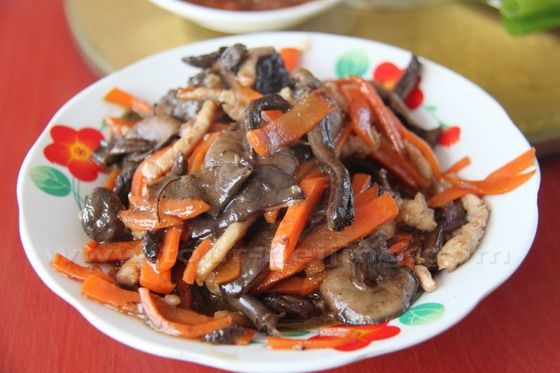
Mushroom and carrot
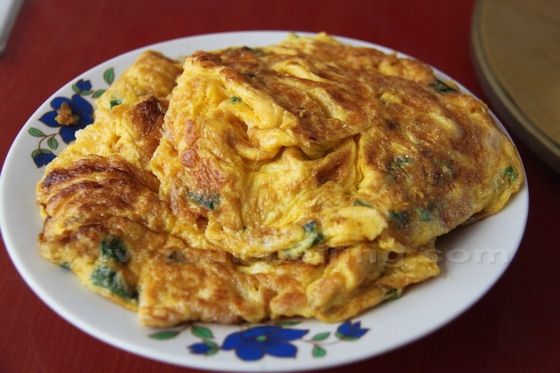
Fried eggs produced by his own backyard chickens
Share a question or note for this guide. Comments are reviewed before publishing.
Hand-picked routes matched from this article's destination clues, tags, and categories.
Use these attraction notes to connect nearby sights with tours, destination guides, and planning articles.
Continue planning with practical Beijing guides selected from similar places, themes, and travel questions.
Subscribe to receive Beijing travel ideas and tour updates.