
Call a local advisor
+86 186 1196 4400Email our team
[email protected]Tour Beijing Journal
Are you interested in a Great Wall Tour? The Great Wall section extended...
Xiaohekou Village is located within the administrative village known as Xigou Village in Yongan Town of Suizhong County in Liaoning Province. Keeping on walking to the west from Xiaohekou Great Wall, you will get to Badaling Great Wall in Beijing while to the south, you will get to Shanhaiguan.
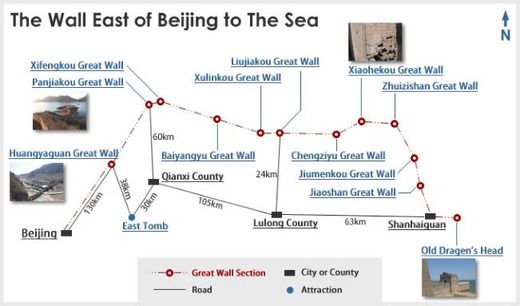
Escorted by our farmer turned guide - Lao Yang, we drive from Zhuizishan Great Wall westwards along a cement mountain road for about 9km, passing by Xiaohekou village and get to a simple parking lot in front of "the mouth of a dry river", which is actually a narrow valley with a dry river spanned by a Great Wall pass - Xiaohekou Pass. Now the Great Wall pass has been broken and damaged.
Now the Great Wall pass has been broken and damaged.
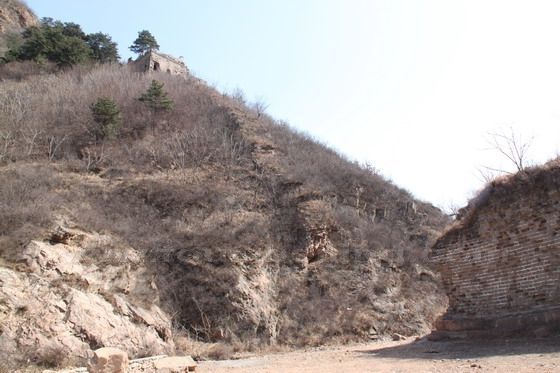
Xiaohekou Great Wall was originally built from the year 1381 in Ming Dynasty with a total length of 8.9km. This section of the Great Wall has 36 watch towers, of which there are 12 towers have stone carvings in decorated design and style on the windows and doors.
Xiaohekou Great Wall was first discovered in July, 2004. Ever since there are more and more people coming to Xiaohekou including photographers, archaeologists, artists and normal travelers.
We walk through the broken Xiaohekou Pass (a small river's mouth), turn left and climb up on a well built mountains slab paved road.
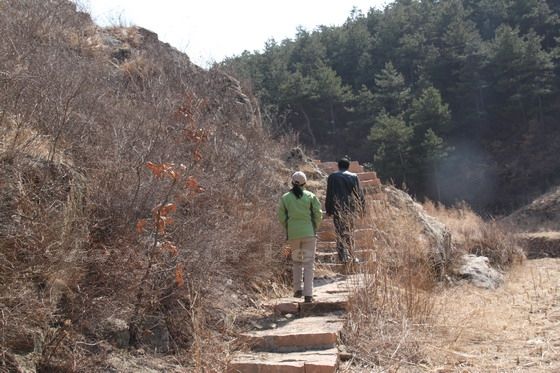
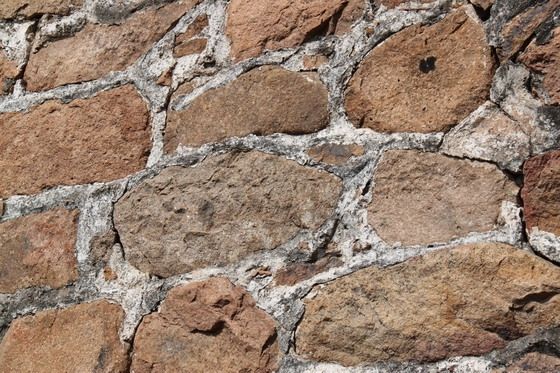
The wall is built of slabs
The first fort is over us, the largest on our hike up to the top.

Its east door is carved with beautiful flower designs.
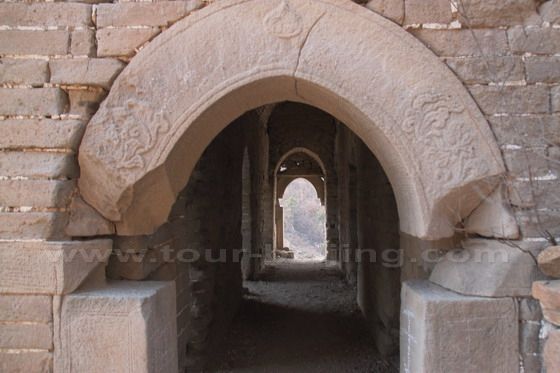
Its west stone door is also carved with decorative relief.
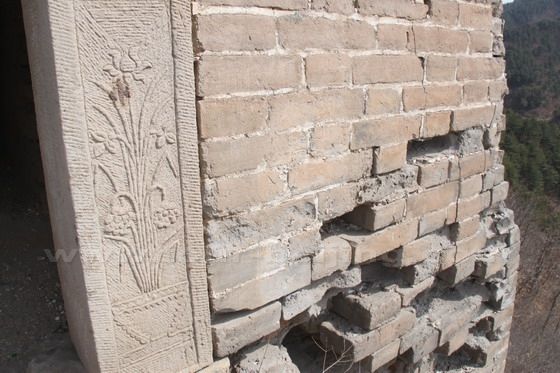
Inside the first floor of the bastion
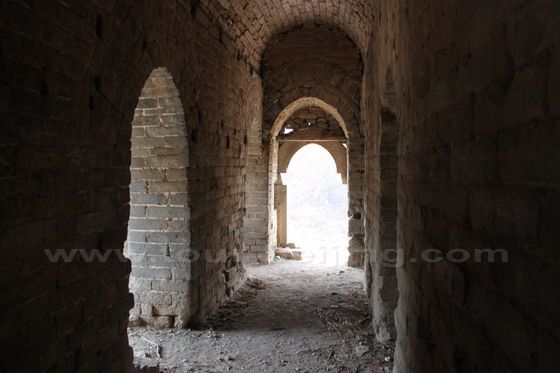
The officers stayed on the first floor while the soldiers on the second floor. A flight of stairs leading to the second floor of the fort.
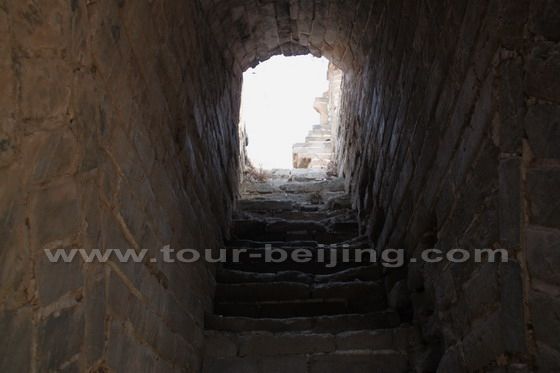
We see unique battlements made entirely with masonry on the fort.
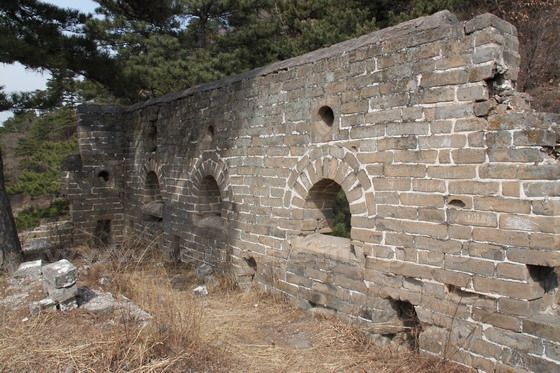
The hole on the battlement is to hold a crossbow.
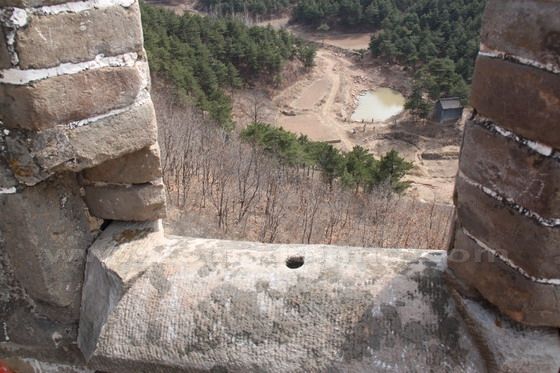
Look down from the fort, we see Xiaohekou Village nestled in the valley by the mouth of a small river - Xiaohejou, hence the name of the village.
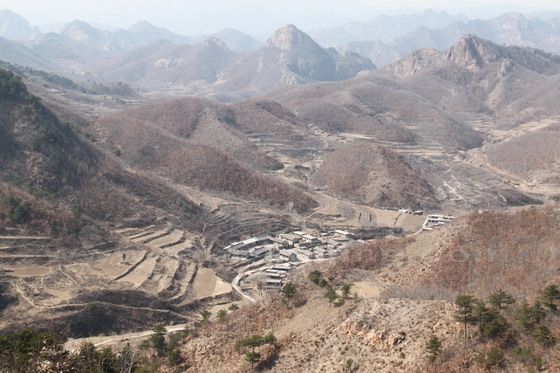
We continue to trudge up on a treacherous wall ridge up to the second watch tower.
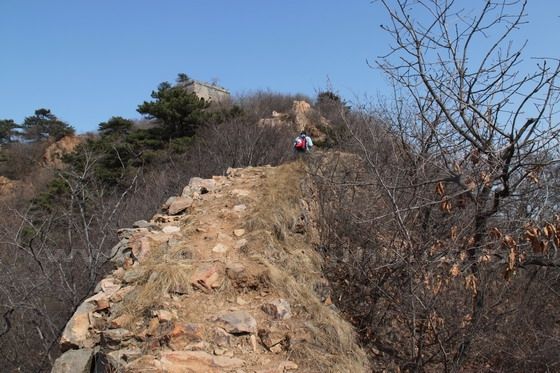
Xiao Hao, my colleague, is hiking in an opposite direction to the east instead of to the west where we hike.
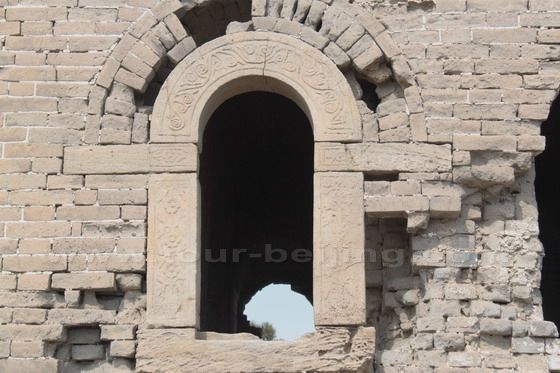
This is the second fort with its stone door also decorated with beautiful carvings.

Let us have a close look at the decorative relief.
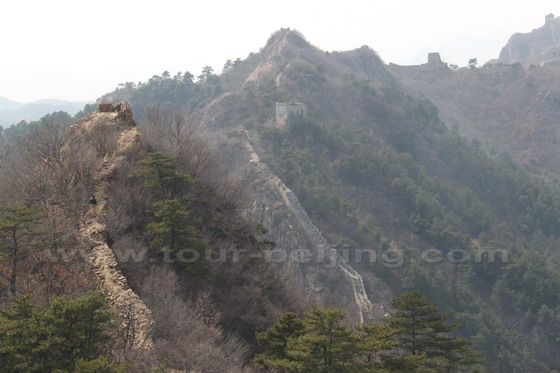
Standing on the second open floor of the fort, I snap a picture of the great wall ahead of us in the east.

Xiao Hao is sitting on a dilapidated tower on the hill to our west.

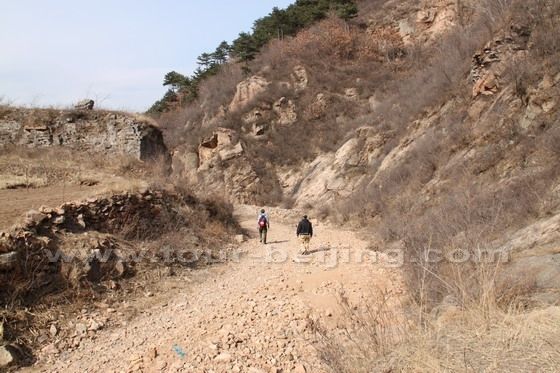
We don't move further and turn back along the same mountain road back to the mouth of the small river - Xiaohekou.
Then we drive to the nearby village - Xiaohekou Village. Most of the villagers are the descendants of the army guiding the Great Wall, who were from Yiwu, a town in southern China, which was the hometown of Qi Jiguan (November 12, 1528 – January 5, 1588).
Qijiguan is was the Wall's architect in chief responsible for the building of the great wall from Beijing to Shanhaiguan. Qi's army of guardians, joined by their families made the Wall alive with villages, fields, orchards and many of which survive to this day. Xiaohekou Village is one of them. which still keeps some traces in Ming and Qing dynasties.
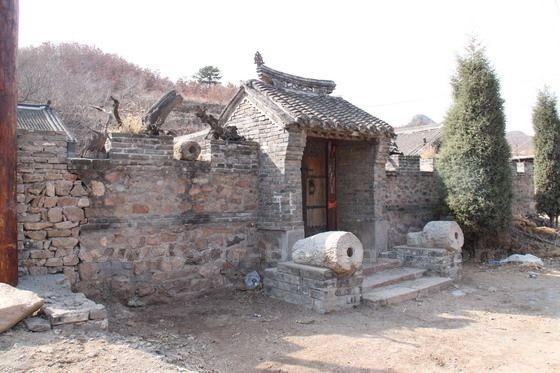
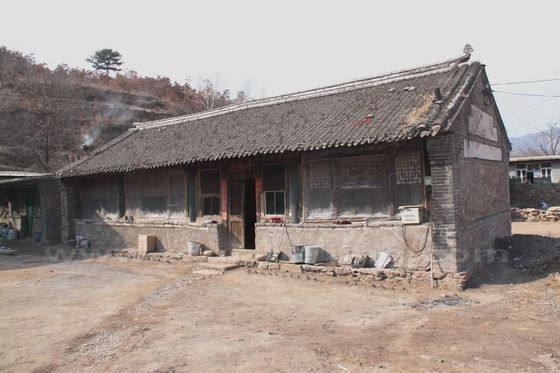
A Ming and Qing style bungalow house
Share a question or note for this guide. Comments are reviewed before publishing.
Hand-picked routes matched from this article's destination clues, tags, and categories.
Use these attraction notes to connect nearby sights with tours, destination guides, and planning articles.
Continue planning with practical Beijing guides selected from similar places, themes, and travel questions.
Subscribe to receive Beijing travel ideas and tour updates.