
Call a local advisor
+86 186 1196 4400Email our team
[email protected]Tour Beijing Journal
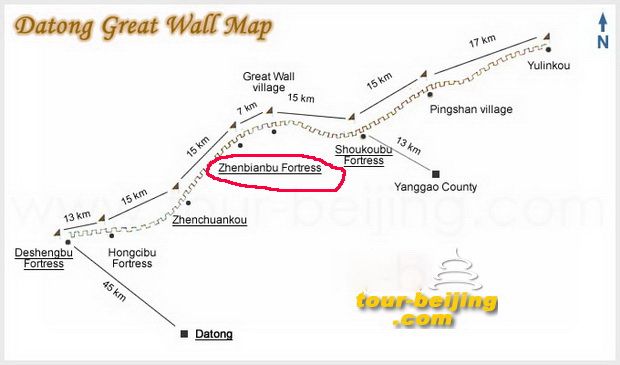
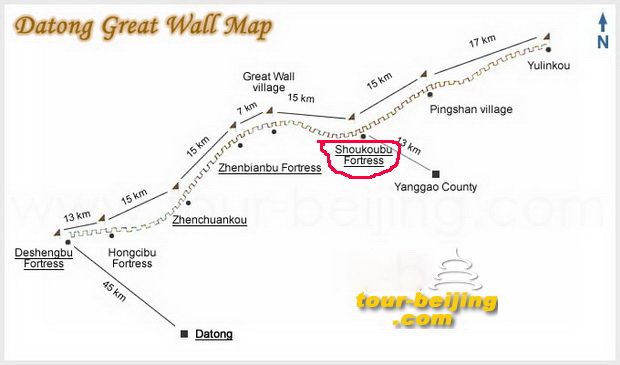
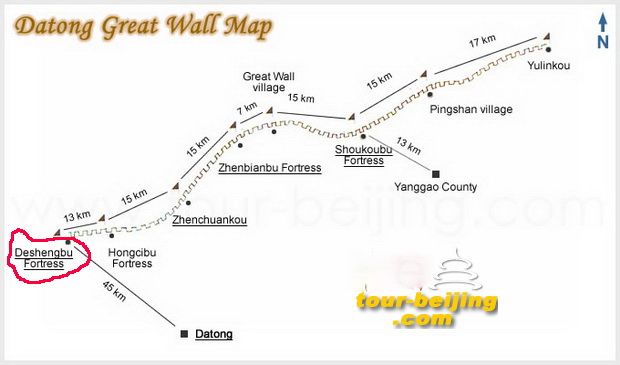
Deshengbu Fortress (得胜堡) was one of the 52 fortresses built along the...
Like other fortresses, Deshengbu Fortress was one of the military bases along the Wall, where the frontier soldiers stationed defending the Wall against the Mongol nomads. In Ming Dynasty the Mongol warlords often came across the borderland, looting and slaughtering, often forcing the Ming Dynasty Government to open the border market.
So, in addition to the defence garrison town, Deshengbu Fortress also served as a bridge connecting the cultural and commercial exchange between Ming and Mongols. In 1571, a grand ceremony was held in Deshengbu Fortress, granting Altan Khan the title of Shunyi Wang. Altan Khan was the ruler of the Tümed Mongols.
Altan Khan led raids into China in 1529, 1530 and 1542 returning with plunder and livestock. The Chinese emperor was forced to grant special trading rights to Mongols, after signing a peace treaty with him in 1571, allowing it to trade horses for silks. Deshengbu Fortress became an important Horse Market in the later Ming Dynasty.
Now follow me to have a virtual tour of Deshengbu Fortress.
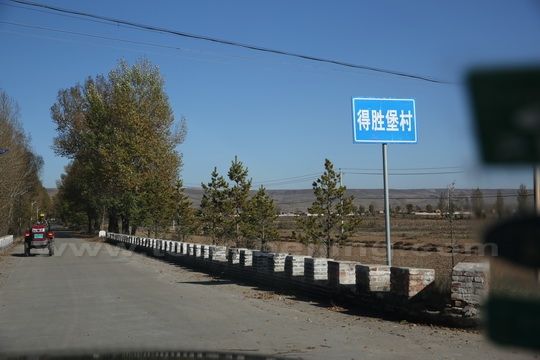
Seeing a signboard pointing to the road leading to Deshengbu village which is located inside Deshengbu Fortress.
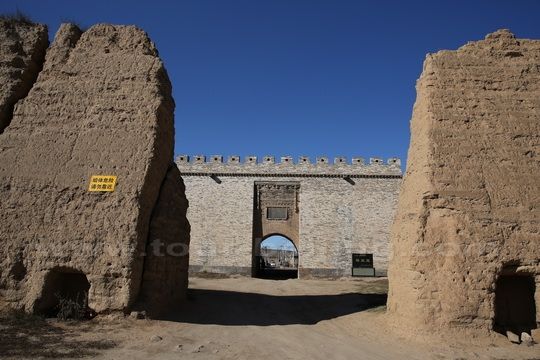
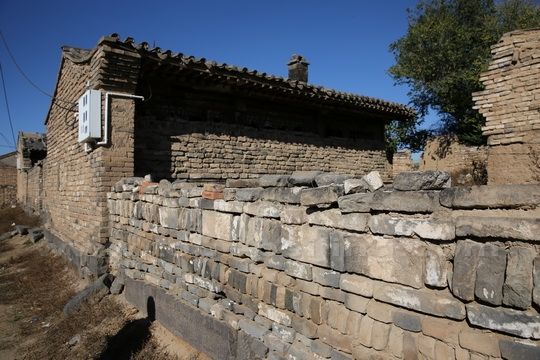
Soon we come up to the south gate of the fortress. Almost all the bricks and stones on the wall have been taken away for building houses and you will see many stone houses inside the castle.
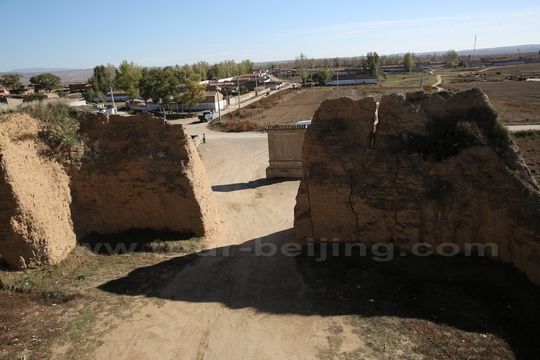
The massive south gate is a recent restoration with the two broken walls standing south of the gate. The two broken ramparts are remnants of the inner city of the castle.
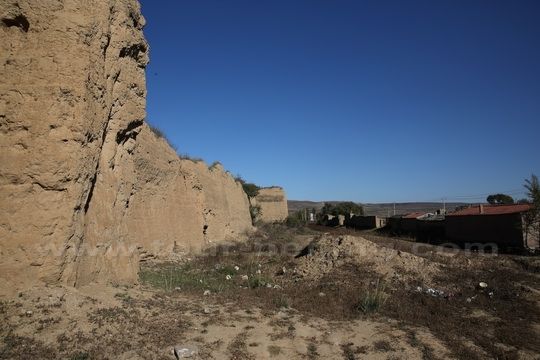
The south wall stands firmly though the tamed brick wall looks a bit dilapidated, extending on the two sides and circling the fortress.
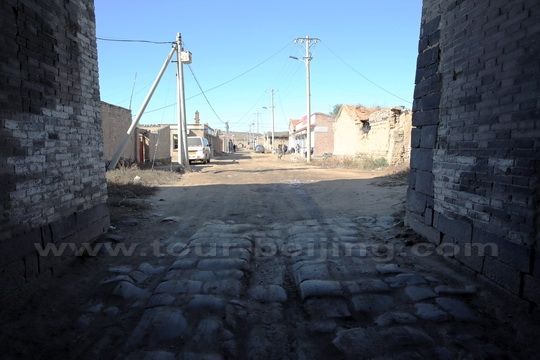
We walk through the archway of the south gate, seeing the trodden pavement the south-north axis street in the village.
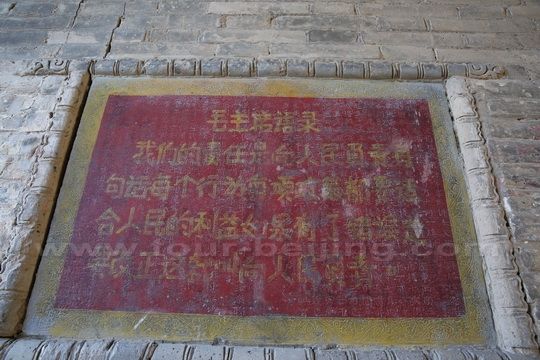
On the wall inside the gate, we find a stone plaque carved with the words recording the reconstruction in 1604 during the reign of Wanli Emperor in Ming Dynasty. Ironically on the stone plaque brushed with the words quoted from Mao Zedong.
For a better view of the whole fortress and the village,we ascend the south gate, having a nice panorama of the whole area. We can see clearly the outline of the dilapidated wall surrounding the castle - Today's Deshengbu Village. Rows of stone houses perched inside the castle, scrubby and a bit rundown.
On the top of the south gate, I'm briefed by Mr. Tao on the history of the fortress.
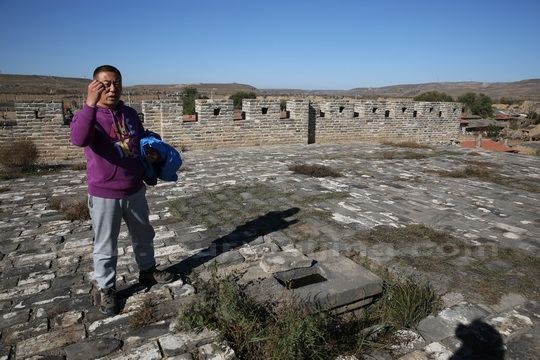
Standing on the top of South Gate and looking down in the east direction.
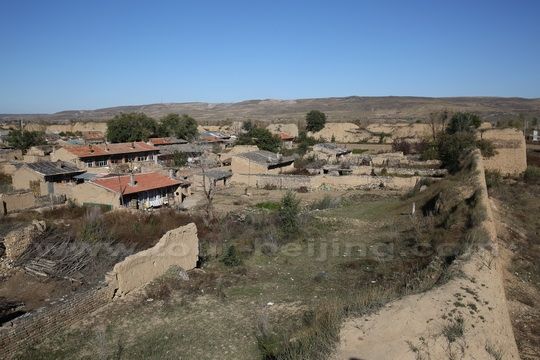
On the top of the south gate and looking down at the north along the south-north axis.
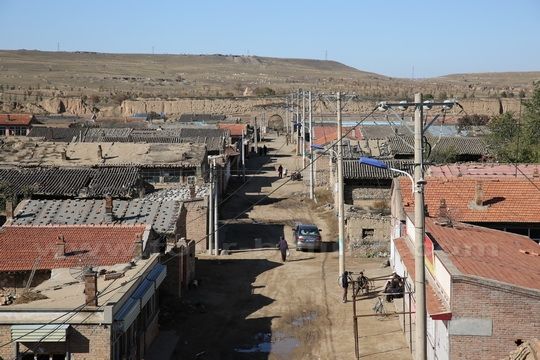
On the top of the south gate, I'm looking down at the castle in the west direction.
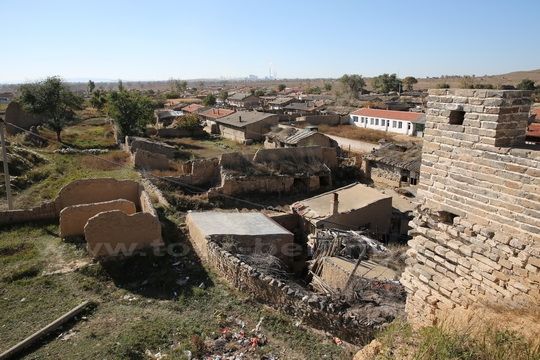
Looking in the south direction, I see two large remnants of the ramparts that are part of the wall circling the former inner city of the fortress.
We come down from the south gate and walk along the south-north axis street inside the village. We see many walls and houses that are made of stones and bricks that may have been taken from those in the walls surrounding the castle.
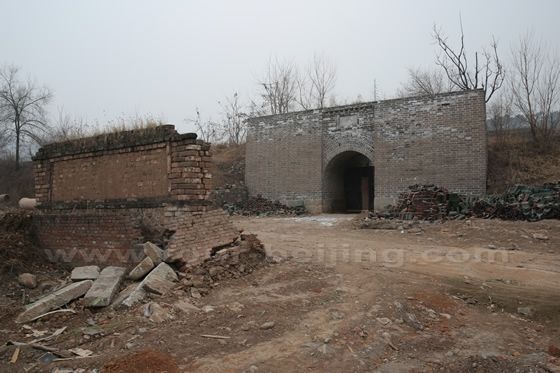
At the northern end of the street, we see an unrestored Ming-era gate which used to have a pavilion enshrining Emperor Jade on its top.
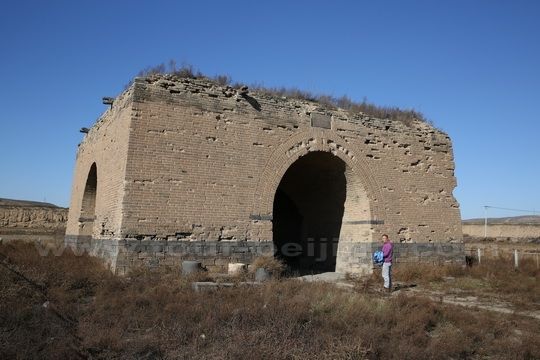
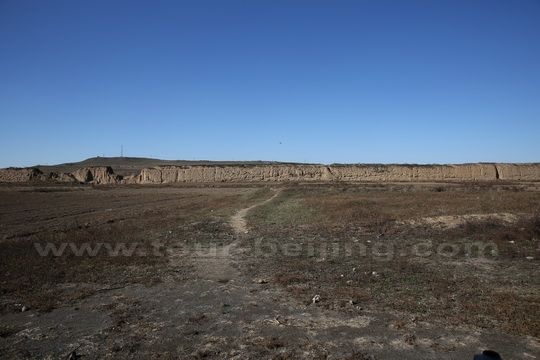
North of the Ming-era gate is the north wall of the castle.
Any questions, just drop a line.
Share a question or note for this guide. Comments are reviewed before publishing.
Hand-picked routes matched from this article's destination clues, tags, and categories.
Use these attraction notes to connect nearby sights with tours, destination guides, and planning articles.
Continue planning with practical Beijing guides selected from similar places, themes, and travel questions.
Subscribe to receive Beijing travel ideas and tour updates.