
Call a local advisor
+86 186 1196 4400Email our team
[email protected]Tour Beijing Journal
Plan your Datong tour? Have you ever had a bold idea of planning your...
No, much of the Great Wall we see today were built in Ming Dynasty (1368-1644), which is made of not stone but tamped earth! For the 6700 km Ming Dynasty Great Wall, only over 1000 km section of the Wall is stone.
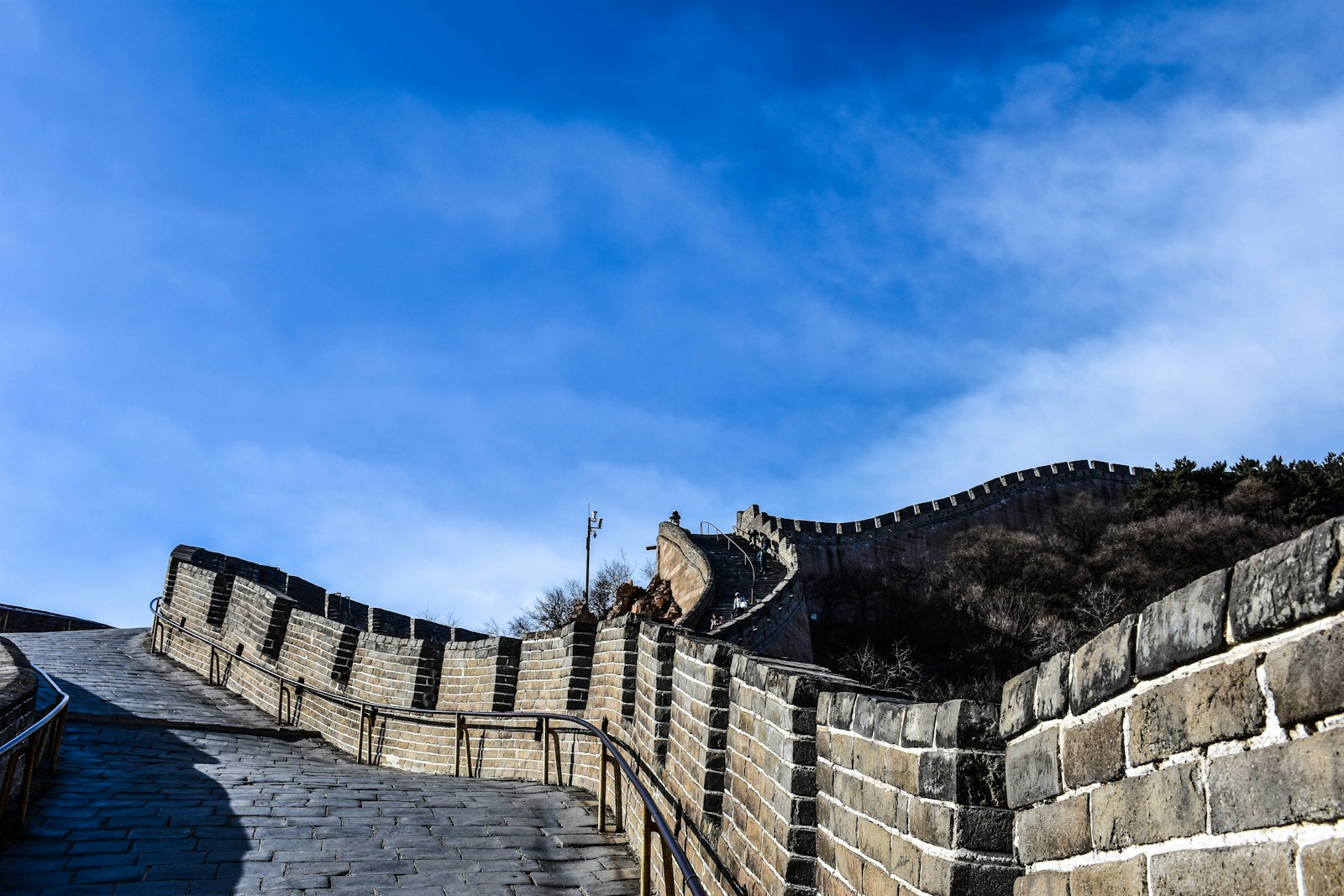
The Great Wall we see today mainly refers to the Great Wall built in Ming Dynasty (1368-1644), a massive wall construction era. The Ming Dynasty Government established so-called Nine Frontier Important Towns which were in charge of the whole over 6000 km chunk of the Great Wall from Shanhaiguan Pass to Jiayuguan Pass.
The ancient Datong was one of the Nine Frontier Important Towns, maintaining the 335km Great Wall within Datong and defending against the Mongol raiders.
Datong Great Wall is also known as “Outer Section of the Great Wall” snaking 335km along the border between today’s Shanxi Province and Inner Mongolia which was a border wall – the frontier between Mongolia and the Chinese heartland in Ming Dynasty (1368-1644).
Datong Great Wall was an important part of the Wall’s central section from the Yellow River to the passes leading to Beijing, vital to the defence of both central China and Beijing. Actually the Great Wall near Datong here doubles and triples like a bit of DNA and Datong lies between two lines – Outer Great Wall and Inner Great Wall.
Along the 335km Datong Outer Great Wall, you still can see much of the remnants of the ramparts, dilapidated forts, crumbling and overgrown; some sections vanish into gaps of roads, quarries, and reservoirs; some give away to camel’s humps or saw-teeth blasted by wind and washed by rain; sometimes no more than a gentle bank a meter or two in height and sometimes nothing at all.
Recently, escorted by a local Datong tour guide – Mr.Tao, we had a 3-day hike along the fragmented Datong Great Wall. Now I’d like to give you a general picture with broad strokes of the ancient Great Wall north of Datong. Come to Datong to find its charm and take in fresh air!
The early morning 45-minute flight from Beijing Capital Airport brings me safely to Datong Yungang Airport. Met by my escort – Mr. Tao and driven directly to Datong’s city center.
After a simple street food breakfast and a short break, Mr. Tao gives me a general introduction to the Wall near Datong and the travel plan for the 3-day Datong Great Wall trip. The 3-day Great Wall trip without much prearranged logistic supply is a touch work-out for me. A big lunch is arranged to prepare for the harsh days ahead.
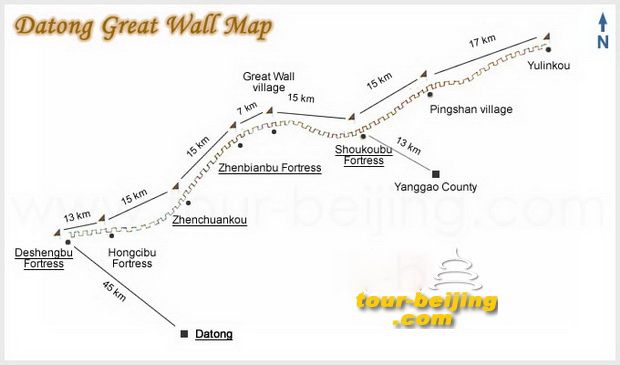
It is recorded that along the 335km Datong Outer Great Wall there used to be 52 fortress and Deshengbu was one of the ancient walled, garrison towns that are the epitome of north China.
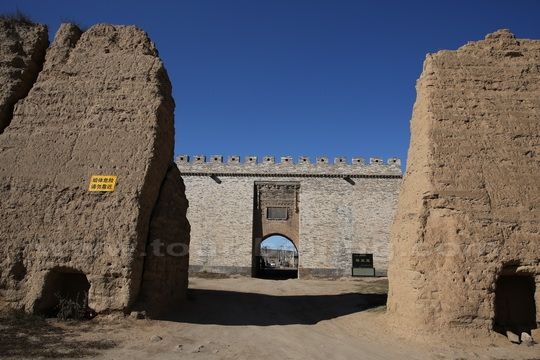
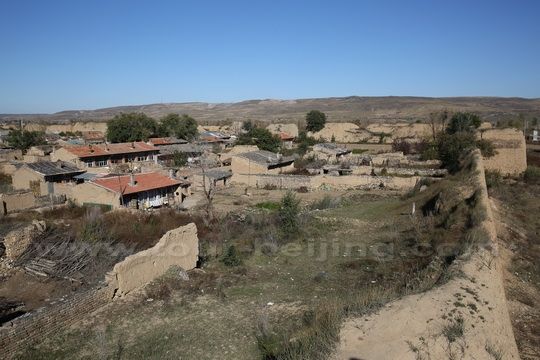
Standing on the top of the north gate, I have a panoramic view of the village within the compound of the fort circled by the remnants of the ramparts.
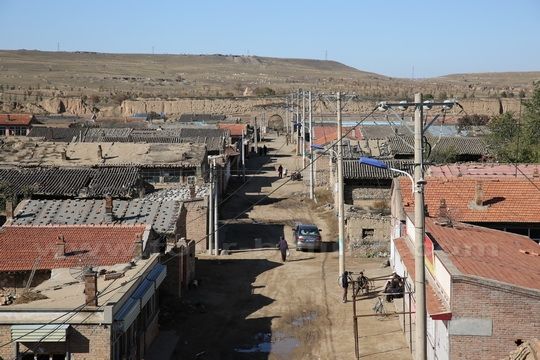
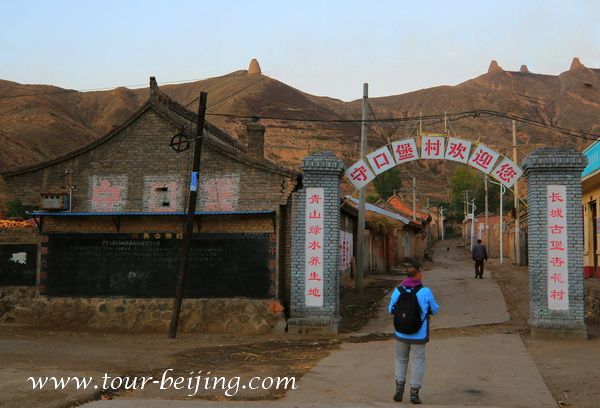
Wander the dirt roads lined with stone and brick houses, old people idle and chat. To the north end you will see an unrestored Ming-era gate.
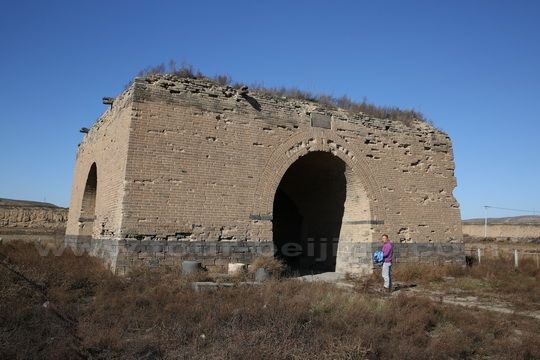
You may hike along the tamped earth wall north of Deshengbu Fort to the east direction for about 13 km and reach the next former garrison town - Hongcibu Fortress. Given 3 days for such a long wall hike ahead of us, to save time and energy we ask our driver to send us directly to Hongcibu Fortress and start our Datong Great Wall trip there.
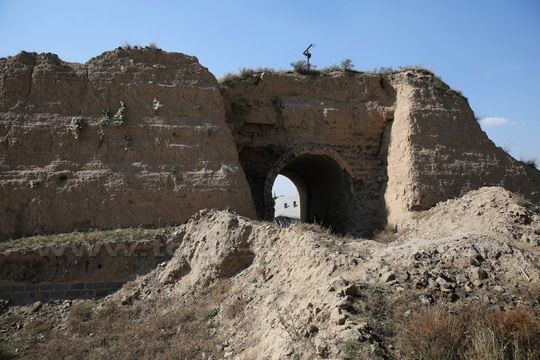
Hongcibu Garrison Town was one of the most famous fortresses along Datong Great Wall. But now not much left for the remnants of the ramparts around the fort. Its south wall is nothing at all. The north archway gate is left with two earth high ramparts with the exterior bricks taken away by the local villagers for building houses.
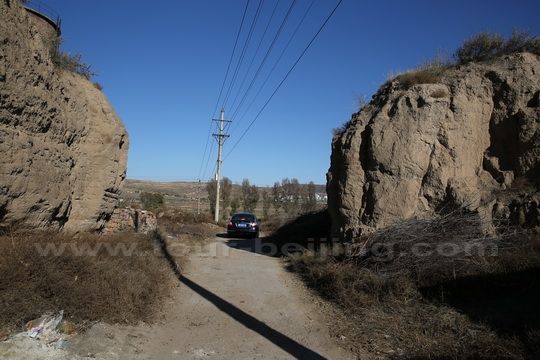
We need to cross over a steep mountain known as Fangshan (Square Mountain). My escort - Mr.Tao suggests a short cut hiking route leading up to the steep hill. Later it shows this section is most tiring and tough for two of us trudging up the hill with heavy bags filled with food,water and sleeping bags and more.
We plunge on uphill through bushes and saplings and walk along the tamped earth section of the Great Wall.
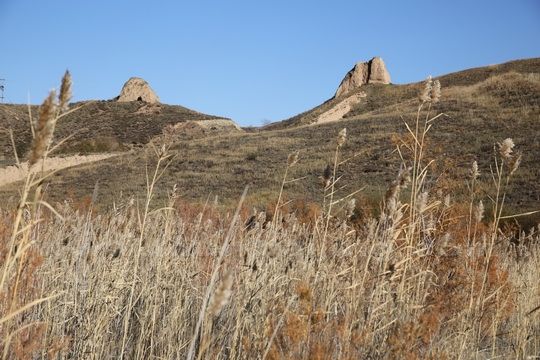
Scrambling up the overgrown and even crumbling earth Great Wall perched on the steep slopes of Fangshan Mountain.
To catch up with the time left before dark, Mr. Tao chooses a short cut away from the Great Wall for a faster ascent up to the summit. The short cut does reduce our hiking distance, but doesn't save our energy, a tiring and tough climb!
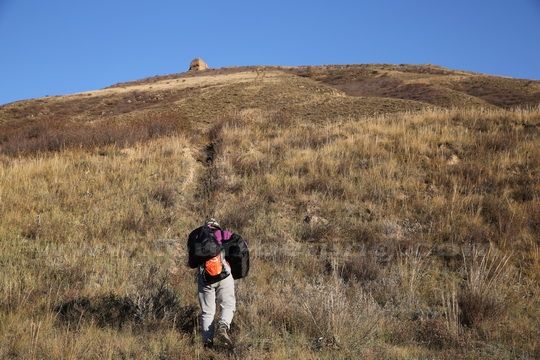
Reaching the summit, we see the sun is setting, blanketing the top and wall in golden rays. The dilapidated beacon-tower still stands on the summit blasted by wind and washed by rain.
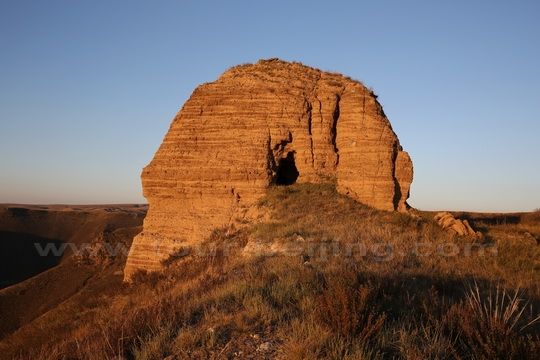
The rigorous climb awards us with the amazing view of the plateau on the summit with the beautiful sunset. We are walking along the tamped earth Great Wall perched on the plateau with the backdrop of sunset glow.
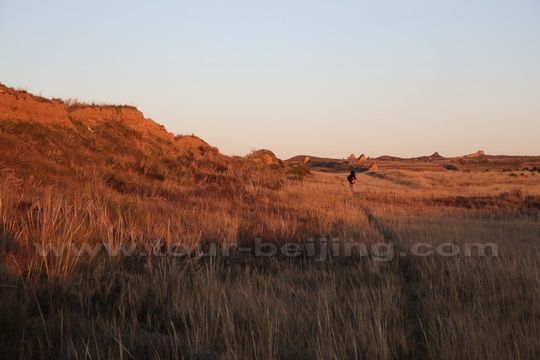
Walking on the wild section of the earth Great Wall on the flat summit, communicating in heart with the soldiers who eked out their lives for the safety of the country over 500 years ago.
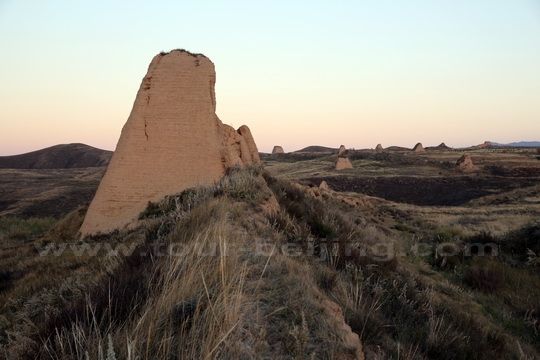
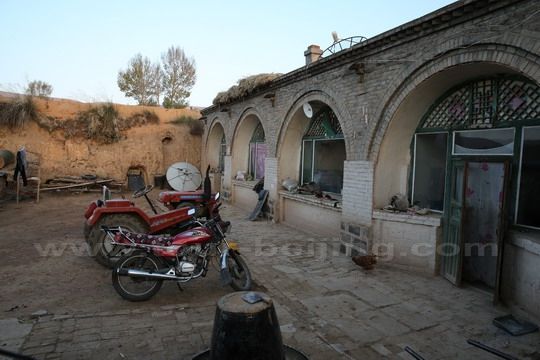
It is getting dark and the Great Wall hike after nightfall is risky. So we decide to stop walking along the Wall and hike down the hill. Before we reach a courtyard home in the village down the hill, it has been already dark outside. We knock at the door. It is a cave house with a spacious courtyard.
The host Mr. Li is very friendly. He agrees to let us put up for the night in his cave house. And he even invites us to have dinner with them ( including his son and his son's wife).
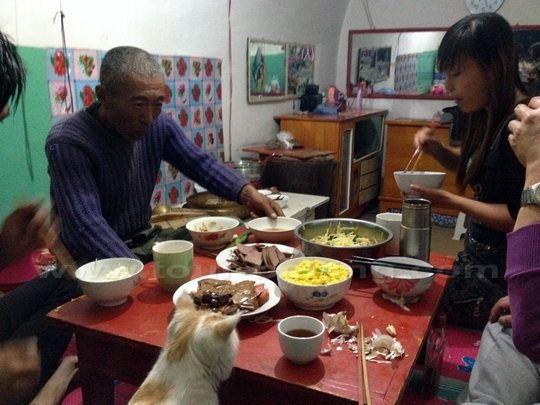
Spreading the sleeping bags on the kang- a stone bed with a stove both for cooking and warming in the house. Soon we both fall asleep. With much hiking ahead, we have to get up early. At this moment, we have the chance to see the 4-hole cave house.
The earth houses common in the Loess Plateau in Henan, Shanxi, Shaanxi, Gansu and Qinghai. Cave houses are generally carved out of a hillside, a vertical side of a loess hill, warm in winter and cool in summer.
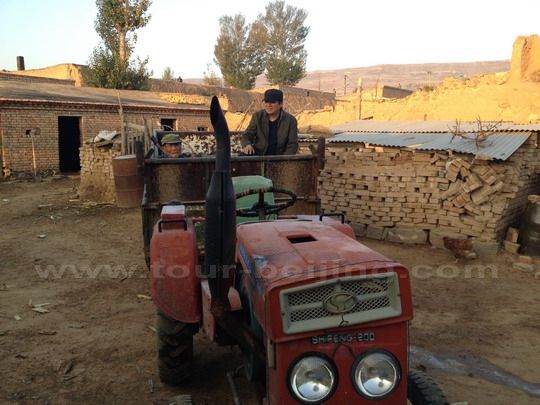
Seeing we have so much to carry on the tough Great Wall hike, Mr. Li is ready to give us a hitchhike using his tractor and brings us to the starting point of Zhenchuankou Great Wall about 2.5km north of his village.
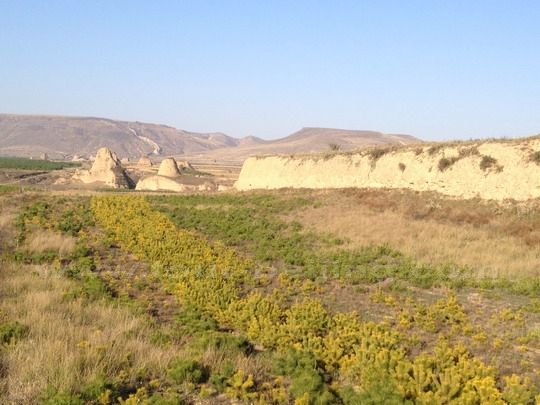
Guide-towers and beacon-towers are dotted on the wall or by the wall. Blasted by wind and washed by rain, some sections are just camel's humps or low banks, or nothing at all.
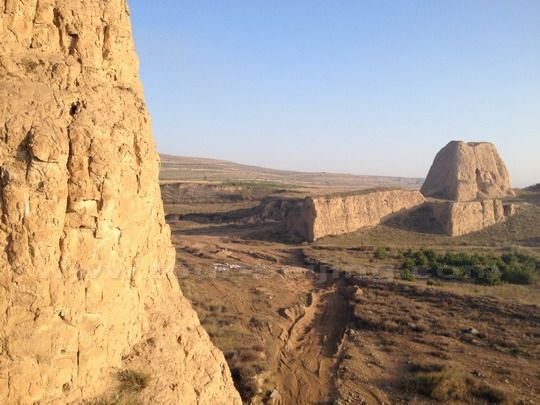
Hike along the rugged wall ridge with bushes and saplings. Unlike the wall near Beijing built on the summit of the high mountains, most of the earth wall here built on the flat plain or at the base of the mountain with much vulnerability to the raids from the nomads. On the both sides of the wall are fields planted with corns,sorghum and potatoes.
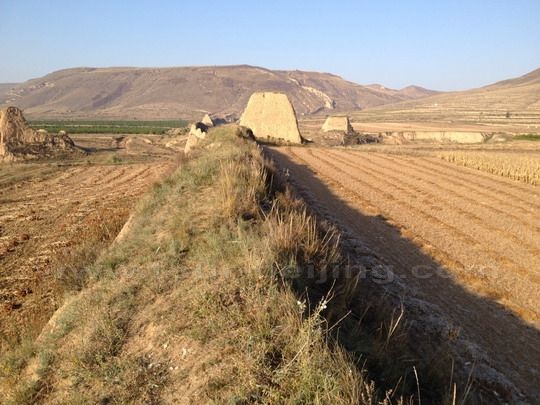
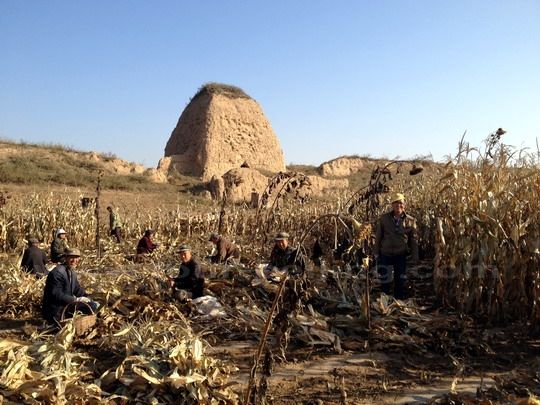
It is an autumn harvest time and the farmers are busy collecting corns on the fields.
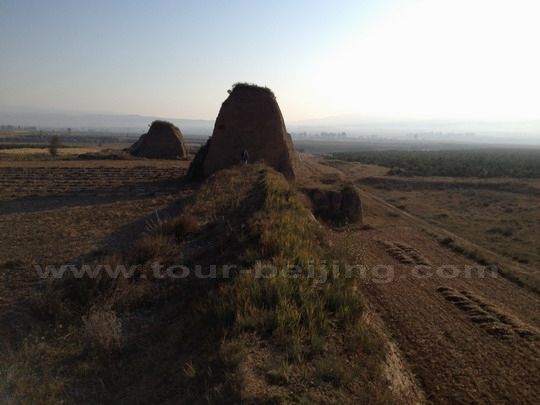
We continue to walk on the wild wall top overlooking the farmlands on both sides of the wall below, feeling the silence and tranquility of the yellow dragon snaking extending east and north.
We reach the next village known as Zhenchuankou Village with over 50 households. In Ming Dynasty was also a small castle for military defense. Now the village looks rundown, dusty and scrubby. Young people have almost all left the village for migrating to the cities for work. We don't know how long the village will keep on with old people taking caring of the fields and themselves.
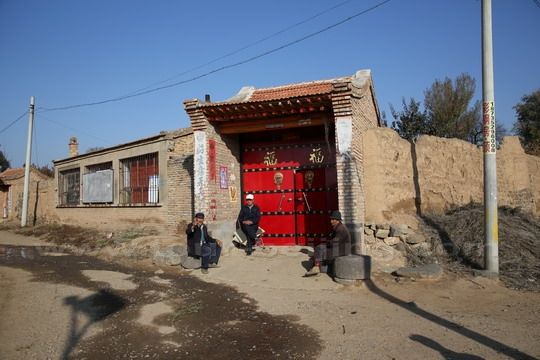
The local villagers are warm and friendly, worried that we are unable to walk to our next destination - Zhenbianbu Fortress, still over 10 km away. Seeing we carry so much backpack, they persuade a passing by SUV to give us a hitchhike to Zhenbianbu Fort.
Arriving at Zhenbianbu Fortress, we are amazed at the ancient walled garrison town that is still populated by the local village. The fortress was built in 1539.
People live in the stone and brick houses. The scene would have a timeless quality except for a few electricity poles and motorbikes. Year after year people live the same farm life.
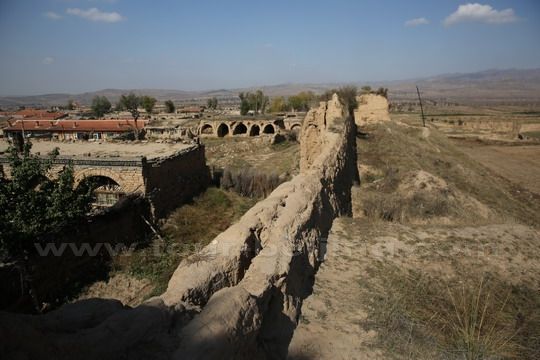
The ancient gate is dilapidated, showing us its past pride. The stone and brick gate is under the protection of the local government.
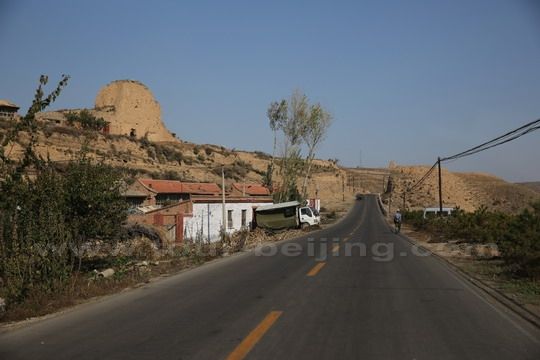
Parts of the ramparts around the fort are still visible. The Shoukoubu Village is within the former castle. Losing no time, we walk to the east side to have better pictures of the Wall in the sunset glow.
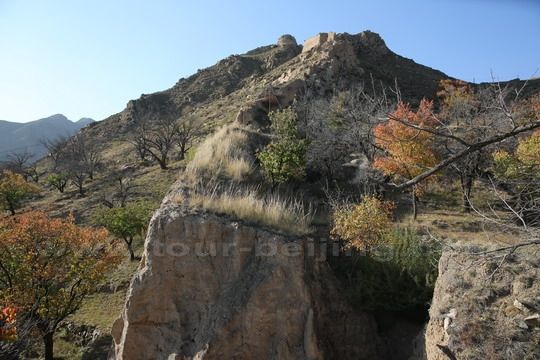
The crumbling Great Wall snakes down the steep mountain under the setting sun with a backdrop of colorful autumn leaves.
The fortress or the village now is located on the west side of the valley with the west section of the wall and high beacon towers looming over it.
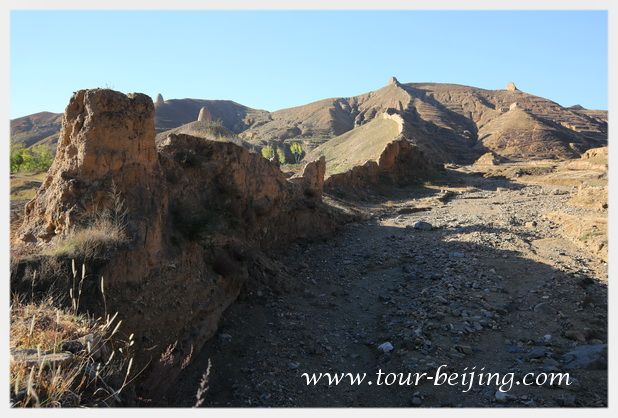
Next morning, I climb up the west section of the Wall on the steep hillside. The rammed wall feels hard and firm, going up along the rugged mountain. Eroded by the rain and blasted by rain, the wall appears like undulating saw-teeth perched on the steep slope.
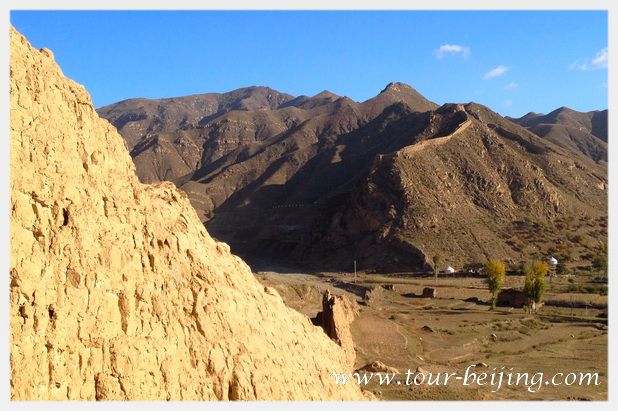
Looking at the east direction, I'm amazed by the autumn view of the Wall and colorful apricot trees. The guide-towers and beacon-towers are scattered around the mountain in the east side in a far distant mist with the backdrop of the autumn apricot trees and the courtyards in the village.
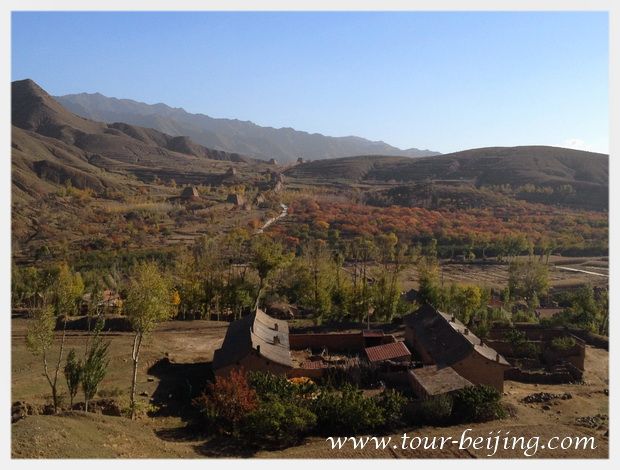
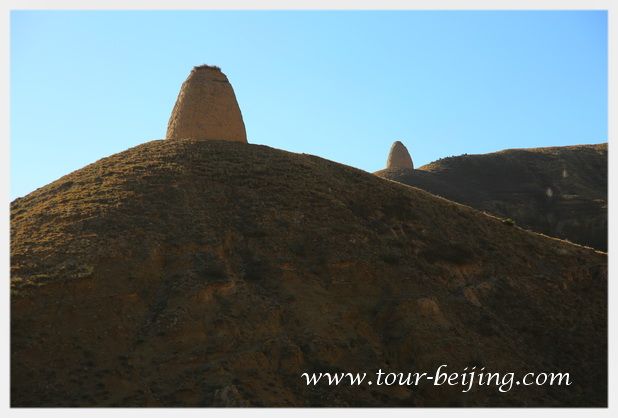
Here you can find some round beacon towers perched on the west slopes of the mountain rarely seen in Beijing.
Any questions, just drop a line.
Share a question or note for this guide. Comments are reviewed before publishing.
Hand-picked routes matched from this article's destination clues, tags, and categories.
Use these attraction notes to connect nearby sights with tours, destination guides, and planning articles.
Continue planning with practical Beijing guides selected from similar places, themes, and travel questions.
Subscribe to receive Beijing travel ideas and tour updates.