
Call a local advisor
+86 186 1196 4400Email our team
[email protected]Tour Beijing Journal
Plan your Nanjing Tour? Linggu Temple Scenic Area (灵谷寺)is one of the four...
Recognized by Google Map as "Linggu Tower", Linggu Temple Scenic Spot is located about 1.5km to the east of Dr.Sun Yat-sen’s Mausoleum on the southeast slope of Zhongshan Mountain.
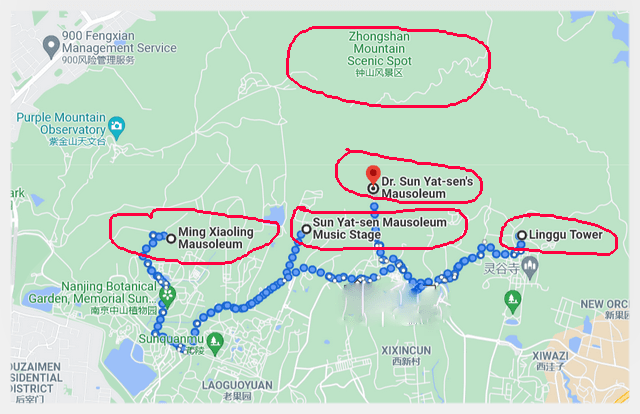
Linggu Temple Scenic Area is named after the namesake temple – Linggu Temple. Now the scenic area is mainly composed of Linggu Temple, Linggu Pagoda (also Linggu Tower), the Beamless Hall, the Entrance Gate, the Paifang and a large screen wall.
The Linggu Temple was first built in 514 under the reign of the Liang Dynasty (502-557), also known as the Southern Liang Dynasty, the third of the Southern dynasties during China’s Southern and Northern Dynasties period.
It used to be the largest temple at that time with an area of over 300,000 square metres. Later it was destroyed in a warfare and rebuilt in Qing Dynasty. Only the Beamless Hall was left intact.
From 1928 to 1935 during the Kuomintang Government, the Linggu Temple was gradually built into a cemetery dedicated to the the National Revolutionary Army’s martyrs who gave their lives during the Northern Expedition against the northern warlords and the Anti-Japanese Wall.
After 1949, Lingu Temple was renamed Linggu Temple Park (Linggu Temple Scenic Area). But people still habitually call it Linggu Temple.
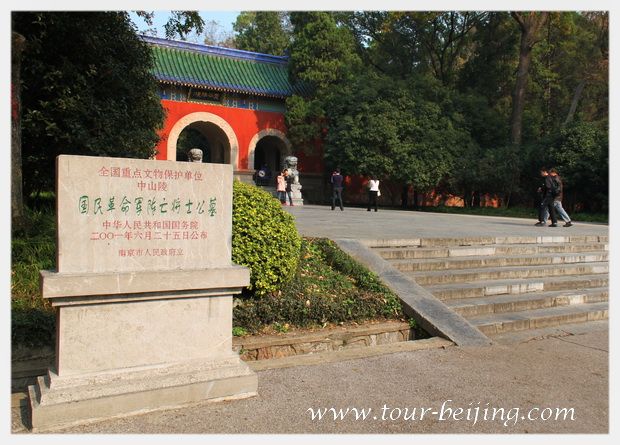
This is the main entrance to the Linggu Scenic Area. The entrance is a three-gate hall, green glazed tiles and red walls on the both sides. By the gate stands a stone sign inscribed with the Chinese characters meaning "The Cemetery dedicated to the the National Revolutionary Army’s martyrs ", indicating that the temple was turned into a cemetery during the reign of Kuomintang Government ( 1928-1949).
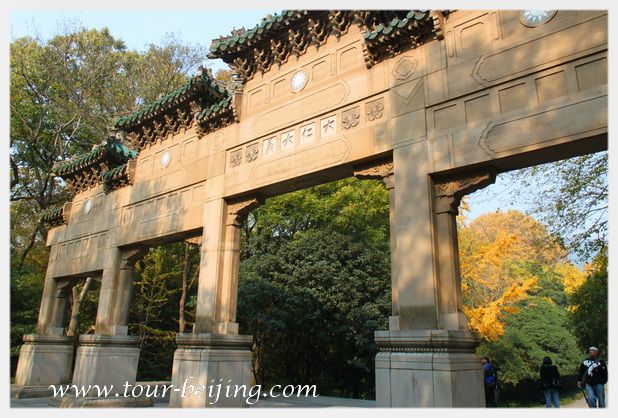
Behind the main entrance, you walk for a while and see a massive and solemn paifang, a traditional Chinese style gating arch, green glazed tiles and inscribed with the the national emblem of the Republic of China.
Wuliang Hall, known as Beamless Hall. The Beamless Hall is the only remaining ancient relic in the temple with over 600 years’ history. The hall is 22m high, 46.7m wide. It has three archways. The hall was constructed with bricks and without a piece of wood or a single nail, hence the name of “Wuliang Hall” means “beamless hall”.
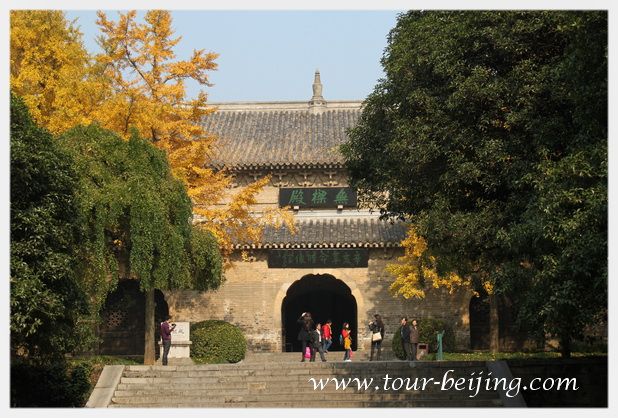
The Hall used to enshrined Amitayus (Buddha of Infinite Life) whose Chinese name has the same pronunciation as that of Wuliang. Later in 1928, the hall was changed into the memorial hall of soldiers who gave their lives in the War of Northern Expedition (1926–1927). Over 30,000 soldiers were enshrined.
A monument to the 19th Route Army Martyrs that primarily led the offensive against the Japanese soldiers invading Shanghai in 1937.
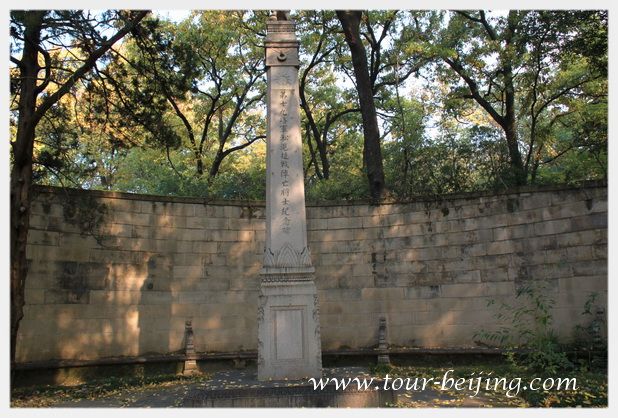
Linggu Pagoda was originally constructed in 1929 as a monument to the soldiers who died during the War of Northern Expedition (1926–1927).
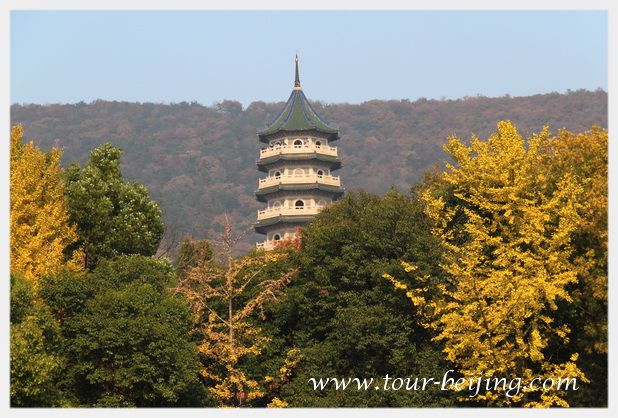
The 9 stories pagoda is 60.5 metres high, inscribed with the speeches made by Dr. Sun Yat-Sen and epigraphs of Chiang Kai-Shek.
If you don’t want to do a self-guided tour and prefer the hassle-free escorted tours, here are some options for organized tours to Jiangsu Province:
Share a question or note for this guide. Comments are reviewed before publishing.
Hand-picked routes matched from this article's destination clues, tags, and categories.
Use these attraction notes to connect nearby sights with tours, destination guides, and planning articles.
Continue planning with practical Beijing guides selected from similar places, themes, and travel questions.
Subscribe to receive Beijing travel ideas and tour updates.