

Call a local advisor
+86 186 1196 4400Email our team
[email protected]Tour Beijing Journal
Dear Travellers, We’d like to have the following Great Wall travel tips to remain updated for the benefit of new visitors visiting the Great Wall of China. If
Dear Travellers,
We’d like to have the following Great Wall travel tips to remain updated for the benefit of new visitors visiting the Great Wall of China. If anybody having used the piece finds necessary updates, please leave a message or feedback. Thanks!
The Great Wall of China was built mainly during the three dynasties - Qin Dynasty (221 B.C to 206 B.C), Han Dynasty (206 B.C.– 220 A.D ) and Ming Dynasty (1368 A.D - 1644 A.D).
The most powerful Yuan Dynasty and Qing Dynasty (the last dynasty) did nothing about the building of the Wall since they were "barbarians" against whom the Great Wall of China was supposed to have been built.
Those sections of the Great Wall snake across the northern China stretching fromShanhaiguan Pass in the east to Jiayuguan Pass in the west, totalling 21196 km long with the Great Wall built in Ming Dynasty ( 1368 to 1644 A.D) being the longest - 8851 km.
Basically most of the first time travellers would choose Beijing as their springboards to visit these sections of the Great Wall of China built in Ming Dynasty. Most of the sections of the Great Wall open to tourists here are tamed or reconstructed for the safety of travellers. But still there remain some wild ones (original and unrestored) - crumbling, overgrown and barred to walkers, but attracting adventure hikers.
Note: this travel guide is mainly focused on some practical travel tips for planning ahead your visit to the Great Wall of China starting from Beijing.
In Beijing, all the officially administered sections of the Great Wall are open to tourists all year round. The ideal months for the Great Wall hike fall on spring, early summer, and autumn: later March, April, May, June, September, October and early November.
Each year, March 15th is the official day of turning off the heating system in Beijing. This special date indicates the dry, harsh cold of Beijing's winter is coming to an end though Beijingers will still have some chilly days in March.
A warmer spring usually starts early April and ends early May. So a warm springtime in Beijing lasts over one month. Kindly reminder: There are possibly dust storms in March. But things are getting better with the efforts put into the local environment management. Generally speaking, Beijing is dry and windy in spring.
Spring is a delightful time to visit the Great Wall - mild climate, green trees and flowers. But if you hike the Great Wall, you still feel chilly and a bit cold especially in March, wearing jackets in the morning and evening due to the big temperature drop between day and night.
How to Visit Beijing in March How to Visit Beijing in April How to Visit Beijing in May
If you happen to visit the Wall in summer - later June, July and August, be ready for heat stroke prevention - sunglasses, sun cream, sun block, hat, and water. Summer is the rain season in Beijing and just bring waterproof in case. The weather in July and August is a bit muggy, so be well prepared for your hiking in summer.
You will expect a long queue, waiting to buy entrance tickets for the Great Wall mainly due to the large number of domestic tourists because of school vacations in July and August.
How to visit Beijing in June How to visit Beijing in July How to visit Beijing in August
The foggy and cloudy days in Beijing's oppressive summer are leaving us, coming with Beijing's cooling autumn, with a blue sky, comfortable sunshine and the colorful leaves in and around Beijing.
Beijing autumn, specifically the two months from the mid-September to mid-November are the best season to visit Great Wall in a year. It's always comfortably cool outside.
The best period autumn colors starts from October 15 throughout November 15 in Beijing with many trees changing theirs colors with charming autumn hues. Snap pictures or just take in a feast for the eyes!
Fairly big difference in temperature between early morning and afternoon. Wear a thin jacket, or a warm coat in the morning, long-sleeve shirts or short T-shirts in the afternoon. So be mindful of the temperature difference in Autumn, comfortable sport shoes, rubber soled shoes for hiking. In afternoon, sometimes the autumn sunlight could be very strong, get ready for sunglasses, sun cream and sun hat.
How to Visit Beijing in September How to Visit Beijing in October How to Visit Beijing in November
Winter Great Wall Hike is a bit challenging mainly due to the frozen weather in later December, January and early February each year in Beijing. You are advised to dress warmly - winter hat with ear flap, ear warmers, gloves, scarf, warm jackets and their winter accessories.
The Great Wall is impossible to hike only because the roads leading to the sections of the Great Wall are blocked due to the heavy snow or other extreme weather. If you plan to do the hike in winter, we do suggest you check the weather report. Check out How to Visit Great Wall of China in Winter
How to Visit Beijing in December How to Visit Beijing in January How to Visit Beijing in February
It is better to hike the Wall during the weekdays instead of weekends. Strongly advise you not to visit the Wall during China public holidays ( Especially May 1-3, and October 1-7).
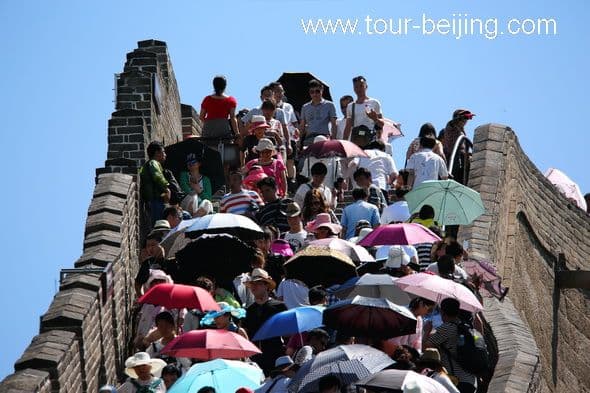
On these special days you will waste much of your valuable time on the way from your hotel to the Wall. On the Wall, you have to take group photos due to a great number of people on the Wall.
There are 10 major sections of the Great Wall of China around Beijing. Within the officially managed sections of the Great Wall, the entrance fees are collected, police stations are set up and security guides are dotted along the Wall.
Jiankouis not open to tourists due to their wildness and treacherousness.
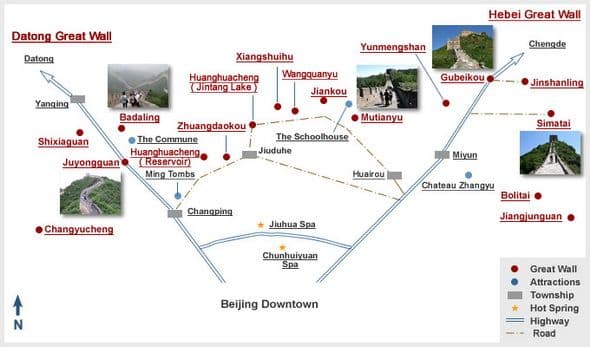
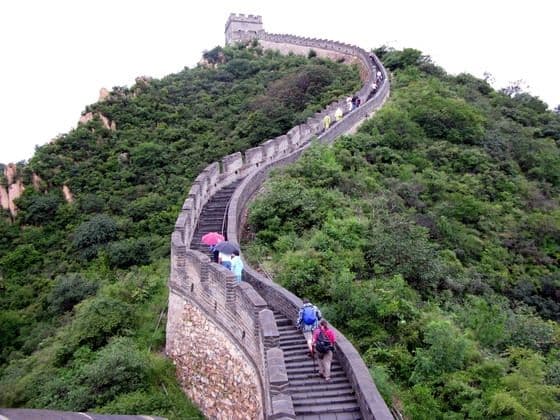
If you don't have much time, but you still want to have a glimpse of the Wall, especially on a busy day, choose Juyongguan Great Wall.
Juyongguan, literally "Juyong Pass"(居庸关), is situated in a valley named "Guangou" as long 20 kilometres, which is within Changping District, about 50 kilometres north of downtown Beijing. It is one of the three most famous passes of Great Wall in China。
If you want to see the most popular and gorgeous restored section of the Wall in Beijing, go to Badaling Great Wall. Badaling is also wheelchair friendly , accessible by the handicapped.
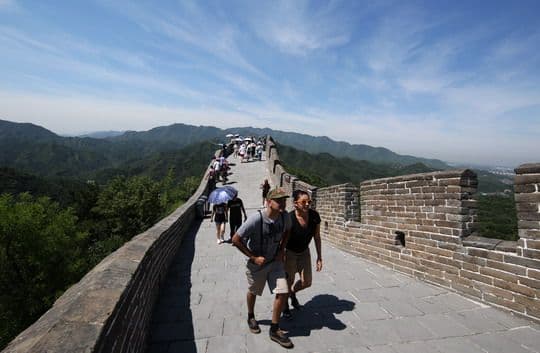
If you want to visit the Wall with beautiful green scenery and environment ( travel with kids or seniors), less crowded, then visit Mutianyu Great Wall**.**
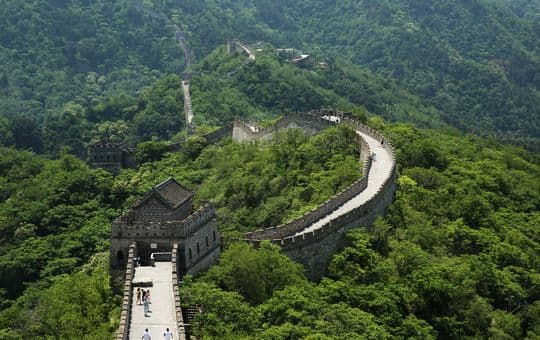
If you want to hike the wild and original sections of the Wall (half restored or unrestored), go to visit Shixiagan Great Wall, Jiankou Great Wall, Jinshanling Great Wall, Gubeikou Great Wall, Huanghuacheng Great Wall and Simatai Great Wall or put them together.
Check out:Hike from Jiankou Great Wall to Mutinayu Great Wall. Jiankou Great Wall is forbidden to hike according to the official rule and regulations concerned. Hikers are responsible for their own safety while hiking Jiankou Great Wall.
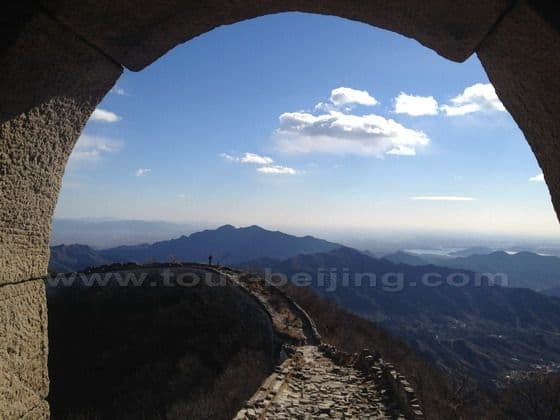
Check out Hike from Gubeikou Great Wall to Jinshanling GreatWall. Today’ Gubeikou Great Wall is only composed of two parts – Panlongshan Great Wall and Wohushan Great Wall. "Panlongshan" literally means "Coiled Dragon Mountain" while "Wohushan" literally means "Crouching Tiger Mountain".
The two mountains faces each other with a valley in between from south to north, a strategic passage in the ancient times linking Inner Mongolia and Beijing. Now the valley has been turned into a fast developing Gubeikou Township under Miyun County of Beijing City.
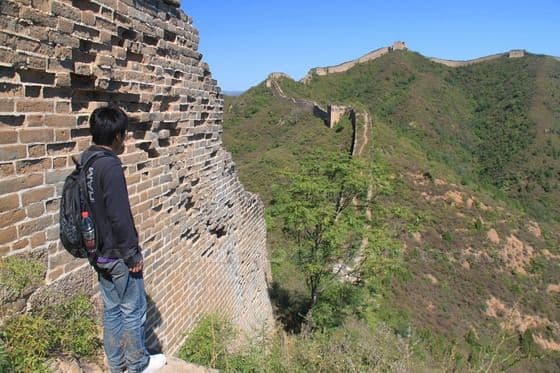
Check outSimatai Great Wall. There are totally 16 watch towers distributed on the Simatai Great Wall snaking the ridge of the steep mountain. The 13th-16th towers are forbidden to hike due to their steepness and treacherousness.
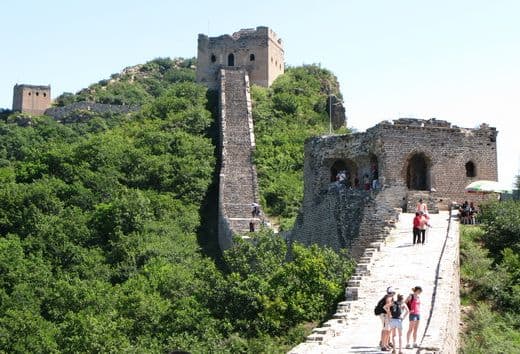
Check out Hike Across Shixiaguan GreatWall. Shixiaguan Great Wall ( literally means "Stone Gorge Pass Great Wall") is officially known as Ruined Badaling Great Wall. It is 5km southwest of the restored Badaling Great Wall,a western gate of the Badaling Defense Works.
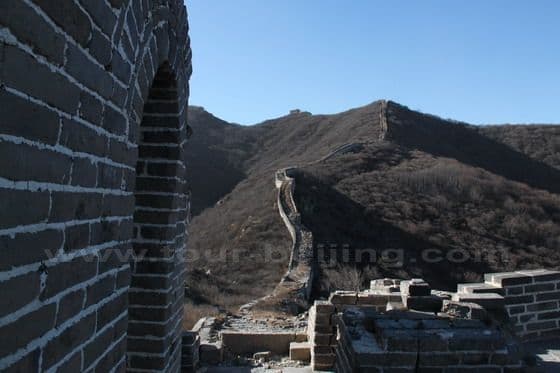
Check outHuanghuacheng Great Wall. Huanghuacheng (literally meaning "Yellow Flower City") Great Wall (黄花城), about 65 km north of downtown Beijing, is one of the most ruined sections of the wall in Beijing.
It has become popular with hikers in recent years. This section of the great wall is about 1000 meters long and connecting Juyongguan Pass Great Wall and Badaling Great Wall in the west and Jiankou Great Wall and Mutianuyu Great Wall in the east. Now it is a quite challenge to climb the wall since it is overgrown and treacherous.
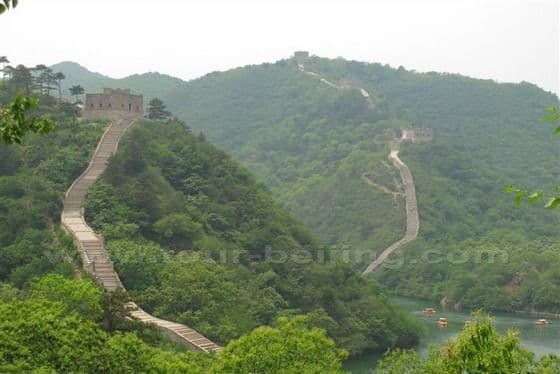
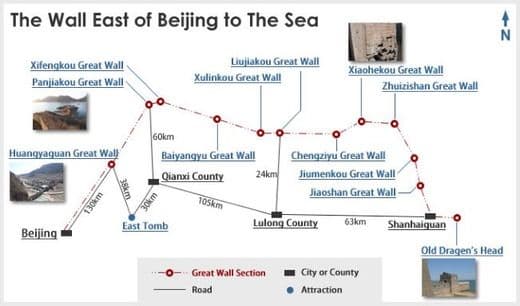
Check outJinshanling Great Wall Jinshanling Great Wall (金山岭长城) is located about 130 km in the northeast of the downtown Beijing. To its east stands the Simatai Great Wall and the west stands Gubeikou Great Wall. Jinshangling Great Wall was named after the mountain called Jinshan Mountains. The Jinshanling Great Wall was first constructed built in the Ming Dynasty.
The famous general, Xu Da, of the early Ming Dynasty (1368-1644) supervised and directed the construction of the Great Wall. Later, Qi Jiguang led a number of defense works while guarding the north area in 1567.
TakeBadaling Great Wall Bus No.877 (Bus Fare: RMB 12)
Deshengmen (德胜门)- Badaling (八达岭) Operating Hours: 06:00-12:00(Apr.1-Oct.31) 06:00-12:30 (Nov.1-Mar.31)
**Return:**Badaling (八达岭)- Deshengmen (德胜门) 10:30-17:00(Apr.1-Oct.31) 11:00-16:30(Nov.1-Mar.31) From: Deshengmen Bus Station
Check out****How to get to Badaling Great Wall by Train
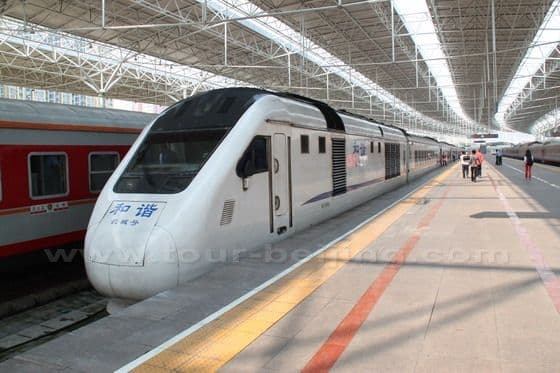
6 Daily High Speed trains ( One extra train added on weekend) starting from Qinghe Railway Station to Badaling Great Wall Station and vice versa
High speed trains from Qinghe Railway Station to Badaling: G2501 ( 07:00 – 07:19 ) Only available on Fri, Sat & Sun G7873 ( 08:38 – 08:57 ) G2485 ( 12:48 – 13:07 ) G2429 ( 14:11 – 14:30 ) G8815 ( 14:43 – 15:02 ) G2431 ( 16:25 – 16:44 ) G2439 (18:18 – 18:37 )
High speed trains back from Badaling to Qinghe Railway Station G2402 ( 09:21 – 09:41 ) G2416 ( 13:24 – 13:43 ) G7876 ( 14:04 – 14:23 ) G2430 ( 17:56 – 18:15 ) Only available on Fri, Sat & Sun G2434 ( 19:08 – 19:27 ) G8818 ( 19:58 – 20:18 )
Ticket prices for the high speed trains between Qinghe Railway Station and Badaling Business Class: RMB 70 ; First Class: RMB 37 ; Second Class: RMB 23
Apart from the regular 916 Express Bus operated all year round from Dongzhimen Transportation Hub to Huairou District where you connect Bus H23 or taxi for Mutianyu Great Wall Scenic Area, there is one daily return direct shuttle bus starting from Beijing Dongzhimen Wai Bus Station to Mutianyu Great Wall Scenic Area**.**
Basically you have four ways by using the special shuttles, public buses and S5 trains going from the city core of Beijing to Gubei Water Town ( Simatai Great Wall) or vice versa. Please check out: Bus & Train to Gubei Water Town & Simatai Great Wall.
At ****Dongzhimen Public Transport Hub**(东直门交通枢纽)**take Bus 980. Very Important Notice: Actually the Bus 980 Express stops at Miyun County ( 密云汽车站 ), and then you take a mini bus from the downtown Miyun to Jinshanling.
Bus Fare: RMB 15
Minibus Fare: about RMB 50 ( you have to share a mini-bus for Jinshanling Great Wall)
You can also charter a taxi for day trips to the Great Wall. The drive ranges from 1.5 hour to 2.5 hours from the city center according to the different sections of the Great Wall.
Below are the approximate taxi fares to the different sections of the Great Wall with waiting for about 2-3 hours while touring the wall:
Beijing Mutianyu Great Wall: 85km – RMB 600 Beijing Badaling Great Wall: 80km – RMB 500 Beijing Simatai Great Wall: 140km – RMB 700 Beijing Juyongguan Great Wall: 60km – RMB 400 Beijing Jinshanling Great Wall: 160km RMB 800 Beijing Gubeikou Great Wall: 150km – RMB 750 Beijing Jiankou Great Wall: 85km – RMB 650 Beijing Huanghuacheng Great Wall 85km – RMB 600
Both Badaling Great Wall and Mutianyu Great Wall have accessible ramp paths. On the Badaling Great Wall, a special flat lane is built for wheelchair users to get to the third watch tower of the Great Wall. Even two elevators are equipped for easy ascending the wall if you book the elevator service in advance.
Badaling Great Wall has the upper hand over Mutianyu Great Wall with its gentle ramp leading to the first watch tower of the Great Wall.
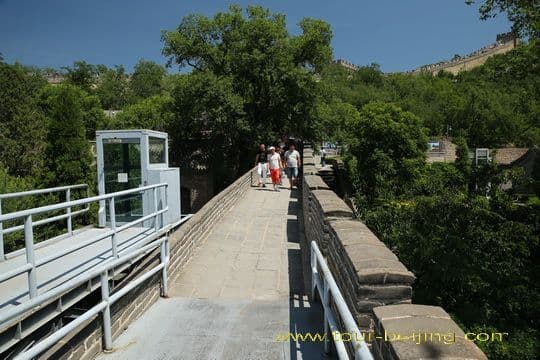
Check out "The Most Wheelchair-Friendly Great Wall to Visit" for more tips for accessible Great Wall of China.
Basically it is more convenient to use its smooth and gentle ramp leading up Badaling Great Wall. You don’t need to use the cable car. The area for the upper cable station is not wheelchair-friendly and teem with domestic tourists.
On the Mutianyu Great Wall, wheelchair users may take a cable car up and then use the accessible lane leading to the platform below the 14th watch tower for a good view of Mutianyu Great Wall.
The accessible paths in Mutianyu Great wall are too steep, not wheelchair user-friendly! The accessible lane from the upper cable car station to the platform below the 14th watch tower on Mutianyu Great Wall.
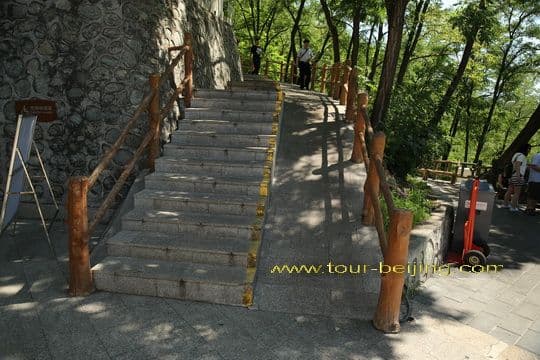
The accessible platform for wheelchair users below the 14th watch tower on Mutianyu Great Wall.
you may choose half restored or wild sections of the Wall. But you have to be responsible for your own safety.
Travel Notes for wild great wall hiking:
How to Visit Great Wall of China How to Visit Jiankou Great Wall How to Get to Badaling Great Wall by Train How to Get to Badaling Great Wall by Bus How to Get to Simatai Great Wall & Gubei Water Town How to Visit Mutianyu Great Wall How to Visit Great Wall of China in Winter How to Visit Great Wall of China Wheelchair Accessible
Hand-picked routes matched from this post's destination clues, tags, and categories.
Use these attraction notes to connect nearby sights with tours, destination guides, and planning articles.
Subscribe to receive Beijing travel ideas and tour updates.





Leave a Reply
Share a question or note for this guide. Comments are reviewed before publishing.