
Call a local advisor
+86 186 1196 4400Email our team
[email protected]Tour Beijing Journal
Welcome, global explorers! As you prepare for your Beijing tour or visiting...
Welcome, global explorers!
As you prepare for your Beijing tour or visiting other captivating destinations in China, it’s crucial to equip yourself with the right knowledge about China's electrical systems. Understanding the basics of China's electricity, including its plug and socket system, is essential for a smooth and hassle-free travel experience.
Whether you're a seasoned traveller or embarking on your first journey to this fascinating country, this guide aims to provide you with valuable insights into China's unique electrical infrastructure. Your feedback is always appreciated to keep this guide up-to-date and helpful for all visitors.
Globally, there's a diverse range of power plugs and sockets, with no universal standard. These include American, European, British, South African, and Chinese standards.
In China, unique power plug types, such as Type A and Type I, are commonly used. These may vary from the plug types in your home country.
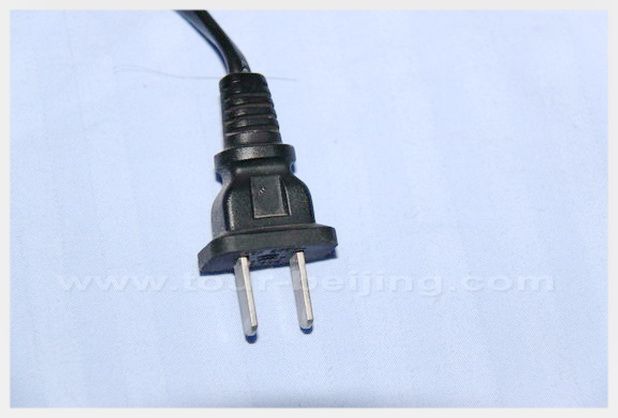
This plug features two flat parallel pins. It's ungrounded and operates on a 220V supply voltage. An important difference to note is the frequency in China, which is 50 Hz, unlike the 60 Hz commonly used in other countries.
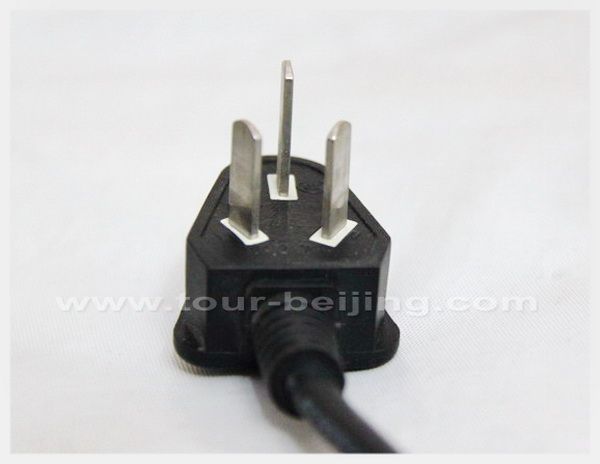
This plug type includes three flat pins in a triangular configuration, with two pins for live and neutral, and an earth pin for grounding. Like Type A, it uses a 220 volts supply at a 50 Hz frequency.
Before traveling, it's advisable to prepare a plug adapter or converter that matches the socket standards of China, ensuring compatibility for your devices.
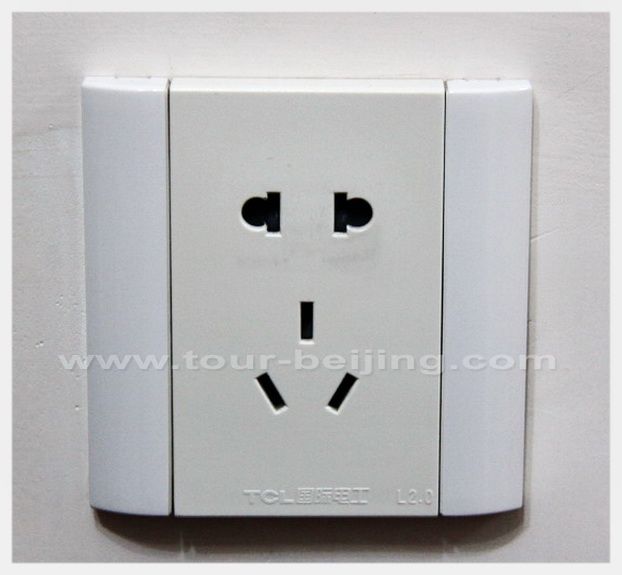
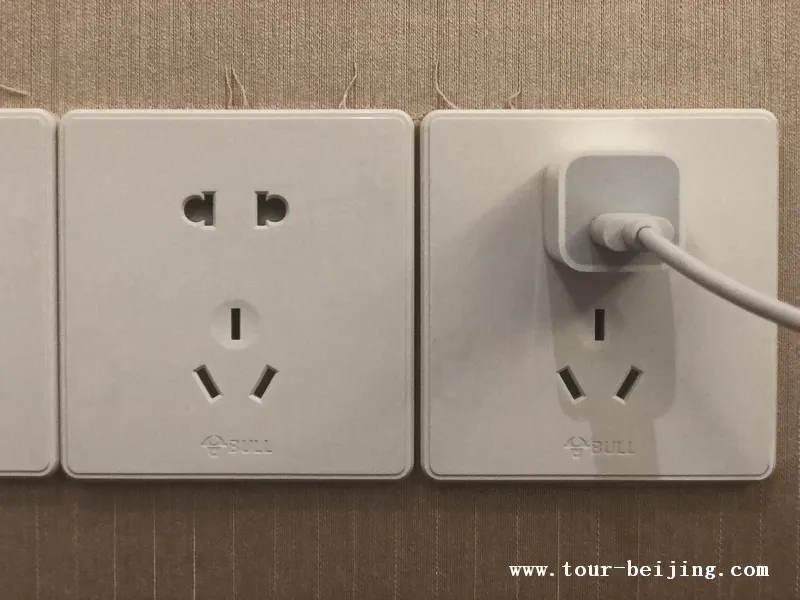
A standard socket on a wall in China has two flat pins ( which also matches a two-round-pin plug for the devices used in Europe or elsewhere) on the upper part and earthed three flat pins on the lower part.
When venturing to China, carrying a travel adapter is a must due to the country's unique electrical standards.
It's vital to remember that while travel adapters enable device compatibility with Chinese sockets, they don't convert voltage. If your device operates on a different voltage than the local supply, a voltage converter or transformer is necessary to prevent damage.
Always check the voltage requirements of your devices to ensure they are compatible with Chinese electrical standards or have suitable voltage conversion capabilities when using travel adapters.
If your electronic devices need a different voltage than the standard in China, a voltage converter or transformer is essential. These devices adjust the incoming voltage to a level suitable for your device.
For the best advice, consult with the device manufacturer or an electrical expert. Their expertise will guide you in choosing the right converter or transformer, ensuring the safety and proper functioning of your devices in China.
Basically there are two main standards for voltage and frequency in the world. One is the standard of 110-120 volts at a frequency of 60 Hz (mostly used in USA), and the other is the standard of 220–240 volts at 50 Hz (mostly used in Europe).
But basically you don't have to worry about the voltage since most of your electric appliances use a wide range of voltage covering the two major standards for the voltage used in the world. So please check your electric devices and find if they are within the range of the voltage used in the country you are going to visit.
China mainland uses generally 220V, 50HZ, AC (Hong Kong is 220V; Taiwan is 110V).
Just list some of the countries with different Voltage Frequencies:
| Argentina 220 V 50 Hz | Armenia 220 V 50 Hz | Australia 240 V 50 Hz |
| Austria 230 V 50 Hz | Belgium 230 V 50 Hz | Brazil 110/220 V 60 Hz |
| Brunei 240 V 50 Hz | Bulgaria 230 V 50 Hz | Canada 120 V 60 Hz |
| China, People’s Rep. of 220 V 50 Hz | China (Hong Kong) 220 V 50 Hz | Czech Republic 230 V 50 Hz |
| Denmark 230 V 50 Hz | England (UK) 230 V 50 Hz | Finland 230 V 50 Hz |
| France 230 V 50 Hz | French Guiana 220 V 50 Hz | Germany 230 V 50 Hz |
| Great Britain (UK) 230 V 50 Hz | Greece 220 V 50 Hz | Holland (Netherlands) 230 V 50 Hz |
| Hong Kong (China) 220 V 50 Hz | Hungary 230 V 50 Hz | Iceland 220 V 50 Hz |
| India 230 V 50 Hz | Indonesia 127/230 V 50 Hz | Ireland (Eire) 230 50 Hz |
| Israel 220 V 50 Hz | Italy 230 V 50 Hz | Japan 100 V 50/60 Hz |
| Korea, South 220 V 60 Hz | Luxembourg 220 V 50 Hz | Macau 220 V 50 Hz |
| Malaysia 240 V 50 Hz | Mexico 127 V 60 Hz | Netherlands Antilles 127/220 V 50 Hz |
| New Zealand 230 V 50 Hz | Northern Ireland 230 V 50 Hz | Norway 230 V 50 Hz |
| Philippines 220 V 60 Hz | Poland 230 V 50 Hz | Portugal 230 V 50 Hz |
| Romania 230 V 50 Hz | Russia 220 V 50 Hz | Saudi Arabia 127/220 V 60 Hz |
| South Africa 220/230 V 50 Hz | Spain 230 V 50 Hz | Swaziland 230 V 50 Hz |
| Sweden 230 V 50 Hz | Switzerland 230 V 50 Hz | China Taiwan 110 V 60 Hz |
| Thailand 220 V 50 Hz | Turkey 230 V 50 Hz | United Arab Emirates 220 V 50 Hz |
| UK (United Kingdom) 230 V 50 Hz | US (United States) 120 V 60 Hz | Venezuela 120 V 60 Hz |
| Vietnam 127/220 V 50 Hz |
You may buy a portable power plug adapter at your home country or here in China. Most of your hotels in China offer free use of plug adapters.
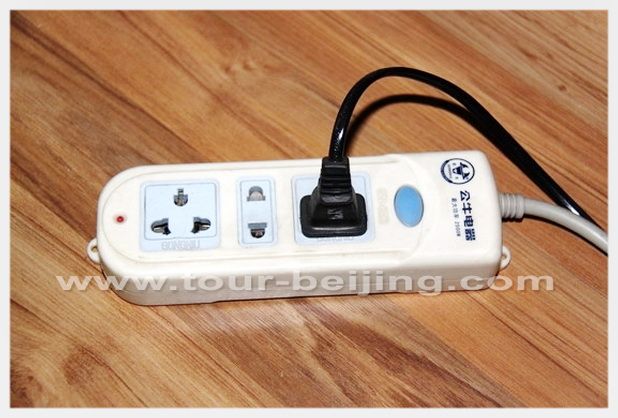
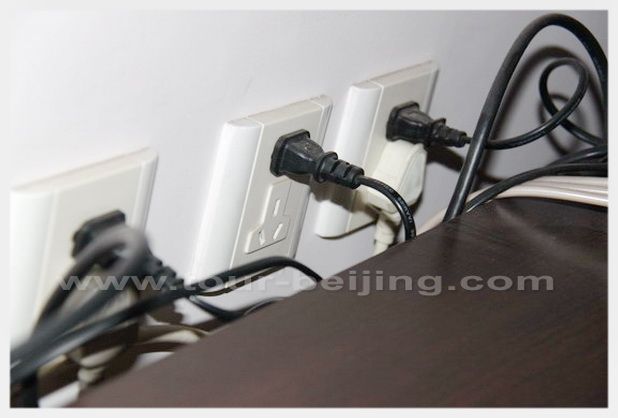
Sockets and plugs in use
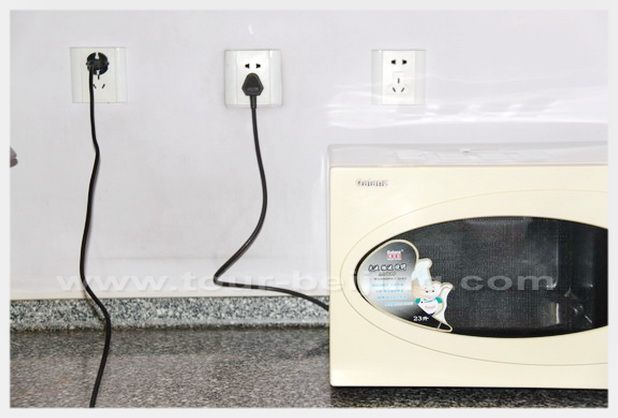
Nowadays, many portable devices like cell phones, cameras, electric toothbrushes, and shavers comply with international voltage standards (110/220 volts) and have two flat or round prong charger plugs. In China, these devices can usually be used without an adapter.
Before departing for China, ensure your devices are compatible with 110/220 volts and have two-prong plugs.
Note that laptop chargers often have three-prong plugs, which might not fit into Chinese sockets. It's advisable to purchase a portable plug adapter either before your trip or in China. Also, verify the voltage compatibility of your laptop. If it's not suitable for 220 V, a converter is necessary.
As your journey to China approaches, equipping yourself with the right knowledge about the country's electrical system is crucial.
This guide aims to provide you with essential information on plugs, sockets, adaptors, and voltage considerations in China. By preparing accordingly, you can ensure your electronic devices function seamlessly, allowing you to focus on the rich experiences and unforgettable memories awaiting you in this vibrant country. Safe travels and enjoy your journey to the fullest!
Share a question or note for this guide. Comments are reviewed before publishing.
Hand-picked routes matched from this article's destination clues, tags, and categories.
Use these attraction notes to connect nearby sights with tours, destination guides, and planning articles.
Continue planning with practical Beijing guides selected from similar places, themes, and travel questions.
Subscribe to receive Beijing travel ideas and tour updates.