

Call a local advisor
+86 186 1196 4400Email our team
[email protected]Tour Beijing Journal
Meaning of "Tanzhe Temple" “Tanzhe Temple 潭柘寺” literally means “Temple of Pool and Zhe Tree”. There used to be a pool behind the temple and a lot of Zhe trees
“Tanzhe Temple 潭柘寺” literally means “Temple of Pool and Zhe Tree”. There used to be a pool behind the temple and a lot of Zhe trees ( a kind of wild mulberry trees ) on the mountains nearby, hence the name of Tanzhe Temple.
People often use a cliché to describe the long history of Tanzhe Temple – “First came Tanzhe Temple, then Beijing.” Tanxhe Temple was first built in 307 AD in Western Jin Dynasty ( 265 – 316 AD). Its name was changed again and again through Jin, Yuan, Ming and Qing Dynasties.
After its repair and expansion in 1692, the temple was renamed “Xiuyun Temple” and has remained till today. But it is popularly referred as Tanzhe Temple due to the dragon pool behind the temple and the Zhe trees on the nearby mountains.
More than just a famous Buddhist temple in China, Tanzhe Temple is also well known for its grandeur Chinese architecture and green plants. The temple compound is well arranged along an axis, which is said to have provided a model for the layout of the Forbidden City.
The temple is perched on a hillside surrounded by nine peaks and composed of various prayer halls, pavilions, courtyards and a group of pagodas dating from the Yuan, Ming and Qing dynasties. It was an imperial temple with high status.
Entrance Fee: RMB 55 per Person Tel: 010-60862505 Add: Tanzhesi Town mentougou District Beijing 北京市门头沟区潭柘寺镇
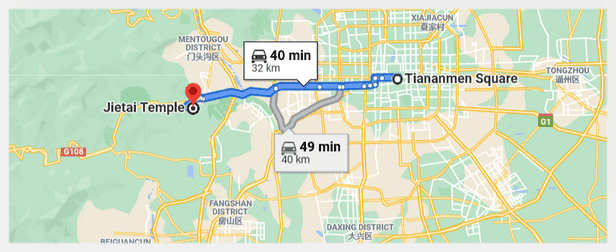
Tanzhe Temple is about 30km northwest of Tiananmen Square, Beijing; 10km northeast of Jietai Temple. Many visitors would put Tanzhe Temple and Jietai Temple for a combo day trip.
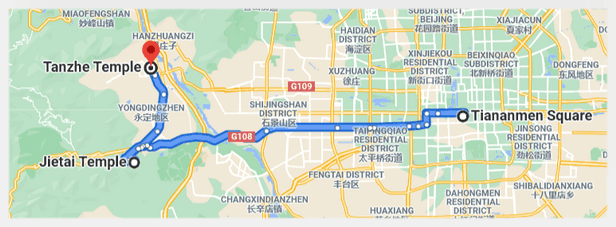
How to get there: By Public Transport: Take subway line 1 and get off the most western station – Pingguoyuan, then connect public bus 931 for Tanzhe Temple and Bus runs daily 7am-5:30pm, about every 30 minutes. The bus ride time is about 1 hour
By Car: Drive along National Highway No. 108 (G108) in the west of Beijing. While on the way, it is advisable to notice the placards pointing to Tanzhe Temple.
Well, now follow us to explore Tanzhe Temple along its axis.
We start our Tanzhe Temple trip from Tanzhe Town under the jurisdiction of Mentougou District, Beijing. Tanzhe Temple is only 4km north of Tanzhe Town.
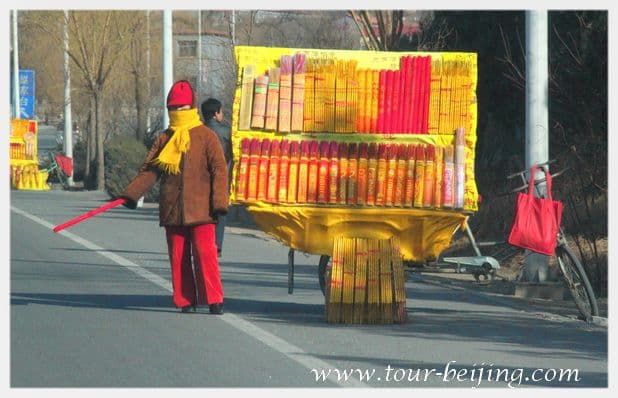
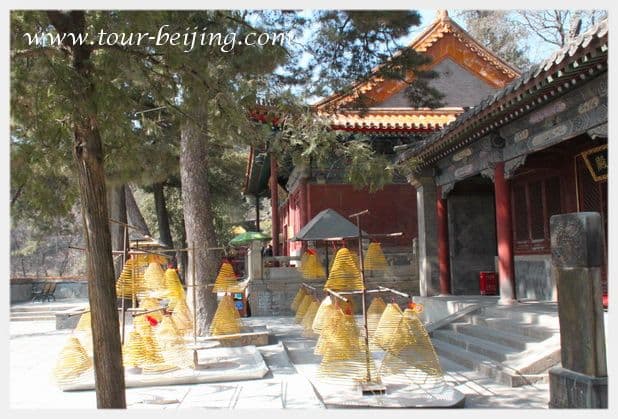
Several incense vendors are standing by the main road selling incense sticks for people to burn inside. It is said that the incense sticks bought on outside the temple are cheaper than inside.
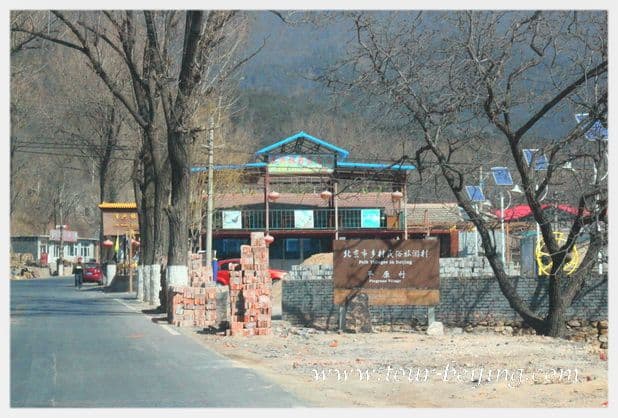
Passing by a village on the way from Tznzhe Town to Tanzhe Temple. It is Pingyuan Village. Most of the households in village are engaged in rural tourism offering accommodation and dining for Tanzhe Temple visitors. The food here in the village is much cheaper than in Tanzhe Temple.
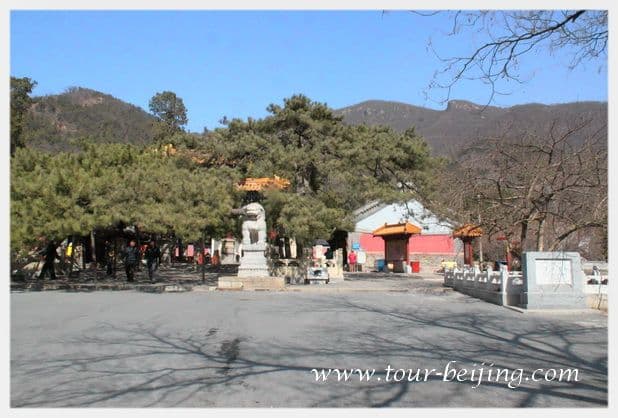
There are several parking lots around Tanzhe Temple. We choose the parking area just in front of the south gate – the main gate of Tanzhe Temple. If it is peak season , it is quite difficult to park your car in a good place. It is low season. It is very easy to park our van.
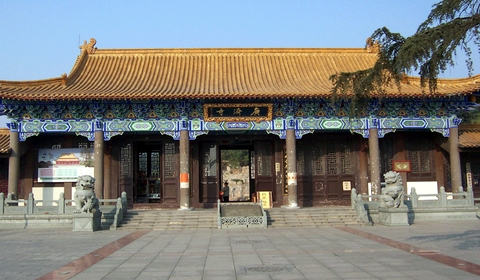
This is the main gate to Tanzhe Temple. People have to buy tickets and go through the ticket collecting.
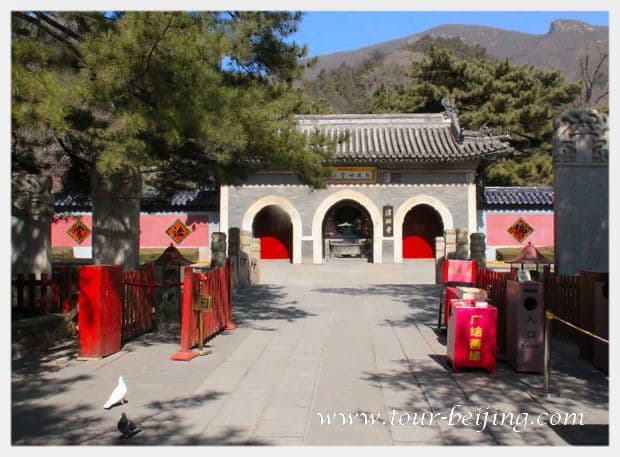
The Hall of the Heavenly Kings (Tian Wang Dian or Devaraja Hall). Like other temples, the first hall on the south in the temple complex is the Hall of the Heavenly Kings.
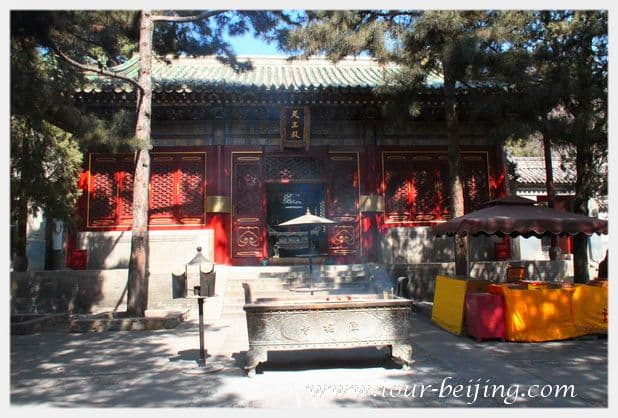
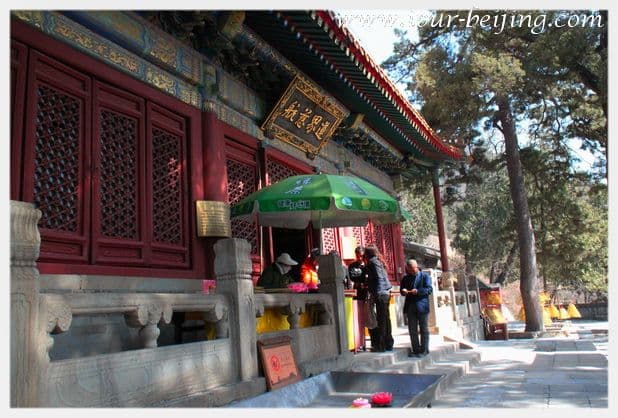
A Mahavira Hall or Hall of Mahavira (大雄寶殿), meaning “Hall of the Great Hero” , is the main building of a traditional Chinese Buddhist temple complex, behind the Hall of the Heavenly Kings.
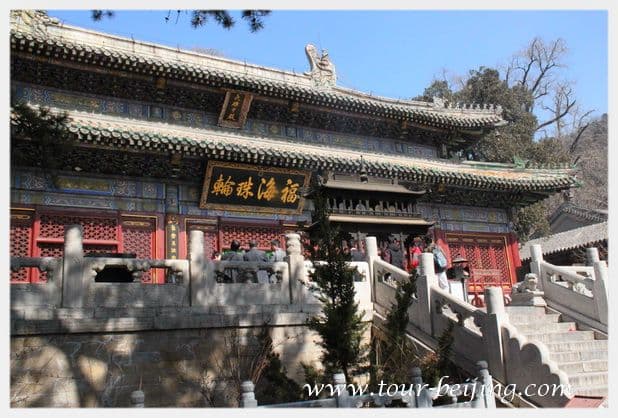
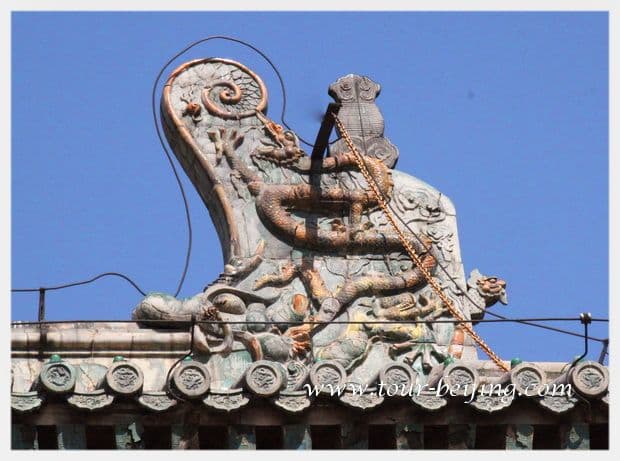
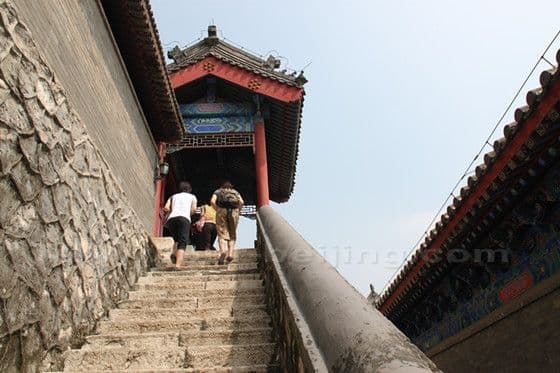
Since it was once an imperial temple, it had enjoyed much higher position among Buddhist temples. Look at the 8 mythical animals on the double-tiered roof, only one animal less than Forbidden City.
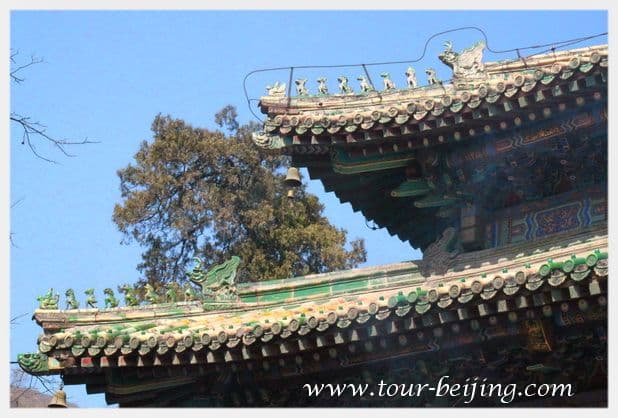
The carved dragon on the mural above the rooftop.
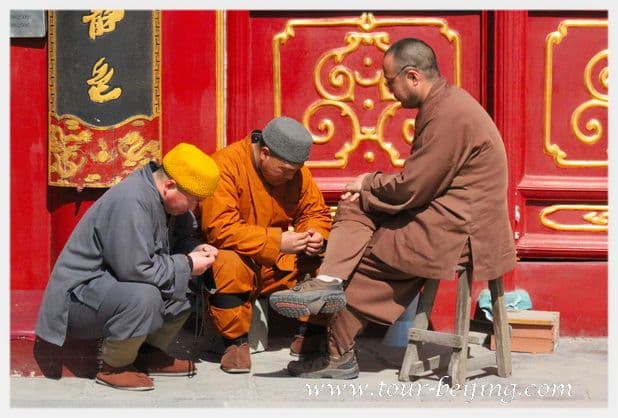
Three – see through life – living monks at leisure time in front of the Mahavira Hall
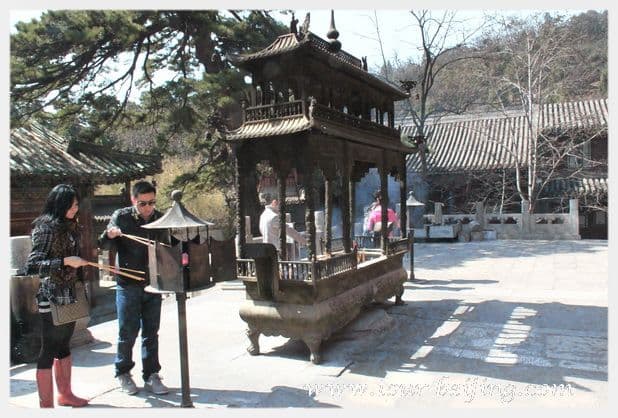
At the end of the axis is the Vairochana Pavilion. It is a double-floored pavilion as well as highest building along the axis in Tanzhe temple.
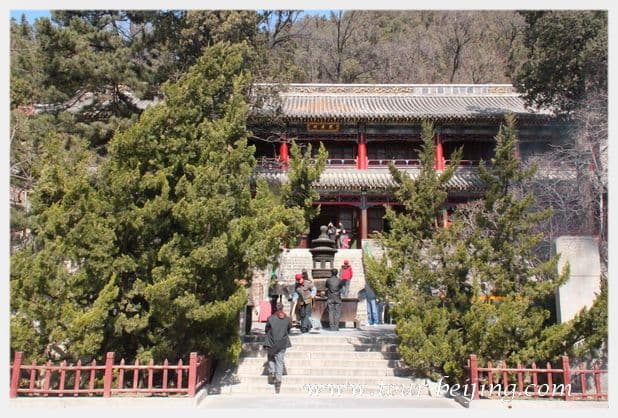
Vairocana (also Vairochana or Mahāvairocana) is a celestial Buddha who is often interpreted as the Bliss Body of the historical Gautama Buddha.
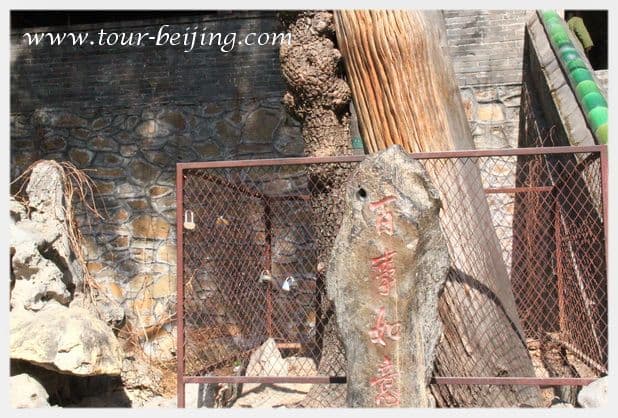
A cypress tree and a persimmon tree grow side by side and are said to be 100 years old. People borrow the pronunciation to call it "Everything goes smoothly" tree. Some visitors hug the combo trees, praying for happiness.
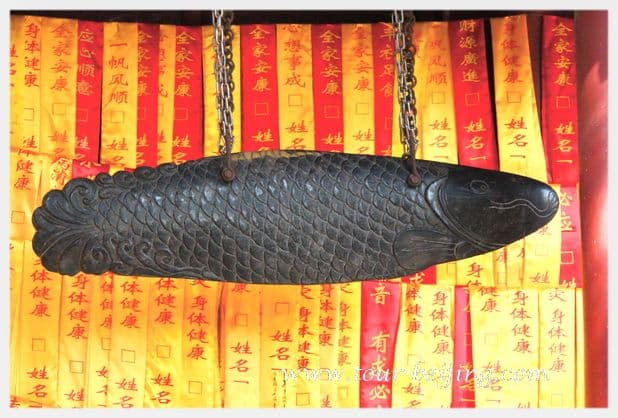
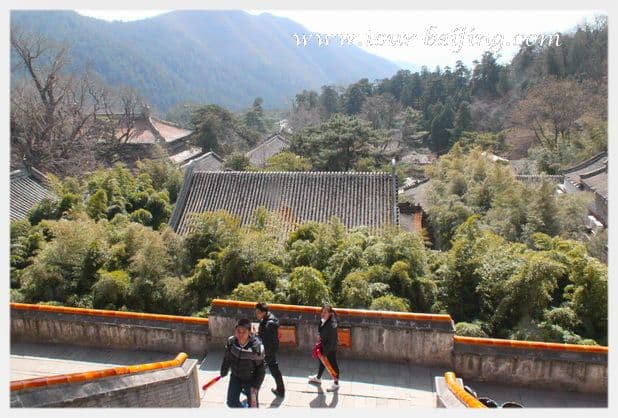
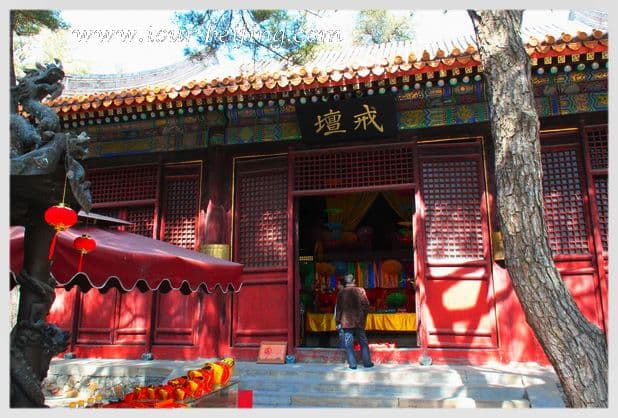
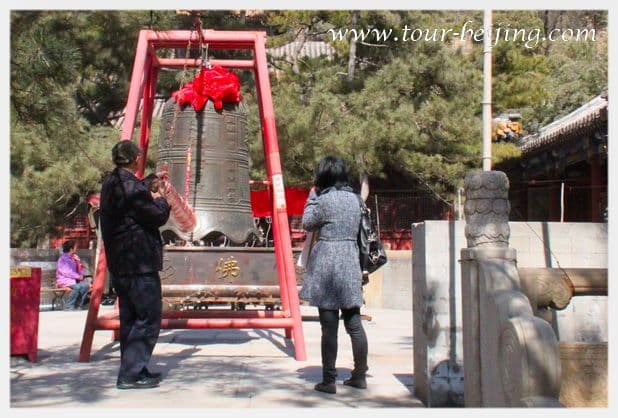
To knock the huge bell for 108 times can bring you good fortune and prosperity.
Hand-picked routes matched from this post's destination clues, tags, and categories.
Use these attraction notes to connect nearby sights with tours, destination guides, and planning articles.
Subscribe to receive Beijing travel ideas and tour updates.


Leave a Reply
Share a question or note for this guide. Comments are reviewed before publishing.