

Call a local advisor
+86 186 1196 4400Email our team
[email protected]Tour Beijing Journal
Wanshou Temple (万寿寺) in Chinese means “Longevity Temple” or “Wanshousi”. Wanshou Temple is one of the most important remaining imperial temples in Beijing. It
Wanshou Temple (万寿寺) in Chinese means “Longevity Temple” or “Wanshousi”. Wanshou Temple is one of the most important remaining imperial temples in Beijing. It was first constructed between 881 and 884 in Tang Dynasty ( 618 -907). Its name was changed for the present Wanshou Temple in 1577 during the reign of Wanli Emperor ((1563 – 1620) in Ming Dynasty.
Wanshou Temple was also favoured by Kangxi Emperor(1654-1722), Qianlong Emperor (1711 –1799) and Guangxu Emperor (1871 – 1908) in Qing Dynasty. Wanshou Temple went through several repairs and revamps through Qing Dynasty. Empress Dowager Cixi (1835-1908) often used the temple as a stopover between Summer Palace and Forbidden City.
Now Wanshou Temple houses Beijing Art Museum, (北京艺术博物馆). The museum has a permanent collection of over 1 70,000 things – porcelains, earthenwares, enamels, carved lacquer ware, ivory carving, wood carving and etc.
Plan your Beijing tour? After you have visited some must-see attractions in Beijing like Forbidden City, Summer Palace, Temple of Heaven and the Great Wall, you may consider choosing Wanshou Temple, which will offer you some glimpses into Beijing’ religion, arts and architecture in Ming and Qing dynasties.
On May 25, 2006, Wanshou Temple was listed as China’s key protection cultural relics in the name of China’s ancient architecture.
Wanshou Temple is closed on Monday. Wanshou Temple is located in the northwest of Beijing, not far from Summer Place. Its official address is North Road, Xishanhuan, Haidian District, Beijing. You may take bus 300, 323 or 374 and get off at Wanshou Temple Stop.
Tel: 6841 3380 Entrance fee: CNY20
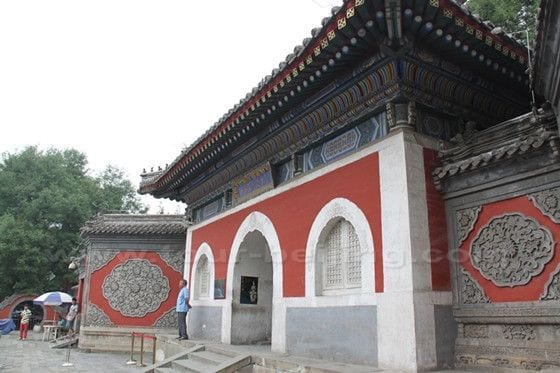
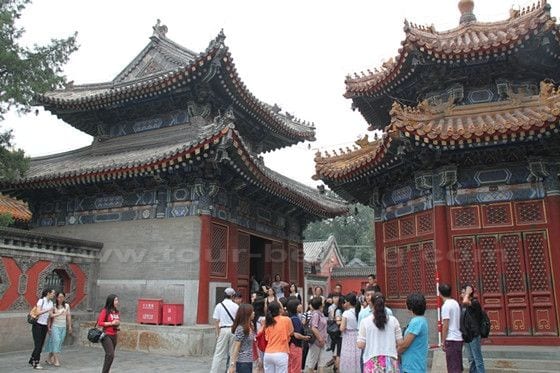
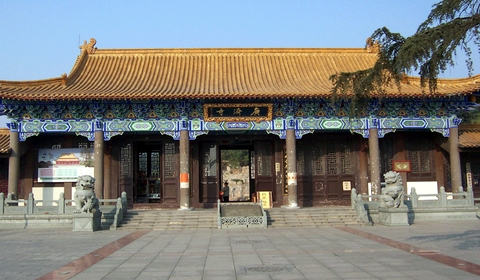
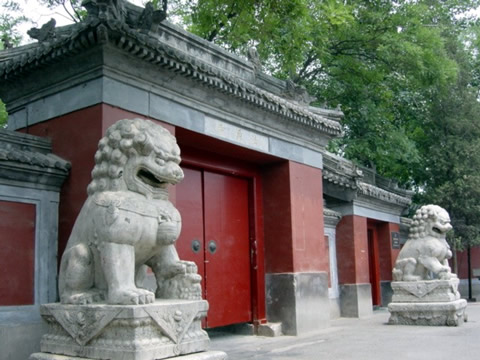
This is the Temple Gate. Above the gate is a picture depicting one hundred bats flying between the blue sky and the cloud, which implies that people coming here will have good luck.
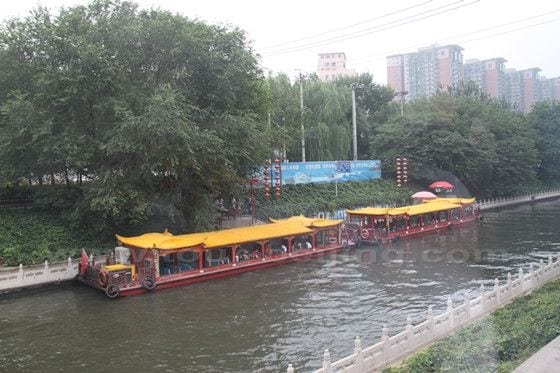
Outside the Temple Gate of Wanshou Temple is the famous river in Beijing – Changhe (Long River). The 9km Changhe River, also known as Royal River or Gaoliang River in Ming Dynasty, is the only river with some connection with the imperial family in Qing Dynasty. Beijingboat tour on Change River is an interesting outside activity in Beijing.
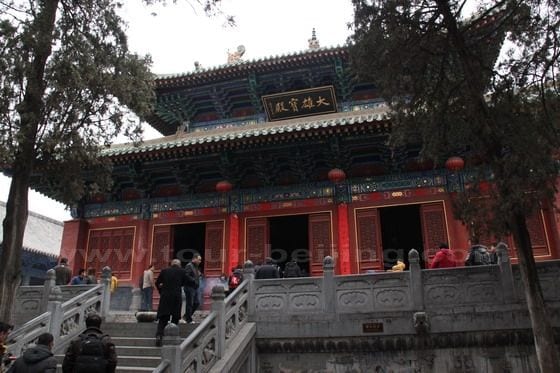
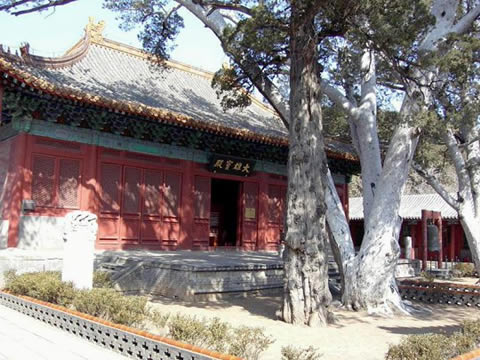
Entering the Temple Gate, you will see the Hall of Deva Kings. It used to be the statues of the four heavenly kings on both sides of the hall.
After the Hall of the Deva Kings, is the main hall, the Mahavira Hall (Baxiong BaoDian), worshipping the founder of Buddhism.
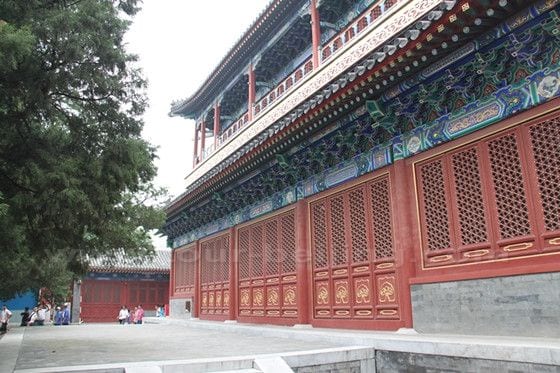
North of the Main Hall is the Wanshou Tower. The Wanshou Tower is the place for preaching that monastery.
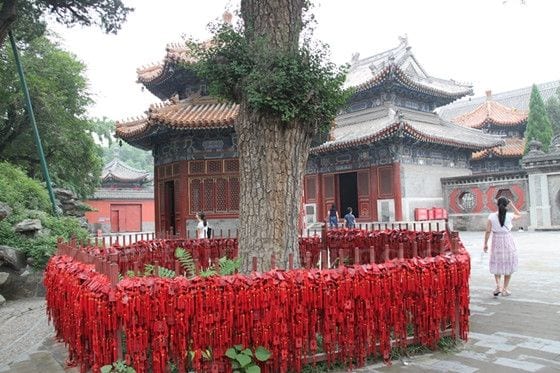
After the preaching hall is a pile of rockeries, a symbol of the three religious mountains. Red wooden sticks indicates good luck, which are bound around trees inside Wanshou Temple.
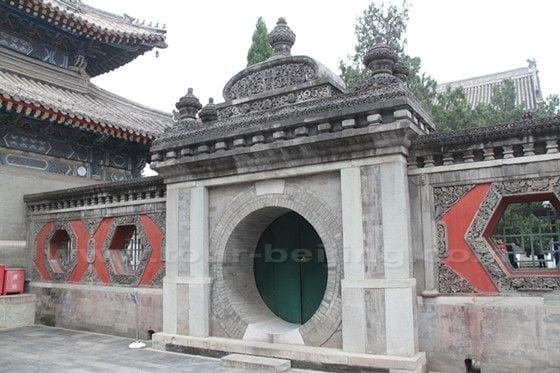
This yard gate was built in 1761 in Qing Dynasty. It is a half Chinese and half western. Its arched top is the French structure style.
Hand-picked routes matched from this post's destination clues, tags, and categories.
Use these attraction notes to connect nearby sights with tours, destination guides, and planning articles.
Subscribe to receive Beijing travel ideas and tour updates.



Leave a Reply
Share a question or note for this guide. Comments are reviewed before publishing.