
Call a local advisor
+86 186 1196 4400Email our team
[email protected]Tour Beijing Journal
Plan your Henan Tour? I’ve rounded up the top 10 attractions in Henan, a...
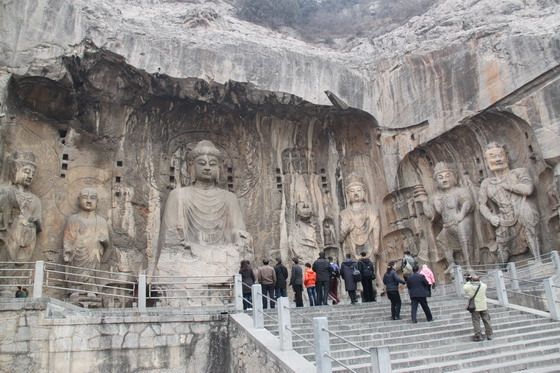
Basically, visiting Longmen Grottoes takes about 3-4 hours. If you arrive at Longmen Railway Station from Xian or Zhengzhou before noon, you are highly advised to go directly from Longmen Railway Station to Longmen Grottoes. Longmen Grottoes are located 12km in the south of Luoyang city center and 5km south of Longmen Railway Station.
So it saves both time and money to visit Longmen Grottoes directly from Longmen Railway Station. The taxi ride from Longmen Railway Station to Longmen Grottoes costs between RMB20 and 30. Or you may take the public bus No. 67 or 71 within close proximity to Longmen Railway Station (bus fare RMB1).
Yinxu is home to the first form of Chinese writing ( oracle bone script ). The massive architecture consists of palace area, emperor tomb area, general tomb area, handcraft workshop area, civilian inhabitant area and slave inhabitant area.
Yin Xu ( Yinxu ) is located 7km northwest of the city center of Anyang, 510km south of Beijing. The city of Anyang is easily accessed by highs-peed trains from any cities along the Jingguang Railway Line such as Beijing, Shijiazhuang, Zhengzhou, Wuhan and Guangzhou.
From the city center of Anyang, you may take the public bus No.01 fromt the bus stop of Shirenda (市人大) and get off at the 14th stop of Yinxu Museum, then walk north for about 900m and you will reach Yin Xu, officially known as Foundation Sites of Palace and Temple of Yin Xu (殷墟宫殿宗庙遗址). Of course, you also can taxi there for a small amount of money.
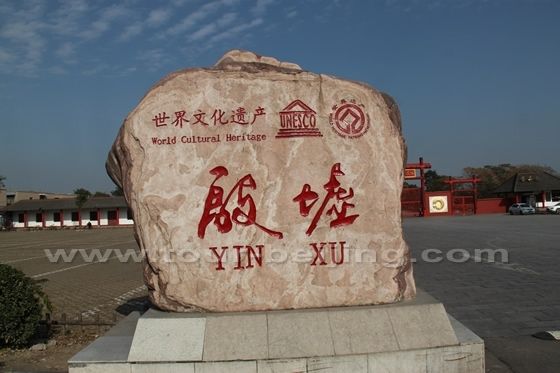
Entrance Fee:RMB 90
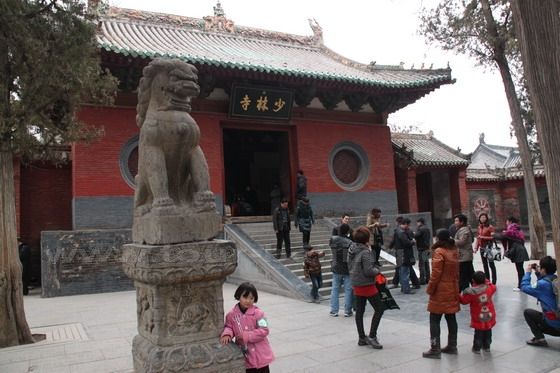
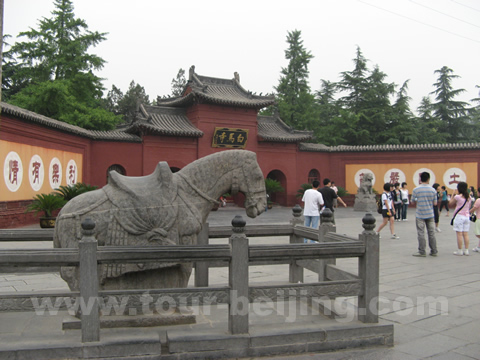
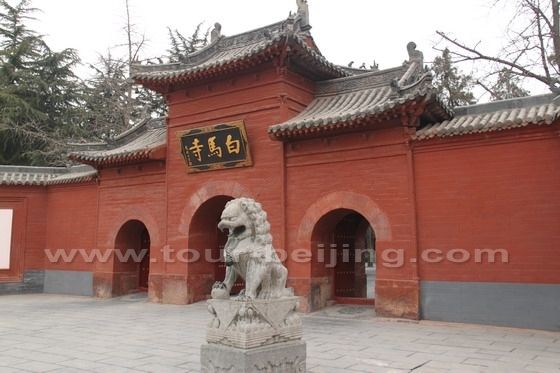
The white horse temple is located about 20km east of Luoyang City center. You may take the public bus No.56 starting from Luoyang Railway Station and ending at the White Horse Temple. Or you may take a taxi (RMB 50) directly from downtown Lulyang to the entrance to White Horse.
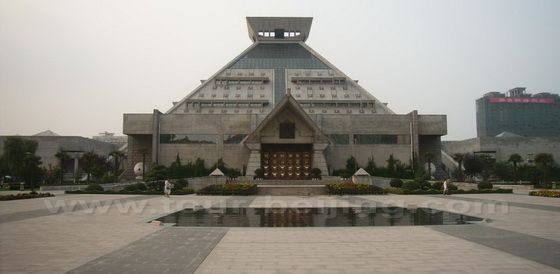
The present building was built up in 1991. Its appearance of hourglass seems to tell you what will deposit here after the time flies.
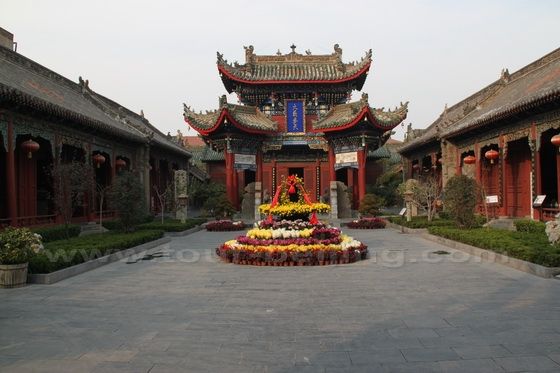
The past 200 years have seen Shanshaangan Hall going through numerous ups and downs. What we we see today is a small part of the orginal guild. Or more exactly it is the only remaining Guangdi Temple building inside the original guild hall. The whole temple architecture is rife with exquisite carvings out of stone, brick and wood, which vividly tell the Buddhist stories and folk tales with great artistic value.
The remaining Guangdin Temple is mainly composed of 7 parts- A huge screen wall, Opera Tower, Bell and Drum Tower, East Wing and West Wing Halls, Traditional Pailou (decorated archway), the Great Hall.
Entrance Fee: RMB 30 Opening Hour: 8:00 – 18:30 Add: Xufu Street, Kaifeng. 开封市内徐府街 How to get there Take Bus 1,13,18 and 31 or walk from Temple of the Chief Minister
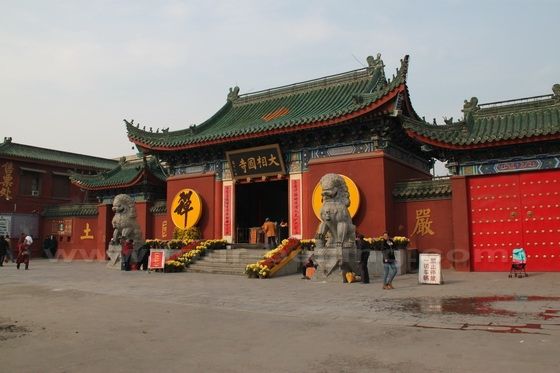
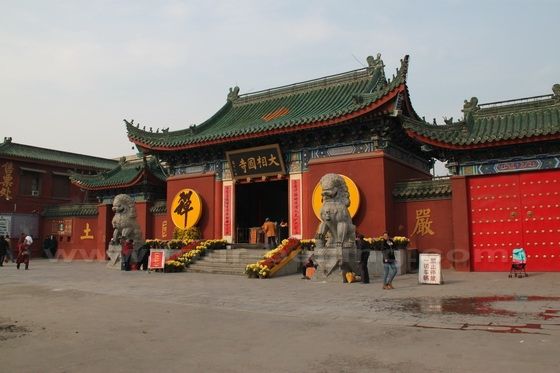
Temple of the Chief Minister was in its prime during Northern Song Dynasty (960-1126), the monks totaling 10,000, 64 subordinate temples and an area of 540 mu ( 35 hectares ), an imperial temple for Northern Song Dynasty.
The present temple is mainly composed of the Heavenly Kings Hall, Mahavira Hall, the Octagonal Glazed Hall, Sutra Depository Building and the Four-Faced Thousand Eye Guanyin within the Arhat Hall.
Entrance Fee: RMB 45 Opening Hour: 08:00 – 18:30 Add: 36 West Section of Ziyou Road, Gulou District, Kaifeng 鼓楼区自由路西段36号 Tel: 0378 – 5665090 How to get there Take Bus 1,2,5,8 or walk from Kaifeng Bus or Train Station ( 2. 5km).
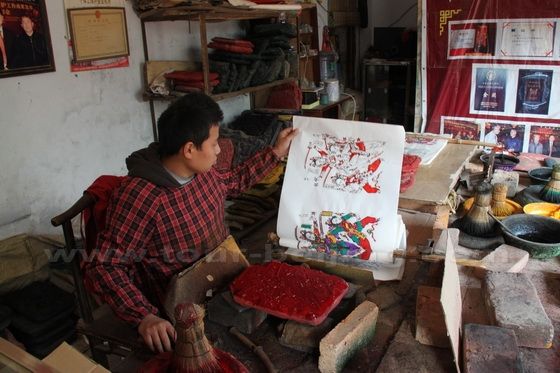
The woodblock new year paintings in Zhuxuan Town is an untangable cultural heritage in China. It has been on the verge of extinction due to the new printing technology. Recently the governments at all levels have allocated funds to support and develop the craft of man-made new year paintings
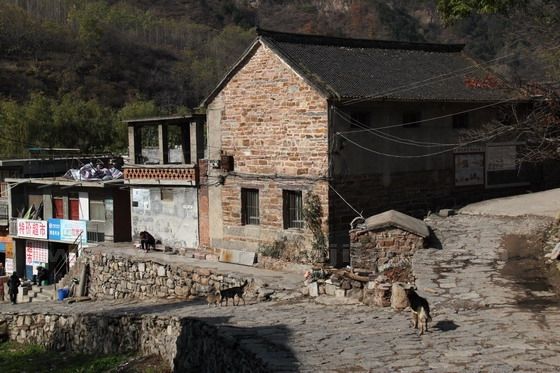
In 1972, 13 strong villagers from Guoliang Village wanted to change the situation of inaccessibility to the outside world and started carving a road off the east side of the cliff, a three sided tunnel that would stagger today’s average construction firm. The carved tunnel is 12 or 13 feet across, about 15 or 16 feet high and a mile long. The tunnel road is praised as one of the 8 road wonders in the world. The road was opened in 1977.
Guoliang Village is located 82km to the northwest of Xinxiang, 90km north of Zhangzhou, easily accessible by highspeed trains from Beijing, Shijianzhang, Wuhan and Guangzhou since Xixiang is on the Beijing – Guangzhou Railway Line. From Xinxiang, you may take the bus from Xinxiang Long-distance Bus Station first to Huixian County, then connect the local bus to Guoliang Village.
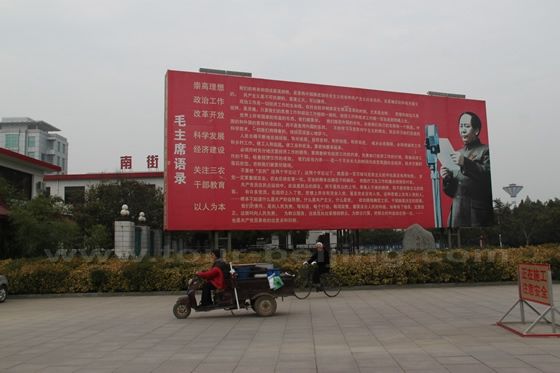
Nanjiecun is the last enclave of the Mao-style collective in a sea of socialist market economy with Chinese characteristics. It is an anachronism, a quaint , lovable oddity and a Maoist Disneyland in the competitive market economy in China.
Nanjiecun Village is located in Linying county 128km south of Zhengzhou along the Jingguang Railway ( Beijing – Guangzhou ) , National Highway No.107 and Jingguang Expressway ( Beijing – Guangzhou ). Nanjiecun is easily reached by the buses starting from Zhangzhou. Now there are 848 families with a population of 3100 people in Nanjiecun Village and an area of 1.78km square km. Over 10,000 migrant workers live in Nanjiecun Village. These migrants work in the factories and enjoy partially the welfare of the villagers of Nanjiecun.
Share a question or note for this guide. Comments are reviewed before publishing.
Hand-picked routes matched from this article's destination clues, tags, and categories.
Use these attraction notes to connect nearby sights with tours, destination guides, and planning articles.
Continue planning with practical Beijing guides selected from similar places, themes, and travel questions.
Subscribe to receive Beijing travel ideas and tour updates.