
Call a local advisor
+86 186 1196 4400Email our team
[email protected]Tour Beijing Journal
Plan your Beijing tour? We have rounded up 10 most important religious...
Plan your Beijing tour? We have rounded up 10 most important religious places which may be helpful for you if you are interested in religious sites in Beijing.
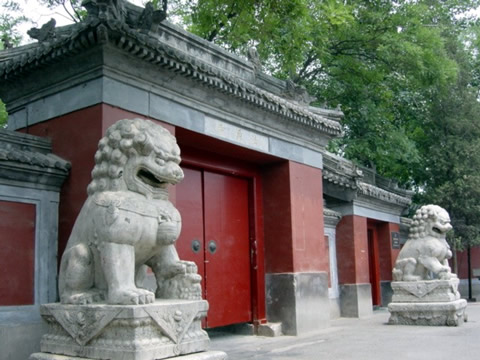
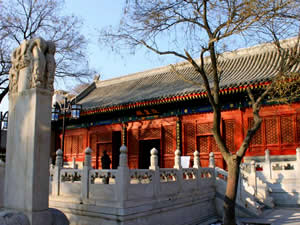
The only temple in Beijing to have its own subway stop, the Yonghe Lamasery, or Yonghegong,or lama Temple is the most handsome and impressive Buddhist temple in the city. Lama Temple ( Yonghe Lamasery ) was built in the 33 Qing Kangxi year (1694) and it is now the largest and best-preserved Lamasery of Yellwo Sect in Beijing.
It was the residence of Emperor Yongzheng before his ascending to the throne. Built initially in 1694 during the Qing Dynasty, this building was the residence of Emperor Yongzheng when he was just a prince. However, in 1744 the Qing Dynasty formally changed the status of the dwelling to that of a lamasery, and so Yonghe Lamasery became the national centre of Lama administration.

This temple is the center of Taoist activity in Beijing. Its origin dates back to the Tang Dynasty, when it was called Temple of the Supreme Ultimate. It became a major Taoist temple after a 13th century master taught, died and was buried here. His disciples renamed the temple Baiyunguan (White Cloud Temple) and the name has stuck.
There are still Taoist monks in the temple and they will talk to you. The temple is also the headquarters of the China Taoism Association.
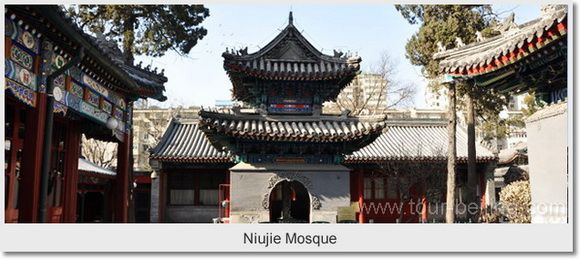
The Niujie Mosque is the oldest mosque in Beijing. It was originally built in 996 during the Liao Dynasty and was reconstructed and renovated in successive dynasties. The mosque has had three big renovations since the founding of the People’s Republic of China in 1949.
Niu Jie Mosque is located in the largest muslim community in Beijing. The Niujie Mosque takes an area of approximately 10,000 square meters. Its architecture is a blend of Islamic and Han Chinese cultural and architectural influences.
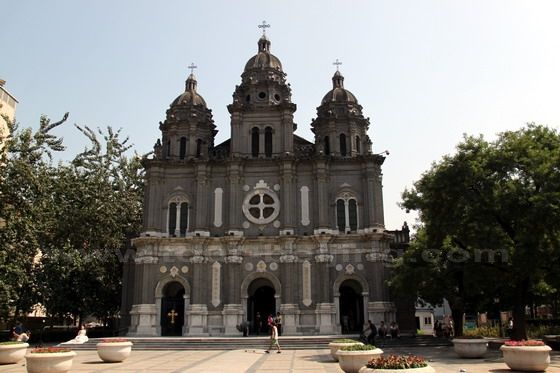
The present building was rebuilt in 1904 on the ruins of the burned church. The East Church was originally called Saint Joseph's Church, and was built in the 12th year (1655) of Emperor Shunzhi during the Qing Dynast y (1644-1911).
It was the second Catholic church built in Beijing after Italian preacher Matteo Ricci built the “South Church” in southern Beijing at the end of the Ming Dynasty (1368-1644). In the 1980s, large-scale repairs and maintenance were carried out by the government for East Church.
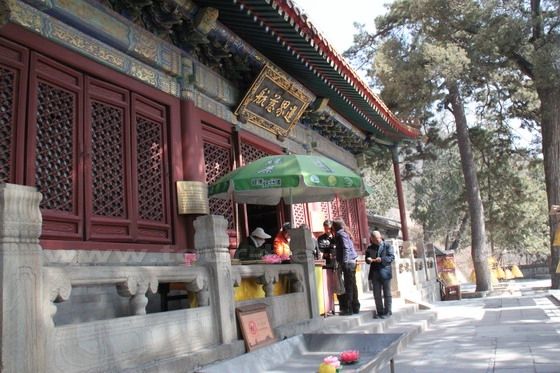
The Chinese “Tanzhe Si 潭柘寺” literally means “Temple of Pool and Zhe Tree”, now popularly known as Tanzhe Temple in English. There used to be a pool behind the temple and a lot of Zhe trees ( a kind of wild mulberry trees ) on the mountains nearby, hence the name of Tanzhe Temple.
People often use a cliche to describe the long history of Tanzhe Temple – “First came Tanzhe Temple, then Beijing.” which was first built in 307 AD in Western Jin Dynasty ( 265 – 316 AD). Its name was changed again and again through Jin, Yuan, Ming and Qing Dynasties. After its and repair and expansion in 1692, the hotel was renamed “Xiuyun Temple and has remained till today.
But it is popularly referred as Tanzhe Temple due to the dragon pool behind the temple and the Zhe trees on the nearby mountains.
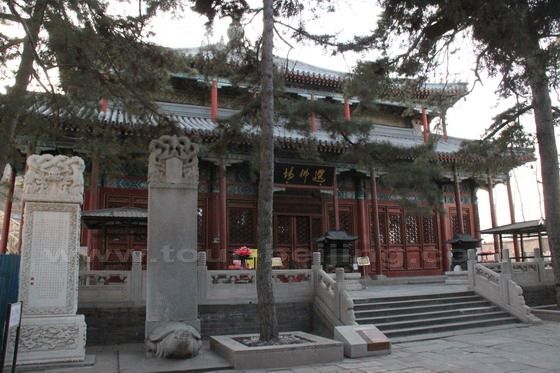
“Jietaisi – 戒台寺” literally means “Ordination Terrace Temple” Or “Altar Temple” for Buddhist discipline and ordination, now popularly known as Jietai Temple, a combined Chinese and English phrase.
It is one of the well known Buddhist temples in Beijing as well as one of the three most important “Ordination Terrace Temples” in China with other two being Zhaoqing Temple in Hangzhou and Kaiyuan Temple in Quanzhou Fujian Province.
Fayuan Temple was built in 645 during Tang Dynasty (618 -906), the old est temple within the city proper of Beijing. It is situated at the south of Jiaozi Alley outside the Beijing Xuanwumen District.
It is not only the oldest Buddhist temple, but also the location for the China Buddhism Institution and China Buddhism Library and Relic Centre as well as an important venue for nurturing young monks and Buddhism research.
Fayuan Temple spreads over an area of 6700 m2. Fayuan Temple which consists of 13 halls carefully layout over a huge compound, is the oldest ancient temple buildings in Beijing.
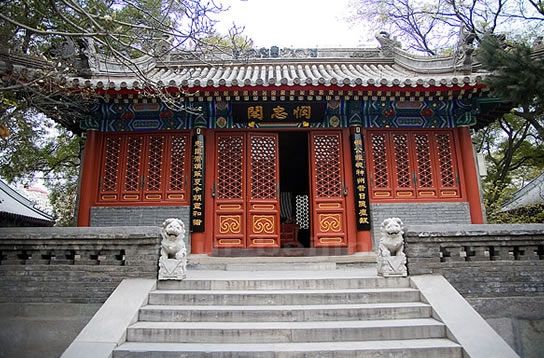
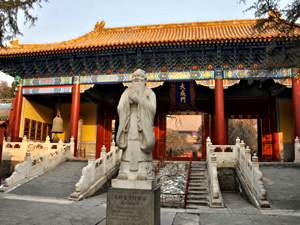
Confucian Temple in Beijing is the place where people pay respect to Confucius, which has started since the Yuan Dynasty (1271-1368), Ming Dynasty (1368-1644) and Qing Dynasty (1644-1911).
2. Entrance fee: RMB 30 per person
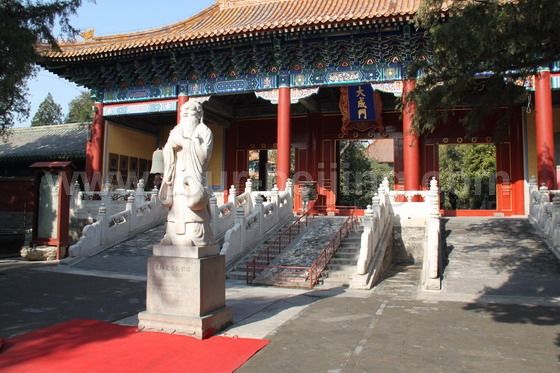
Subway Line 5: get off at Yonghegong (Lama Temple )Station, and come out of the station from Exit D (Southwest Exit).
Temple of Heaven ( Tiantan ) is located in the southern part of Beijing, and has been one of the most holy places for the whole country for more than five centuries. It used as a complex of sacrificial buildings for the Ming and Qing emperors, and is the largest one in Beijing among several royal altars to Heaven, Earth, the Sun, the Moon and other deities or symbolic forces of Nature.
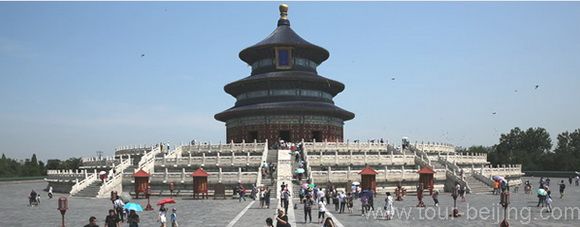
If you go to the Temple of Heaven in the early morning, you can see groups of people practicing all types of kung fu and taiji. You can also practice with them if you are so inclined. This is another good activity for the jet lag.
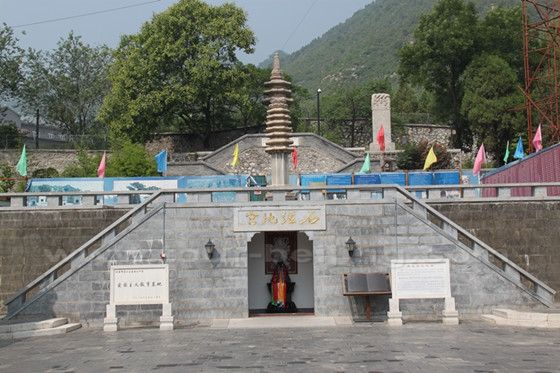
Most of the temple was destroyed in the 1930s. Reconstruction of the temple is now underway. In 1992, it was among the “Top Ten Tourist Spots of Beijing.”
If you don’t want to go the do-it-yourself route and prefer the hassle-free escorted tours, here are some options for guided tours to Beijing:
Share a question or note for this guide. Comments are reviewed before publishing.
Hand-picked routes matched from this article's destination clues, tags, and categories.
Use these attraction notes to connect nearby sights with tours, destination guides, and planning articles.
Continue planning with practical Beijing guides selected from similar places, themes, and travel questions.
Subscribe to receive Beijing travel ideas and tour updates.