
Call a local advisor
+86 186 1196 4400Email our team
[email protected]Tour Beijing Journal
Plan your Suzhou tour? We’ve rounded up a list of the top 10 attractions in...
Plan your Suzhou tour? We’ve rounded up a list of the top 10 attractions in Suzhou, which may be helpful for your planning your short trip to Suzhou.
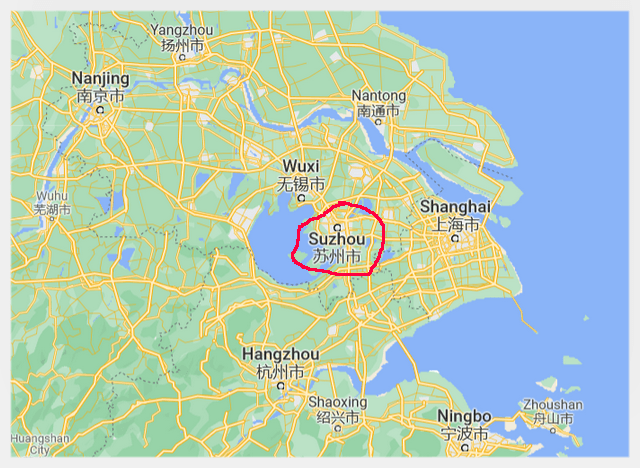
Suzhou is renowned for its world famous private gardens - stone bridges, pagodas, lakes, rockeries and traditional architectures and meticulously designed gardens which have contributed to its status as a great tourist attraction.
Suzhou enjoys great fame internationally for its elegant gardens. It is said that the gardens to the south of Yangtze River are the best in the world, and Suzhou gardens are the best among them. Suzhou attracts many visitors both home and abroad every day.
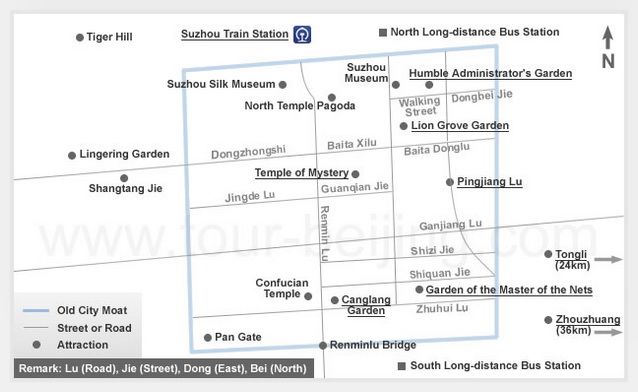
Now follow us to have a virtual tour of the top 10 attractions in Suzhou.
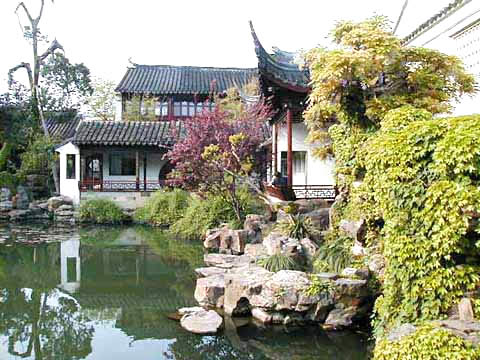
Humble Administrator’s Garden is representative of Chinese classical gardens in the Ming Dynasty, which are focused on a central pond with pavilions. At 51,950 m2, it is the largest garden in Suzhou and generally considered the finest garden in southern China.
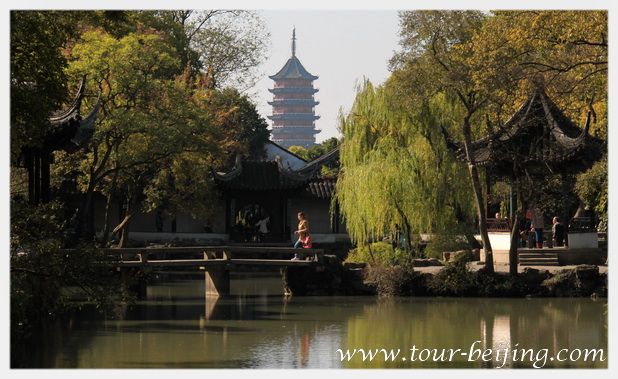
The Humble Administrator’s Garden was a scholar garden during the Tang dynasty and a monastery garden during the Yuan dynasty. It then changed hands many times.The structures are grouped round a labyrinthine lake, rather like a Chinese water village. The garden consists of Eastern, Central and Western sections as well as some residences of the former owners.
The Humble Administrator’s Garden is easily accessible by public buses – Tourism Bus No.01, Tourism Bus No.02, Bus No.313 and get off at the stop of Suzhou Museum (苏州博物馆) since Suzhou Museum is very close to both the Administrator’s Garden and the Lion’s Forest Garden.
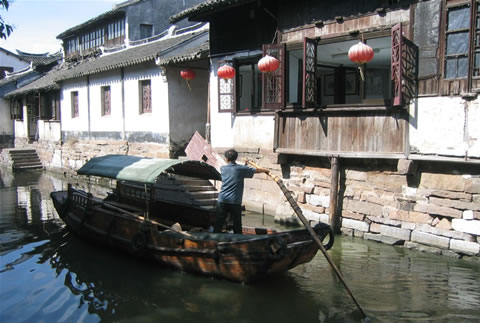
If you plan Suzhou tour, don’t miss a side trip to Tongli. Tongli Town (同里)is one of the famous ancient water towns in the Yangtze River Delta, which are specifically scattered around the large river and crisscross the triangle area of Suzhou, Huzhou, Hangzhou and Shanghai.
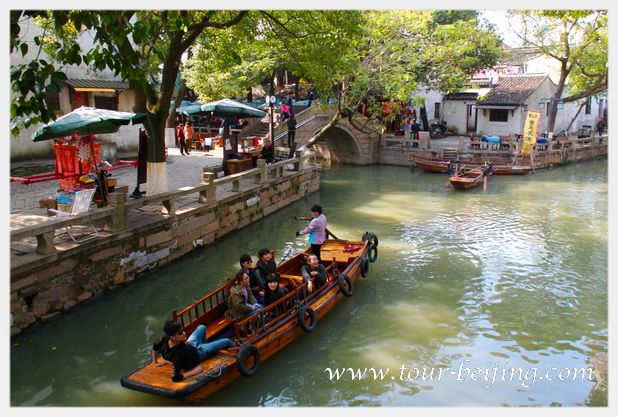
The ancient Tongli Ancient Town has a history of over 1000 years, a typical water town in the Yangzte River area. The ancient town is scenic enough to be surrounded by waters. The town is cut into 7 islands by 15 canals which are linked by 45 bridges. It is reputed as “the Venice of the East”.
In 1997 and 2000, eight of the finest gardens in Suzhou along with the ancient water town of Tongli were selected by UNESCO as a World Heritage Site to represent the art of Suzhou-style classical gardening.
Tiger Hill, which is located at the northwestern suburb of Suzhou, is a popular tourist destination and is known for its natural beauty as well as historical sites. The hill is so named because it is said to look like a crouching tiger. The Tiger Hill covers about 14,100 square metres and is 36 metres in height.
The Tiger Hill includes Tiger Hill Pagoda, Sword Testing Stone and Sword Pool, Lu Yu Well, Verdant Mountain Villa and Wanjing Villa.
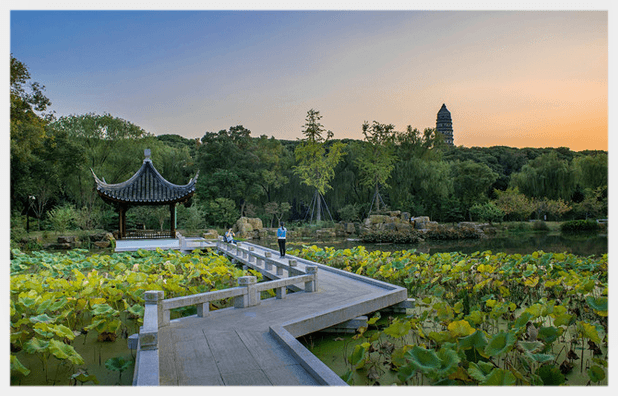
Tiger Hill Pagoda is just a another version of Pisa, a leaning in Italy, an iconic structure, but you cannot go inside the pagoda but nice viewing and picture opportunities.
The hill has been a tourist destination for hundreds, if not thousands, of years, as is evident from the poetry and calligraphy carved into rocks on the hill.
Hanshan Temple is a Buddhist temple and monastery in Suzhou which is located at the town of Fengqiao ( Maple Bridge), about 5 kilometres west of the old city of Suzhou.
It was first constructed in the Liang Dynasty (502-557). During the Tang Dynasty (618-907), a famous monk called Hanshan lived in the temple. The temple was later renamed after his name. The temple used to be one of the 10 most famous temples in China. Zhang Ji, a noted Tang-dynasty poet once wrote a poem "A Night Mooring by Maple Bridge," which, as a result, made the temple even more famous all over China.
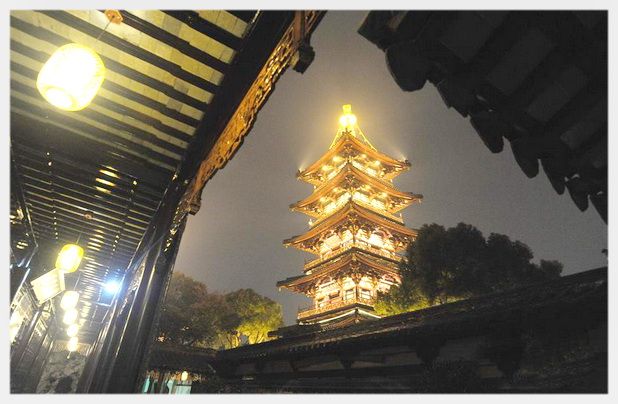
So the temple has been famous since the Tang Dynasty. The temple compound is a scene of luxuriant green creating a secluded atmosphere. The buildings in it are in an unadorned and natural style. In the center of the compound stands Mahavira Hall. Behind the hall stretches a wooden corridor, at the end of which stands a small tower with a wall behind and a stream in front.
Jinji Lake Scenic Area is located in Jinji Lake business district of Suzhou Industrial Park, and about two thirds of the scenic area, precisely, 7.4 square kilometers,are covered by water. It is lauded as the first “Prototype-zone of National Business Travel” in China.
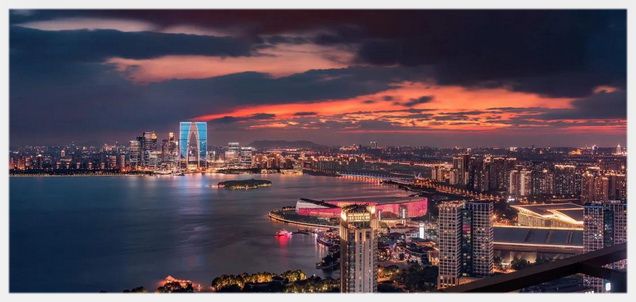
The scenic area has numerous of attractions, including the ten top the list, known as “Suzhou Center”, “The Gate of the Orient”, “Music Fountain”, “Jinji Lake Bridge”, “Culture and Arts Center”, “Moon Harbor”, “Eslite Bookstore”, “Suzhou International Finance Center”, “Lake Watching Corner” and “Ligongdi Causeway”. All the ten attractions are linked by Jinji Lake Fitness Trail which is 14 kilometers long.
Architecture around the lake is generally attractive - and dramatically illuminated in the evening. Restaurants and cafes either near the plaza or especially near the Culture & Arts Centre, also on East side (Western) or SW section. There are many places to pop in for food or a drink nearby and the area is lined with quite a few metro stations and getting here and away is a breeze.
Suzhou Museum is a museum of ancient Chinese art, ancient Chinese paintings, calligraphies, and hand-made crafts, situated in Suzhou, Jiangsu, People’s Republic of China.
Check out Suzhou Museum for more information.
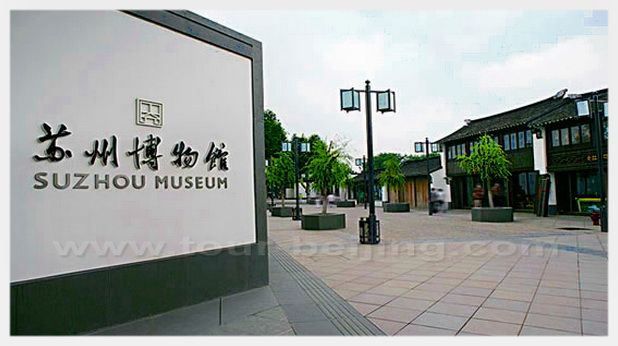
The museum has a display area of 2,200 square meters. It has more than 15,000 pieces in its collections. Most are ancient paintings and calligraphy, ceramics, crafts, unearthed relics and revolution relics.
Pingjiang Road (平江路) in Suzhou! The name “Pingjiang Road” originated from the old city name of Suzhou – “Pingjiang”.
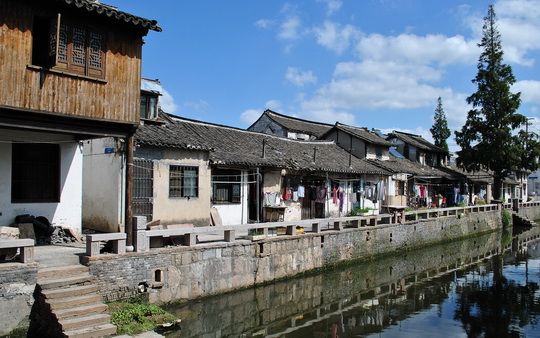
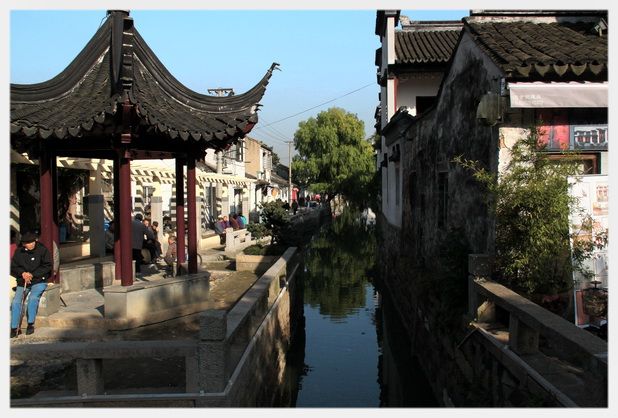
This 800-year old street is the best preserved ancient “water lane” ( in contrast with “water town”) in Suzhou.It is a 1600 meters long street set alongside with a north-south canal, starting from East Beita Road (北塔东路) in the north to East Ganjiag Road (干将东路) in the south.You cannot find a better place in China in which modernity and tradition match hand in hand.
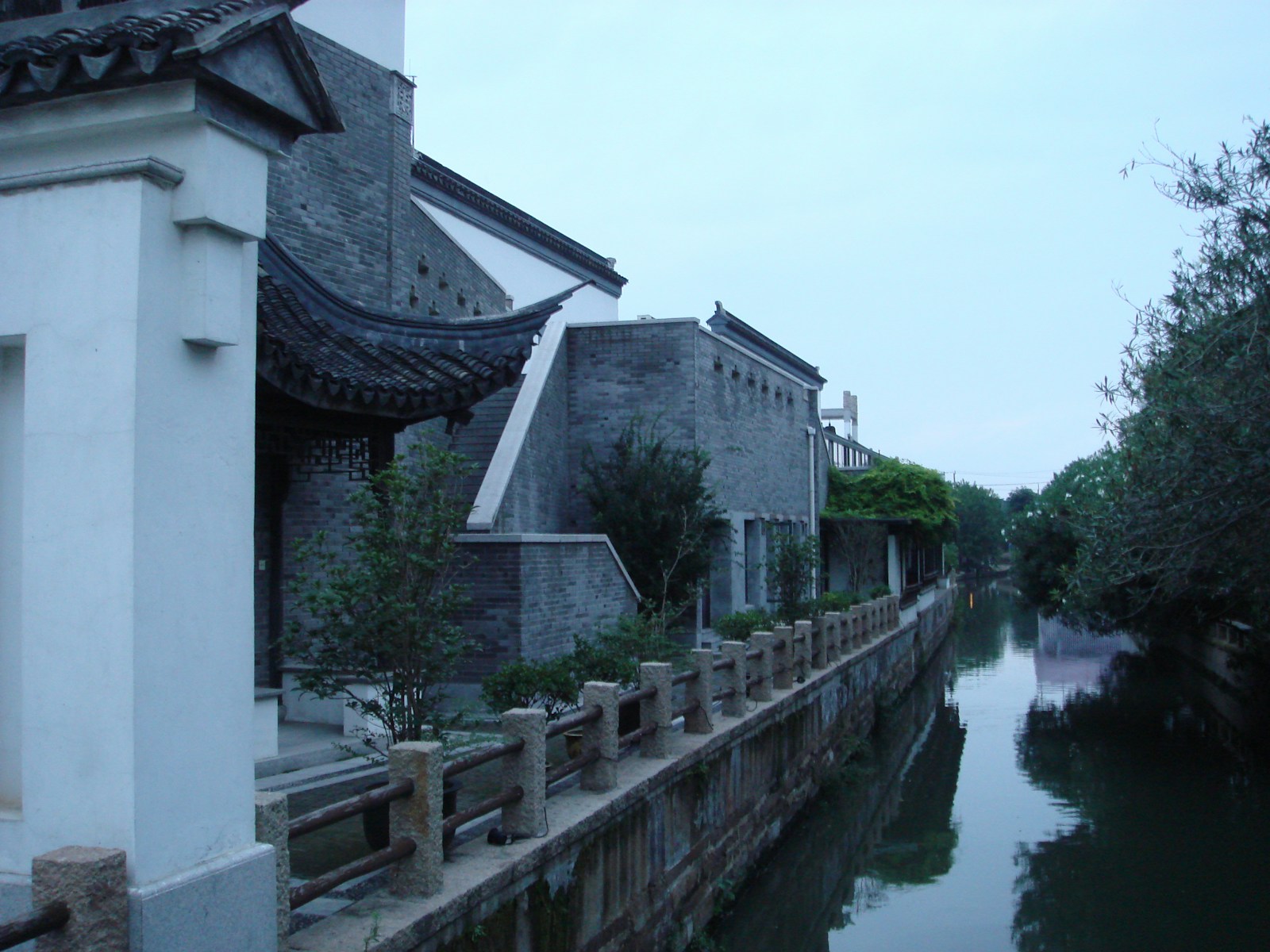
The 1600-meter cobblestone path runs alongside with a canal with willows dipping their branches in the water, cute little bridges that cross and all flanked by old white-washed local houses. The paddle boats rows on the canal while people stroll along the cobblestone path.
Google Maps recognizes “Pingjiang Road” as “Ping Jiang Lu”. Please note that when you google “Ping Jiang Lu”, there appears another “Ping Jiang Lu” which is far away from the Lion Grove Garden, just forget it and try to zoom out the “Ping Jiang Lu” close to the Lion Grove Garden.
The Lion Grove Garden is located at 23 Yuanlin Road (园林路)in Pingjiang District, just about 10 minutes’ walk south from the Humble Administrator’s Garden.
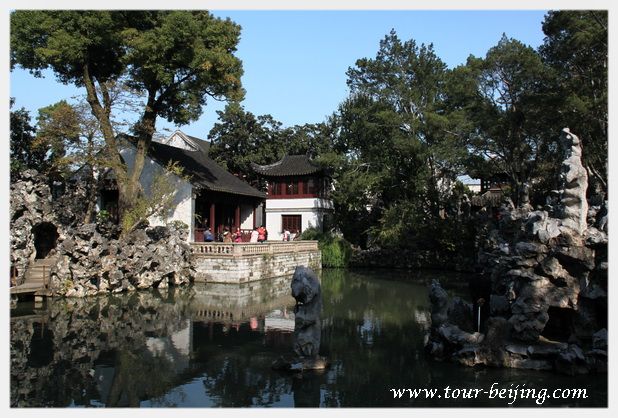
It is located outside the Changmen gate of Suzhou. The Lingering Garden was built by an official named Xu Taishi in Ming Dynasty.
Covering an area of 23,310 square meters, today the Lingering Garden is separated into the four parts of the eastern, central, northern and western parts.
The four scenic spots of the Lingering Garden are of different features. They set off each other with certain connection, but distinguish from each other at the same time. The corridor connecting all the scenic spots is 700 meters long in total, winding with the topography and making the scenery endless and changeable. It is really a masterpiece of gardens in China.
Check out Suzhou Lingering Garden for more information.
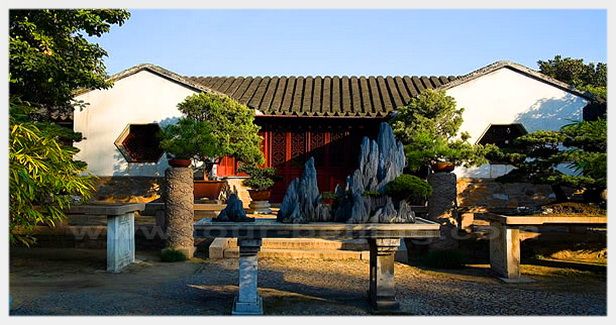
Especially in Suzhou gardens, the buildings inside Lingering Garden are not only large in number, but also densely distributed, with reasonable layout and clever space treatment. Each building has its own distinct personality, from the overall point of view, there is no sense of chaos, giving people a continuous, overall concept.
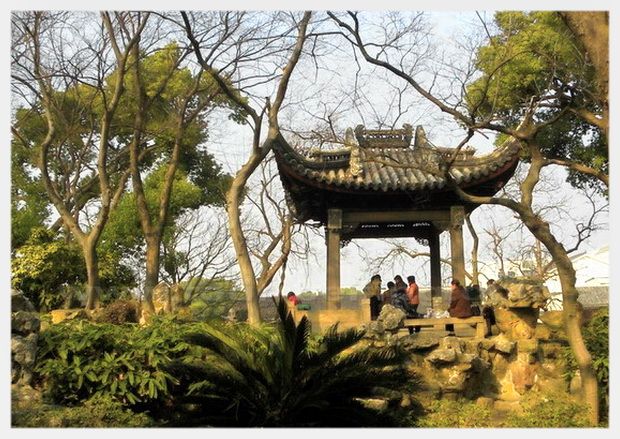
Canglang Pavilion literally means “Surging Waves Pavilion”. The garden was built in the year 1044 by the famous poet named Su Shunqing (1008–1048) in Song Dynasty.
The garden features the Song Dynasty layout and design. The name Canglang originates from a verse in a poem written by Qu Yuan (340 BC-278 BC). Qu Yuan wrote the verse to allude to an honest official who rather resign from his office than do in a corrupt way.
Su Shunqing (苏舜钦) used the verse to express his emotion after his removal from office. In Northern Song Dynasty ( 960 -1279). In 1044, He was removed from office and and settled down in Suzhou. He later bought the abandoned the land and built a garden named “Canglang Pavilion”. He often sailed a boat for playing. Often with Ouyang Xiu, Mei Shengyu and so on to write poems. Since then the name of Canglang spread.
The ownership of the garden changed many times and went through a bunch of renovations and revamping. The garden was opened to the public in 1955 and in 2000 it was listed the UNESCO world cultural heritage site together with other three classical gardens in Suzhou.
If you don’t want to do a self-guided tour and prefer the hassle-free escorted tours, here are some options for organized tours to Jiangsu Province:
Share a question or note for this guide. Comments are reviewed before publishing.
Hand-picked routes matched from this article's destination clues, tags, and categories.
Use these attraction notes to connect nearby sights with tours, destination guides, and planning articles.
Continue planning with practical Beijing guides selected from similar places, themes, and travel questions.
Subscribe to receive Beijing travel ideas and tour updates.