
Call a local advisor
+86 186 1196 4400Email our team
[email protected]Tour Beijing Journal
Plan your Pingyao tour? If you are not pressed for time when visit Pingyao,...
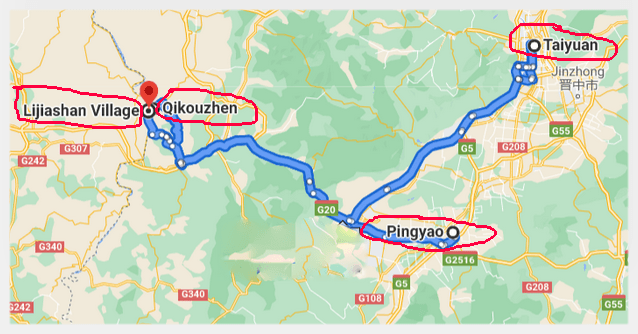
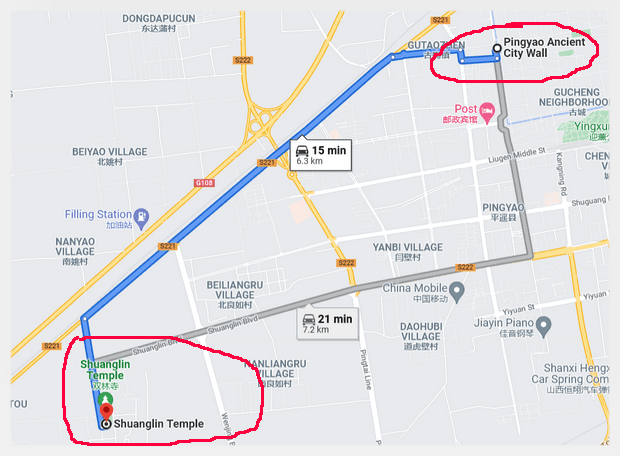
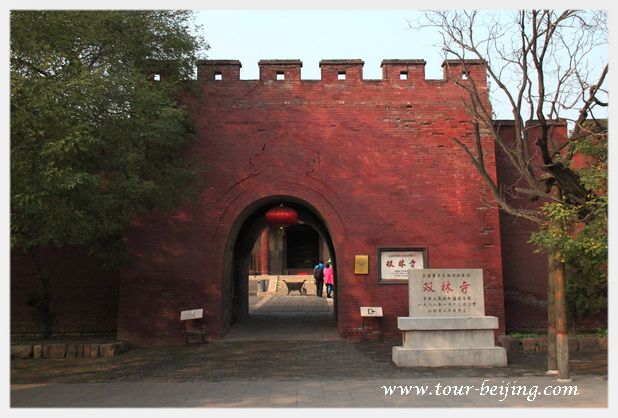
Shuanglin Temple is located in Qiaotou Village 7km to the southwest of Ping Yao ancient city. You may look for a local taxi and bargain with the driver for a return ride to the temple (approx. RMB 60 return taxi fare). If you like cycling, it is a breeze to rent a bike for an easy ride to get there.
Shuanglin Temple was originally named “Zhongdu Temple” built in 571 ( it is said the actual making of the temple was much earlier ).
In Song Dynasty, Zhongdu Temple was renamed “Shuanglin Temple” according to the Buddhist doctrine. "Shuanglin" literally means "twin trees". Here "Shuanglin" is taken from the legend about Sakyamuni’s death, which goes like that the Sakyamuni Buddha died under twin sala trees, by the Ajitavati River, in the city of Kushinagar, India.
Later, Shuanglin Temple was destroyed and rebuilt for several time. The present style of its buildings dates back to Ming and Qing Dynasties (1368 - 1911).
The present Shanglin Temple has an area of 11620 square meters with its main entrance facing south. An impressive complex of halls forms three courtyards housing a number of intricately carved painted clay statues.
Shuanglin Temple looks more authentic than many restored Buddhist temples you’ve seen in China. It is worth your exploring here for 2-3 hours.
Now follow me to have a virtual tour of Shuangling Temple. All the indoor halls are forbidden to take pictures. So we cannot present you the ornately carved clay statues.
This is a traditional Chinese archway ( Pailou ) stands facing west outside the compound of Shuangling Temple.
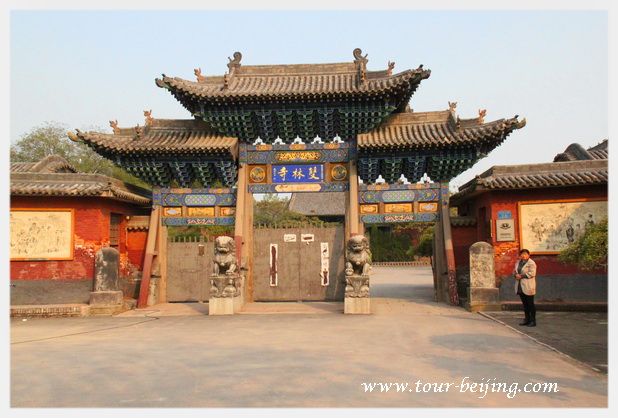
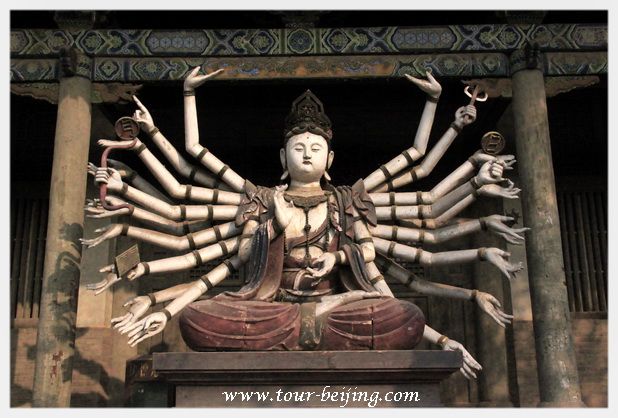
When you enter the pailou, straight ahead, you will see colored Bodhisattva decorated with several arms.
On your left side is the entrance facing south to the temple itself.
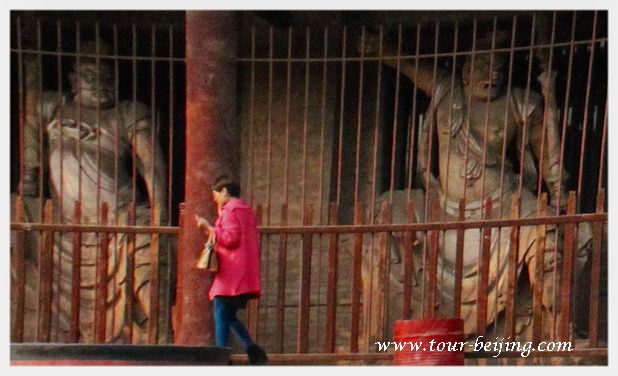
Enter the temple complex, the first hall is the Hall of Heavenly Kings. Outside the hall there are four guardian warriors and inside the hall four heavenly kings and 8 bodhisattvas. These vibrant sculptured were made in Yuan Dynasty ( 1279 – 1368 ) the hall was rebuilt in Ming Dynasty ( 1368 – 1644 ).
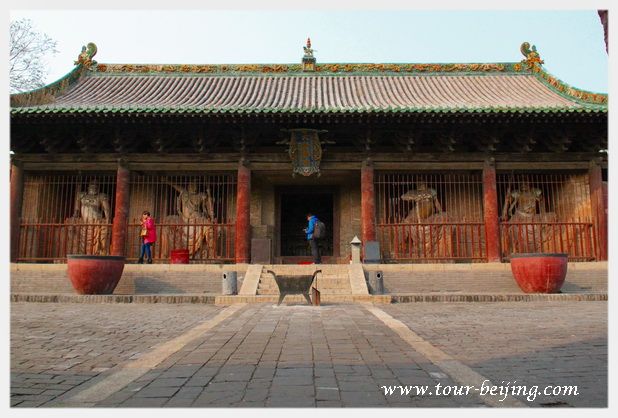
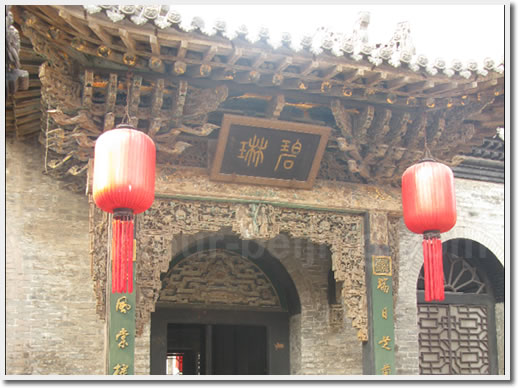
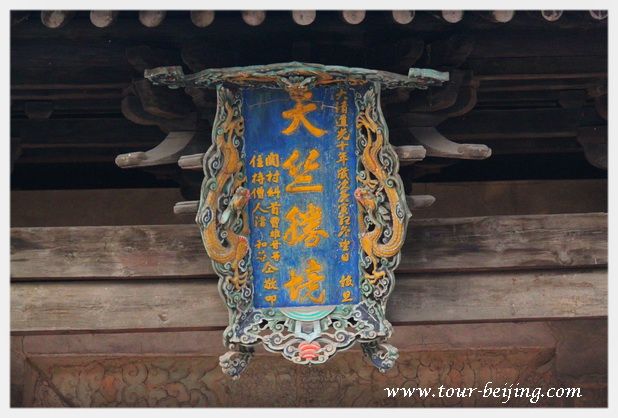
A plaque intricately carved with four Chinese characters hanging over the entrance to the Hall of Heavenly Kings.
Glazed tiles carved with ornate and beautiful patterns decorate the roof of the Hall.
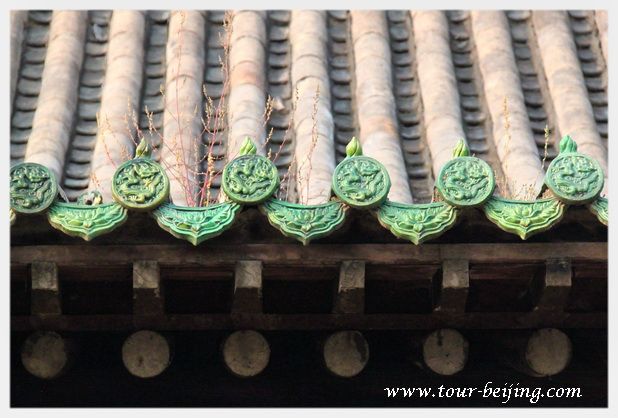
Its roof top is decorated with Buddhist images in glazed tiles. Two dragon heads atop the roof ridge of the Hall.
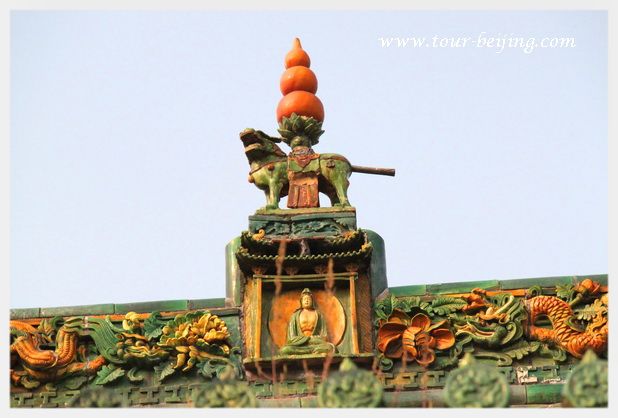
To the north of the Hall of Heavenly Kings is the Hall of Sakyamuni, the main hall in the first courtyard formed also by other 4 smaller side halls.
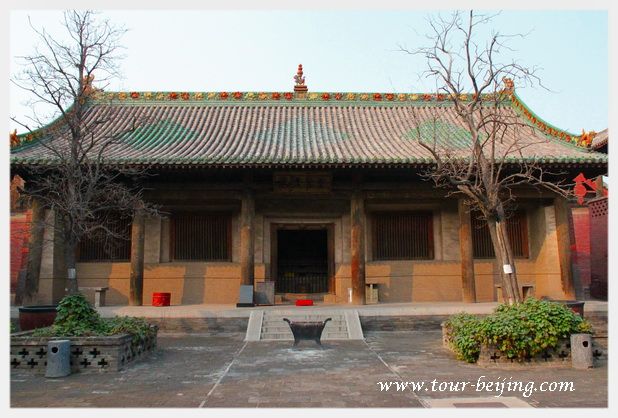
This is one of the main halls in Shuanglin Temple. Sakyamuni is the title of the Buddha. More than 200 sculptures combined with mountains, stones and buildings in shallow and deep relief tells the life story of the Buddha.
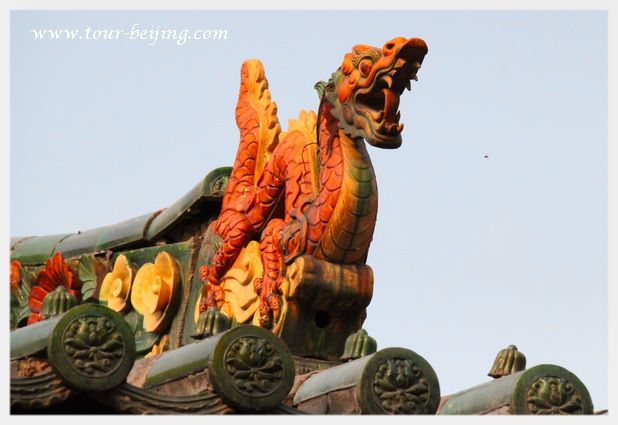
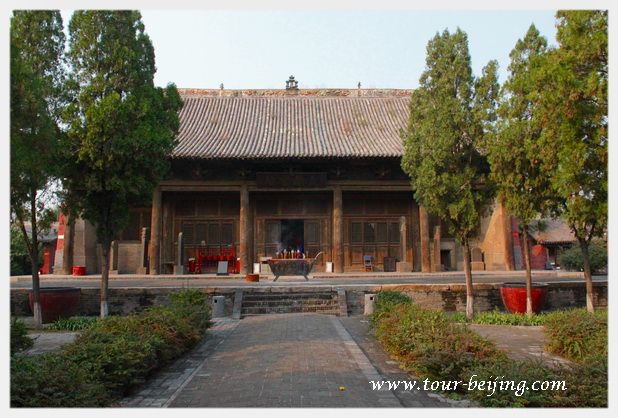
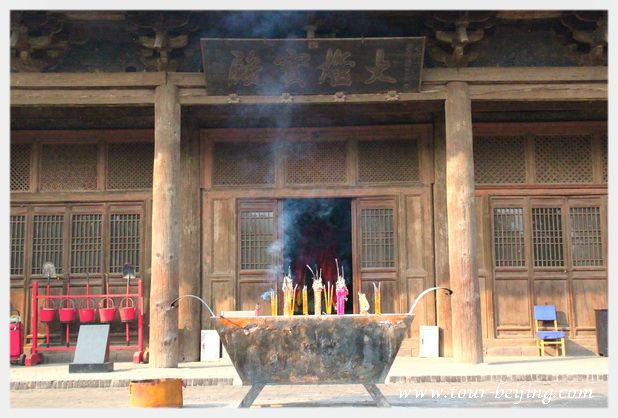
To the north of Sakyamuni Hall is the second courtyard formed by the Precious Hall of Mahavira and other two side halls. The Precious Hall of Mahavira is the tallest building in the temple. The clay sculptures of the welcoming buddha and three main Buddhas and the frescoes were made in Ming Dynasty ( 1368 – 1644 ).
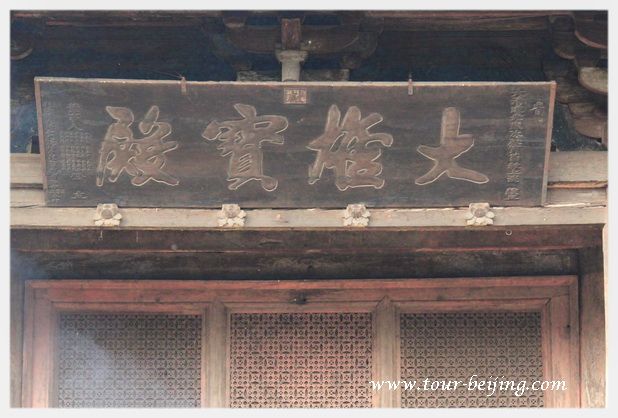
A plaque written with four bold Chinese characters of the Precious Hall of Mahavira hanging over the entrance to the Hall.
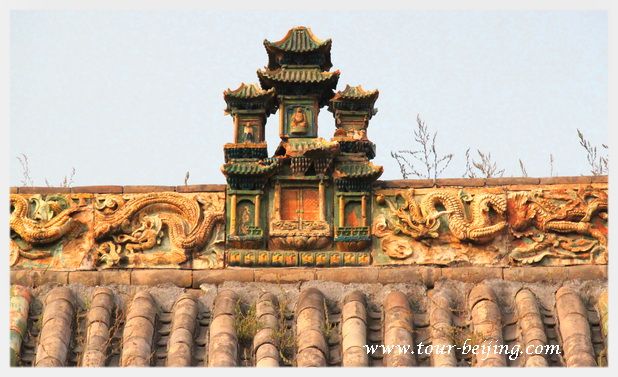
Yellow Dragons and Buddhist figures atop the roof of the Precious Hall of Mahavira.
To the north of the the Precious Hall of Mahavira is the third courtyard formed by the Hall of Fertility Goddess. This hall was originally built during the reign of Emperor Zhengde ( 1506 – 1521 ). The present sculptures were made in Qing Dynasty ( 1368 – 1644 ) depicting women praying for children.
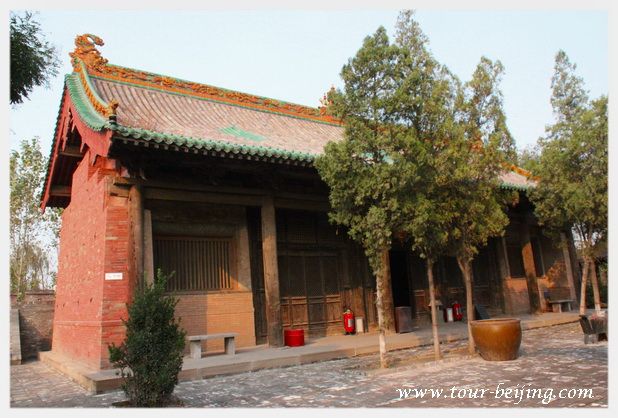
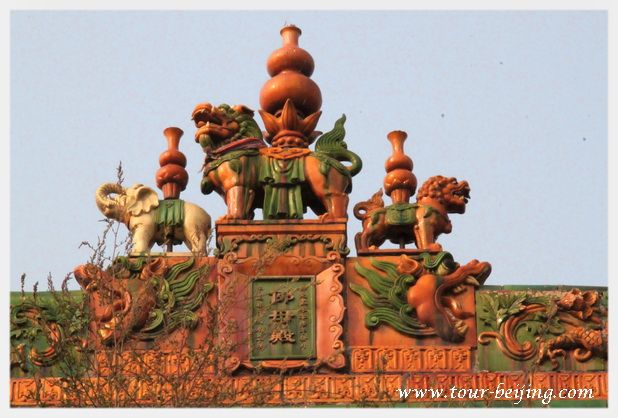
A group of elephants and dragon heads atop the roof ridge of the Hall of Fertility Goddess.
If you don’t want to do a self-guided tour and prefer the hassle-free escorted tours, here are some options for organized tours to Pingyao and Shanxi Province:
Shanxi Tour
Share a question or note for this guide. Comments are reviewed before publishing.
Hand-picked routes matched from this article's destination clues, tags, and categories.
Use these attraction notes to connect nearby sights with tours, destination guides, and planning articles.
Continue planning with practical Beijing guides selected from similar places, themes, and travel questions.
Subscribe to receive Beijing travel ideas and tour updates.