
Call a local advisor
+86 186 1196 4400Email our team
[email protected]Tour Beijing Journal
When you plan your Shanxi tour, probably you would consider putting Datong...
Over 500 years ago, Qikou Town started to flourish as a port town owing to the waterway transportation of the Yellow River. At its heyday, Qikou Town was a place for men or merchants in particular doing trading business.
Many wealthy merchants in the town, for various reasons, maybe, for safety or modesty, arranged their families secretly away in the mountains. Lijiashan was one of their choices. So husbands or men worked in Qikou Town and their wives and children lived in the hills away from the town such as Lijiashan Village.
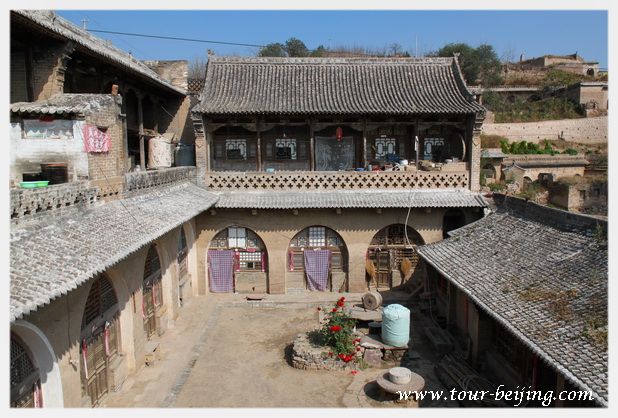
Lijiashan is a village now. But in the ancient time, the villagers in Lijianshan were not farmers and they were rich merchants' families living on the income from the port trading business in Qikou Town. If you understand this, you won't be surprised if you see the faded, but still seemingly magnificent cave houses. These are not just earth caves dwellings, they are brick, stone and tile cave dwellings built deep into the hillsides at theirs backs, but have front courtyards of bricks and tiles, just like a Chinese traditional courtyard.
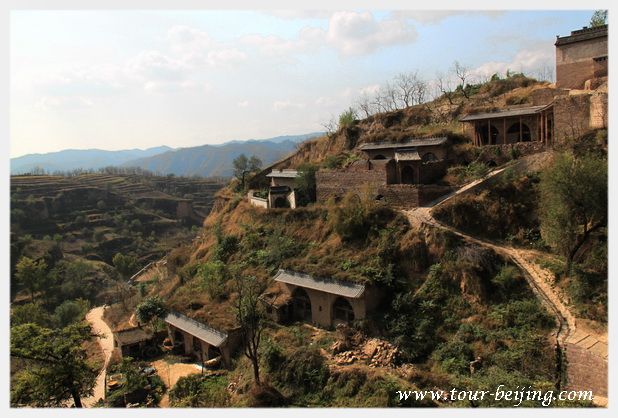
The layout of the cave houses in Lijashan Village is like a phoenix with the cave dwellings perched on the both sides of wings. Between the two wings is the body or the valley of Lijiashan Mountain. The cave houses on the both sides of the valley hug the hillsides and scale nine storeys. All the cave dwellings ( including the dwellings on both sides of the valley are linked by the stone paths and stairways that wind up or down the hills. Some of the stone paths and stairs date back to the Ming times.
Lijiashan was once home to over 600 families, most surnamed as Li, but today’s population is about 40, and most of them are elderly. So where are the other villagers in Lijiashan Village? They have moved down to a new Lijiashan village with better living conditions and facilities at the foot of the Lijiashan Mountain.
Some inhabitants on the old Lijiashan Village are engaged in tourism, offering cave dwellings accommodation and food services to visitors and arts students who come and even stay here for drawing and painting.
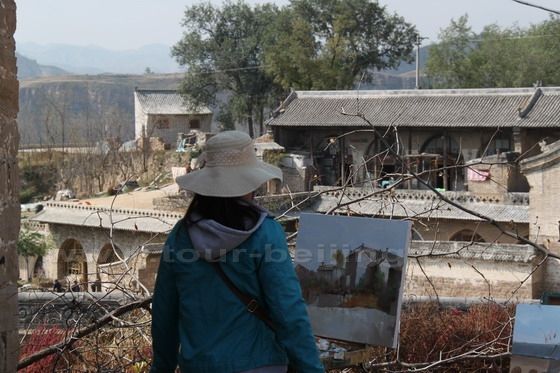
Beside tourists, you will see many arts students use the caves for their classrooms and drawing the picturesque cave houses and the mountain.
At the time of my writing, Lijiashan Village is very peaceful, and free of charge. You can enter most of the cave houses. Some cave dwellings are just empty with nobody living there. Some are still inhabited by local villagers who are very friendly to visitors.
The local people and the government as well are aware of the cultural value behind the hundreds of cave dwellings and going to do something to promote the local tourism, an effective way to improve the local economy. Sincerely hope for a long-term serenity and peace for Lijiashan Village.
You may take the morning long distance bus from Taiyuan West Coach Station (太原汽车客运西站)to Qikou Town, or via Lishi (离石). Taiyuan West Coach Station is located on Yingze Avenue 10km to the east of Taiyuan Railway Station. Take Bus No.01, 06 from Taiyuan Railway Station, you will get to Taiyuan West Coach Station. Add: Yingze W St, Wanbailin, Taiyuan Tel: 0351 6552571
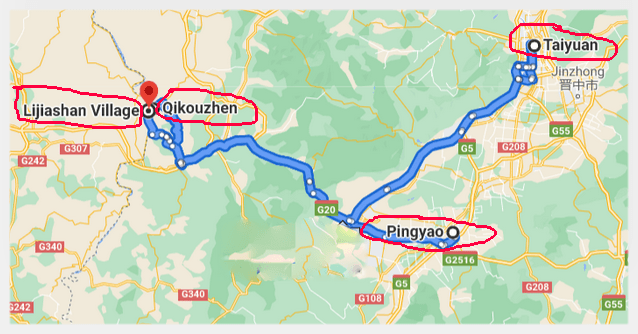
Alternatively, if you are in Pingyao Ancient City, most of the hotels and inns in the old town arrange a day trip to Qikou and Lijiashan Village on a shared van or bus tour.
You may hire a local mini-van at a cost of RMB 60 to bring you to the top of Lijiashan Village from Qikou Town if you don’t want to take a 6 km walk up to Lijiashan.
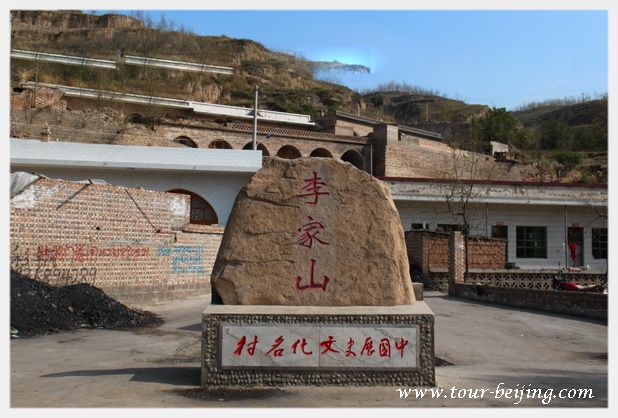
If you prefer to walk to Lijiashan Village, you just cross the bridge over Qiushui River by the side of Qikou Bus Station. Then follow the river for about half hour. Then you will see a rock carved with the Chinese name of Lijiashan (李家山).
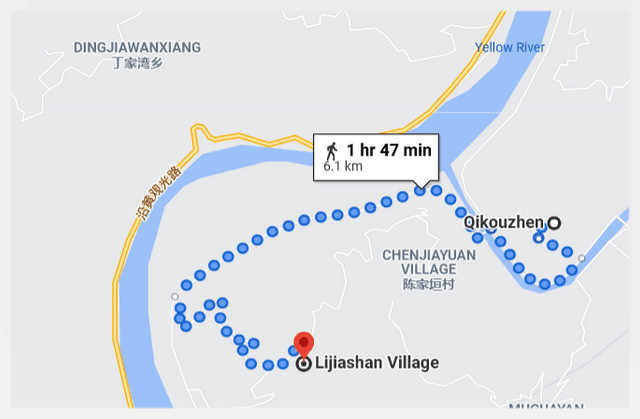
This is the new Lijiashan Village where you turn up on to the mountain road and you will reach the old village for about 30-40 minutes. You may first visit the west side of the cave houses, then move on to the east. Standing on the top of the one hillside will allow you to have a fantastic view of the other side.
If you are mesmerized by the natural beauty and the ancient Chinese venacular buildings in Lijiashan Village, you may stay overnight here in a cave house for RMB 50 per bed. Here you will realize your dream of experiencing Shanxi’s cave houses, but you cannot expect the comforts – no TV, no shower, no heating, no air-conditioning and just basic.
Well, follow me to have a glimpse of Lijiashan Village
When you come across the big rock carved with the Chinese name of Lijiashan Villlage (李家山), you should stop and turn left and go up on to the mountain for the ancient Lijiashan Village.
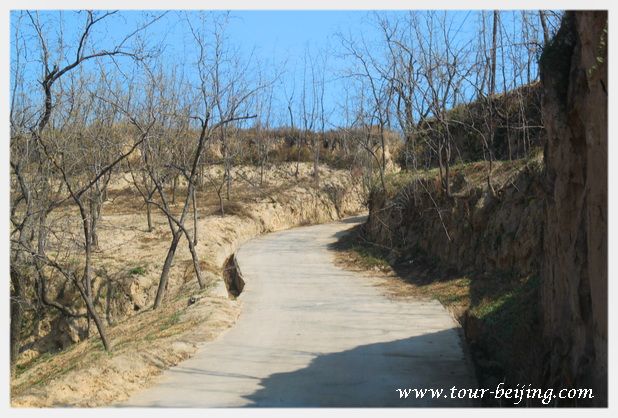
The narrow zigzag mountain leading up to Lijiashan
Approaching Lijiashan Village, look up and you will see the cave dwellings built on the both sides of the valley at Lijiashan Mountain:West Wing and East Wing, like a huge flying eagle.
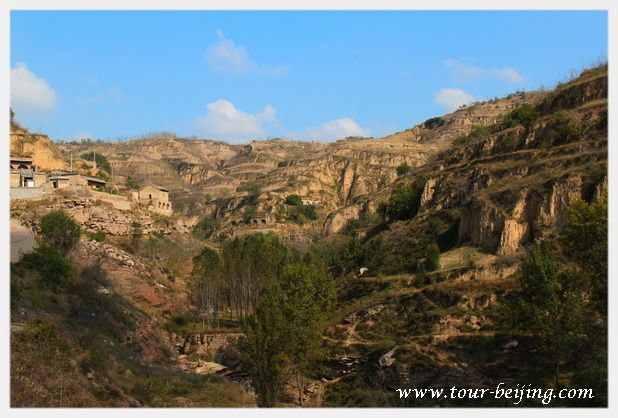
Now we are on the top of the west wing. Standing on the west side, we clearly view the whole picture of the cave houses hugging the hillsides on the east side.
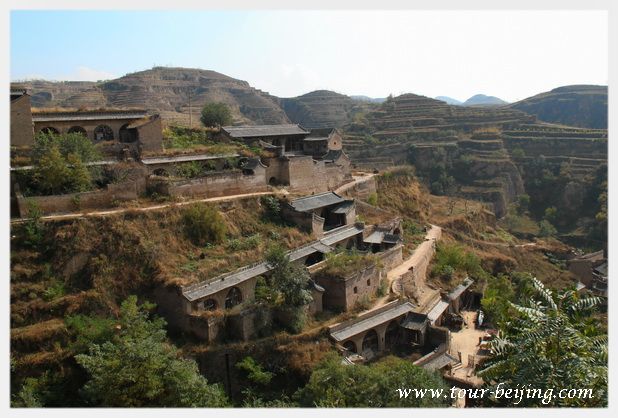
Have a close look at a wealthy two-storey cave dwelling on the east side of the valley at Lijiashan.
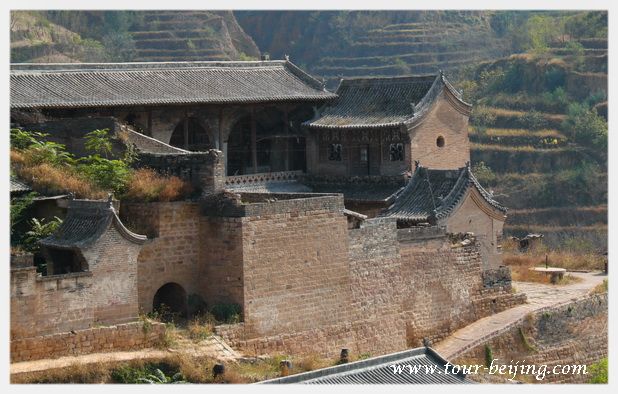
Multi-level layers of cave houses with courtyards.
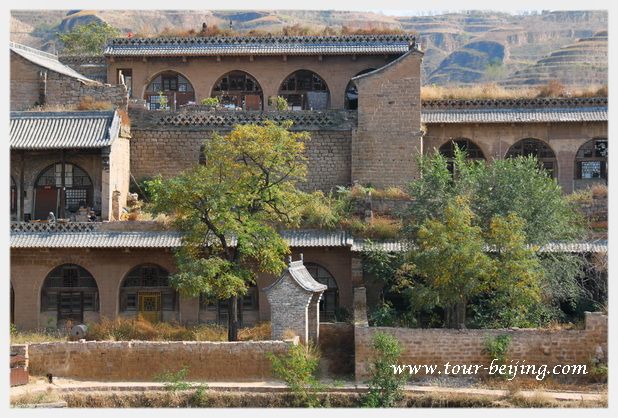
This host's courtyard is named Yellow River Family, a two-storey courtyard.
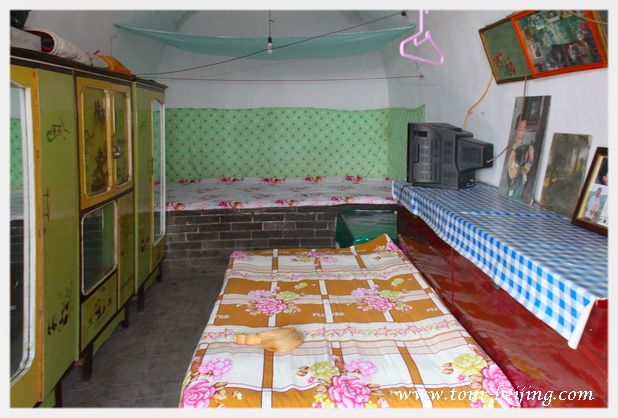
Peep into the stone kang beds in one cave room in Yellow River Family
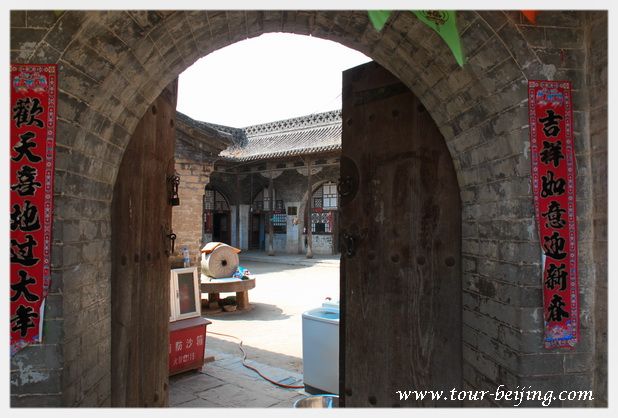
We enter the courtyard of the cave house.
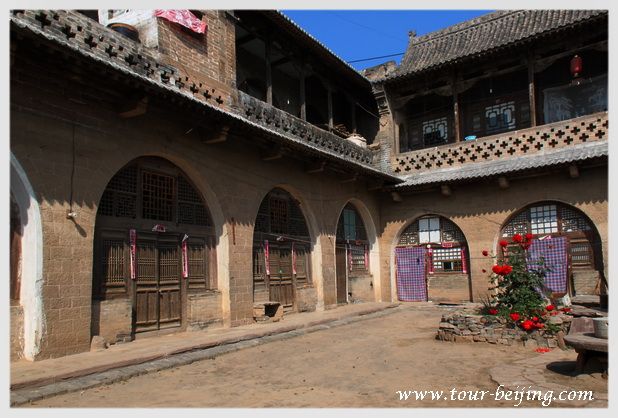
The cave houses are made of wood, stone and brick. Old wooden frame door and rings.
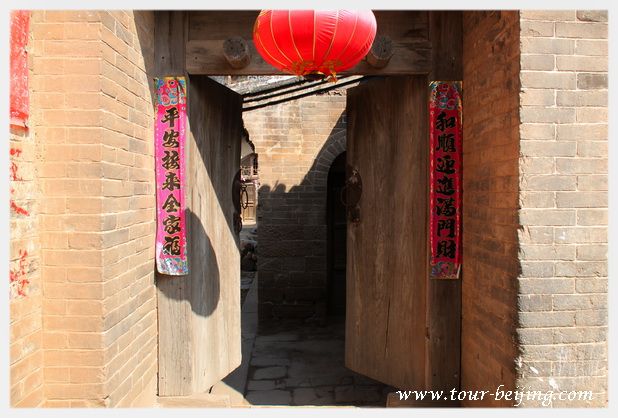
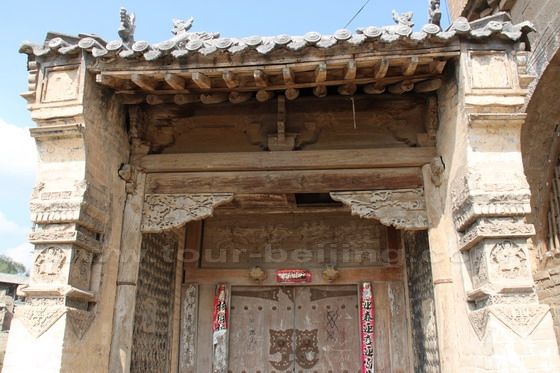
The entrance to Li Yinlan's cave dwelling
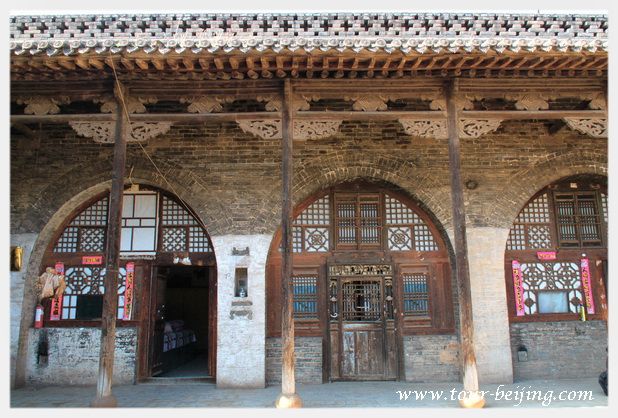
Li Yinlan's courtyard is ornate and exquisite. The exquisite brackets, beautiful wood carvings and decorated tiles
We walk down the valley and walk up to the east side. In the valley, we look back at the cave houses scaling the hillsides on the west side of the valley.
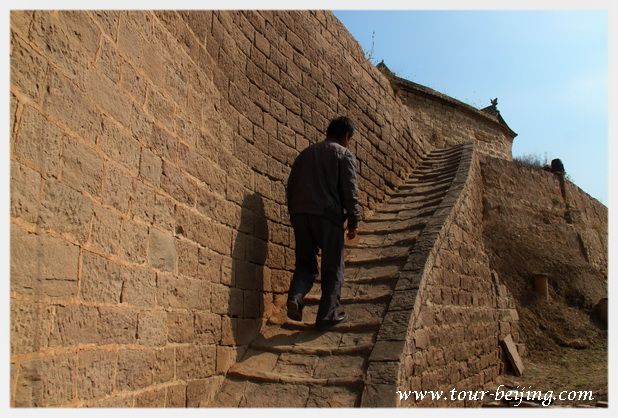
Clamber up the old stone stairs up to the east side of the valley.
View the cave houses perched on the west side from the east side
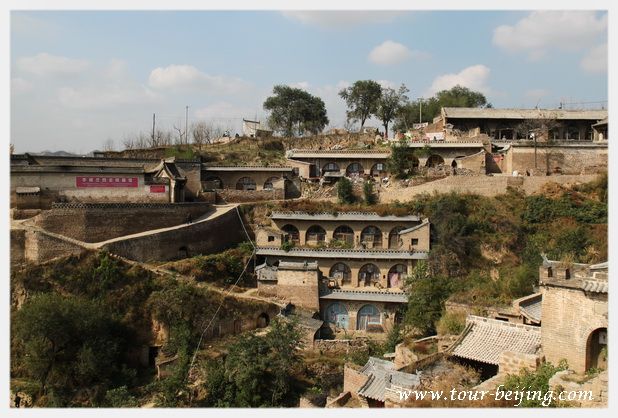
The cave dwellings on the west side of the valley
Ornate entrance to the most wealthy family on the east, but the door is closed.
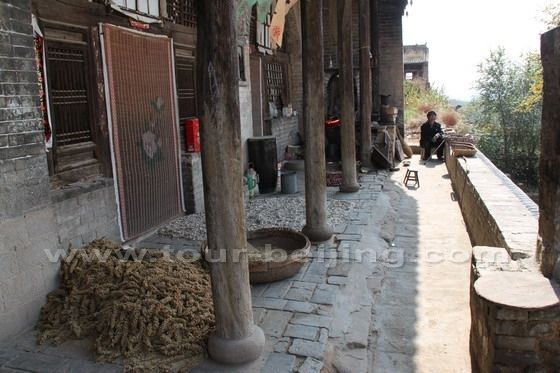
A local senior's cave house
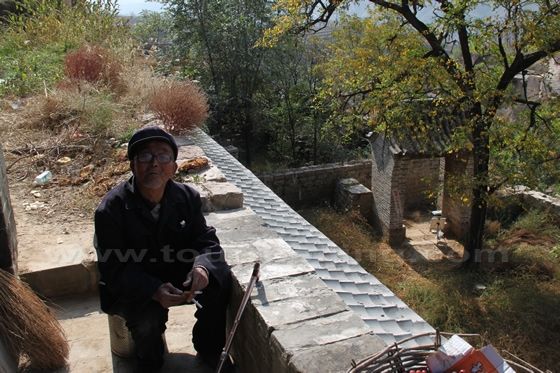
The first local villager we have seen
A group of arts students stay here for drawing classes
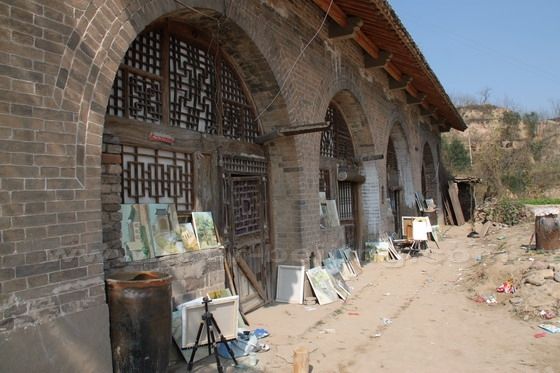
A perfect place for drawing
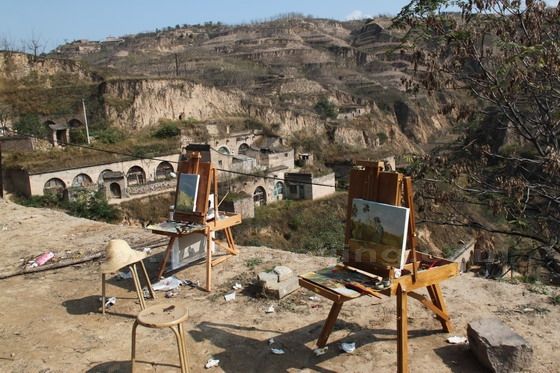
Checking her painting
On the top, you clearly see the cave houses on the both side of the valley

Before leaving Lijiashan Village, don't forget to have a bite of the yummy noodles made by the host at Yellow River Family.
If you don’t want to do a self-guided tour and prefer the hassle-free escorted tours, here are some options for organized tours to Pingyao and Shanxi Province:
Shanxi Tour
Share a question or note for this guide. Comments are reviewed before publishing.
Hand-picked routes matched from this article's destination clues, tags, and categories.
Use these attraction notes to connect nearby sights with tours, destination guides, and planning articles.
Continue planning with practical Beijing guides selected from similar places, themes, and travel questions.
Subscribe to receive Beijing travel ideas and tour updates.