
Call a local advisor
+86 186 1196 4400Email our team
[email protected]Tour Beijing Journal
The Location of Meidaizhao Temple (美岱召) If you are planning Inner Mongolia...
If you are planning Inner Mongolia tour, a side trip to Meidaizhao either from Baotou or Hohhot is highly recommended. Meidaizhao Monastery ( (美岱召) is located in Meidaizhao Village below the massive Daqing Mountain of the Yinshan Range, Tumd Right Banner, Dong He District, Baotou, Inner Mongolia.
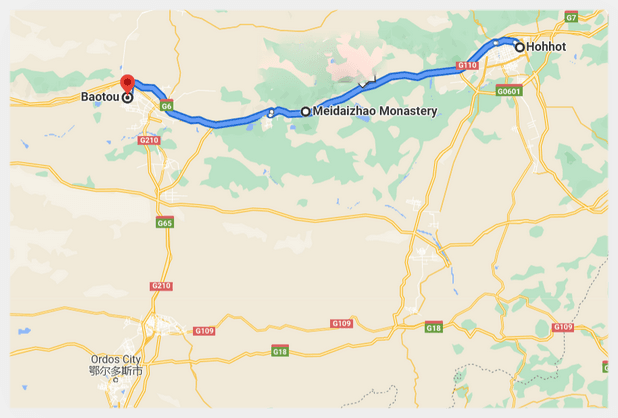
You can take train either from Hohhot or Baotou to Salaqi Railway Station (萨拉齐站) . Salaqi Station is located in Salaqi Town, Tumed Right Banner, Baotou City and it is on Jibao Railway Line, a third class station under the jurisdiction of Hohhot Railway Bureau, built in 1922.
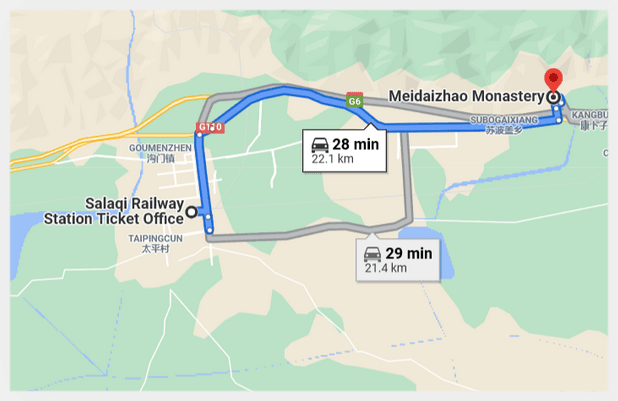
Arriving a Salaqi Train Station out, go west, to the intersection of the overpass, and wait on the road for Minibus No.6 ( 5 yuan ) for Meidai Zhao Village. Alight at Meidaizhao Village, you will see a memorial arch in front of the village, after the memorial arch go straight ahead, a few minutes later you can see Meidai Zhao Monastery.
Alternatively you also can take the long-distance buses either from Baotou or Hohhot.
"Meidaizhao" literally means "Maitreya Temple" in Mongolian ( Zhao means "temple"). Meidaizhao Monastery was originally built in 1565 as a fortified capital city of the Daming Golden Kingdom (大明金国) in Ming Dynasty, also known as Altan Khan Kingdom (阿勒坦汗国), (a vassal of Ming Dynasty) established by Altan Khan (1507 – 1582) .
Altan Khan (阿勒坦汗) was a descendant of Kublai Khan (1215–1294). He managed to unite the Mongols in the north and the south. His name means “Golden Khan” in the Mongolian language, hence the kingdom’s name.
In 1571, Altan Khan was granted the title Shunyi Wang (顺义王) from the Longqing Emperor (March 4, 1537- July 5, 1572), the 12th emperor of China (Ming dynasty). With the assistance of his wife known as Sannianzi (三娘子) (Grand Queen), the Daming Golden Kingdom kept peace peace with the Ming Dynasty for over 40 years.
With a new city known as Hohhot(“Green City) built by Altan Khan and the Grand Queen in the current old town in Hohhot, the political center of Altan Khan Kingdom was move on to Hohhot.
In 1606, the Meidaizhao fortress was transformed into a lamasery. So Altan Khan was the founder of the original city of Hohhot which literally means "green city" in Mongolian.
The present temple occupies an area of 4000 square meters encompassing the over 200 Ming and Qing era buildings including Sakyamuni Hall (Hall of Great Hero), Glazed Hall, Dalai Temple, Sannianzi Hall.
The temple is surrounded by a 5-meter high stone wall in a rectangular shape with a perimeter of 681 meters. The big draw is the 1650-square-meter murals in Ming and Qing Dynasties preserved in the Hall of Great Hero.
If you are planning Inner Mongolia tour, a side trip to Meidaizhao either from Baotou or Hohhot is highly recommended.
Follow me to have a virtual tour of the ancient city of Meidaizhao Temple.
The south gate to the fortress temple and Daqingshan Mountain lies behind the temple.
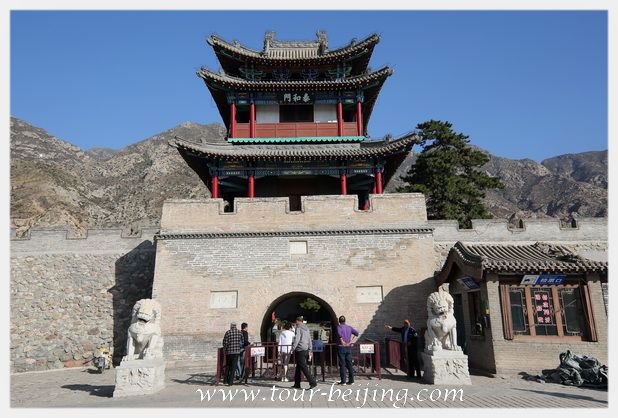
The two old pine trees in front of the Great Hero Hall ( Sakyamuni Hall ) are known as “Listening to Buddhist Scripture” pine trees, west is female and east male, over 400 years old when the temple was originally started being built.
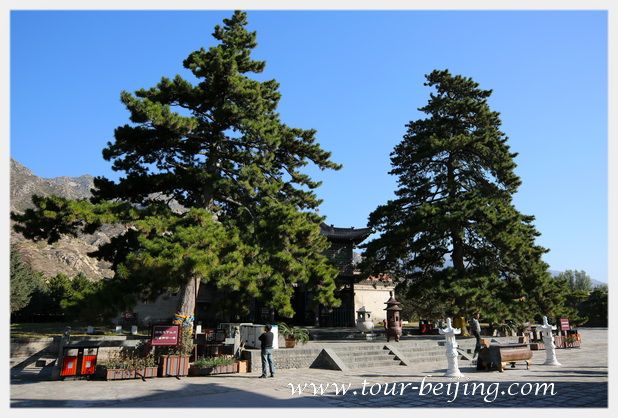
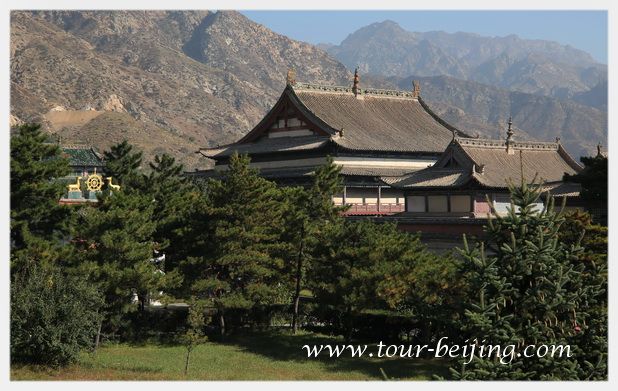
Sakyamuni Hall has three connected halls with two floors and 3 double eaves. The roofs of the three halls are in the gable style. The east, west and south sides of the hall are surrounded by white Tibetan brick walls, forming an architectural body combining Han and Tibet. The lower part of the west wall of the Temple is a group of Mongolian nobles worshipping Buddha.
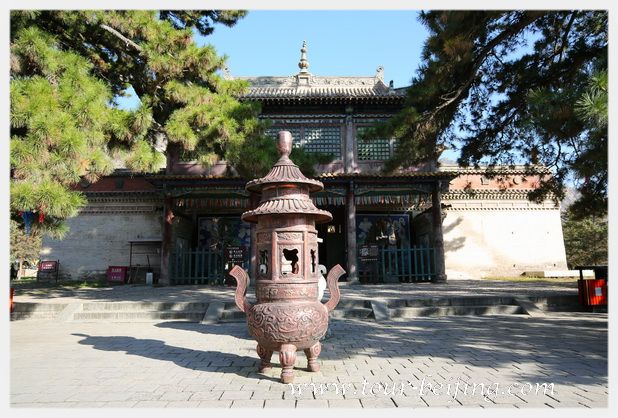
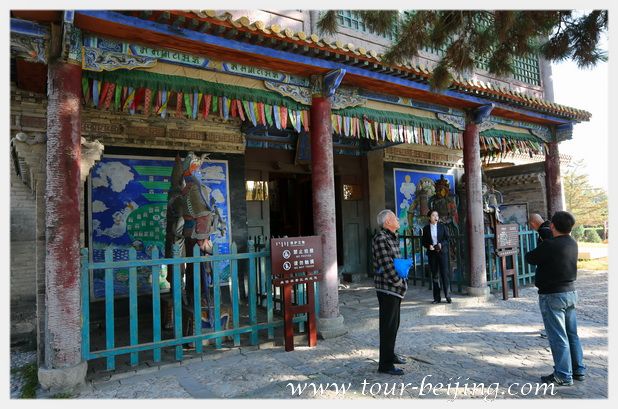
Sakyamuni Hall has the priceless mural in the main hall starting from the waist line to the ceiling. The mural scene is grand. You need to look up to see it. In the middle of the north wall is painted the giant statue of Sakyamuni, and the background is painted with sakyamuni's story of Buddha. Under the wall of the four Kings and Fu Hu Arhat, the cloth bag monk.
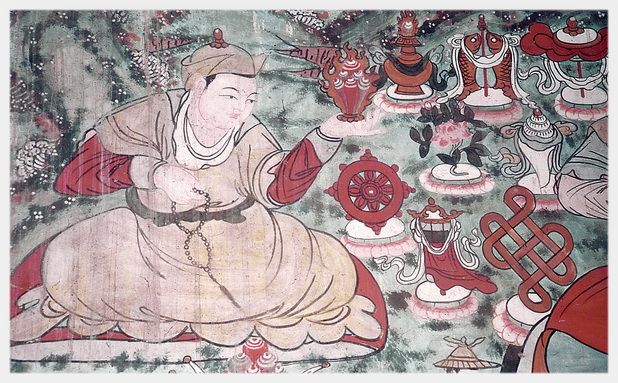
Many of the Mongolian costumes on these mural paintings can be found in the Book of Yi Custom written by Xiao Daheng in Ming Dynasty. It is a valuable material for studying Mongolian history, folk customs and costumes in Ming and Qing Dynasties.
The Nai Qiong Temple is the former dwelling place for Mal Da Li living Buddha (四世达赖的代表人麦达里活佛在此坐床传佛) in Qing Dynasty. The original statue of Mal Da Li is not available. Instead, it shrines the statue of Guardian of God.
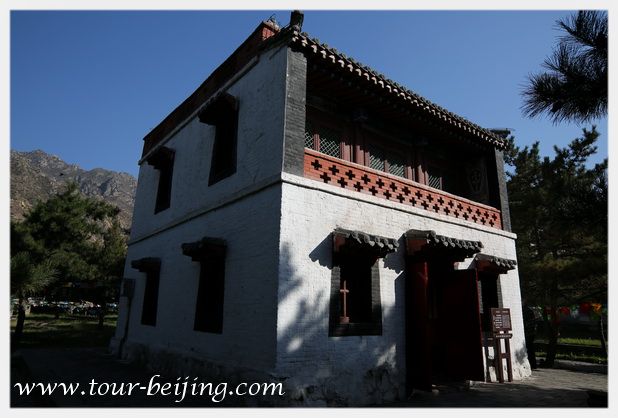
Built in 1566, the Glazed Hall (Liuli Hall) was formerly the meeting hall of Altan Khan Kingdom. Now it is devoted to Three Buddhas, a typical Ming architecture.
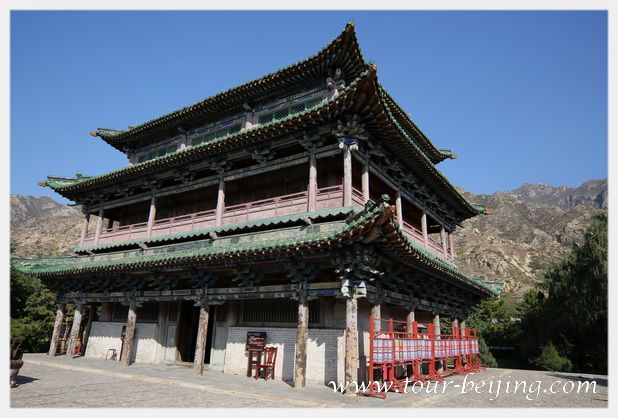
The Dalai Temple is given to the Third Dalai Lama – Sonam Gyatso who came here in 1582 for practicing Buddhism and held a new funeral ceremony for Altan Khan. The title of Dalai Lama was given by Altan Khan.
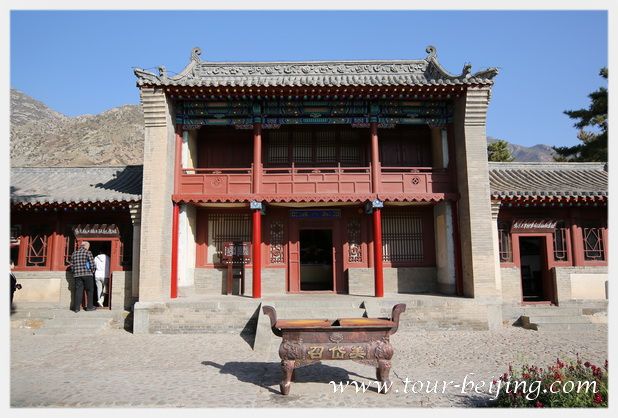
The Grand Queen Hall, a burial place for the third wife ( also known as Sannianzi) of Altan Khan. She assisted her husband managing the kingdom and keeping good relationship with the Ming Dynasty for over 40 years.
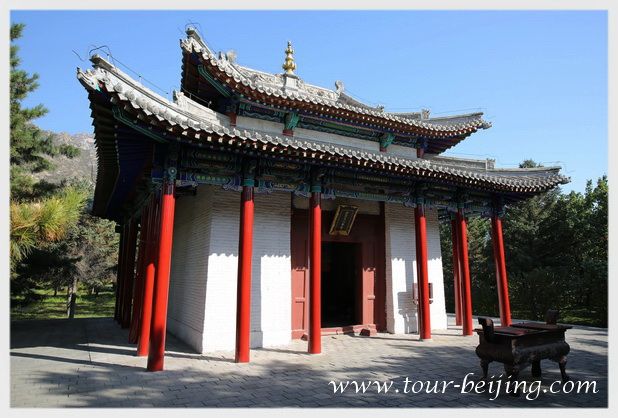
The Grand Queen Hall is surrounded by columns of the funeral hall style building, the funeral hall of the third wife ( also known as Sannianzi) of Altan Khan. The original 1-meter-high sandalwood tower covered with a pot was removed in 1966. When it was removed, it was discovered that there was an underground palace under the tower. In the palace, there was a bag of ashes, three combs, six rosaries, a triangular silver-plated medicine box and two pairs of diamond ears.
In the Grand Queen Temple, there are murals painted in the Ming Dynasty, Mongolian costume figures in the picture,. The legend goes that there are the portraits of Alta Khan and the Grand Queen in the murals.
The statues of Alta Khan and the Grand Queen ( Sannianzi – third wife).
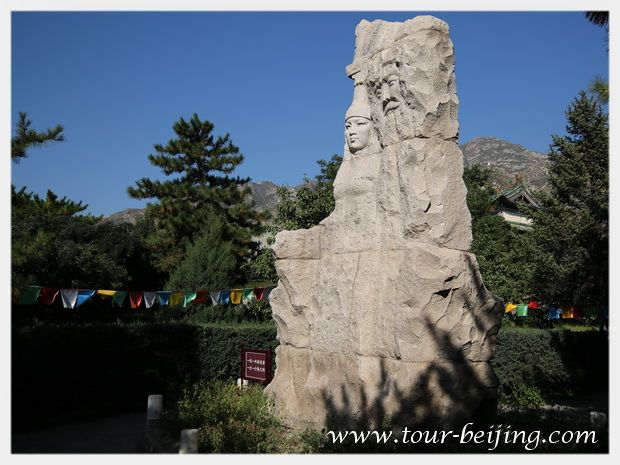
Meidaizhao Temple was originally an ancient city in an irregular square shape. The south gate is the main gate.
The fortified temple stands facing the south below Daqing Mountain on the north, surrounded by a 681-meter long stone wall, 5 meters high. Ascending the wall, you are able to have a clear picture of the ancient city, a former capital of Altan Khan Kingdom.
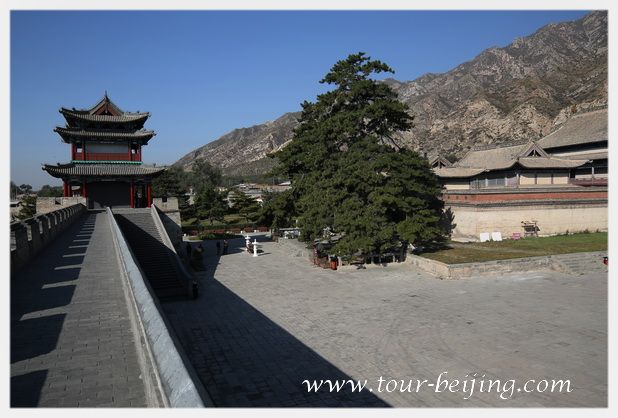
The northern wall of the temple below the Daqing Mountain (大青山).
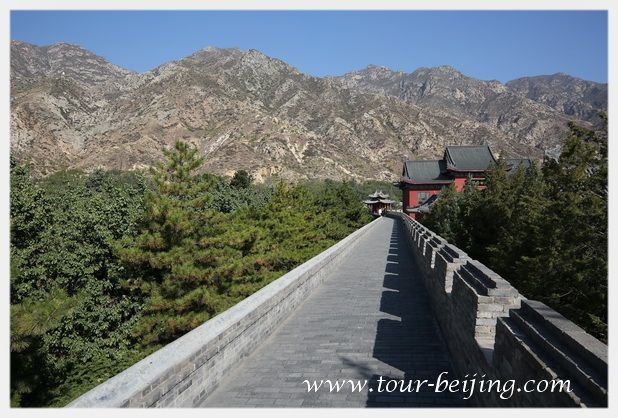
One of the corner towers ( Turrets) on the wall
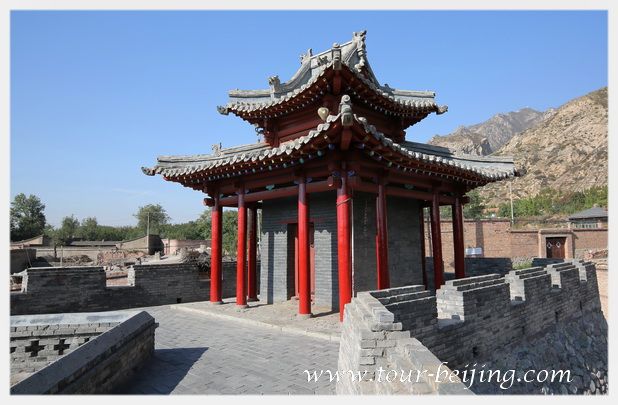
Standing on the wall, you are able to have a clear picture of the Sakymuni Hall and Glazed Hall.
If you don’t want to go the do-it-yourself route and prefer the hassle-free escorted tours, here are some options for guided tours to Inner Mongolia:
Share a question or note for this guide. Comments are reviewed before publishing.
Hand-picked routes matched from this article's destination clues, tags, and categories.
Use these attraction notes to connect nearby sights with tours, destination guides, and planning articles.
Continue planning with practical Beijing guides selected from similar places, themes, and travel questions.
Subscribe to receive Beijing travel ideas and tour updates.