
Call a local advisor
+86 186 1196 4400Email our team
[email protected]Tour Beijing Journal
Plan your Hohhot Tour? Harbin boarders to the Daqing mountains in the north...
Plan your Hohhot Tour? Harbin boarders to the Daqing mountains in the north and the Hetao plateau in the south.
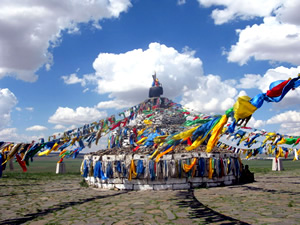
It’s a city buzzing with color, culture and life; being home to no less than 36 ethnicity including Mongol, Heng, Hui, Man and Erwenk peoples. Hohhot is also a common base point for travelers that arrive to Inner Mongolia in order to hike or ride across vast grasslands like Gegentala, Huitengxile and Xilamuren.
Situated in the territory of Siziwang Banner, 130 kilometers from Hohhot, Gegentala Grassland is the largest and a unique Mongolian scenic spot bearing the Mongolian ethical features of China. In Mongolian “Gegentala” means a summer resort or the place of grazing in summer. Gegentala Grassland belongs to typical grassland scenery. It is one of the first batches of 4A-class scenic spots of the country.
Huitengxile means “cold plateau” in Mongolian. Huitengxile Grassland is located 135 kilometers east of Hohhot, and 80 kilometers from the city of Jining. There are small, yellow flowers covering the mountains. The landscape has erect cliffs and pure, cascading springs. This, set against the boundless grassland and the beautiful delicate color of the Jiangnan water-village, is a magnificent sight.
Xilamuren, meaning “yellow river” in Mongolian, is located 100 kilometers (62miles) north of Hohhot. Xilamuren Grasslands is characterized by rolling hills and lush green grass. Xilamuren Grasslands is the nearest such tourist attraction to Hohhot. The best time to visit the grassland is in summer and autumn.
As the oldest building and the largest Gelukpa (Yellow Hat Sect) temple in Inner Mongolia, Dazhao Temple, has considerable position in Hohhot and many important celebrations are also held here. Temple is well-known for the impressive buildings, splendid statues, delicate murals, musical instruments and fine collection of Buddhist scriptures.
Surrounded by green grasses and towering ancient trees, Zhaojun Tomb, also called Green Mound or Green Grave, is located south of the city of Hohhot. It was built to commemorate a great woman named Wang Zhaojun, who was one of the four most beautiful ladies in ancient China, and who sacrificed herself for the unity of China by marrying Khan.
Five pagodas standing side by side on the seat, the central one has seven stories while the rest on the four corners are all five-story high. The body of the pagoda is glazed in greens and yellows. It is representative of the architectural achievements that were made in the Qing Dynasty.
Located in the southeast of Baita Village in the east suburbs about 17 kilometers (11miles) from Hohhot City, The White Pagoda, also called Wanbu Huayanjing Pagoda, was built by the Khitans sometime during the Liao (CE 916-1125) Dynasty. The White Pagoda is a brick-and-wood structure about 55 meters high, Wind bells hang on the ceiling of the corner of each story and on the rafter of the seventh tier.
Approaching the pagoda, tourists can see the bronze mirrors gleaming under the sun and hear the euphonious sound of the wind bells.
If you don’t want to go the do-it-yourself route and prefer the hassle-free escorted tours, here are some options for guided tours to Inner Mongolia:
Share a question or note for this guide. Comments are reviewed before publishing.
Hand-picked routes matched from this article's destination clues, tags, and categories.
Use these attraction notes to connect nearby sights with tours, destination guides, and planning articles.
Continue planning with practical Beijing guides selected from similar places, themes, and travel questions.
Subscribe to receive Beijing travel ideas and tour updates.