
Call a local advisor
+86 186 1196 4400Email our team
[email protected]Tour Beijing Journal
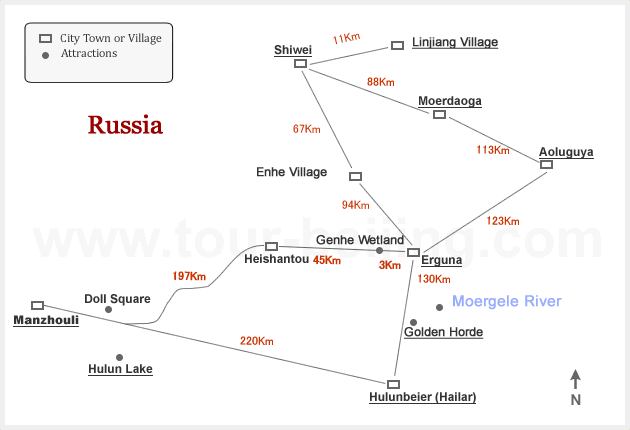
Plan your Inner Mongolia Tour? The exotic Sino-Russian border city of...
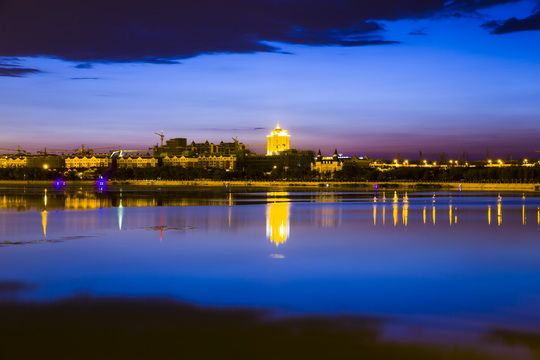
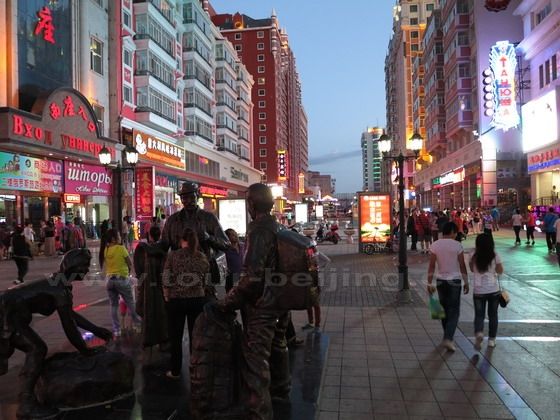
The layout of Manzhouli city center resembles a chessboard with chess-like European-style buildings scattered along the streets. There are approximatley 160 buildings lined on the 12 streets in the city center. Many buildings have been renovated and upgraded, featuring the harmony between the outstanding single buildings and the uniqueness of each street.
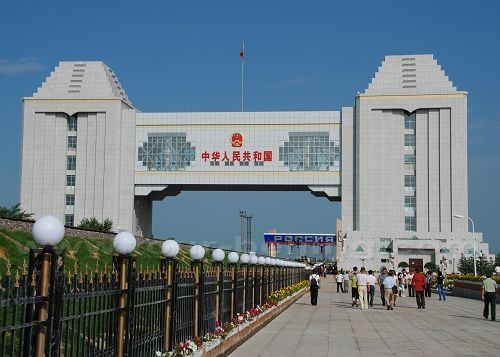
Guo Men, which literally means “National Gate”, is the Sino-Russian border crossing approx.9 km west of Manzhouli’s city center. This is the fifth “Guo Men” built in 2008 with a small museum inside telling the history of the area. Standing on the top of Guo Men, you are able to see the border crossing on the Russian side.
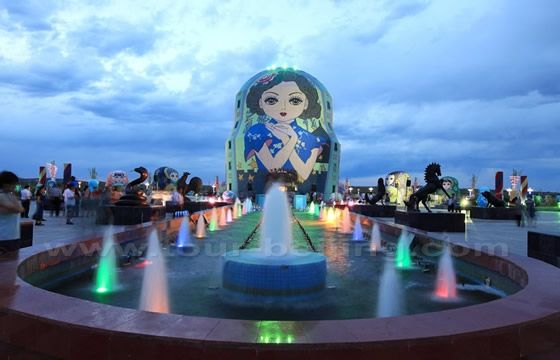
“Taowa” means “Russian Matryoshka Dolls”. Opened in 2006, the squqre has a giant Russian Matryoshka doll towering 30m surrounded by over 200 colorful nesting dolls representing different countries.
Russia Taowa Square is located halfway between the city center and the border crossing. Inside the giant Russian Matryoshka doll there is a largeRussian food resstaurant and a performance hall as well. The whole square features the mixed cultures of China, Russia and Mongolia. It is the largest Taowa doll in the world, a Guinmess world record.
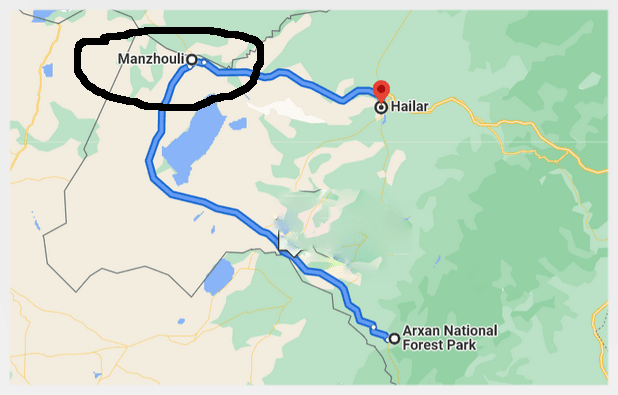
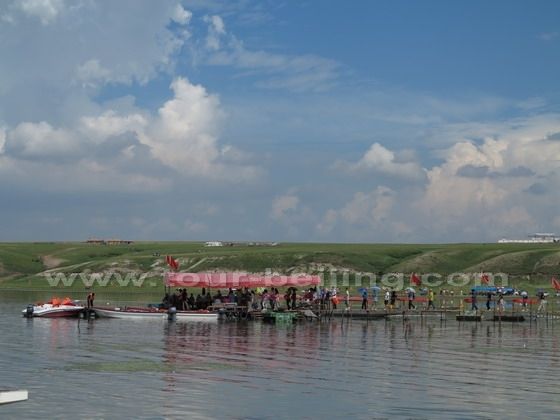
Hulun Lake, also known as Dalai Hu, and Hulun Nur in Mongolian. this massive lake pops out of the landscape 36km south of Manzhoul, China’s fifth-largest lake. Hulun Lake is located near the National Highway No.301 on the route from Hailar to Manzhouli. You can visit Hulun Lake either from Hailar or Manzhouli. The lake itself is under the jurisdiction of Manzhouli City, but it actually lies in the area surrounded by Manzhouli, New Barag Left Banner and New Barag Right Banner.
The Hulun Lake is an ideal summer resort in terms of cool climate, beautiful scenery and fresh air. If you come here in summer, you are able to participate in many activities such as boating on the lake, fishing on the lake shore, sunbathing, bird watching. You can also have a bite of the local all-fish feast with numerous delicious and nourishing dishes of fish.
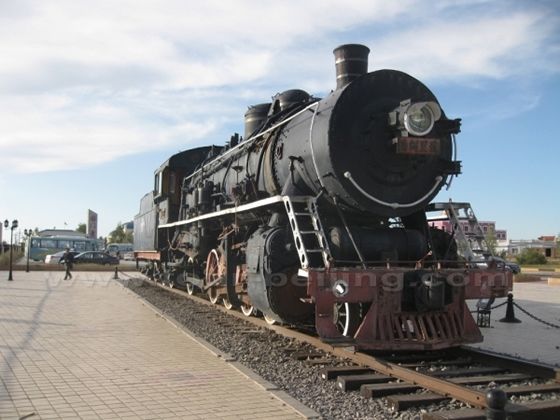
Manzhouli Locomotive Square is located just on the west of Guo Men. It was inaugurated in June, 2004. The old locomotive was built in 1940s by the Japanese. The rails under the locomotive were built by the Russian, nicknamed Rail 43 which refers to the 43 kilograms for extended one meter rail.In 1949, Chairman Mao visited Russia passing by Manzhouli and his train was driven by this locomotive. The locomotive was numbered “1861”.
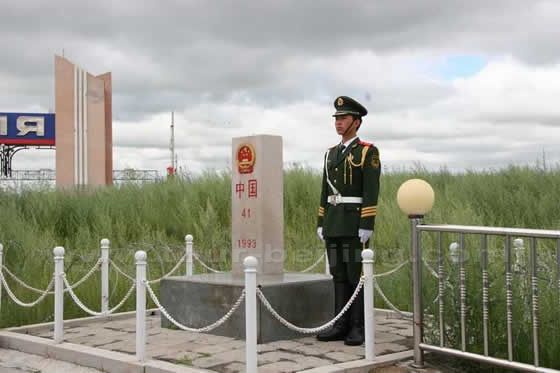
The Boundary Marker No.41 is located within the scenic area of Guo Men, about 10 km west of Manzhouli’s city center. It is the 41th border marker listed in August, 1994 when the Sino-Russian Boundary Survey was finished.
Before 1993, this location was once a busy passage used both by passenger buses and lorries. With the increasing volume of goods on both sides, a new crossing was built elsewhere to take place the old one. The Boundary Marker 41 stands on the former old passage. The boundary marker is made of marble stones, 1.2 meters high, 0.4 meters wide and 0.25 meters thick.
If you don’t want go the daunting do-it-yourself-route and prefer an organized hassle-free private tour to visit Inner Mongolia, no worry and we have the following options:
Share a question or note for this guide. Comments are reviewed before publishing.
Hand-picked routes matched from this article's destination clues, tags, and categories.
Use these attraction notes to connect nearby sights with tours, destination guides, and planning articles.
Continue planning with practical Beijing guides selected from similar places, themes, and travel questions.
Subscribe to receive Beijing travel ideas and tour updates.