
Call a local advisor
+86 186 1196 4400Email our team
[email protected]Tour Beijing Journal
Are you planning your Xi'an tour? If time allows, you could have a day trip...
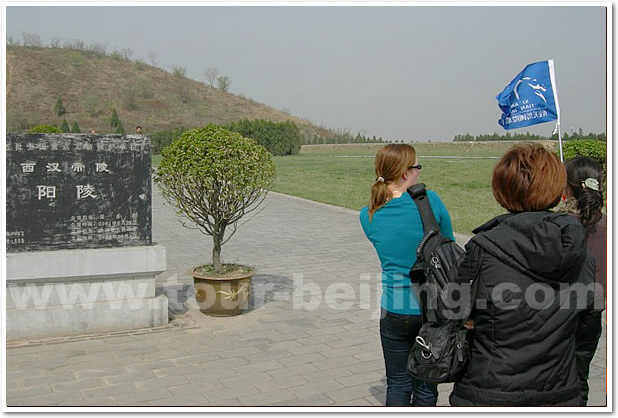
Are you planning your Xi'an tour? If time allows, you could have a day trip from Xi'an Huangdi Mausoleum (also known as Mausoleum of the Yellow Emperor), which is located just 200km north of Xian.
Huangdi, or Yellow Emperor is the legendary ancestor for all Chinese. His ancestral name is Gongsun and his given name Xuanyuan.
It is said that he reigned from 2696–2598 BC. He is considered as the initiator of Chinese civilization - invented weapons, the wells and fields system; upper and lower garments, established palaces and houses, early Chinese astronomy, the Chinese calendar, math calculations, code of sound laws...etc.
Huangdi Mausoleum is nestled at the foot of Qiaoshan Mountain. Qiaoshan is located, is one thousand meters north of the downtown of Huangling County.
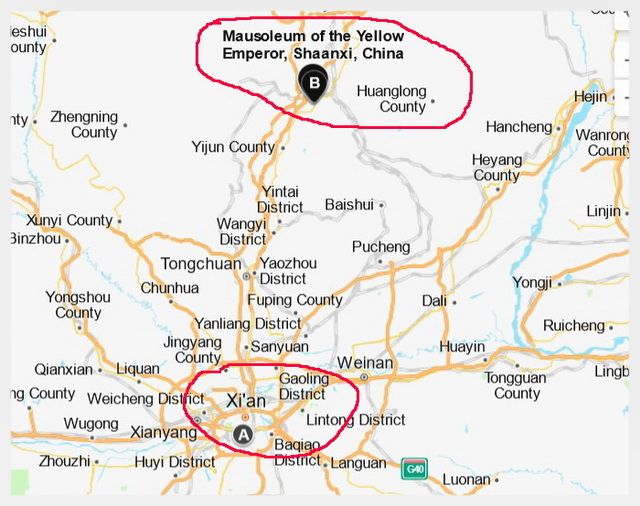
There are many direct and indirect buses either from Xian Long-distance Bus Station or from Yan'an Long-distance Bus Station to Huangling County.
The National Highway 210 passes along the foot of Mt.Qiaoshan where Huangdi's tomb is nestled, from north, down the south and to the east.
For your long-distance bus ride, if Huangling County is not your bus's final stop, most probably your bus will not arrive at the Bus Station in Huangling County. Instead, you will be dropped by the roadside of the National Highway 210 close to Huangling County. If that is the case, you have to find a way out, taking a local private car or taxi from the expressway to Huangdi Mausoleum, 5km away.
If your bus's final stop is Huangling County, then it is very convenient since the Bus Station of Huangling County is just 5 minutes' walk to the ticket office to the Huangdi Mausoleum.
Follow me to visit Yellow Emperor's Tomb. I take a local private car from the roadside of the National Highway 210 where I have been abandoned by the bus from Yan'an to Xian.
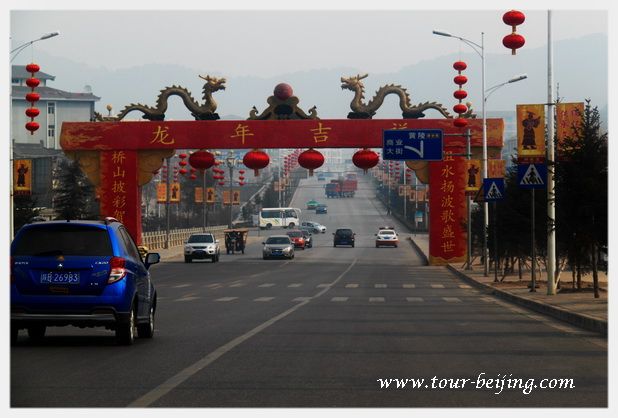
I'm quite lucky to find a car parking for business. The car fare is RMB 15 for the 5km ride. Huangling County used to be a two-horse town, now mainly due to the site of Huangling Mausoleum, the town has been developing fast with many modern buildings. Its main street is quite long along the National Highway 210
Now I'm entering Huangling County along the National Highway 210.
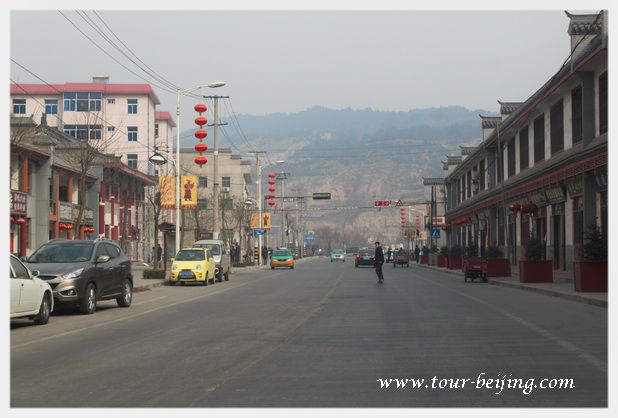
One section of the street (also used by national highway 210) in the town has been built in the style of the traditional Chinese architecture.
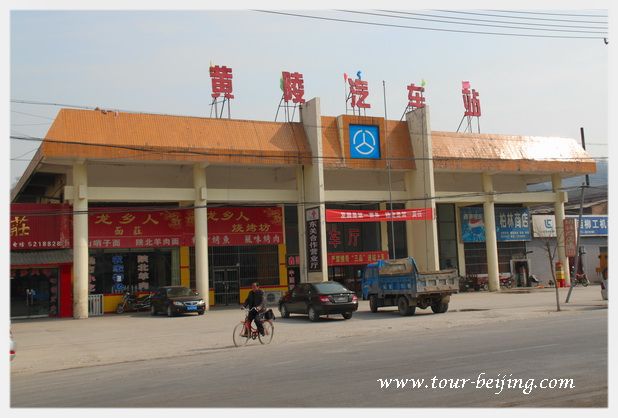
I ask my driver to take me to the bus station of Huangling County in order first to get myself familiar with the buses going to Xian. Lots of buses run between Huangling County and Xian, no need for prebooking the bus ticket for Xian.
After depositing my suitcase at the bus station, I walk towards to Mt.Qiaoshan in the north of Huangling County. Huangling County Bus Station
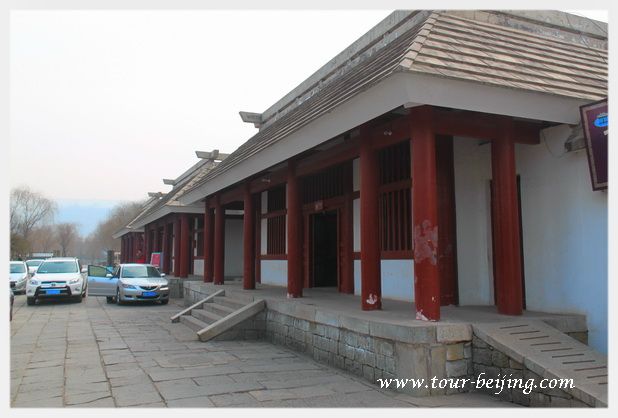
Walking from the bus station to the ticket office only takes me 5 minutes. The ticket office in the tourist service building in a traditional style, which also has a toilet and two shops selling well Huangdi Mausoleum related stuff. The tourist service building (ticket).
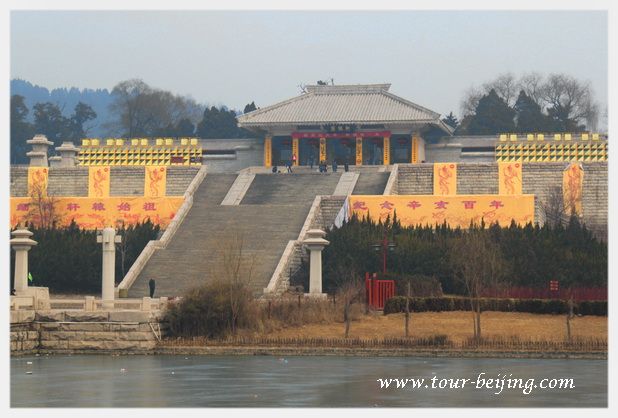
Then I walk from the ticket office up to Xuanyuan Temple which is located at the foot of Mt.Qiaoshan. A concrete bridge spans a man-made lake dug at its front.
Walk across the bridge, continue to climb a dozens of steps before I reach the gate of Xuanyuan Temple. The mausoleum is divided into two parts: the Tomb Area and the Xuanyuan Temple.
In ancient time, to each mausoleum, there was a temple built for it. Huangdi Mausoleum too has a temple in the name of Xuanyuan, Huangdi’s given name.
The Gate of Xuanyuan Temple
Basically visitors will first visit Xuanyuan Temple, then visit Huangdi’d tomb. Walking from Xuanyuan Temple to the tomb takes over one hour.
So there is a battery cart service center, not far from Xuanyuan Temple for people to use the service for easy access to the tomb itself.
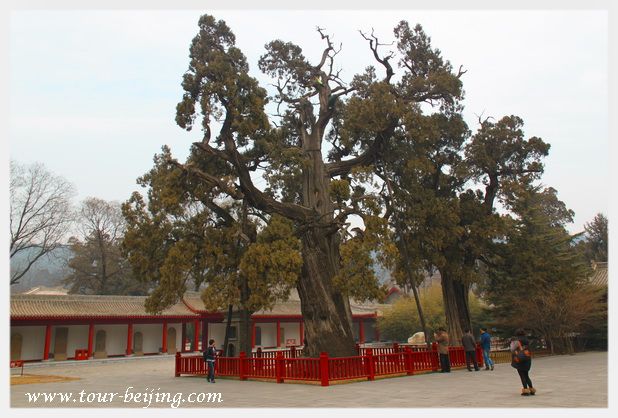
In the temple compound, there is an old cypress which was, according to historical records, planted by Huangdi, the Yellow Emperor.
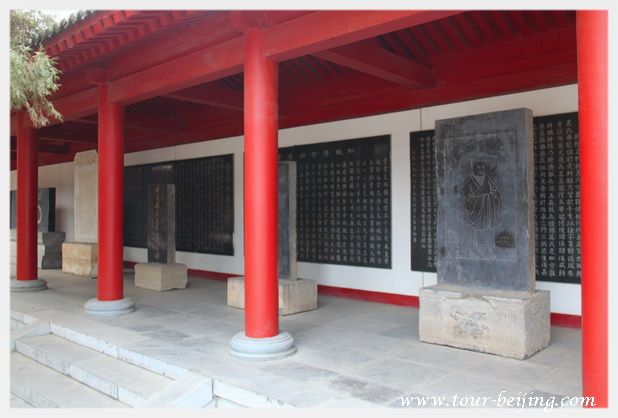
Flanking the temple, there are two rows of tablets and stela from early days in the successive dynasties from Ming and Qing Dynasties, to the present days.
The steles descended from the emperors in Ming and Qing Dynasties.
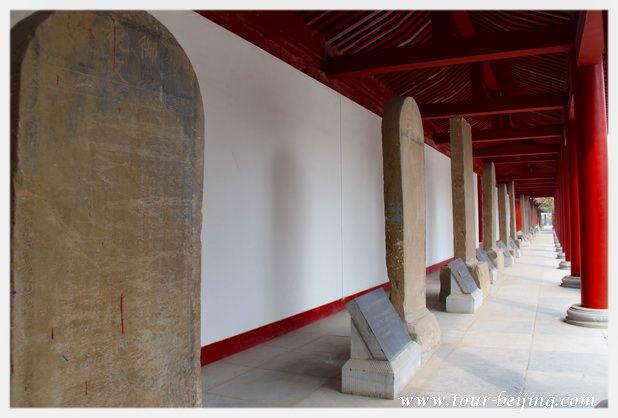
These tablets from leaders and nobilities at home and abroad in modern times.
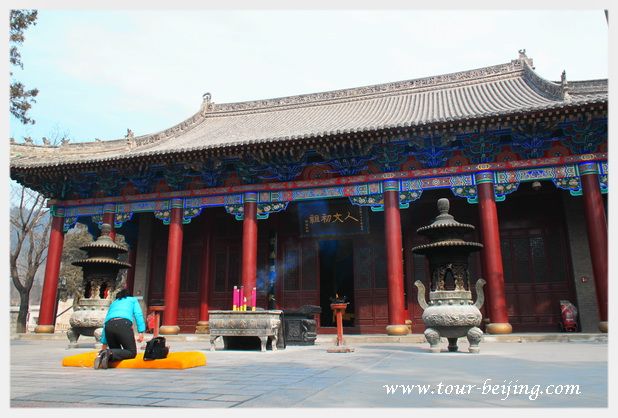
The hall enshrines the statue of Huangdi. People burn incense and pray before Huangdi’s Hall. The placard hanging above reads “The founding ancestor of human civilization”.
The founding ancestor of human civilization
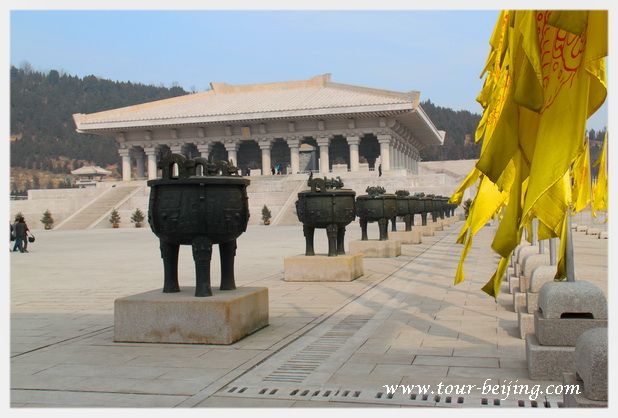
Behind Huangdi’s Hall is a 2004 completed huge praying square used for holding a praying ceremony. It is said that the square can accommodate 100,000 people with a construction area of 13200 square meters. Each April 05 will see a huge ceremony going within Xuanyuan Temple.
To continue to visit the tomb of Huangdi, people have to backtrack at the end of Xuanyuan Temple here and exit from the temple.
Then walk on the right hand. Soon you come to the electric bus terminal. For a small amount of money, RMB20, you will enjoy a round trip battery car ride. It takes you to the so called “second parking lot”, from which you still need to walk about 20 minutes before you get to the tomb of Huangdi. Don’t lose your ticket. At the entrance to the tomb, your ticket will be checked again.
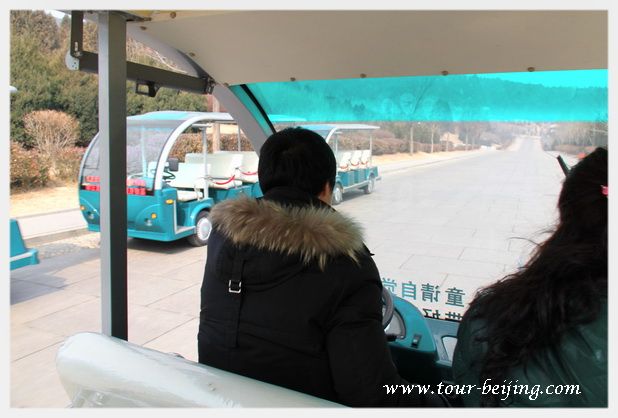
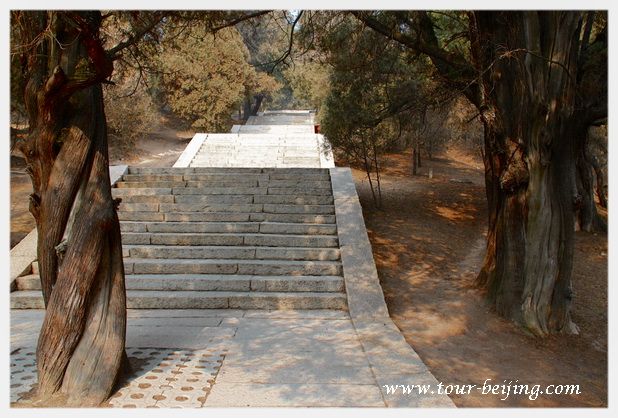
Get off the car, you still need to have an over-20 minute’s walk climbing quite some stone steps up to the tomb. The view along the road is just terrific with numerous old cypresses welcoming you coming afar.
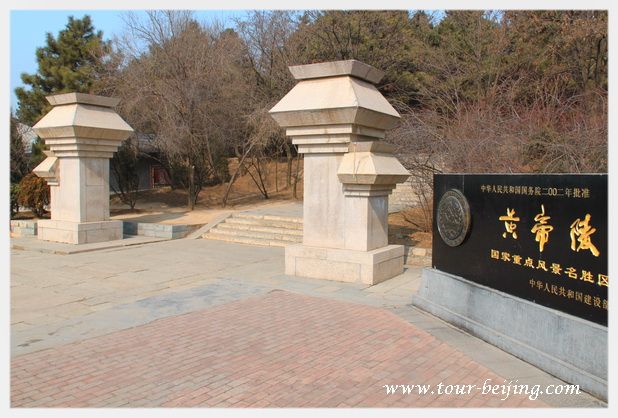
climbing quite some stone steps up to the tomb
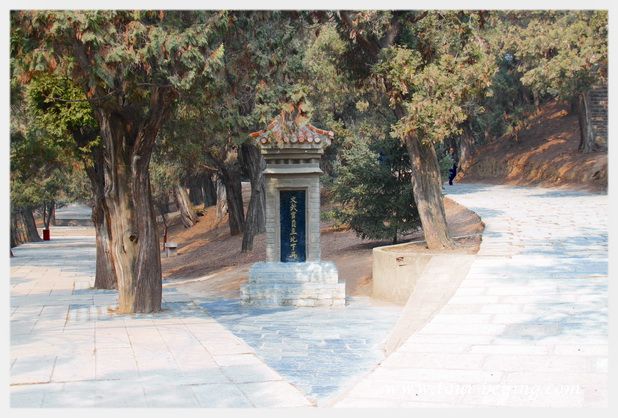
The stone or the tablet is called “Horse-Dismounting Stone”, in ancient times, everybody must dismount here and walk to the tomb area.
According to historical records, after Emperor Wu (156 BC – 87 BC )of Han Dynasty was returning from a northern campaign against the Xiongnu, he and his troops stopped at the Mausoleum and made offerings. Emperor Wu (156 BC – 87 BC ) of Han’s offering.
This is the tomb of Huangdi, the place where the Yellow Emperor attained immortality and flew to heaven, leaving behind his clothing and cap to be entombed here.
In front of the tomb of the Yellow Emperor mausoleum is the sacrificial pavilion, which is 10 meters wide and 6.15 meters deep.
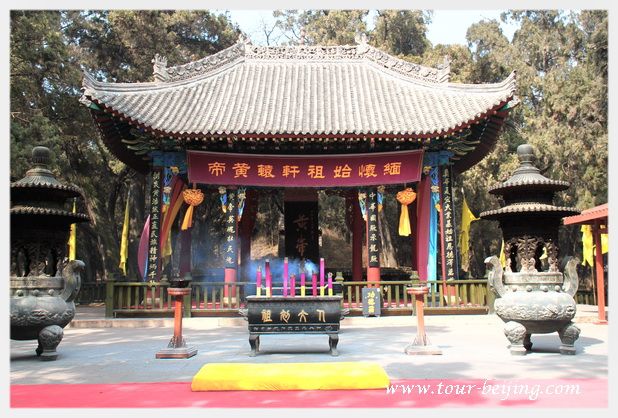
In the pavilion, there is a large stone tablet, 4.3 meters high and 1.2 meters wide, inscribed with three Chinese characters "Mausoleum of the Yellow Emperor".
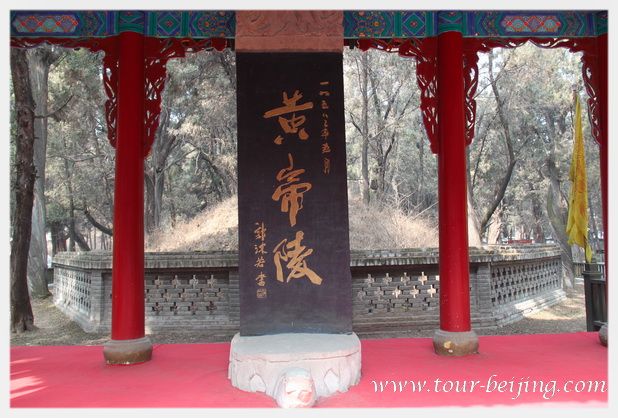
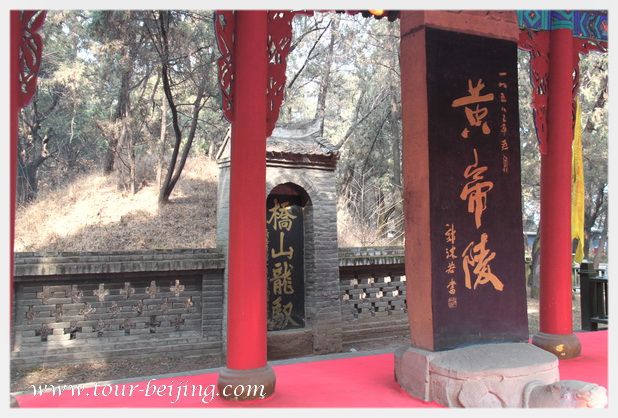
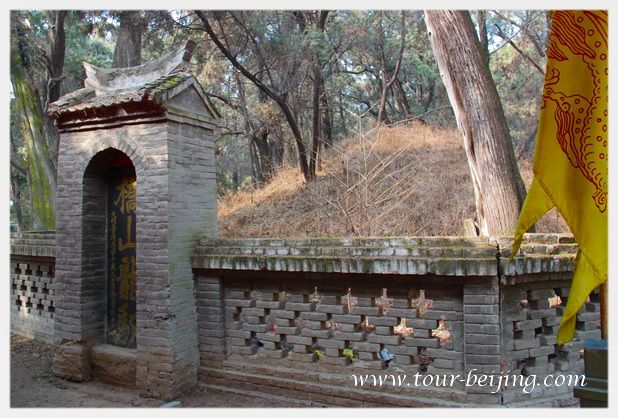
The Huangdi's tomb behind the sacrificial pavilion and the large stone tablet is 3.6 meters tall, 48 meters in circumference, and is surrounded by a brick wall. A brick framed tablet at the front is inscribed with the four Chinese characters "桥山龙驭" ( Longyu on Bridge Hill), which means the place where the Yellow Emperor's dragon ascended to heaven.
If you don’t want to go the do-it-yourself route and prefer the hassle-free escorted tours, here are some options for Xian guided tours:
Share a question or note for this guide. Comments are reviewed before publishing.
Hand-picked routes matched from this article's destination clues, tags, and categories.
Use these attraction notes to connect nearby sights with tours, destination guides, and planning articles.
Continue planning with practical Beijing guides selected from similar places, themes, and travel questions.
Subscribe to receive Beijing travel ideas and tour updates.