Call a local advisor
+86 186 1196 4400Email our team
[email protected]Tour Beijing Journal
Plan your Xi'an Tour? Xian is one of the Four Great Ancient Capitals of...
Plan your Xi'an Tour? Xian is one of the Four Great Ancient Capitals of China. There are many exotic and unusual things to buy in Xian which make wonderful souvenirs and gifts for relatives and friends back home.
If you are wondering what you can bring home, here is the list of the Top 10 Souvenirs in Xi'an for you to choose.
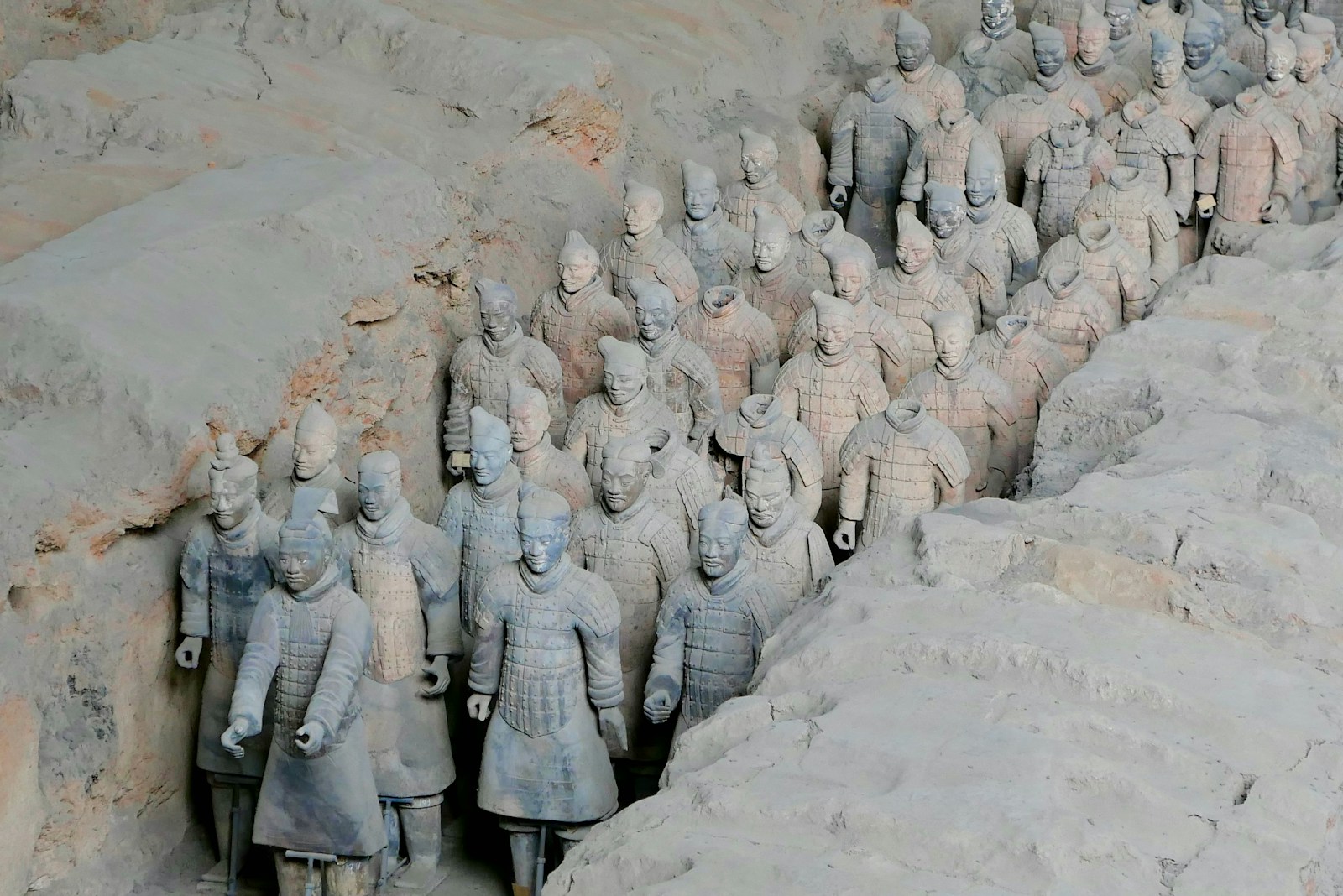
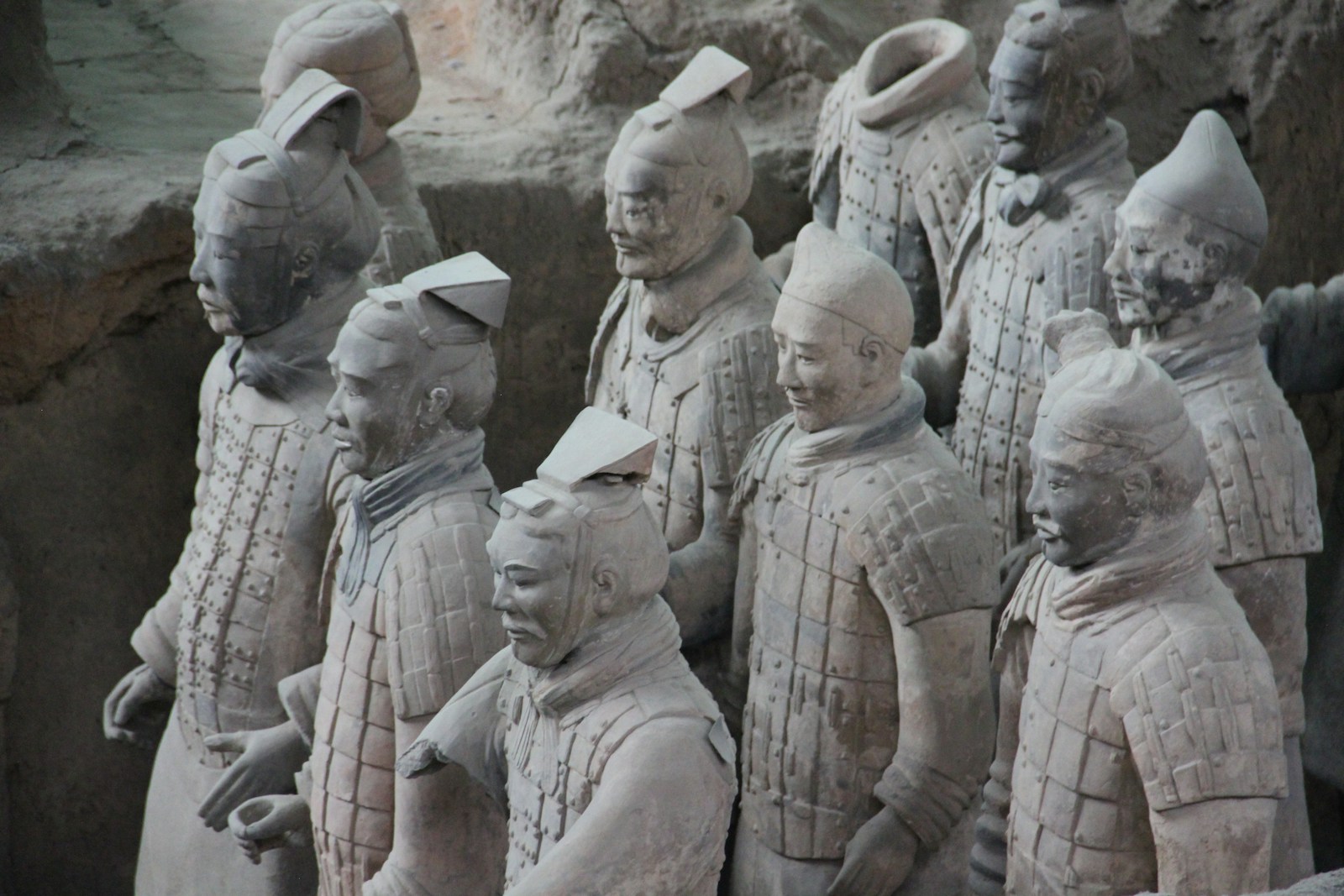
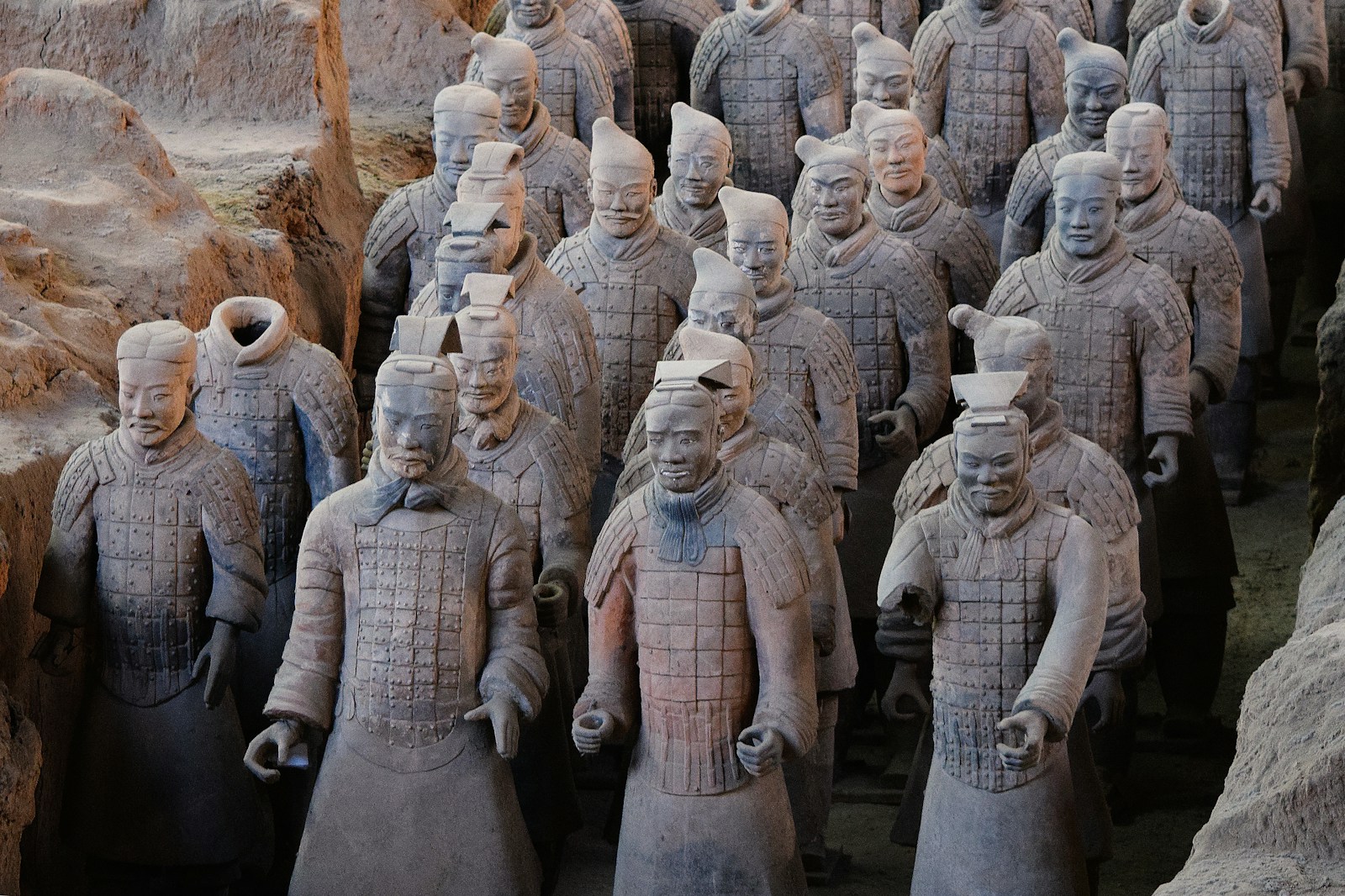
Terracotta Army is a clay army of more than 8,000 life-size terracotta figures of soldiers and horses discovered in 1974 in Xian, Shaanxi after they were buried underground for more than 2200 years.
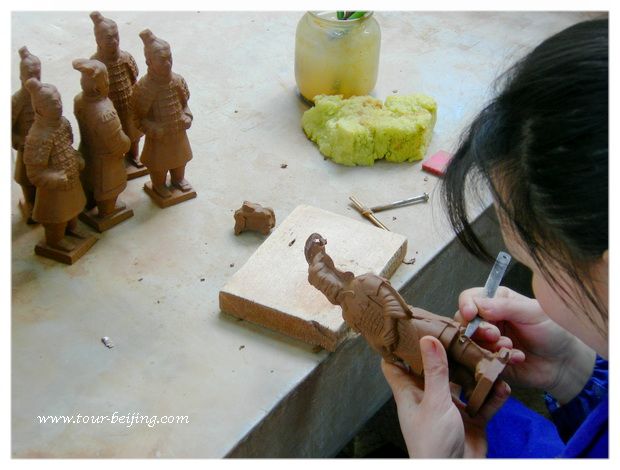
The museum of Terracotta Warriors and Horses has produced imitations since 1982. It is not difficult to take the terracotta warriors and horses back home. Many different types of replicas are available as souvenirs, from a few inches tall to life-size.
About 38 kilometers southwest far away to Xian city, there is a county named “Hu” gathering all kinds of peasant paintings. The naissance of this art is a miracle for it has been conquered so many people by its unique charm.
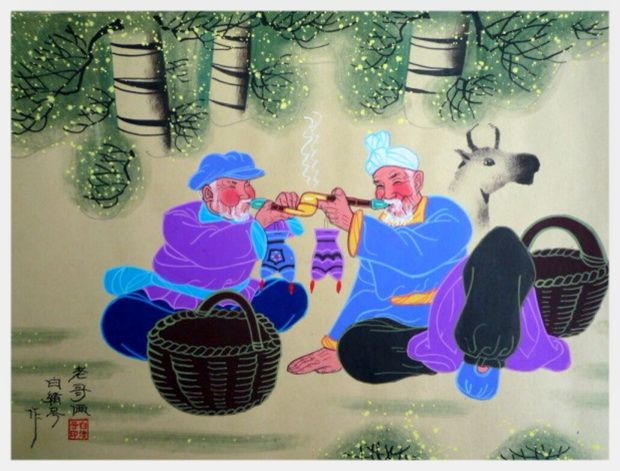
Those paintings show the sweet farm life style – tranquility, simpleness, and gratification. It is a great local treasury in Hu county. You can make a good harvest of Chinese paper-cut, mud models and farmer paintings.
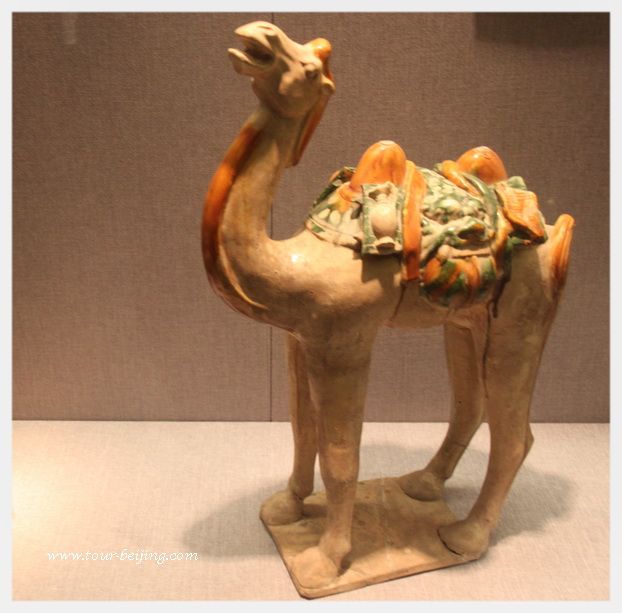
Tang Dynasty tri-colored glazed pottery (Tangsancai) is mostly yellow, brown and green in color. The glaze is made by adding metallic oxides to the basic glaze. During the firing process the chemicals in the glaze create a variegated effect.
This type of pottery was primarily made in Xian and Luoyang, the capital cities of the Tang Dynasty. Although tri-colored glazed pottery was also produced during the Liao and Jin Dynasties, it was not made in large quantities and its quality was not as good as that of the Tang Dynasty.
The Shaanxi people, famous for their rich variety of dishes made from wheat, aside from making various food with dough, also mould it into various “dough figures” to admire as well as for good luck.
They send them to friends as gifts to extend lotions or pay tribute to gods. The dough figures are therefore also called edible artistic works.
Paper-cutting is a very distinctive visual art of Chinese handicrafts which serves as window decorations. With bright red paper-cuts of all kinds on snow white window paper, the atmosphere appears a lot more festive.
At the same time, it contains people's good wishes. Shaanxi paper-cuts are considered to be both bold and unconstrained, brief and exaggerated works of art. Originating in the cradle of ancient Chinese culture, they have been handed down from generation to generation among people.
The Yaozhou Kiln was a well-known blue porcelain producer in northern China during the Song Dynasty. At present, the kilns in Yaozhou mainly put out porcelain pieces for daily use decoration. The products maintain the varied textures of the Song Dynasty's porcelain.
Lacquer is a natural substance obtained from the sap of the lacquer tree, a tree indigenous to China. Up to a few hundred layers of lacquer are applied to an objects surface in order to attain the final thickness of between five and eighteen mm.
While traditional imperial lacquer ware came in the form of chairs, screens, tables and vases, today one can find objects ranging from trays, cup and vases to small decorative boxes. It is being produced in Xian lacquer-ware workshop today.
Xian Jade Carvings boast 5,000 year history. Large amounts of jade ornaments have been discovered during the archaeological excavations.
Nowadays all kinds of nice-looking and exquisitely-carved jade craftwork articles, such as jade bowls, jade bracelets, jade pendants, etc., are being produced in Xian Jade Carving Factory.
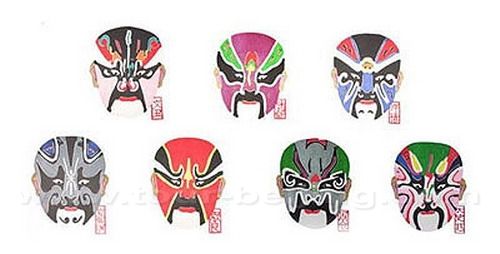
The Shaanxi Opera Masks are made by the facial makeup of Shaanxi Opera. In the opera performance, the different grease paints colored on the faces of the performers stand for different characters, for instance, red for loyalty; impertinence or intrepidity; yellow for atrocity; blue and green for hotspurs; white for treacherous court officials and baddies.
The Shaanxi Opera Masks are not only kinds of artful and exquisite handicraft articles but the rare data for studying the art of Shaanxi Opera and folk customs and practices.
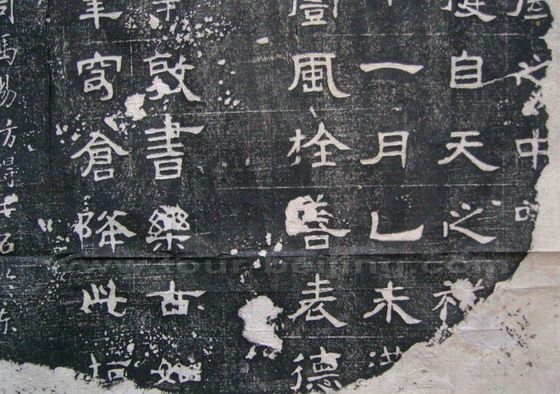
Stone tablets bear evidence to ancient records, inscriptions, statues and architectural decorations. Over 3000 stone tablets from the Eastern Han Dynasty through the Qing Dynasty are preserved in the Forest of Stone Tablets in Xian.
Most of the tablets were created by some famous ancient calligraphers. The Shaanxi Relics Management Department had some of the tablets rubbed by experts, but only in small amount. The Applied Art Department has copies of the original tablets made in order to make rubbings in large numbers. As souvenirs, the copies are also well received among tourists.
If you don’t want to go the do-it-yourself route and prefer the hassle-free escorted tours, here are some options for Xian guided tours:
Share a question or note for this guide. Comments are reviewed before publishing.
Hand-picked routes matched from this article's destination clues, tags, and categories.
Use these attraction notes to connect nearby sights with tours, destination guides, and planning articles.
Continue planning with practical Beijing guides selected from similar places, themes, and travel questions.
Subscribe to receive Beijing travel ideas and tour updates.