
Call a local advisor
+86 186 1196 4400Email our team
[email protected]Tour Beijing Journal
A city’ name card or image symbol is best manifested in its iconic...
A city’ name card or image symbol is best manifested in its iconic architectural landmarks. These landmarks are the barometer of the city’s history, economic development and the spiritual hope on it by its residents as well.
As one of the most famous ancient cities in China, Xian has its own unique cultural values and its historical sites.
To understand Xian’s landmarks is your first step to get to know Xian on your short Xian tour. Here are the seven you shouldn’t miss on your Xian tour.
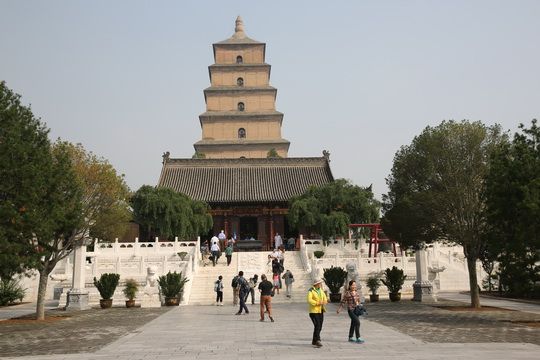
It is the earliest and largest remaining brick square tower built in Tang Dynasty in China, an iconic Buddhist landmark combining the Indian Buddhist architectural forms with the Chinese Han vernacular building features. The present pagoda is 64.5 meters high with 7 stories, located inside Da Ci’en Temple south of Xian city centre.
Big Goose Pagoda
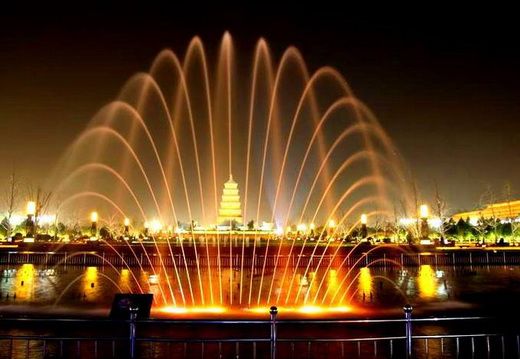
Musical Fountain at North Square of Big Goose Pagoda
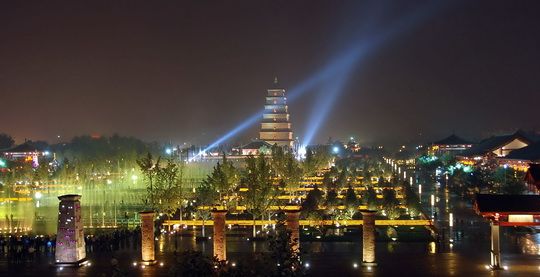
Completed in 2003, the Big Goose Pagoda North Square mainly comprises Asia’s largest Tang Dynasty themed cultural plaza, Asia’ s largest musical fountain square, and Asia’s largest statue square. The construction of the huge cultural square features the Tang culture elements of Big Goose Pagoda and Da Ci’en Temple, combining the elements of the traditional and the modern. The music fountain starts at 8:00 pm everyday.
South Gate to Xian City Wall
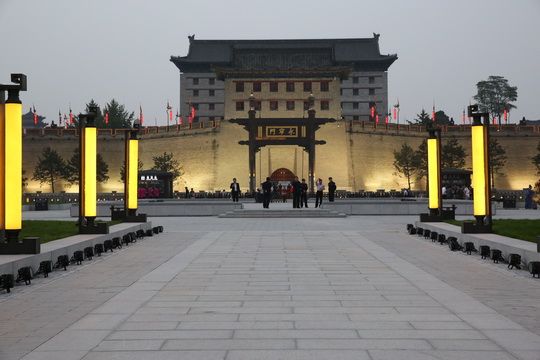
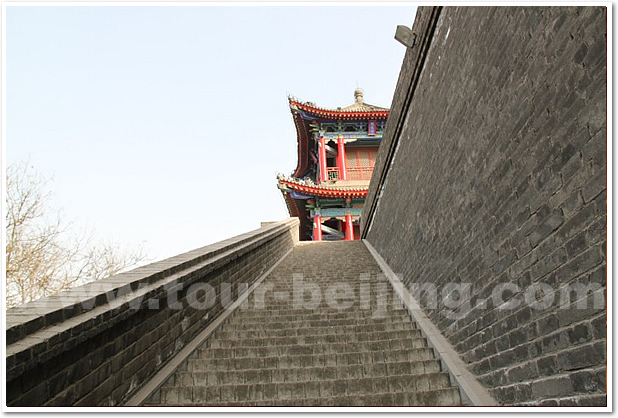
After consistent repair and protection, the Xian City Wall now offers a good combination of the city wall, city moats and forest belt. You can walk, even cycle on the wall. Its south gate is the largest with a suspension bridge. Most of the tourists choose the south gate for sightseeing.
Xian Bell Tower was originally built in 1384 during Ming Dynasty ( 1368 – 1644 ). It is the largest and most well preserved bell tower among the numerous remaining bell towers in China. It is located in the heart of Xian city, the hub of the four avenues fanning out from the bell tower.
In ancient time, the bell in a bell tower was stricken at dawn and the drum in a drum tower was beat at sunset to indicate the end of the day.
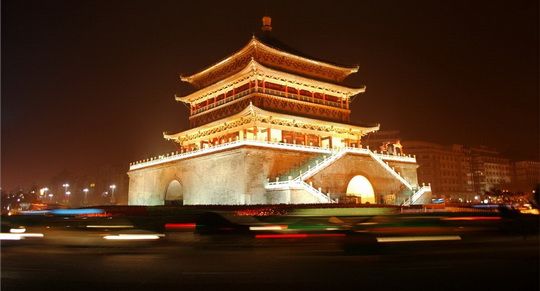
The Xian Bell Tower was built on a square base, a wood and stone structure with two stories, three eaves and 4 upturned roof corners; it is 8.6 meters high at its base and 36 meters high above the base with a perimeter of 35.5 meters with an area of 1377.4 square meters. Today, the Bell Tower can only be accessed from the entrance on North Avenue. There is a staircase leading to the top of the Bell Tower.
To the northwest of the Xian Bell Tower is the Xian Drum Tower. The Drum Tower is located in a busy street which is full of street traders and hawkers. The Drum Tower got its name from the huge drum located within the building. In ancient time, the bell in a bell tower was stricken at dawn and the drum in a drum tower was beat at sunset to indicate the end of the day.
The Drum Tower is 4 years older than Bell Tower and built in 1380 in Ming Dynasty ( 1368 – 1644 ). It went through two large-scale revamps in Qing Dynasty ( 1644 – 1911 ).
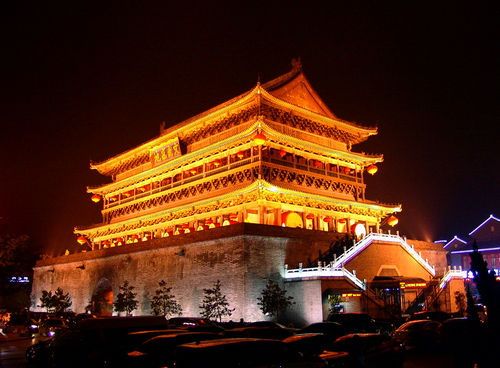
Today the Drum tower marks the southern entrance to the city’s Muslim Quarter which is an interesting area to walk around and have a look. You will feel as if you are in a “city within a city” in the Muslim Quarter. Atop the Drum Tower you will have a bird’s eye view of the Muslim Quarters.
My selection of Xian People’s Hotel on the top list is to some extent due to the emotion and nostalgia the local Xian people have over the building. It used to the best hotel in 1950s where the experts from former Soviet Union stayed with a kind of mystery looming in people’s hearts.
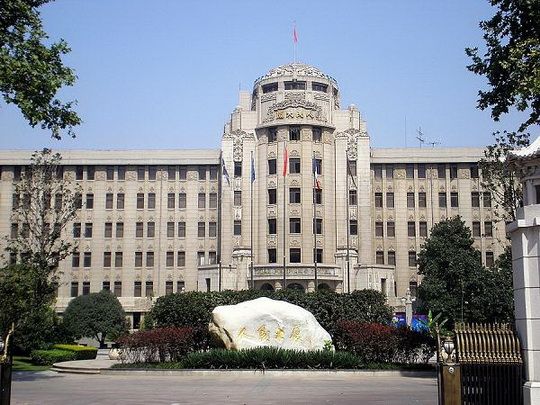
The hotel was built in 1953 and revamped in 1985. It is one of the famous large courtyard hotels in China with an construction area of 63800 square meters. The hotel is composed of a group of buildings which feature the combination of Chinese architecture’s simplicity and elegance with the Western delicacy and splendor.
It is scattered with Chinese pavilion-topped buildings surrounded by classical Chinese gardens in a spacious compound. Today, part of the hotel complex has been turned to Sofitel Xian.
Xian People’s Theatre was originally built in 1954 in order to house the Northwest Art Work Troupe ( Today’s Shaanxi Singing and Dancing Troupe) that had been relocated from Yan’an to Xian.
The building features the mixed Chinese and Western architectural styles, and later it was encluded together with other 36 buildings completed in mainly in Beijing 1950s in the book named ” World Architecture History” published in UK.
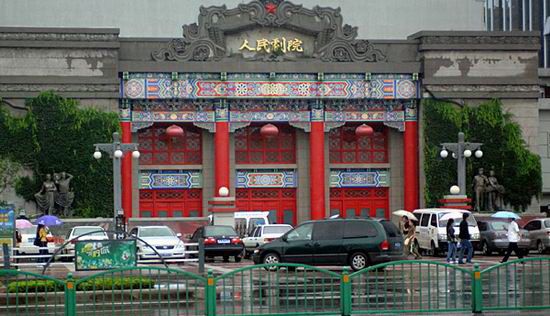
Xian People’s Theater is known as the first modern theater in northwest China, hold more than 1000 persons. It is the venue for plenty of dramatic performances. Today, the theater is also converted into a dinner theater with integrated dining and entertainment. Add: No. 41, Beida Jie, Xincheng District, Xi’an.
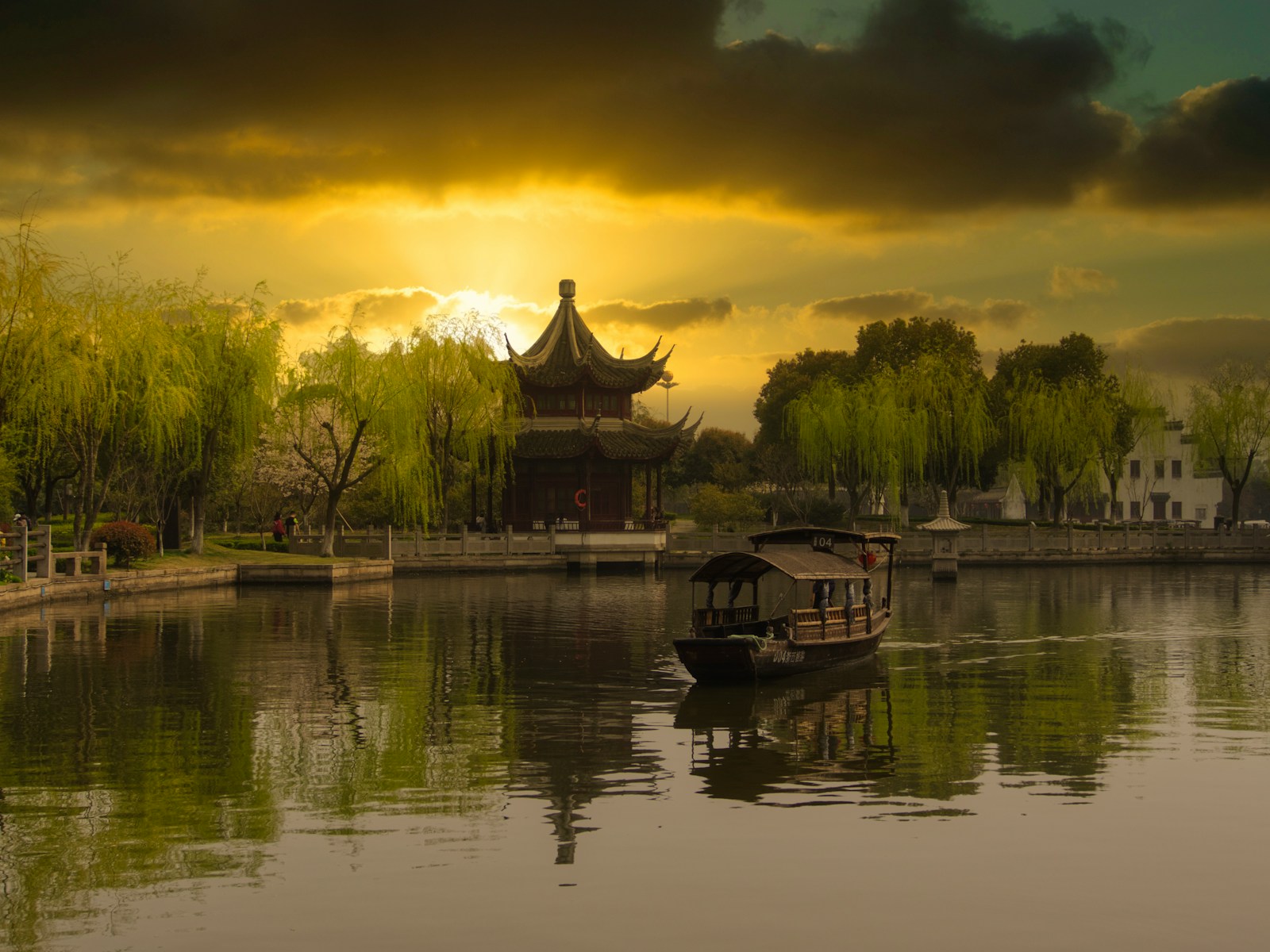
The setting, a landscaped 165-acre site surrounding a willow-lined lake, captures something of the look and feel of classical Chinese landscape painting.
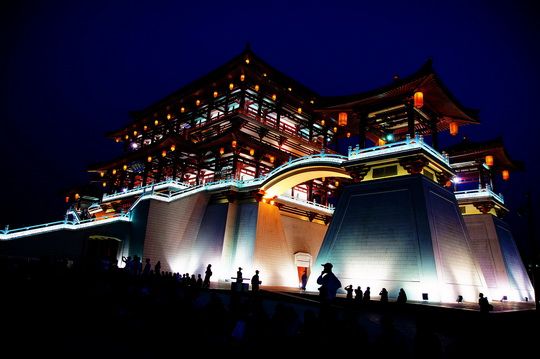
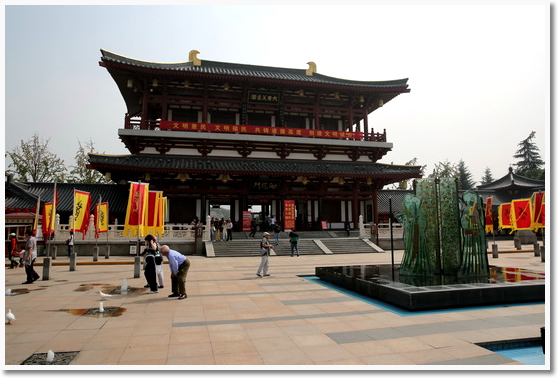
Throughout the Tang Paradise, there are twelve scenic regions including the attraction of Ziyun Tower Block, Elegant Lady Area, Imperial Banquet Hall, Fanglin Fragrant Garden, Phoenix Theater, Apricot Garden, Lu Yu Teahouse, Tang Marketplace and the Floating-drink at Qujiang Lake.
The Water Film is the main attraction in Tang Paradise. The screen of the water is a film of water, which makes you a wonderful and illusory feeling that you were on the scene in person. When the figures in the movie appear on the screen, it seems that they are flying to the sky or coming down from the heaven. It is indeed a splendid ocular enjoyment.
If you don’t want to go the do-it-yourself route and prefer the hassle-free escorted tours, here are some options for Xian guided tours:
Share a question or note for this guide. Comments are reviewed before publishing.
Hand-picked routes matched from this article's destination clues, tags, and categories.
Use these attraction notes to connect nearby sights with tours, destination guides, and planning articles.
Continue planning with practical Beijing guides selected from similar places, themes, and travel questions.
Subscribe to receive Beijing travel ideas and tour updates.