
Call a local advisor
+86 186 1196 4400Email our team
[email protected]Tour Beijing Journal
Plan your China tour in autumn? Autumn leaf peeping time in China varies...
If you are a leaf peeping fan and happen to visit China during the fall foliage period, you may choose one or two places to comfort your eyes and relax yourself with viewing the autumn leaves. We at Tour Beijing have leafed through the top 10 fall foliage destinations in China that we think are worth your exploration on your China autumn trip.
Ejina Banner is in the most west end of Alashan, west of Inner Mongolia, adjacent to Alxa Right Banner in the east. Ejina Banner has a drought, extreme arid desert steppe climate with four distinctive seasons. It features rainless, abundant sunshine, and great temperature difference. The annual average temperature is 8.3℃. The number of annual dust storm is up to 14.
Ejina Diversifolius Poplar Forest National Nature Reserve is one of the three largest poplar forests in the world with mesmerizing autumn scenes sought after by numerous tourists and photographers.

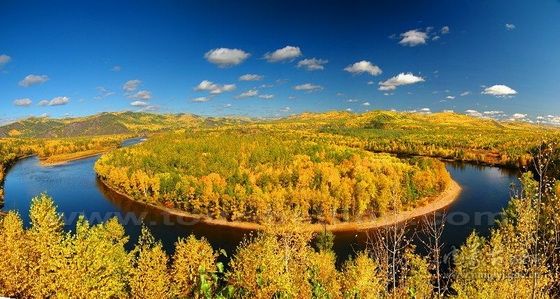
Moerdaoga National Forest Park ia the first national forest park in the Greater Khingan Range (Greater Xing'an Mountain ) within Inner Mongolia Autonomous Region, the biggest national forest park of its kind in China.
Moerdaoga" literally means that "set out for flight riding your horses" that was legendarily said by Genghis Khan who tried to integrate the tribes. The forest park is adjacent to the Hulunbuir Grassland on the south, the Erguna River on the north, packed with old and tall trees and numerous streams and rivers. The Moerdaoga turns into a "five-colormountain", a perfect place to see autumn leaves.
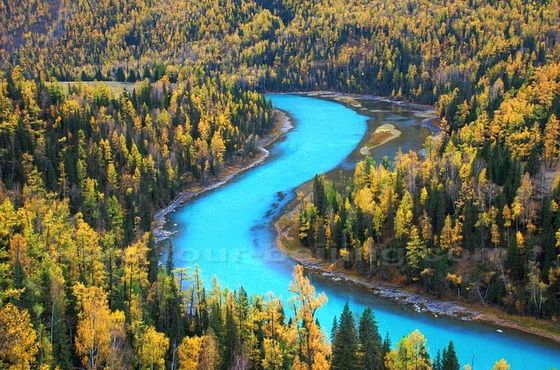
Kanas is located in the northern tip of Xinjiang. The Kanas Lake (Kanasi Hu) means "beautiful, rich and mysterious" in Mongolian. The lake is nestled in the deep forests and mountains of Altay. The lake is 1,374m above sea level and covers an area of 45sqkm (10 times bigger than Tianchi on Bogda Mountain) with the deepest point of 188m.
The long bean-shaped lake reflects the surrounding snowcapped mountains. The Kanas Lake in autumn is at its best with the beautiful foliage. Legend has it that huge monsters live in the lake. They often has take away horses and camels drinking into the water by the lake and later swallow them, a similar story of "Nessie Monster".
Jiuzhaigou literally means “Nine Village Valley” in Chinese. Listed as World Cultural Heritage in 1992. Jiuzhaigou is well known for its beautiful water – multi-level waterfalls and colorful lakes, and magnificent autumn scenery.
Jiuzhaigou is located in Jiuzhaigou County of the Aba Tibetan Qiang Autonomous Prefecture in Sichuan Province, 436km north of Chengdu, the capital city of Sichuan Province.
Jiuzhaigou has three valleys naturally formed in a Y shape. The Rize Valley 17km long and Zechawa Valley 18km long flow from the south and meet at a confluence where they form the Shuzheng valley 15km long in the middle, continuing to flow north to the mouth of the Shuzheng Valley. All the three valleys are accessible both by shuttle bus and boardwalks.
7.jpg)
Yading Nature Reserve is located within Riwa Township, Dacheng County, in the south of Garze Tibetan Autonomous Prefecture, Sichuan. Yading is oft-lauded as “The last piece of pure land in the water-blue planet”. Yading and Dacheng are often put together and known as the last Shangri-la.
The Yading Nature Reserve mainly comprises three holy mountains known as Chenresig, Channa Dorje and Jampelyang which are all above the altitude of 6000 meters with Chenresig the highest at 6032 meters. Chenresig is often likened to the giant Buddha; Channa Dorjie as a young man and Jampelyang as a girl. The three holy mountains are just like three sacred souls, a pilgrimage place for Tibetans.
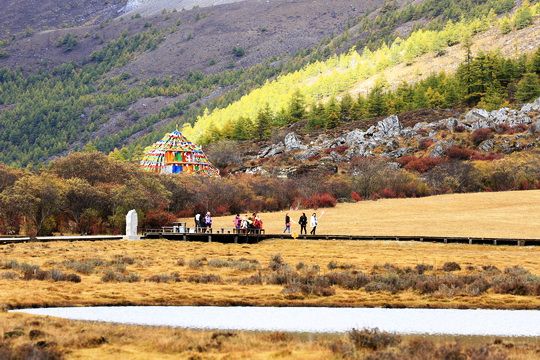
Besides the three holy mountains, the reserve is also dotted with high-plateau grasslands and green lakes, like Milk Lake, Five-color Lake, Luorong Grassland and Changgu Monastery. The 12-km koral around the 6032 m Chenresig is a huge rewarding experience. If you don’t have strong legs, you may stop overnight on camping and do it next day to continue your hike.
Yading Nature Reserve is a perfect natural eco-system formed by the featured geography and natural climate. When autumn comes, Yading and Daochange become a sea of colors, a birthplace for numerous picturesque landscape photos.
The Red Leaves Valley is located at the west foot of Changbai Mountain within the jurisdiction of Jiaohe City, Jinlin Province. Just drive out of Jilin city along the road leading to Jiaohe and then take the muddy road into Jiefang Village, and after a stone bridge, you reach the red leaf valley.
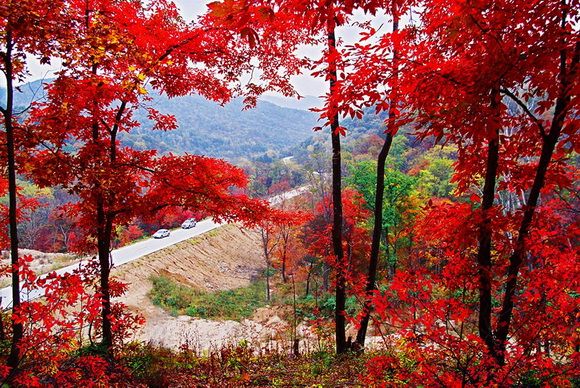
The Red Leaf Valley ranges from Jiefang Village at Qingling Town to Yanjiang Village at Songjiang Town, a total length of more than 50 kilometers. The whole valley is teemed with numerous trees, such as maple, birch, larch and gingko trees. The blend of red and golden colors makes the valley look like massive waves rolling across a colorful sea.
The Great Wall at Jinshanling Great Wall is much less touristy in comparison with the Walls at Badaling and Mutanyu. This section of Wall is situated about 140km to the northeast of Beijing, further than Baddaling and Mutianyu ( about 80km from Beijing).
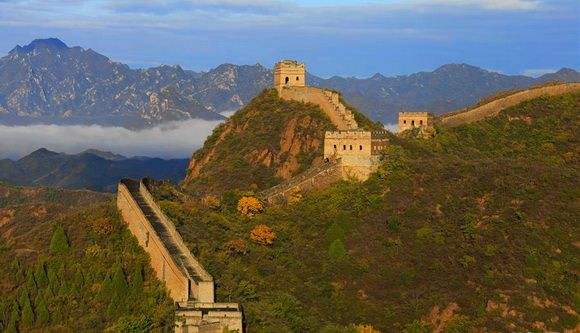
The best time to visit Jinshanling Great Wall and Simatai Great Wall falls between October 15 and November 15 each year when the autumn leaves are at their best – yellow, orange, pink, and red. The walls havedensely vegetation – smoke trees, persimmon, hawthorn, gingko, torch trees, birch, aspen, hickories, chestnut, walnut, sawtooth oak, jujube and more to beautify the autumn.
Wulingyuan Scenic Area is located about 30 km north of Zhangjiajie’s city center. Wulingyuan Scenic Area was listed with UNESCO World Heritage 1992. This world heritage site is popularly known as “Zhangjiajie Senic Area” rather than “Wulingyuan” mainly because Wulingyuan Scenic Area is under the administration of Zhangjiajie City.
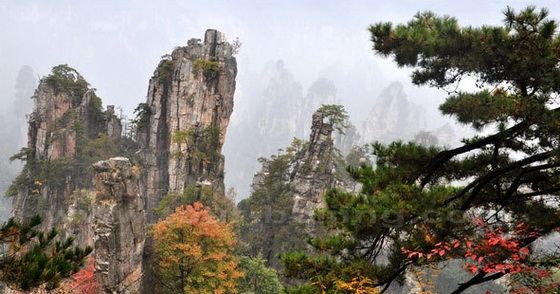
Wulingyuan Scenic Area are famous for its unique hills, queer rockss and peaks, tranquil valleys, clear streams, abundant fauna and flora and hospitable climate.
Location: Namcha Barwa ( or Mt.Namjabarwa, Namchabarwa ) is located in Nyingchi in the southeast of Tibet, at the height of 7782m. Nyingchi, which literally means “throne of the sun” in Tibetan has a relatively lower altitude bestowed with the green mountain slopes, snow-capped peaks and crystal-clear rivers. Nyingchi is dubbed as “Switzerland of Tibet”. The county boasts the Namcha Barwa Peak, and the Yarlung Zangbo Great Canyon, and the abundant nature resources.
Autumn is the best time for tourists to visit the Nancha Barwa Peak for the rainy season in the canyon has been over and the dry season has just started. The whole valley or the canyon has been turned into a colorful sea of colours.
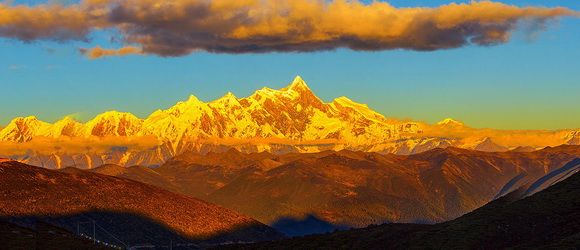
Its colossal triangle body is capped with snow and mists all year around and people find it hard to see its true face. In 1992 that the Sino-Japan Mountain Climbing Team conquered Mt.Nanjiabawa. Today it has become a very popular and challenging destination for leisure travelers and professional mountain climbers from both home and abroad.
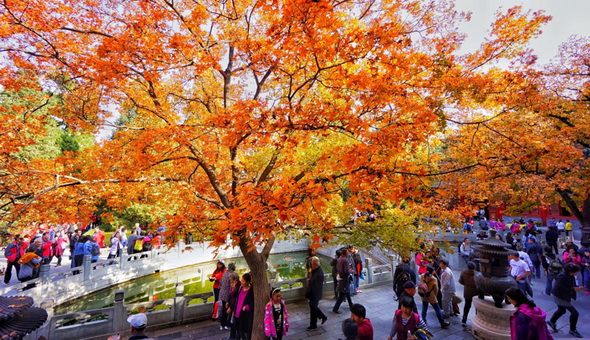
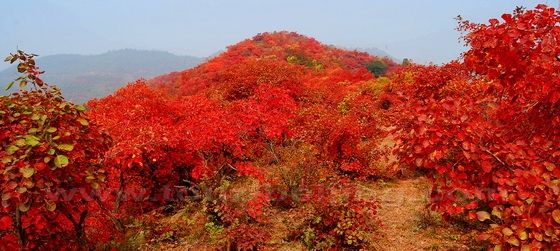
The hill is dotted with maple trees, smoke trees and persimmon trees. When autumn arrives, fiery red leaves blanket the entire mountain. Every year, a huge number of tourists flock to the park. The cable cars are a great way to hike up the hill and enjoy the spetacular fall scenes at the same time.
If you don’t want to go the do-it-yourself route and prefer the hassle-free escorted tours, here are some options for China guided tours:
Share a question or note for this guide. Comments are reviewed before publishing.
Hand-picked routes matched from this article's destination clues, tags, and categories.
Use these attraction notes to connect nearby sights with tours, destination guides, and planning articles.
Continue planning with practical Beijing guides selected from similar places, themes, and travel questions.
Subscribe to receive Beijing travel ideas and tour updates.