
Call a local advisor
+86 186 1196 4400Email our team
[email protected]Tour Beijing Journal
Plan your Chengdu tour? As the provincial capital and largest city of...
Plan your Chengdu tour? As the provincial capital and largest city of Sichuan, Chengdu is located on the edge of the fertile plains of the Red Basin in China’s Sichuan Province.
Its long and splendid history has left Chengdu countless historical and cultural sites and some of them are definitely worth visiting.
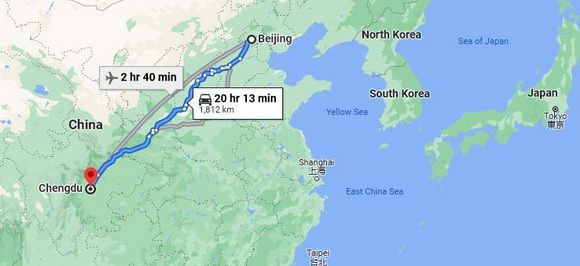
Also, your trip to Chengdu is not fully complete without a pleasant side trip to the Panda Research Base. And plenty of interesting attractions await your exploration.
We’ve rounded up a list of the top 10 attractions in Chengdu, which can be helpful for your planning your short trip to Chengdu.
The Giant Panda Breeding Research Base is located on the mountain of Futoushan in the northern suburbs of Chengdu. It has been created and imitated the pandas’ natural habitat in order that they might have the best possible environment for rearing and breeding.
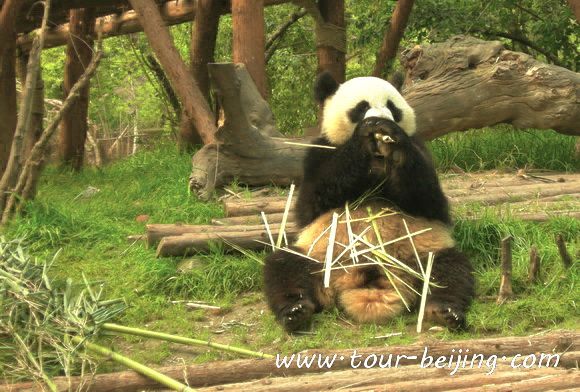
The Research Base shows many practical specimens of the Giant Panda, including fossils, dissected anatomical remains, diet specimens, etc. Additionally there is a Giant Panda Museum together with research laboratories and a training center.
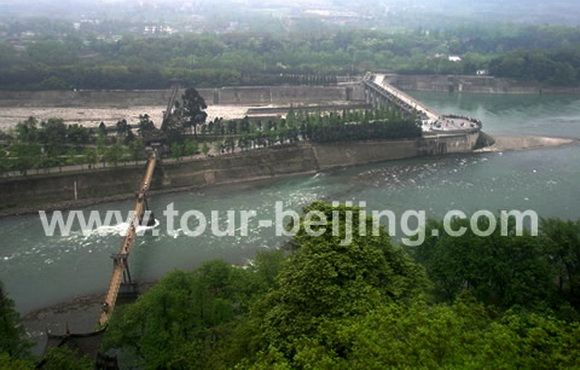
Dujiangyan is an ancient irrigation infra-structure built in 256 BC during the Warring States Period of China by the Kingdom of Qin. It is located in the Min River in Sichuan.
Dujiangyan Irrigation Project is still in use today to irrigate over 5,300 square kilometers of land in the region. The project consists of three important parts, namely Yuzui, Feishayan and Baopingkou scientifically designed to automatically control the water flow of the rivers from the mountains to the plains throughout the year.
Check out Dujiangyan Trip for more information.
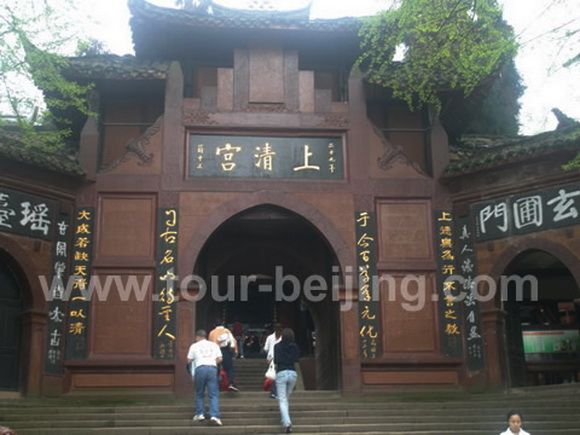
Qingcheng Mountain means “Green City Mt.” because the whole mountain is covered by green trees, like a city. Qingcheng Mountain is famous for its beauty and quietness. Qingcheng Mountain is 15 kilometers away from Dujiangyan and 68 km east of downtown Chengdu.
This Mountain is also one of the birthplaces of the Taoist religion. With over 20 temples and religious sites for Taoism With over 20 temples and religious sites for Taoism, it exudes a strong flavor of Taoist culture and the buildings demonstrate the Sichuan style of architecture.
Check out Qingcheng Mountain Trip for more information.
Jinsha Site Museum is one of the highlights of your Chengdu Tour. The Jinsha Relics Museum is just about 5 km west of the downtown Chengdu. It is located at No.02, Jinsha Site Road, Chengdu. It is easily accessible by taxi and buses.
Jinsha site is a relic site in the Shang Dynasty (1600–1046 B.C) and Zhou Dynasty (1046–256 B.C.), which has unearthed the most dense cluster of ivory and the most abundant gold and jade ware in the world in the same period.
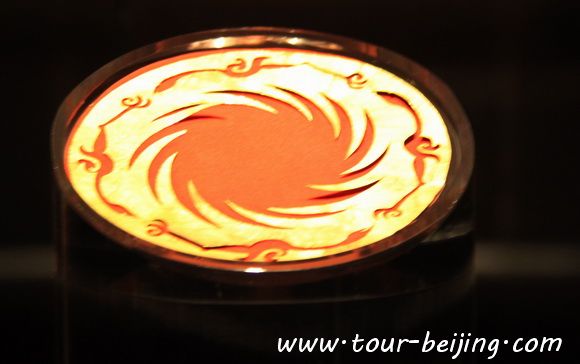
Among them, the most famous is the gold foil "Sun Bird" on show on the fourth hall, which has been identified as the symbol of Chinese cultural heritage and the main pattern of Chengdu city image logo.
With a history of more than 1,000 years, Wenshu Temple, or Wenshu Temple is the largest and the best-preserved Buddhist temple in Chengdu. It has been a popular destination for visitors and pilgrims alike for centuries.
There is a tallest iron pagoda in China near the entrance to the Wenshu Temple, the Peace Pagoda of a Thousand Buddhas. There is a long corridor on the west side of the Wenshu Academy, where many inscriptions are stored. A strong sense of history.
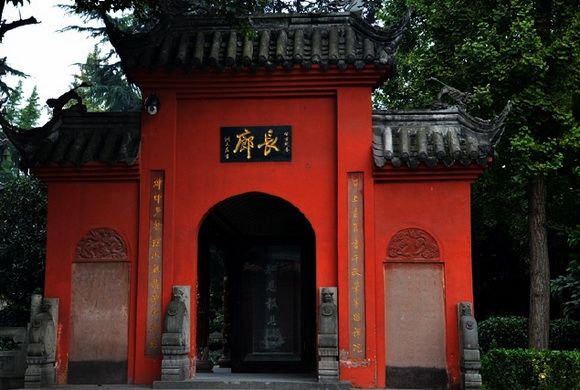
The most outstanding objects in the Wenshu Temple are these over 300 statures of the Buddha, which are made by iron, wood, stone, and clay. The most distinguished one is a jade Buddha brought back from Burma by a Buddhist monk on foot in 1922.
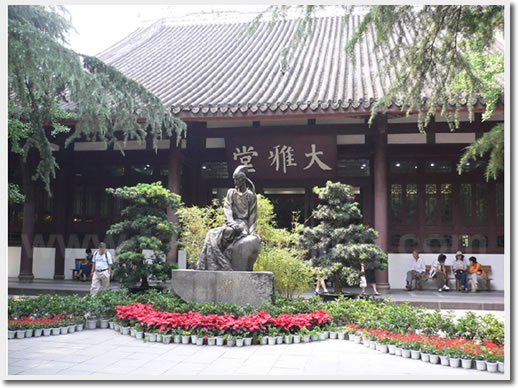
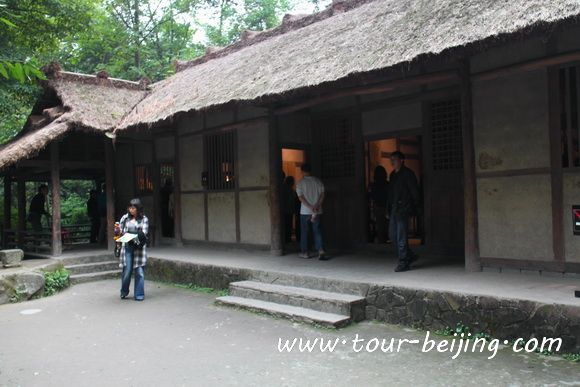
Du Fu, a well-known poet of Tang Dynasty, has a strong influence in the field of Chinese poem. Du Fu Thatched Cottage is the former residence of him.
The cottage consists of six important parts: the Front Gate, the Lobby, the Hall of poem History, the Water Pavilion, the Gongbu Shrine and the Thatched Cottage. There are exhibits that provide details of Du Fu’s life and work. In addition, statues, stone carvings, paintings, and calligraphies by famous writers of different dynasties are also on display.
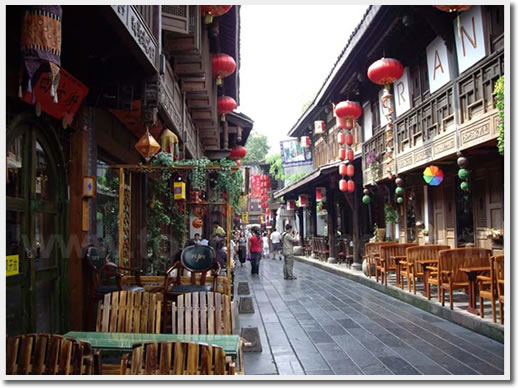
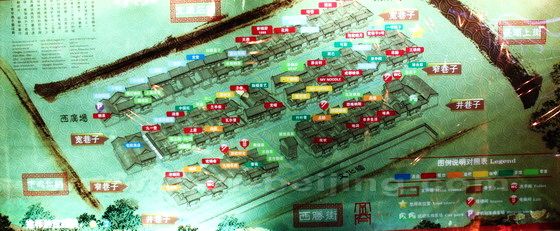
Kuan Alley and Zhai Alley literally refer to "Kuan Zhai Xiang Zi" in Chinese meaning “Wide Alleys and Narrow Alleys”. Here they particularly refer to the two famous lanes in Chengdu – Kuan Alley (wide lane) and Zhai Ally ( narrow Lane). Both Kuan Alley ( wide lane ) and Zhai Alley (narrow lane) are the gentrified ancient alleys from Qing Dynasty ( 1644 -1911 ) in Chengdu.
Kuan Zhai Xiang Zi is one of the three historical relic protection areas in Chengdu. This area is actually mainly composed of three lanes – Kuan Lane (Wide Alleys), Zhai Lane ( Narrow Alleys) and Jing Alley ( the old grid pattern streets and courtyards formed by the three parallel alleys).
Kuan Lane ( Kuan Xiang Zi ) is home to the most complete old buildings in the whole block, where you can enjoy a bowl of tea, eat authentic Sichuan cuisine and experience the local conditions and customs of old Chengdu.
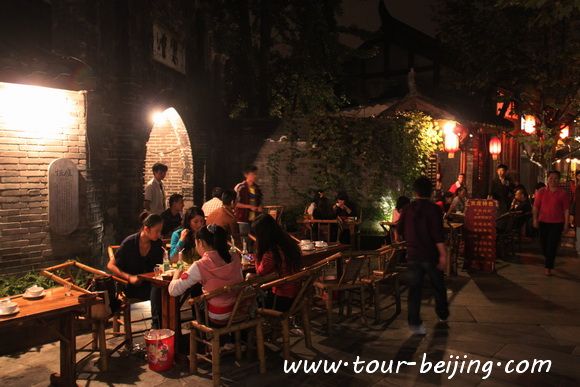
Zhai Lane (Zhai Xiang Zi) is a leisure life taste area with western-style food culture, art and leisure as its focus, as well as buildings of the late Qing Dynasty and early Republic of China.
Jing Lane (Jing Xiang Zi) is a typical miniature of Chengdu folk customs. In addition to the fascinating brick cultural wall, there are also chengdu special snacks and folk customs.
Wuhou Shrine Chengdu was first built in memory of Zhuge Liang (181 – 234), the prime minister of Shu ( 221 – 263 ) of the Three Kingdoms ( 220 – 280). Zhuge Liang was a famous statesman, military strategist. He was also given the title of Marquis Wuxiang in his lifetime. “Wuhou” literally means “Wuxiang Marquis”.
Now Wuhou Shrine is more than a shine. Instead, it has become a museum, the largest museum in China displaying the relics and introducing the history about the Three Kingdom.
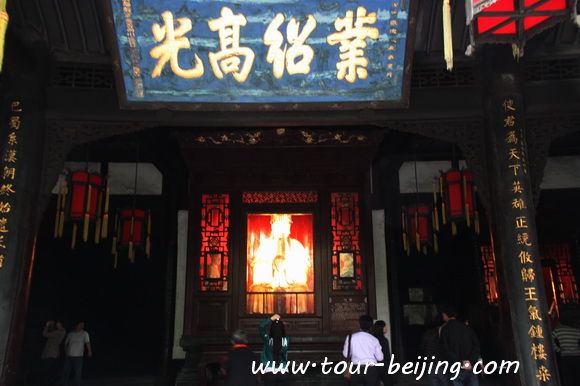
Wuhou Shrine has incorporated the Liu Bei’s Tomb and Liu Bei Temple into one huge museum. In addition, Wuhou Shrine also includes the Sanyi Temple and 50 statues of the heroes in Shu Kingdom.
Jinli Old Street is located to the east of the Wuhou Memorial Temple of Chengdu. As recode, the street was built originally as early as Shu Kingdom and is called “The First Street of the Shu Kingdom”.
Listed in “the ten commercial pedestrian streets of the Nation” in 2005, Jinli Old Street combines the ambience of ancient and modern China. Strolling down the narrow street, you will find yourself surrounded by a charming old world. The wooden steles and the brick-walls exhibit an ancient charm.
There are also a variety of Sichuan characteristic snacks in the street, a variety of teahouses, cafes, bars, and inns.
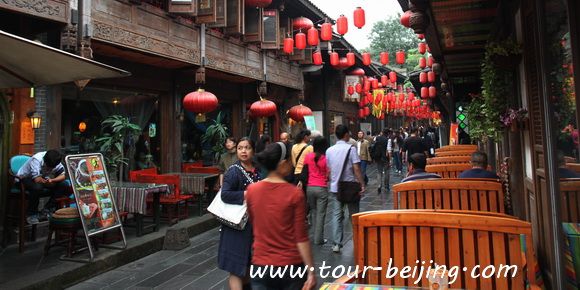
At dusk, Jinli Street will be lit up, quite charming, suitable for taking photos and playing.
Chengdu People's Park is a city center park with a comprehensive garden integrating cultural relics and entertainment. The park is composed of natural landscapes such as Jinshui Creek and bonsai Garden, with various vegetation planted along the banks.
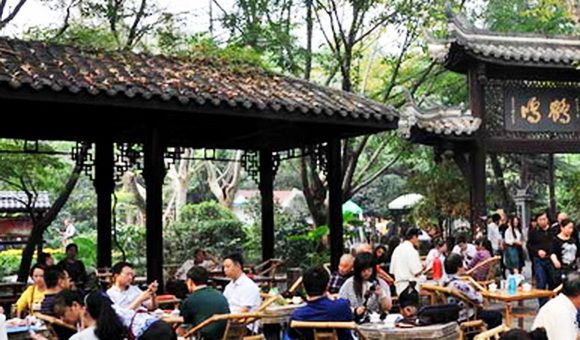
People's Park is the most popular park in Chengdu. Local people hang out in the park for driking tea and leisure acitivities. People's Park provides tourists an opportunity to have a glimpse of the leisure city of Chengdu. It is a great public outlet for joggers, tai qi enthusiasts, gamers, musicians, tea drinkers and grandparents with their grandchildren in tow.
If you don’t want to go the do-it-yourself route and prefer the hassle-free escorted tours, here are some options for Chengdu and Sichuan guided tours:
Any questions, just drop a line.
Share a question or note for this guide. Comments are reviewed before publishing.
Hand-picked routes matched from this article's destination clues, tags, and categories.
Use these attraction notes to connect nearby sights with tours, destination guides, and planning articles.
Continue planning with practical Beijing guides selected from similar places, themes, and travel questions.
Subscribe to receive Beijing travel ideas and tour updates.