
Call a local advisor
+86 186 1196 4400Email our team
[email protected]Tour Beijing Journal
After simple breakfast at our lodging hotel, at 7:30 am in the wet autumn...
After simple breakfast at our lodging hotel, at 7:30 am in the wet autumn day, we leave the cozy and green city of Hanzhong (汉中), driving through the main street and Han River Bridge in patchy fog and drizzle.
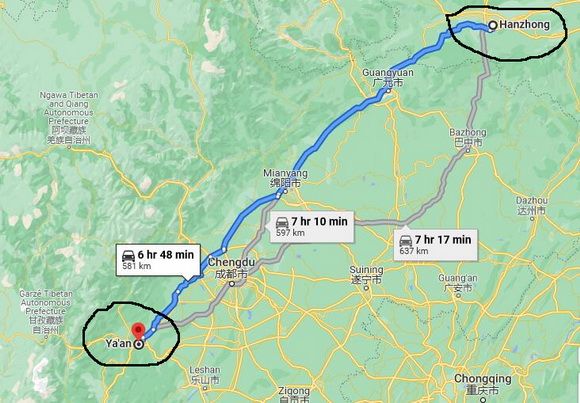
Today we spend most of our daytime driving on route, a 600km and 7-hour long haul G5 (Jingkun Freeway ) from Hanzhong to Ya'an.
We enter Sichuan Province at Guangyuan (广元), known as the northern gate to Sichuan and further going southwest, passing by Mianyang (绵阳), Deyang (德阳) , Chengdu (成都) and getting to Ya'an (雅安), our final destination today.
The screenshot below gives you a rough idea of our traveling route today.
The roads between Xian and Chengdu which we are driving past so quickly, dating back to in the Warring States (481-221 BC) period, the Qin (221-206 BC) and Han (206 BC to 220 AD) dynasties, were collectively known as Shudao "Roads to Shu" (蜀道) or "Hard Roads to Shu". Chengdu is officially abbreviated as Shu (蜀) and Shu was an ancient state in modern Sichuan.
The ancient Shudao "Roads to Shu" were built connecting both north-south sides of the mountainous barrier formed by the Qinling (秦岭).
"Shu Roads" served as a bridge linking Chang’an (长安), near present day Xi’an in the north and Shu (蜀) in the south, the present day Chengdu in the Sichuan plain. Some of the roads have been preserved and maintained, even consolidated up till today while others have faded away.
"Shu Roads" also bridged the two most important historical "Highways" in China history - the southern trade routes such as the Tea and Horse road to Tibet and northern routes such as the Silk Road to the west.
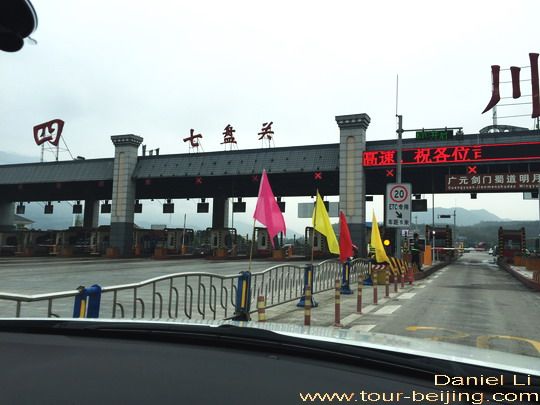
When we are passing through the Qipanguan Toll Gate at Guangyuan (广元), formally entering Sichuan Province, we see the banner hanging above says "Welcome to Jianmen Shudao (literally Shu Roads ) at Mingyue Gorge Tourism Area".
People haven't forgot the Shudao (hard Shu Roads) and the local government has developed Shu Roads ecological and historical tourism routes.
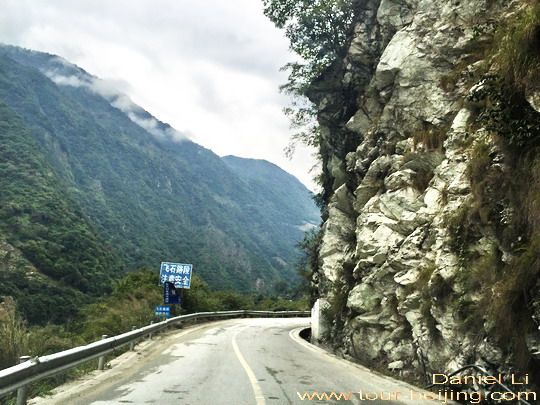
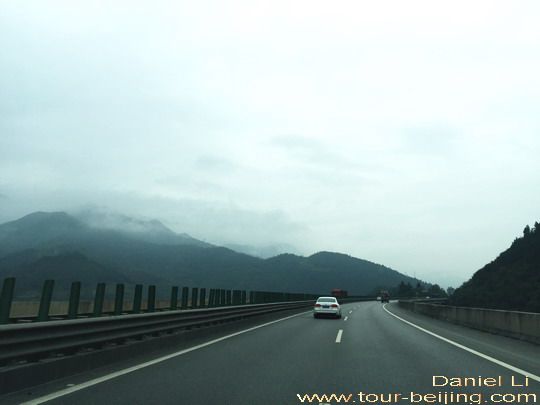
In the course of driving, we are still amazed by the high-quality construction of the flat and wide freeway framed with charming Chinese traditional paintings of the clouds and mountains.
For an urban dweller, driving fast through the mountainous areas is definitley a luxury rewinding experience!
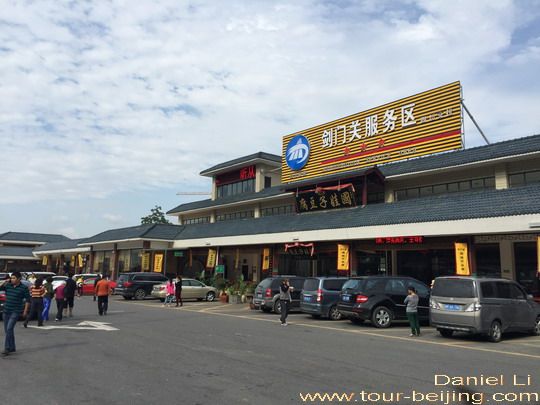
We take a break at Jianmen Pass Service Area. Jianmen is a county under Guangyuan City. This county is well known for its Jianmen Pass, the strategically located pass and the endless Shudao (Shu Roads).
Here you can view the magnificent scenery, but also have the chance to look for the traces of the historical site of the Three Kingdoms and more. But we have to say goodbye to the intriguing Jianmen Pass and Shu Roads and go on with our dream focused on the West Sichuan.
When We’ve reached the city of Ya’an (雅安) driving all the way from Hanzhong (汉中) along the expressway G5 (Jingkun Expressway), it is getting darker. The city looks neat and bright with Qingyi River (青衣江) winding past cutting the city into two parts. Actually the city of Ya’an is built on the two sides of the valley of Qingyi River.
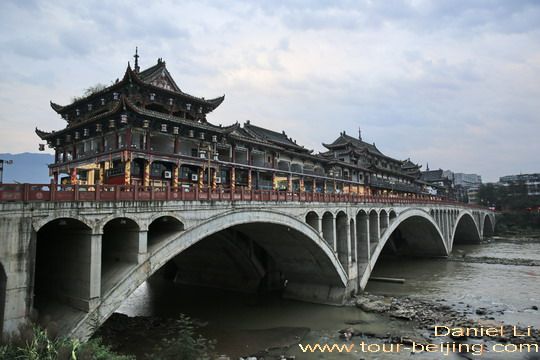
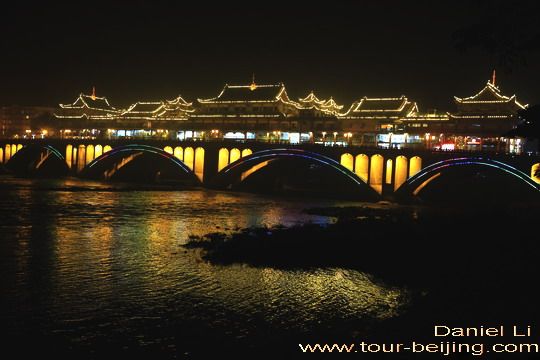
We are pleasantly surprised at the solemn beauty of the largest covered bridge (Langqiao) I’ve ever seen, which is just across our lodging hotel – ibis downtown Ya’an.
Ya’an has long been well known for its “three most famous” – Ya Fish, Ya Girls and Ya Rain. Tasting Ya fish is a must for tonight. Just forget Ya rain, as Ya’an is noted for a city of rain, the most rainy city in Sichuan Province and hopefully we’ll have a sunny and bright day tomorrow. The girls in Ya’an are said to to be beautiful, so we’ll see!
Our growling stomach reminds us of the need to have dinner first upon arrival at the pretty city. Ibis downtown Ya’an suggests us have Ya fish at the time-honored Ganlaosi Ya Fish Restaurant ( 干老四雅鱼饭店), a ten-minute drive from our hotel.
This is a chain restautant and we go to its flagship restaurant – Ganlaosi Ya Fish at Sha Wan ( tel: 035-2821584 Add: No.236, Shawan Road, Yucheng District, Ya’an 雅安市雨城区沙湾路236号).
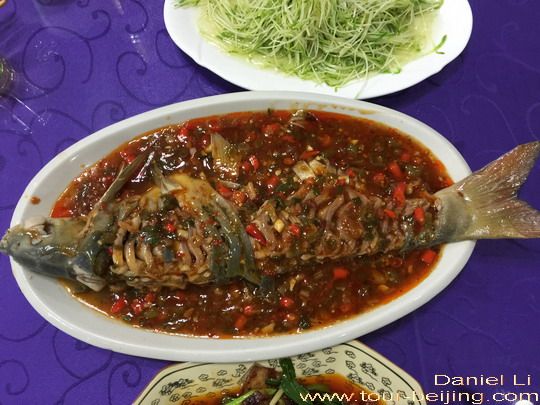
We order a Ya fish braised in soy source with red peppers. It tastes soft, delicious and melts in our mouths. The Ya fishes live in Zhou Gong River, a branch of Qingyi River.
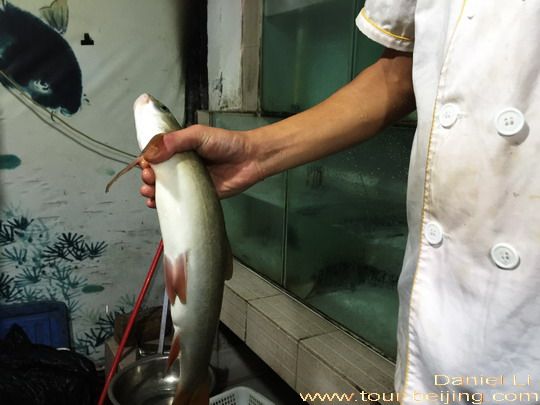
Ya fish caught alive and cooked freshly.
The cooked Ya fish tastes delicious and melts in our mouths.
As a Chinese saying goes "One hundred steps of walking after dinner make you live to 99 years old", we take a short stroll after supper,which is said to be good for health.
The walk along the river bank turns out to be a joyful experience! The walkway along the river bank is partially made of synthetic tracks and paving stones. Sporadic river bank parks are set attached to the walkways, making a stroll along the banks pleasant and comfortable.
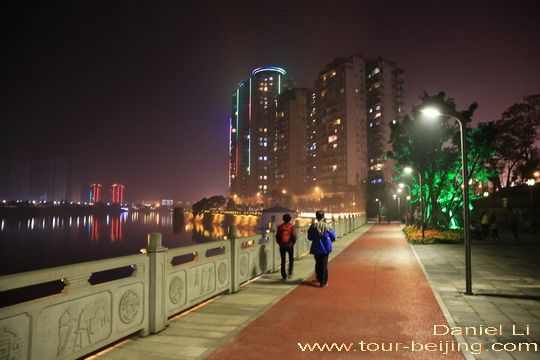
The concrete guardrails are lit outside with their reflections on the river, prettifying the river sides.
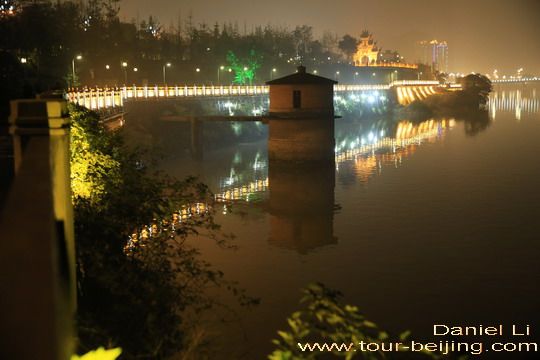
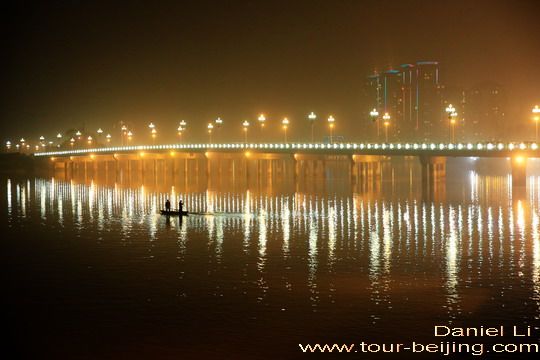
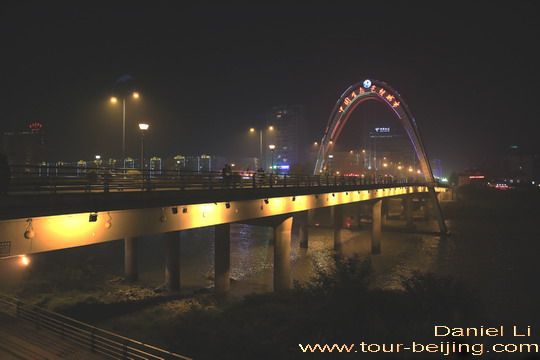
The night views of the bridges straddling Qingyi River are astonishedly beautiful with coloful lights and shades. This is Qingyi River Bridge lit brightly with a fishing boat on the river.
The largest covered bridge I’ve ever seen spans Qingyi River in Ya’an city, brightly lit.
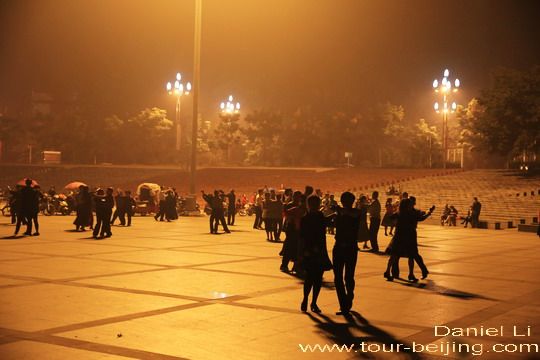
Local people are seen singing and dancing leisurely and happily at the riveside park, a pleasant city for slow life and a mecca for retirees.
More bridges are built to connect the two sides of the river in Ya’an city.
If you are planning Chengdu tour, you are highly recommended to have a side trip to Ya’an, a sharp contrast to the hustle and bustle of Chengdu.
If you don’t want to go the do-it-yourself route and prefer the hassle-free escorted tours, here are some options for Chengdu and Sichuan guided tours:
Any questions, just drop a line.
Share a question or note for this guide. Comments are reviewed before publishing.
Hand-picked routes matched from this article's destination clues, tags, and categories.
Use these attraction notes to connect nearby sights with tours, destination guides, and planning articles.
Continue planning with practical Beijing guides selected from similar places, themes, and travel questions.
Subscribe to receive Beijing travel ideas and tour updates.