
Call a local advisor
+86 186 1196 4400Email our team
[email protected]Tour Beijing Journal
Plan your Chengdu tour? If you are into the Taoism (also spelled Daoism) ,...
Plan your Chengdu tour? If you are into the Taoism (also spelled Daoism) , a religion and a philosophy from ancient China, Qingyang Palace is definitely your cup of tea.
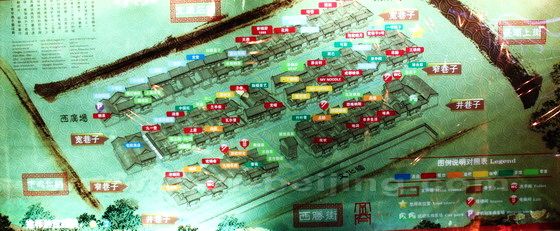
The Qingyang Palace, also known as Qingyang Taoist Temple, is lauded as “No 01 Taoist Temple in Sichuan” and “No.01 Taoist Temple in West China”. Now It is a famous tourism and sightseeing attraction of Taoist cultural heritage.
First built in Zhou Dynasty (1046 BC-249BC), Qingyang Taoist Temple was originally called Qingyang Fair. In the first year of Zhonghe Period (881) of Xizhong Reign of Tang Dynasty (618-907), the emperor retreated to the place of Qingyang Temple to avoid the chaos.
After the upheaval was calmed down, the emperor allocated a sum of money to expand the temple and issued an imperial edict to change the name of the place into Qingyang Palace. This temple was flourishing in Tang Dynasty.
In Ming Dynasty (1368 – 1644), the temple buildings built in Tang Dynasty were unfortunately damaged in natural disaster and wars. Today’s Qingyang Palace is the result of successive reconstructions during the six to tenth year of Kangxi of Qing Dynasty (1644 – 1911).
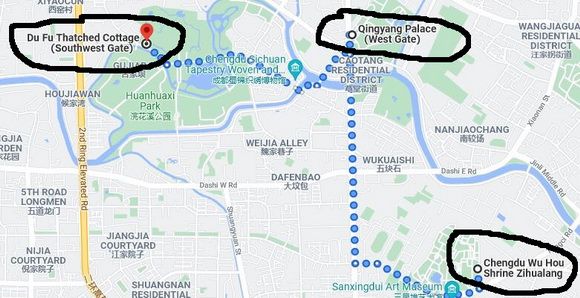
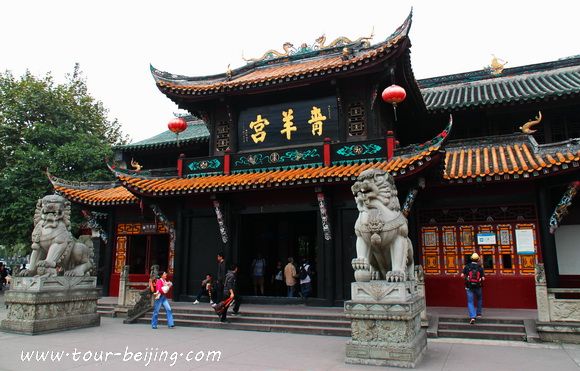
Follow us to enter the main gate to Qingyang Palace and start the virtual tour.
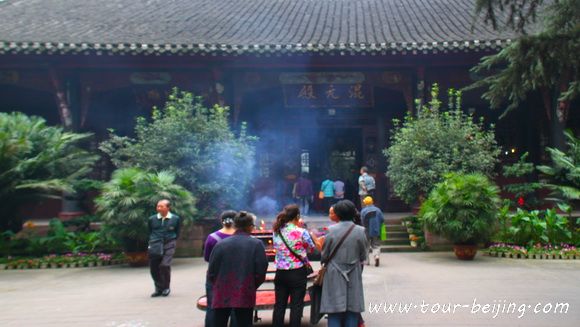
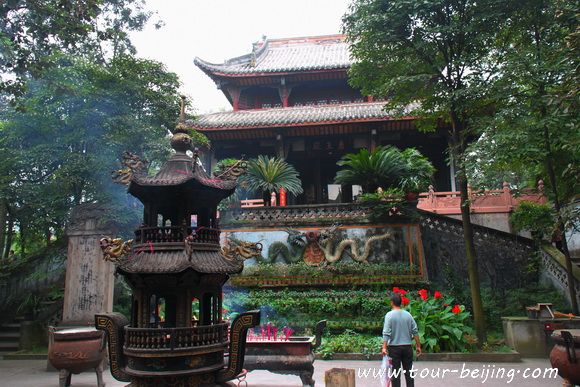
Going through the gate, and the first building you will see is the second important hall in the temple known as Hunyuan Hall. The hall was rebuilt during reign of Kangxi emperor (4 May 1654 – 20 December 1722) in Qing Dynasty.
The hall is about 22 meters high and suppported by 28 columns and covers an area of 600 square mteters. Enshrined in the hall are Taishang Laojun and Goddess of Great Compassion.
The Bagua (Eight Trigrams) Pavillion is an octagonal pavilion where the statue of Laozi riding on a bronze cow is enshrined and well preserved.
Constructed on square bases, with a colored glazed dome on top, this octagonal building showcases the ancient Chinese thinking that “the sky is round and the earth is square”.
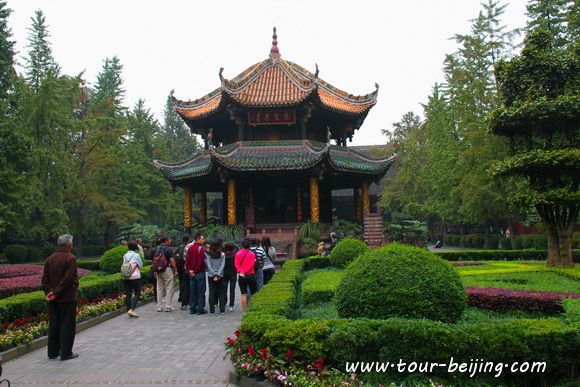
Sanqing Hall, also known as Wuji Hall, is the main hall of Qingyang Palace. It was originally built in the Tang Dynasty and rebuilt in 1669 ( the eighth year during the raign of Emperor Kangxi ) in Qing Dynasty.
Sanqing Hall is dedicated to the worship of the three highest Taoist deities in Taoism - Yuanshi Tianzun, Lingbao Tianzun and Daode Tianzun.
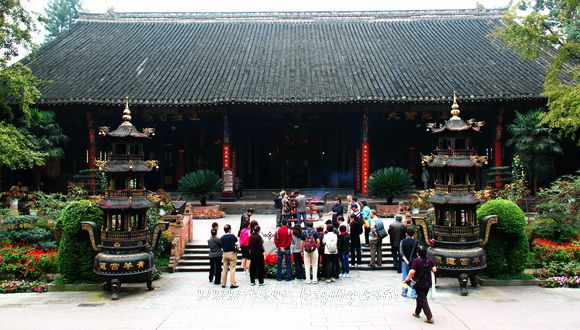
In front of the Sanqing Hall stand two eye-catching bronze goats. Two bronze goats are a veritable treasure of the palace.
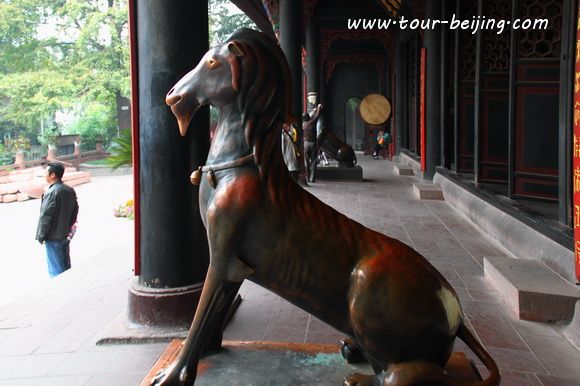
Doulao Hall where Doulao, a great Goddess in Taoist is enshrined. Doulao Hall, also known as Yuanchen Hall, is about ten meters long and nine meters wide. It was built in the Ming Dynasty ( 1368 - 1644) . Doulao Hall is the only existing Ming Dynasty original building in Qingyang Palace.
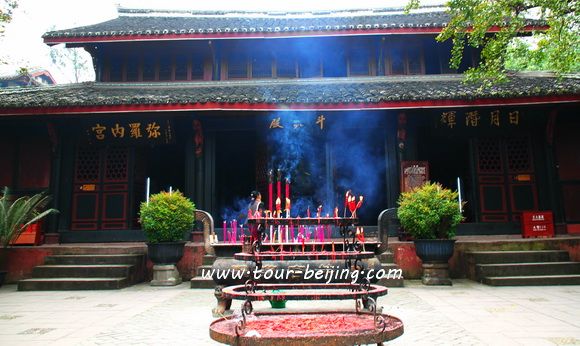
The Jade Emperor Hall. According to the doctrine of Taoism, the Jade Emperor is the most senior God of the world. The original hall of the Jade Emperor was built during the reign (1821-1850) of Emperor Daoguang in Qing Dynasty. But was later demolished due to dangerous buildings.
The new hall, built in 1995, is about 18 meters long and 6 meters wide. On the upper floor of the temple is dedicated to the Jade Emperor, a Taoist deity next in rank to the three highest Sanqing deities.
If you don’t want to go the do-it-yourself route and prefer the hassle-free escorted tours, here are some options for Chengdu and Sichuan guided tours:
Share a question or note for this guide. Comments are reviewed before publishing.
Hand-picked routes matched from this article's destination clues, tags, and categories.
Use these attraction notes to connect nearby sights with tours, destination guides, and planning articles.
Continue planning with practical Beijing guides selected from similar places, themes, and travel questions.
Subscribe to receive Beijing travel ideas and tour updates.